


Boiler Breakdown: What to Do When Your Boiler Stops Working

What should you do first when your boiler stops working: reset it, check the pressure or call an engineer? A boiler breakdown can leave you without heating or hot water, but guessing at the cause or attempting a repair could make the situation worse.
It’s understandable to want a quick fix, especially if you’re worried about gas or carbon monoxide. Start by looking for warning signs, not by taking the boiler apart. If you smell gas or a carbon monoxide alarm sounds, stop using the appliance and treat the situation as urgent. Don’t investigate the fault yourself.
This guide explains which visible signs need urgent attention, which basic checks are safe and when to leave the boiler alone. You’ll also learn what to note before contacting a Gas Safe Registered engineer. A fault doesn’t automatically mean you need a new boiler: professional diagnosis can help establish whether repair is appropriate.
Table of Contents
Boiler breakdown warning signs: identify the problem and any immediate danger
Losing heating or hot water can disrupt your day, especially in cold weather. A boiler breakdown means the boiler isn’t working as it should. It might stop producing heat, switch off repeatedly or display a fault code. Not every fault is dangerous, but some warning signs need urgent action.
Your boiler is part of a wider central heating system, so a problem may affect heating, hot water or both. Symptoms can help you describe what’s happening, but they can’t confirm the cause. Don’t open the boiler casing or attempt to inspect gas components.
This video is for general context only. Don’t use it as a guide to repair your boiler. Leave technical checks and repairs to a qualified professional.
Which boiler symptoms suggest a breakdown?
No heating, no hot water, repeated shutdowns or a fault code on the display can all indicate a problem. Note the message rather than repeatedly resetting the boiler. Unusual banging or whistling, a visible leak, or a changed pressure reading also warrants professional assessment.
These signs can have several explanations. A displayed code may help an engineer narrow down the issue, but it isn’t a diagnosis by itself. Record what you notice and when it happens. Avoid touching hot, leaking or damaged parts.
When should you stop using the boiler?
A loss of heating or hot water without other warning signs is disruptive, but it doesn’t automatically mean there’s an immediate safety risk. A smell of gas, a carbon monoxide alarm sounding, or symptoms such as headache, dizziness, nausea or confusion need urgent attention. Carbon monoxide has no smell, so don’t rely on odour to judge the risk.
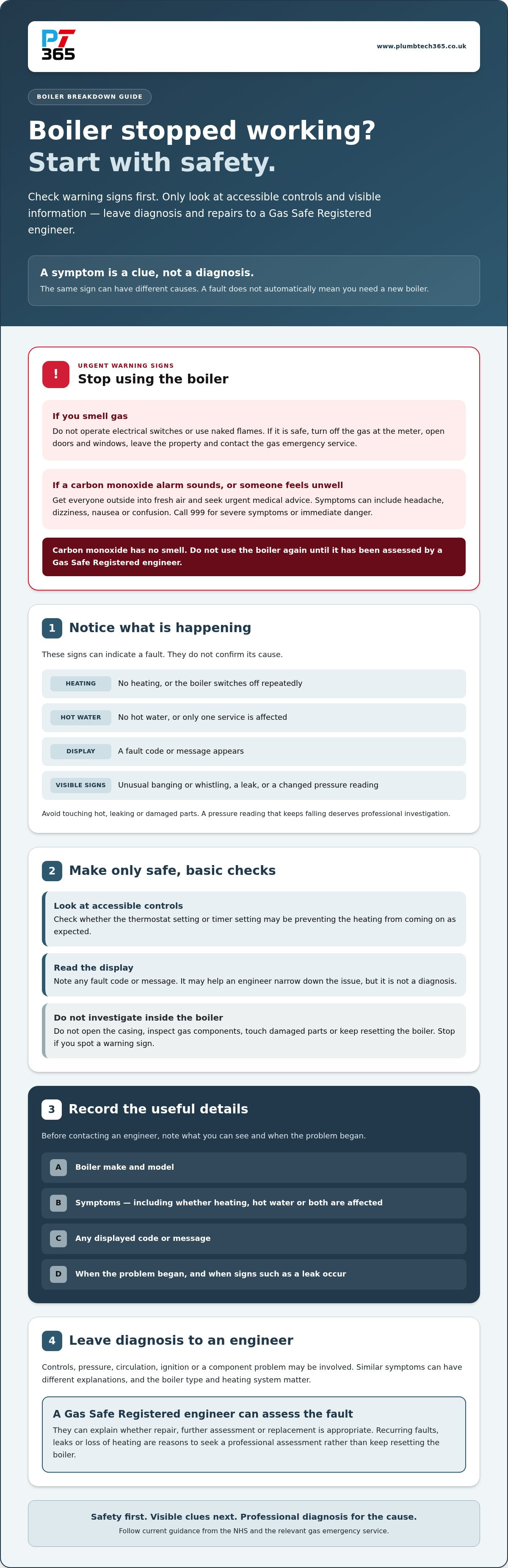
If you suspect a gas leak, don’t operate electrical switches or use naked flames. If it’s safe, turn off the gas at the meter, open doors and windows, leave the property and contact the gas emergency service. If a carbon monoxide alarm sounds or someone feels unwell, get everyone outside into fresh air and seek urgent medical advice. Call 999 for severe symptoms or immediate danger. Follow current guidance from the NHS and the relevant gas emergency service. Don’t use the boiler again until it has been assessed by a Gas Safe Registered engineer.
Why boilers break down: common faults and what the symptoms can mean
A boiler breakdown can start with a control setting or point to a fault inside the appliance or heating system. Possible causes include controls, pressure, circulation, ignition and component problems. These categories can help explain what an engineer may investigate, but they can’t identify the cause by themselves.
A boiler symptom is a clue, not a confirmed diagnosis. Several faults can produce similar signs, and one issue can affect heating and hot water in different ways. A Gas Safe Registered engineer can assess the boiler and confirm what’s wrong.
What can cause no heating or hot water?
Start with the accessible controls. A thermostat set too low, an incorrect timer setting or an unresponsive control may prevent the heating from coming on as expected. If the settings appear correct, possible causes could involve water pressure, circulation through the system, ignition or another boiler component.
Combi boilers heat water directly, while system and conventional boilers work with hot-water storage arrangements. This means the same symptom, such as having hot water but no central heating, may have different explanations depending on the setup. Don’t assume a particular part has failed or try to repair it yourself. Note which services are affected and tell the engineer.
What can boiler noises, leaks or pressure changes indicate?
Banging, whistling or other unusual sounds may signal that the boiler or heating system needs attention, but the noise alone doesn’t prove what caused it. A pressure reading that keeps falling also deserves investigation. It may relate to a leak or another system issue, but an engineer needs to assess the cause.
If you notice water around the boiler or nearby pipes, avoid touching hot or damaged parts. Note where you see it, when it started and whether it returns. For help understanding possible concealed water loss, read this guide to spotting hidden leaks.
Keep a short record of changes: when the problem began, whether it happens every time the heating runs, and what the controls or display show. This gives the engineer useful context without requiring you to investigate the appliance. Avoid repeatedly resetting it or opening the casing.
If the symptoms persist or recur, arrange a professional assessment rather than guessing at the fault. Read more about getting boiler repair help.
Boiler breakdown checks: what you can safely check before calling an engineer
A few external checks can help you describe the problem, but they won’t identify or repair every fault. Start with safety and stop as soon as you notice a warning sign. Never remove the boiler casing, adjust gas components or repeatedly reset a boiler that keeps shutting down.
Follow this simple sequence:
Check for danger first. If you smell gas, a carbon monoxide alarm sounds or anyone feels unwell, stop and leave the property. Don’t continue these checks. Follow current official emergency guidance and don’t use the boiler again until it has been assessed.
Look at the controls. Check whether the programmer is set to the right time and heating schedule, and whether the thermostat setting has changed. Use only controls intended for normal household operation.
Read the display. Note any message or fault code exactly as shown. Don’t guess what it means or try to clear a recurring fault by resetting the boiler repeatedly.
Check for visible signs. Look at the outside of the appliance for water, damage or anything unusual. If safe, check whether the boiler appears to have power using its normal display or controls. Don’t touch wet electrical parts or investigate behind covers.
These observations can help an engineer understand what happened, but they aren’t a substitute for diagnosis. A restart may clear a temporary interruption on some boilers, but it won’t fix every fault. If the boiler stops again, leave it off and arrange professional help.
Which basic checks are reasonable for a homeowner?
Stick to accessible settings, the display and what you can see without moving or dismantling anything. Check whether the thermostat or programmer has been changed, record any message, and note whether the normal controls appear to have power. If reaching a switch means touching a wet area, damaged cable or boiler casing, don’t do it. Stop and ask for professional advice.
Which boiler repairs should you leave to an engineer?
Leave internal boiler, gas and combustion work to an appropriately qualified professional. Don’t remove covers, alter pipework, adjust gas components or bypass safety controls, even if an online guide suggests a quick fix. Gas work should be handled by a Gas Safe Registered engineer. For more on the role of qualified professionals, read this guide to how boiler engineers help keep homes safe.
When a boiler breakdown needs an engineer: what to report and expect
Arrange a professional assessment if the boiler keeps shutting down, a fault returns after a reset, you can see a leak, or you’ve lost heating or hot water and basic checks haven’t resolved it. If you suspect an immediate safety risk, follow urgent safety advice rather than treating it as a routine fault.
A clear account of what’s happening helps the engineer assess the issue. You don’t need to identify the fault yourself. Share what you’ve observed and leave diagnosis to a Gas Safe Registered engineer.
What information should you give the boiler engineer?
Before you call, gather details you can safely see. Don’t remove a cover or move the boiler to find a label. A short, factual description is more useful than a guess about which part has failed.
The boiler make and model, if visible or already known.
The symptoms, such as no heating, no hot water, unusual sounds or a leak.
Any message or fault code shown on the display, copied exactly.
When the problem started, whether it comes and goes, and if it has happened before.
Whether heating, hot water or both are affected, and where you’ve seen any water.
If you manage a rented property, explain how tenants are affected and how they can be contacted to arrange access.
What happens during a professional boiler assessment?
The engineer will ask about the symptoms and assess the appliance. The checks depend on the boiler and the reported problem, so a fault code or brief phone description alone may not be enough to confirm the cause. Boiler and gas work should be carried out by a Gas Safe Registered engineer.
After assessing the fault, the engineer can explain the findings and appropriate next steps. These may include a repair or further assessment. A breakdown doesn’t automatically mean the boiler needs replacing.
For more context, read this guide to emergency boiler repair. If the fault persists or returns, read more about boiler repair support and share the details you’ve noted.
After a boiler breakdown: repair, replacement or prevention
Once an engineer has assessed the fault, the next step should be based on the findings, not a guess based on the boiler’s age or one symptom. A repair may be suitable if the cause is clear and the appliance is in an appropriate condition. If more investigation is needed, the engineer can explain why before you decide what to do.
Replacement is another possible outcome, but it isn’t automatic. The boiler’s condition and history of recurring faults can help inform the decision. Ask the engineer to explain the available options and the reasons for their recommendation.
How do you decide whether a boiler should be repaired?
Let a professional diagnosis guide the decision. If a fault keeps returning, a wider assessment may help establish whether there’s an underlying issue. That doesn’t automatically mean the boiler needs replacing. Ask what the engineer found and why they recommend repair, further checks or replacement. For related guidance, read about signs a boiler may need replacing.
How can boiler servicing support reliable operation?
Boiler servicing is planned maintenance. It allows an engineer to assess the appliance and identify issues that need attention, but it can’t guarantee that a fault won’t develop later. Ask what maintenance is suitable for your boiler and keep a record of recurring symptoms to discuss with the engineer.
After the assessment, follow the engineer’s advice. If a fault returns, note what has changed and report it rather than repeatedly resetting the boiler. This can help the engineer determine whether the original issue has persisted or another problem has appeared.
Plumbtech 365 provides boiler servicing and installation, with technical work carried out by Gas Safe Registered engineers. Contact us to discuss boiler servicing or installation and the next suitable step for your appliance.
Take the next safe step with your boiler
You don’t need to work out the cause yourself. Note what the boiler is doing, avoid opening its casing and treat any possible gas or carbon monoxide warning as urgent. Those observations give an engineer a useful starting point.
A Gas Safe Registered engineer can assess the fault and explain whether repair, further checks or replacement is appropriate. A breakdown alone doesn’t mean the boiler must be replaced.
For boiler servicing or a new boiler installation, contact Plumbfix 365 to discuss the next step.
Boiler breakdown FAQs
Why has my boiler suddenly stopped working?
A boiler can stop working because of an issue with its controls, power supply, pressure, circulation or an internal component. These faults can cause similar symptoms, so a search query or display message can’t confirm the cause. Check only accessible settings, note any message shown and record what has stopped working. If you notice a safety warning sign, stop using the boiler and arrange an assessment by a Gas Safe Registered engineer.
Can I reset my boiler after a breakdown?
You can follow the reset guidance in your boiler’s manufacturer instructions, if provided, but a reset isn’t a repair. Don’t keep resetting the appliance if the fault returns or it shuts down again. Stop if you notice a leak, smell gas or have another safety concern. For a persistent fault, leave further checks to a Gas Safe Registered engineer and share any displayed message with them.
Is it safe to use a boiler that is making unusual noises?
Noise alone can’t confirm what’s wrong or establish that the boiler is safe. Note what the sound is like, when it happens and whether it continues, then seek professional guidance if it persists or occurs alongside another symptom, such as a leak or shutdown. If you suspect a gas leak or carbon monoxide, stop using the appliance, leave the property and follow the relevant emergency advice.
What should I do if my boiler is leaking?
A visible leak needs prompt attention, not repeated resetting or an attempt to repair the boiler yourself. Don’t open the casing or work on pipework. Keep clear of water near electrical equipment or any damaged parts, and contact a qualified professional. The urgency depends on the leak’s location and severity. If there’s immediate danger, leave the area and contact the appropriate emergency service.
Can a boiler breakdown cause loss of hot water but not heating?
Yes. A boiler or control issue can affect hot water and heating differently, depending on the type of system and the fault. Make a note of which functions still work, when the problem began and any message on the display. These details help an engineer assess the issue, but they don’t identify a definite cause. Don’t attempt internal repairs to restore either function.
When should I call a Gas Safe Registered engineer for a boiler breakdown?
Contact a Gas Safe Registered engineer for a persistent fault, repeated shutdowns, a leak or any problem you can’t safely resolve using accessible controls. If you smell gas, leave the property, avoid switches and naked flames, and call the gas emergency service from outside. Use the relevant gas emergency number: 0800 111 999 or 0800 002 001. If a carbon monoxide alarm sounds, get outside and seek urgent help.
Does every boiler breakdown mean I need a replacement?
No. A boiler breakdown doesn’t by itself mean the appliance needs replacing. The right next step depends on the confirmed fault, the boiler’s condition and whether problems keep recurring. After assessing it, a Gas Safe Registered engineer can explain whether a repair, further investigation or replacement is appropriate. Ask them to talk you through their findings so you can make an informed decision, rather than assuming the most extensive option is needed.


Comments