


Central Heating Sludge Removal Kent: The 2026 Guide to Power Flushing & Efficiency
Why are you paying for a full tank of gas when your radiators are only delivering half the heat? It's a frustrating reality for many Kent residents in 2026, especially since research shows 30% of UK homeowners are currently struggling with rising household costs. If your boiler is making loud banging noises or your radiators have stubborn cold spots at the bottom, you're likely dealing with a buildup of internal corrosion. Investing in professional central heating sludge removal Kent is the most effective way to stop wasting money and regain control over your home's comfort.
We understand the stress of a noisy, inefficient system and the fear of a total breakdown during a cold snap. You want a warm home and lower energy bills without the constant worry of an expensive emergency call-out. This guide explains how to identify, remove, and prevent radiator sludge to protect your boiler warranty and your wallet. You'll learn about the latest BS 7593:2019 standards for system cleaning and how our expert boiler engineers use power flushing to restore your heating system to peak efficiency.
Key Takeaways
Identify the common signs of magnetite buildup, such as cold radiator bases and boiler kettling, before they lead to a total system failure.
Discover why professional central heating sludge removal Kent is essential for homeowners in hard water areas to maintain long-term system health.
Learn how high-velocity power flushing and advanced chemical inhibitors strip away internal corrosion to restore even heat distribution throughout your home.
Understand the financial impact of sludge, including how a clean system can significantly reduce gas bills and keep your manufacturer's boiler warranty valid.
Find out why local boiler engineers are the best choice for performing maintenance that complies with the latest BS 7593:2019 industry standards.
Table of Contents
Understanding Central Heating Sludge in Kent Homes
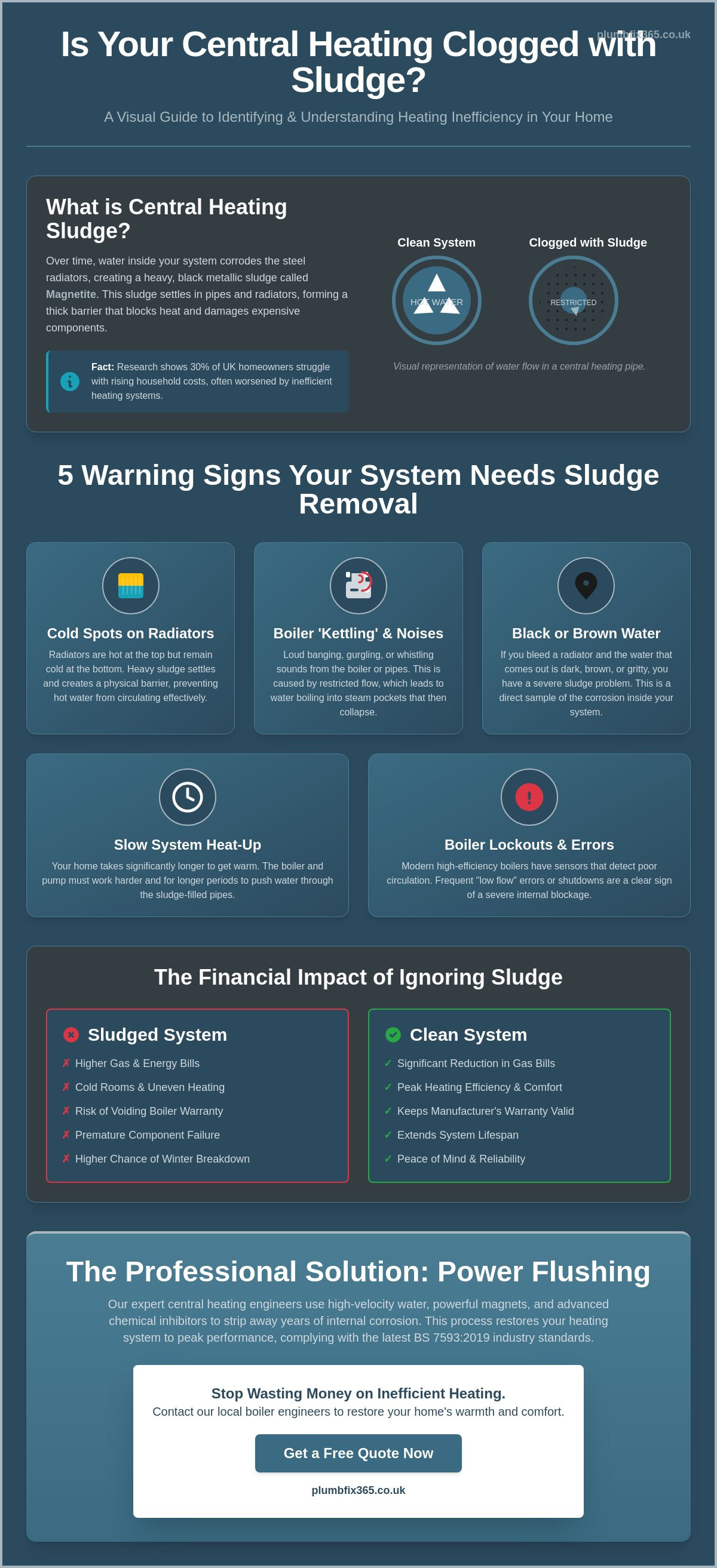
Your heating system is a hidden network of steel, copper, and water. While it seems static, it's actually a site of constant chemical activity. Over time, the water inside reacts with the steel of your radiators, creating a heavy, black substance called magnetite. This is what we call sludge. It settles in the quietest parts of your pipes and radiators, creating a thick barrier that stops heat from reaching your rooms. This process is inevitable in untreated systems, but it's also entirely reversible with the right technical intervention.
Sludge doesn't just reduce comfort; it destroys expensive components. It travels through your system, acting like liquid sandpaper on your pump's internal bearings. To understand the risks, you must first grasp how central heating systems work and how they rely on clear, fast-flowing water. Without professional central heating sludge removal Kent, your boiler must run for longer cycles to overcome this internal resistance. This directly leads to the rising energy bills many Kent families are facing in 2026.
To better understand this concept, watch this helpful video:
The Chemistry of Magnetite: What is Sludge?
Magnetite is a heavy, metallic oxide. It's significantly denser than water, which is why it sinks and forms "dead zones" in your radiators. Our boiler engineers frequently find that newer high-efficiency boilers are the first to fail when sludge is present. These modern units feature compact, high-performance heat exchangers with very narrow channels. Even a handful of black oxide can trigger a "kettling" noise or a complete system lockout. Local plumbers often see these issues in systems that haven't been treated with high-quality chemical inhibitors to stop the reaction between water and steel.
Why Kent Systems are at Higher Risk
Kent's geology makes it a high-risk zone for heating failure. The hard water in Dartford and Sevenoaks is packed with calcium and magnesium. When these minerals heat up, they form limescale. In a dirty system, this limescale binds with the magnetite sludge to create a rock-hard crust. This "dual-layer" blockage is incredibly difficult to remove without professional equipment. Homes in Gravesend and Bromley with older, open-vented systems face an even greater threat. These systems are prone to oxygen ingress through the header tank, which acts like fuel for the rust process. Our central heating engineers recommend a professional power flush to clear these blockages before they cause permanent damage to your heat exchanger.
Warning Signs: How to Tell Your System Needs Sludge Removal
Your heating system often gives clear warnings before it quits. Ignoring these signs usually leads to higher bills and eventual system failure. If your home feels colder despite the thermostat being turned up, your system is likely choked with magnetite. This thick debris prevents the water from circulating freely, forcing your boiler to work harder than necessary. This inefficiency directly impacts your boiler efficiency (AFUE), meaning you're burning more gas for less heat output. Kent homeowners often notice their system's performance dipping gradually, but these small changes are symptoms of a growing problem.
One of the most obvious signs is discoloured water. If you bleed your radiators and the water is black or dark brown, you have a serious sludge problem. This abrasive liquid is essentially liquid rust. It doesn't just sit there; it circulates through your boiler's delicate internal parts. If you're noticing frequent "low flow" errors or your system takes twice as long to warm up as it did last year, it's time to consider professional central heating sludge removal Kent to clear the path for heat.
The Radiator "Touch Test"
You can diagnose your system's health in minutes. Turn your heating on and let it run for 15 minutes. Carefully feel the surface of each radiator. If the top is cold but the bottom is hot, you likely have trapped air that needs bleeding. However, if the top is hot and the bottom or middle is cold, you have a sludge problem. Gravity pulls the heavy magnetite to the bottom of the radiator, forming a thick, insulating layer. This "cold bridge" prevents the warm water from heating the entire panel, leaving you with a lukewarm room and a wasted heating bill.
Boiler Noises and Pump Strain
Listen to your boiler. A healthy system should be relatively quiet. If you hear a sound like a kettle boiling or loud metallic banging, this is "kettling." It happens when sludge blockages in the heat exchanger cause water to overheat and turn to steam. This creates immense pressure and can lead to a cracked heat exchanger, which is often an unrepairable failure. These blockages also put extreme strain on your circulating pump. If your pump is hot to the touch or making a grinding noise, it's struggling to push water through the debris. Catching these issues early during a professional boiler service can prevent an expensive emergency plumbing repair later.
Professional Sludge Removal Methods: Power Flushing and Beyond
Effective central heating sludge removal Kent isn't a one-size-fits-all job. Depending on the age and condition of your system, our central heating engineers choose the most efficient method to restore heat. While some competitors claim power flushing is the only solution, we use a combination of techniques to ensure your pipes are truly clean. Not all blockages require the same level of force. For systems with lighter buildup, a chemical flush might suffice. This involves adding professional-grade inhibitors and cleaners to the system for several days before a final drain-down. However, for systems suffering from the "cold bottom" radiator symptoms mentioned earlier, more intensive action is required.
For severely blocked "dead legs", we sometimes perform manual radiator removal. This allows us to flush individual units with high-pressure water outside the home to clear stubborn blockages that a standard flush might miss. We always perform our work in accordance with British Standard BS 7593:2019. This ensures your system is cleaned to a recognized industry level, protecting both your boiler and your peace of mind. Don't wait for a total breakdown; proactive cleaning is always cheaper than an emergency repair.
How a Power Flush Works
A power flush is the gold standard for cleaning a dirty system. We connect a specialized, high-velocity pump to your heating circuit. This machine forces water and cleaning chemicals through your radiators at high speed but low pressure. This specific balance is critical; it dislodges heavy magnetite without damaging old joints or thin pipework. We use oscillating magnets to trap and remove the metallic debris as it flows through the machine. Once the water runs clear, our Gas Safe registered boiler engineers provide a completion certificate. This document is vital for proving you've maintained the system correctly if you ever need to make a warranty claim.
Magnetic Filtration: The Silent Guardian
Magnetic filtration offers a permanent solution to prevent future sludge buildup. These devices, such as the MagnaClean, sit on your return pipework and catch metallic particles in real-time before they reach your boiler. Without a filter, even a clean system will eventually start to corrode again. We strongly recommend fitting a high-quality filter during every new boiler installation in Kent. To remain effective, these filters must be emptied and cleaned by a professional during your annual boiler service. This simple maintenance step acts as a safety seal for your entire heating system.
The Financial Case: ROI and Warranty Protection
The financial burden of a dirty heating system is often hidden until a major repair bill arrives. In 2026, with 29% of UK homeowners concerned about rising energy bills, ignoring your system's health is an expensive mistake. UK households spend an average of £10.70 per week on maintenance and repairs. You can make that money go further by preventing issues before they occur. Investing in central heating sludge removal Kent isn't just about comfort; it's a strategic move to protect your home's most expensive appliance and reduce your monthly gas consumption.
Don't be fooled by "no fix, no fee" marketing gimmicks. Professional sludge removal requires a detailed diagnostic approach to be effective. A reputable central heating engineer will assess the specific state of your system before starting work. This prevents the risk of damaging older, fragile pipework that hasn't been maintained. By investing in professional care now, you extend the life of your radiators and prevent the internal corrosion that leads to pinhole leaks and ruined flooring.
Lowering Your 2026 Energy Bills
Clean water is a significantly better conductor of heat than metallic sludge. When your system is packed with magnetite, your boiler has to work harder and run for longer to reach the temperature set on your thermostat. This extra "on-time" is exactly what drives up your bills. By removing the insulating layer of debris, you allow heat to transfer into your rooms almost instantly. Industry reports suggest that a clean system can be up to 15% more efficient than a heavily sludged one. For even greater control, we often recommend combining a system clean with a smart thermostat installation. This allows you to heat only the rooms you're using, further slashing your annual gas spend.
Warranty Compliance for New Boilers
If you're planning a heating upgrade, system cleanliness is mandatory, not optional. Major manufacturers like Worcester Bosch, Vaillant, and Ideal are very clear in their terms. They'll void your warranty if a failure is caused by sludge or debris from the old pipework. This is why our boiler engineers include a comprehensive system flush with all boiler installations. We document this process in your Benchmark logbook. This logbook is your legal proof that the system met the manufacturer’s standards on day one. Without it, you could be left with a multi-thousand-pound repair bill that your warranty won't cover.
Protect your investment and start saving on your energy costs by scheduling a professional power flush with our expert Kent team.
Expert Sludge Removal Services Across Kent and South East London
Finding a reliable expert for central heating sludge removal Kent shouldn't be a gamble. Our team operates across the entire region, providing rapid response times to homeowners in Dartford, Bexley, Sevenoaks, and Gravesend. We've built our reputation on being the steady hand during a household crisis, ensuring your heating system returns to peak efficiency without the stress of hidden costs. Every one of our central heating engineers is Gas Safe Registered, providing the total competence you need when dealing with complex system corrosion. We prioritize results over personality flourishes, focusing on getting your home warm and your boiler quiet.
We understand that having tradespeople in your home can be disruptive. That's why we offer a "Clean Home Guarantee" with every service. Our boiler engineers use professional-grade protective floor coverings and specialized containment equipment to ensure your carpets and furniture remain untouched by the black magnetite sludge we extract. We believe in total financial clarity, which is why we provide honest, fixed-price quotes before any work begins. There are no surprises on your bill, just a high-standard service that restores your system's performance and protects your property.
Local Engineers You Can Trust
Our local plumbers maintain a constant presence in Bexleyheath, Sidcup, and Bromley, allowing us to respond quickly when you need us most. This local focus means we aren't just a faceless firm; we're a community-focused provider that takes personal accountability for every job. While we specialize in central heating sludge removal Kent, we also provide emergency plumbing repairs for those moments when a leak or breakdown simply can't wait. We're committed to honest billing and reliable service, ensuring every Kent resident has access to the polished, high-standard care of a major firm with the heart of a local tradesman.
Booking Your System Health Check
The process for restoring your heating efficiency is straightforward and efficient. When you contact us, we'll arrange a visit to perform a professional diagnostic of your system. Our boiler engineers Kent perform a comprehensive assessment, checking for cold spots, kettling noises, and water clarity to determine the best cleaning method for your specific property. Beyond heating, we offer a full suite of general plumbing services to keep your entire home running smoothly. Whether you need toilet repairs, tap replacements, or a complete bathroom plumbing overhaul, our team has the specialized skills to handle it. Don't let a sluggish system drive up your bills this winter. Contact Plumbfix 365 today to secure a more efficient, reliable home.
Restore Peak Performance to Your Kent Heating System
Sludge is a silent efficiency killer that drives up gas bills and threatens your boiler's lifespan. By identifying warning signs like cold radiator spots early, you can prevent a total system failure before the coldest weather arrives. Professional central heating sludge removal Kent ensures your home stays warm while keeping your manufacturer's warranty fully intact. Our Gas Safe Registered engineers provide the technical expertise needed to strip away internal corrosion and restore your system's flow. We provide fixed-price quotes and cover all of Kent and South East London. With our 100% satisfaction guarantee, you can trust us to solve the problem quickly and cleanly.
Book Your Kent Power Flush & System Health Check Today to slash your energy costs and enjoy a quieter, more reliable home. Take control of your household comfort and start saving on your energy bills immediately.
Frequently Asked Questions
What is central heating sludge and how does it get there?
Central heating sludge is a thick, black substance composed of rust and metallic debris that settles in your pipework. It forms when oxygen in the water reacts with the internal steel of your radiators, creating a chemical byproduct called magnetite. This process is common in older Kent systems where corrosion inhibitors have been depleted or were never added during the initial installation.
How much does professional central heating sludge removal cost in Kent?
The cost of central heating sludge removal Kent depends primarily on the number of radiators in your home and the severity of the blockages. Larger properties with fifteen or more radiators require more time and specialized chemicals than a small flat. You should contact our local boiler engineers for a fixed-price quote tailored to your specific system requirements and property size.
Can I remove sludge from my radiators myself?
You can bleed radiators or use over-the-counter chemical cleaners, but these methods rarely remove heavy magnetite buildup. Professional power flushing uses specialized high-velocity pumps to strip away debris that manual flushing or gravity draining simply cannot reach. Attempting to remove heavy sludge without professional equipment often leaves the most damaging blockages behind in your boiler's heat exchanger.
How long does a professional power flush take to complete?
A professional power flush typically takes between six and ten hours to complete for an average home. The exact duration depends on the number of radiators and the volume of debris that has accumulated over the years. Our central heating engineers work through each radiator individually to ensure the entire circuit is clear before we issue your system completion certificate.
Will power flushing my system cause leaks in old pipes?
Power flushing is a low-pressure process designed to be safe for most domestic systems, including older ones. While it uses high velocity to move debris, the pressure is no higher than your standard mains water supply. If a leak does occur, it usually indicates that the pipework was already severely thinned by corrosion and was likely to fail in the near future.
How often should I have my central heating system flushed?
Most systems benefit from a professional flush every five to ten years to maintain peak efficiency. However, you should book a system health check immediately if you notice cold spots at the bottom of radiators or unusual boiler noises. Regular boiler servicing helps our engineers monitor sludge levels, allowing you to act before a complete and costly system breakdown occurs.
Is a magnetic filter better than a power flush?
These two solutions work together to protect your home rather than competing with each other. A power flush is a deep clean that removes years of existing buildup from your radiators and pipework. A magnetic filter is a preventative device installed afterwards to catch new metallic particles before they can settle. We recommend both for the best long-term protection of your boiler.
Do I need a power flush before installing a new boiler?
Yes, manufacturers almost always require a full system flush before a new installation to protect the new appliance. This prevents old sludge from entering and damaging your new boiler's compact, high-efficiency heat exchanger. Skipping this step often voids your manufacturer's warranty, leaving you unprotected against future repair costs and unexpected failures.


Comments