


Chemical Flush vs Power Flush: Which Is Best for Your Heating System?

Internal sludge buildup is responsible for approximately 60% of annual boiler breakdowns in the UK. This hidden grime can reduce your radiator's heat output by up to 47%, forcing your system to work harder and driving your energy bills higher every month. When your home isn't getting warm enough, the debate of chemical flush vs power flush becomes a critical decision for your comfort and your wallet. You need a solution that restores performance without risking the integrity of your older pipes.
It's stressful to deal with a noisy, "kettling" boiler while worrying if a high-pressure clean will cause more harm than good. You want your heating back to peak efficiency, but you don't want to pay for more than you actually need. This guide will help you discover the critical differences between chemical and power flushing so you can make an informed choice to protect your boiler and lower your bills. We will compare both methods based on system age and sludge severity while explaining how magnetic filters can keep your system clean for the long term.
Key Takeaways
Identify how magnetite sludge compromises your boiler's pump efficiency and damages critical heat exchanger components.
Understand the role of a gravity-fed chemical flush in breaking down soft rust without risking damage to fragile, older pipework.
Compare the intensity of a chemical flush vs power flush to see why high-velocity mechanical cleaning is required for heavy debris.
Discover why professional central heating engineers prioritize system integrity and financial clarity when recommending a deep clean.
Learn how a professional flush restores heating performance, lowers energy bills, and protects your home from sudden boiler failures.
Table of Contents
The Silent Killer of Central Heating: Sludge and Debris
Sludge isn't just common household dirt; it's a destructive chemical byproduct known as magnetite. This black, metallic mud forms when oxygen in the water reacts with the internal steel components of your radiators. Over time, this corrosion creates a thick, abrasive paste that settles in the lowest points of your system. Without intervention, this debris circulates through your pipework, causing friction and blockages that lead to catastrophic failures. Our boiler engineers frequently see how this hidden threat destroys even the most expensive systems from the inside out.
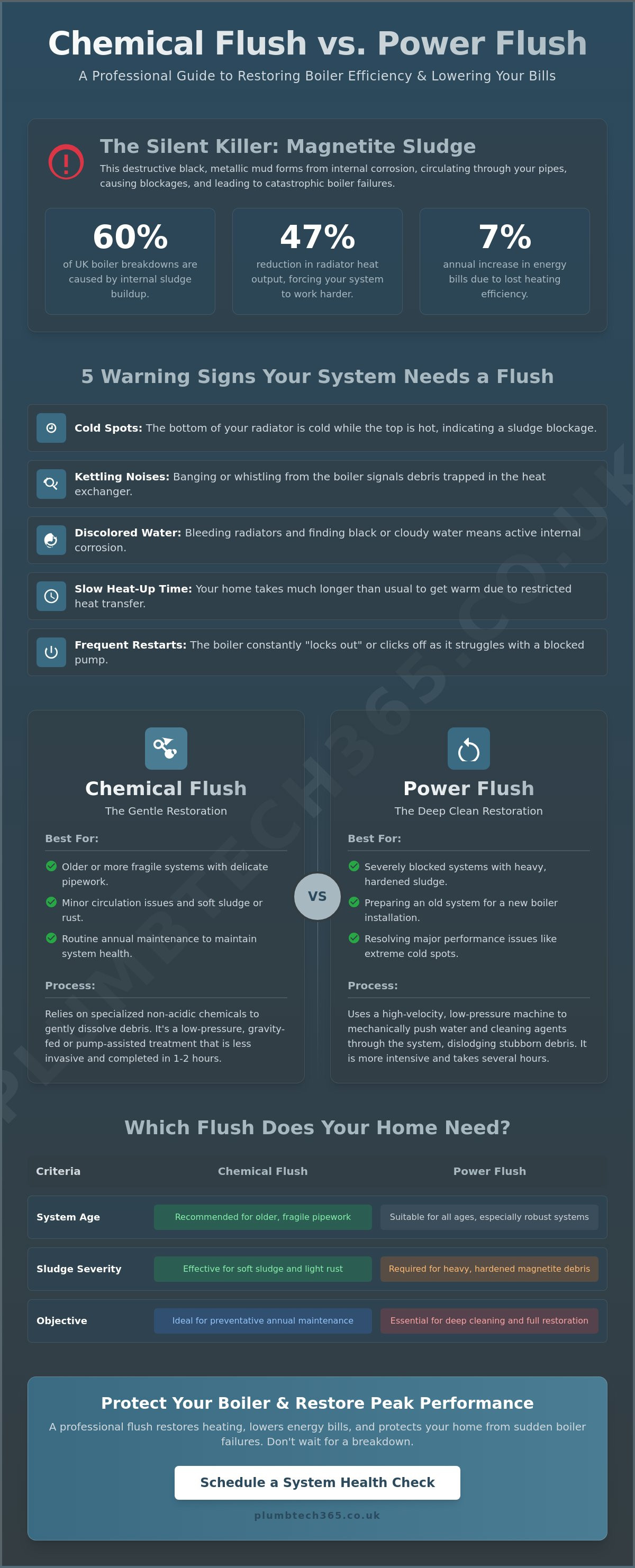
A healthy central heating system relies on a clean, unobstructed flow of water to transfer heat effectively. Magnetite is responsible for approximately 60% of annual boiler breakdowns in the UK. It acts like an insulating blanket inside your radiators, which can reduce heat output by as much as 47%. This forces your boiler to work significantly harder, driving up energy bills by up to 7% annually. Understanding the difference between a chemical flush vs power flush is the first step in stopping this efficiency drain.
To better understand how this debris is removed, watch this professional demonstration:
Ignoring system debris is a gamble that usually ends in an expensive emergency. When sludge reaches the boiler's heat exchanger or pump, it causes overheating and mechanical seizing. These precision parts aren't designed to handle gritty contaminants. Professional central heating engineers use specialized testing kits to diagnose your system's health before a total breakdown occurs. Choosing between a chemical flush vs power flush depends entirely on how much of this "silent killer" has already accumulated in your pipes.
5 Warning Signs Your System Needs a Professional Flush
Cold spots: If the bottom of your radiator stays cold while the top is hot, heavy sludge is blocking the flow.
Kettling: Strange banging or whistling noises from the boiler indicate debris is trapped in the heat exchanger.
Discolored water: Bleeding your radiators and finding cloudy or black water is a sign of active internal corrosion.
Slow heat-up: If your home takes hours to reach a comfortable temperature, sludge is likely restricting the heat transfer.
Frequent restarts: A boiler that constantly clicks off or "locks out" is often struggling with a blocked pump.
Why Regular Maintenance Prevents Emergency Repairs
Prevention is always more cost-effective than a total system replacement. Most manufacturers require proof of regular maintenance to honor their warranties. Sludge buildup is often categorized as a preventable water quality issue, meaning a failure caused by debris might not be covered. Regular boiler servicing allows an engineer to check inhibitor levels and catch corrosion early. By maintaining a clean system, you protect the boiler's internal components and ensure your heating performs at peak efficiency throughout the winter.
Understanding the Chemical Flush: The Gentle Restoration
A chemical flush is the least invasive method for restoring your heating performance. Unlike the high-velocity mechanical cleaning used in how power flushing is done, this process relies on specialized, non-acidic chemicals to break down debris. It's a gravity-fed or pump-assisted treatment that targets soft sludge, rust, and limescale. For many homeowners, this is the first line of defense against minor circulation issues before they escalate into a full-scale boiler failure. The choice of chemical flush vs power flush often depends on the current state of your system's water quality.
If your radiators are only slightly underperforming, a chemical treatment is often sufficient to clear the path. It takes significantly less time than mechanical methods, often completed in just an hour or two. This makes it a practical choice for annual maintenance or as part of a routine boiler servicing visit to ensure your system remains within manufacturer warranty guidelines. It's an efficient way to maintain flow without the setup time required for heavy machinery.
The Chemical Cleaning Process Explained
We begin by injecting a high-strength cleanser into your system via the filling loop or the header tank. Your existing central heating pump then circulates these chemicals through every radiator and pipe. These chemicals stay in the system for a set period, often while the heating is running, to loosen stubborn deposits and hold them in suspension. Finally, we perform a thorough 'drain and refill' stage to remove the loosened contaminants. We finish the job by adding a corrosion inhibitor to provide long-term protection against future magnetite formation.
When is a Chemical Flush the Safest Choice?
Not every system can handle high pressure. Older heating systems with thin-walled radiators or fragile joints are at risk during a mechanical clean. If your home uses microbore pipework, which is much narrower than standard copper pipes, a chemical flush is often the only safe way to clear blockages without causing leaks. It's also the ideal choice for preventative maintenance. If you catch debris early, you don't need the aggression of a power flush to restore efficiency. Our local plumbers can assess your pipework to determine if a gentle approach is the best way to protect your investment.
The Power Flush: Deep Cleaning for High-Performance Heating
While a chemical flush is an excellent preventative measure, heavily contaminated systems require the mechanical force of a power flush. This process uses a specialized pumping station to circulate water at high velocity but low pressure. This technical balance ensures that stubborn magnetite is dislodged without risking damage to your pipework joints. When deciding between a chemical flush vs power flush, our boiler engineers recommend this deep-clean for systems where radiators have significant cold spots or the boiler is frequently kettling.
A power flush is far more intensive than a standard gravity-fed clean. The primary advantage is the use of flow reversal. By rapidly switching the direction of the water, the machine creates a turbulent "scrubbing" action that breaks up hardened sludge. We connect the unit directly to your system, usually at the circulator pump or a radiator, to ensure every internal pathway is cleared. This is the most effective way to restore a system that has been neglected for several years.
How a Mechanical Power Flush Works Step-by-Step
System Connection: We bypass the boiler's delicate internal pump and connect our high-velocity flushing station to the system.
Individual Radiator Isolation: We close all radiators except one. This concentrates the full flow of the machine on a single area, forcing out debris that a normal pump cannot move.
Mechanical Agitation: We use pneumatic vibrating tools on the exterior of the radiators. These agitators shake loose the heavy, baked-on magnetite that chemicals alone often leave behind.
Fresh Water Purge: Once the sludge is loosened, we flush the system with clean water until the discharge runs clear.
Long-Term Benefits for Boiler Lifespan and Efficiency
A clean system is much cheaper to run. Research shows that central heating sludge can increase energy bills by up to 7% annually. By removing this debris, you restore optimal heat transfer and reduce the strain on your boiler's pump. This is especially critical during a new boiler installation. Under Part L Building Regulations updated in June 2022, a full system flush is mandatory when fitting a new unit. Failing to clear old debris before an install is a leading cause of premature component failure and can void your manufacturer warranty.
A professional power flush is only the first step in a long-term maintenance strategy. Our central heating engineers always integrate magnetic filtration during the flushing process to capture suspended metallic particles. However, the real protection comes from installing a permanent inline magnetic filter. This device acts as a continuous safety net, catching new magnetite before it can settle. Without this addition, your system will begin accumulating sludge again the moment the flush is finished. We prioritize this level of technical care to ensure your heating remains reliable for years to come.
Chemical Flush vs Power Flush: Which Does Your Home Need?
Choosing between a chemical flush vs power flush is a decision between routine maintenance and a total system restoration. The two methods differ significantly in intensity, time, and cost. A chemical flush is a light-touch approach. It typically takes around 2 hours to complete because it relies on your existing pump to circulate cleaners. It's a cost-effective way to maintain a relatively healthy system. In contrast, a comprehensive power flush is a heavy-duty mechanical process. This requires a full working day, often lasting between 6 and 8 hours. It involves specialized high-velocity machinery that our boiler engineers use to purge years of neglected debris.
The suitability of each method depends heavily on the material and age of your radiators. Modern steel radiators can usually handle the turbulence of a power flush without issue. However, older systems require a more cautious approach. Because a power flush is a larger initial investment in terms of both time and labor, it's reserved for systems where performance has dropped significantly. If your radiators have large cold spots or your boiler is frequently locking out due to poor circulation, the lighter chemical option won't be enough to solve the problem.
The Risk Factor: Is Your Pipework Strong Enough?
One critical detail many providers overlook is the risk to older pipework. High-velocity flushing, even at low pressure, can occasionally expose existing pinhole leaks. These leaks are often already present but are currently "plugged" by the very rust and sludge we are trying to remove. Before starting any work, our Gas Safe engineers perform a rigorous pre-flush assessment. We check the thickness of your radiators and the integrity of your joints. For Victorian-era systems or homes with extremely thin-walled radiators, a chemical flush is often the only responsible choice. It allows for a gentle cleaning action that doesn't put unnecessary stress on fragile components. If you're unsure about the state of your pipes, you should schedule a professional heating assessment to avoid accidental water damage.
Decision Matrix: Selecting the Right Method
Choose Chemical Flush for: New heating systems (under 5 years old), routine preventative care, or very old Victorian systems with fragile pipework.
Choose Power Flush for: Heavily contaminated systems with cold radiator bottoms, frequent pump failures, or as a mandatory requirement before a new boiler installation.
While a chemical flush provides a gentle maintenance solution for fragile or well-maintained systems, a power flush offers the deep mechanical cleaning required to clear heavy blockages and prepare a system for a new boiler installation. Making the right choice now prevents the need for emergency plumbing repairs during the coldest months of the year.
Expert Heating Maintenance with Plumbtech 365
Restoring your heating system requires more than just the right equipment; it demands the technical oversight of qualified professionals. At Plumbtech 365, our central heating engineers provide the expert assessment necessary to determine if your home requires a chemical flush vs power flush. We don't believe in guesswork. Every service call starts with a rigorous evaluation of your system's current water quality and pressure integrity. This ensures we apply the most effective cleaning method for your specific boiler and pipework, acting as a steady hand to resolve your household heating crisis. Our team is committed to transparency, offering financial clarity and honest billing for every project we undertake.
We've evolved from a dedicated local trade presence into a sophisticated operation that maintains the personal accountability of a neighbor. Our versatile service profile is designed to address the full spectrum of home maintenance needs. While we specialize in high-stakes tasks like boiler installations and system restoration, we are equally equipped to handle minor essential repairs. Our goal is to provide a reliable, one-stop solution for homeowners who value professional competence and immediate action.
Why Gas Safe Registered Engineers are Essential
Attempting a DIY flush is a significant risk to your property. Handling concentrated cleaning chemicals requires professional training to prevent accidental damage to internal boiler seals and heat exchangers. More importantly, most manufacturers require a professional service record from Gas Safe Registered engineers to keep your warranty valid. Once the chemical flush vs power flush is complete, we perform comprehensive post-flush testing. This includes verifying system pressure and conducting gas safety checks to ensure your boiler operates at peak performance. We don't just leave once the water runs clear; we verify that your entire system is safe and efficient for the winter ahead.
Total System Care: Beyond the Flush
Our expertise extends far beyond internal system cleaning to provide total home care. We offer a comprehensive range of technical services to keep your property’s infrastructure in top condition. This includes everything from minor tap replacements and toilet repairs to more complex tasks like leak detection and repair. We also specialize in all aspects of bathroom plumbing and the installation of unvented hot water cylinders. By choosing a provider that understands both major boiler installations and minor maintenance tasks, you ensure every part of your home's water and heating system is managed by a single, dependable team.
Book your professional system health check with Plumbtech 365 today to restore your home's comfort and protect your boiler from future failures.
Secure Your Home's Warmth and Peak Efficiency
Magnetite sludge is a silent threat that compromises 60% of UK boilers every year. You now understand that the choice between a chemical flush vs power flush depends entirely on your system's age, pipework integrity, and the severity of debris buildup. While a chemical treatment offers gentle maintenance for fragile Victorian systems, a mechanical power flush is the ultimate solution for restoring radiators with heavy cold spots. Taking action now prevents the high energy bills and noisy "kettling" that signal a system in distress.
Don't wait for a total system failure during a winter freeze. Our Gas Safe Registered Engineers are ready to provide a professional assessment to keep your heating running at peak performance. We prioritize financial clarity with honest billing and maintain 24/7 emergency availability for your peace of mind. Whether you need a routine service or urgent emergency plumbing repairs, we are the steady hand you can rely on. Your comfort is our priority, and we're here to ensure your boiler remains reliable for years to come.
Restore your heating efficiency today with Plumbtech 365
Frequently Asked Questions
How much does a power flush cost compared to a chemical flush?
A power flush represents a larger financial investment than a chemical flush because it requires specialized machinery and significantly more labor time. The choice of chemical flush vs power flush depends on your budget and the severity of the sludge buildup. While the chemical option is a fast maintenance step, the mechanical process involves a full day of expert work to restore your system.
Will a power flush cause leaks in my old radiators?
A power flush doesn't create leaks; it can occasionally expose pre-existing pinhole leaks that were previously "plugged" by rust and sludge. Our central heating engineers perform a rigorous pre-flush assessment to check the thickness and integrity of your radiators. If we find that your pipework is too fragile for high-velocity cleaning, we'll advise on a safer alternative to protect your home.
How often should I have my central heating system flushed?
When comparing a chemical flush vs power flush, the frequency depends on your system's age and water quality. Most heating professionals recommend a full system flush every five to six years to prevent the buildup of destructive magnetite. Regular boiler servicing is the best way to monitor your system's internal health and catch debris issues before they lead to an expensive emergency repair.
Can I do a chemical flush myself or do I need a plumber?
You should always hire a professional to ensure that chemicals are handled safely and circulated correctly through your pipework. Improper DIY attempts often lead to system airlocks or damaged internal seals. A qualified boiler engineer will also ensure the system is properly neutralized and treated with the correct ratio of corrosion inhibitor to protect your boiler warranty and system integrity.
How long does a professional power flush take to complete?
A professional power flush typically takes between 6 and 8 hours depending on the number of radiators in your home. The process is time-intensive because each radiator must be isolated and cleaned individually to ensure all sludge is removed. Larger properties with more than ten radiators may require additional time for a complete mechanical purge of the entire heating circuit.
Is a power flush necessary before installing a new boiler?
Yes, performing a system flush is a mandatory requirement under Part L Building Regulations for all new boiler installations. This ensures that old debris from your existing pipework doesn't contaminate and damage your new heat exchanger. Failing to clean the system properly before fitting a new unit can also void your manufacturer's warranty, leaving you unprotected against future component failures.
What chemicals are used in a central heating flush, and are they safe?
We use specialized non-acidic cleansers and corrosion inhibitors that are specifically formulated to be safe for all standard heating components. These chemicals break down rust and scale without damaging your radiator walls or rubber seals. Once the process is finished, the system is thoroughly flushed with clean water to remove any chemical residue before the final inhibitor is added.
Do I need to leave my home while the flushing process is happening?
You don't need to leave your home while we carry out the work. The process is contained and tidy because our pumping station connects directly to your existing pipework. Our engineers work efficiently to minimize disruption, and we ensure that all work areas are kept clean throughout the duration of the service call. You can continue your day as normal while we restore your heat.


Comments