


Christmas Plumbing Preparations: 2026 Guest Checklist

A boiler fault or leaking pipe can turn a festive welcome into a stressful scramble. Extra showers, frequent toilet use and a busy kitchen all put more demand on your home’s plumbing. A few practical plumbing preparations for hosting guests at Christmas can help you spot warning signs before the house fills up.
Check your heating, hot water and plumbing ahead of your guests’ arrival, but don’t take appliances apart or attempt technical repairs. This checklist explains which observations are safe to make, what to look out for and when to call a qualified plumber or heating engineer.
We’ll cover boiler controls, radiator performance, visible pipework, taps and toilets, as well as ways to manage extra water use. You’ll also learn where DIY checks should stop: work on a gas appliance must be left to a Gas Safe registered engineer. A calm check now can help you prepare and recognise when a professional should take over.
Table of Contents
Christmas Plumbing Preparations: The Essentials
Hosting brings extra demand on the systems you rely on every day. More showers, toilet use and kitchen activity can make a plumbing or heating problem more noticeable. A short check before guests arrive gives you time to spot anything unusual and decide whether it needs professional attention.
The aim isn’t to diagnose faults or guarantee that nothing will go wrong. Think of plumbing preparations for hosting guests at Christmas as a visual review: check heating and hot water first, then bathrooms, visible pipework and the household controls guests may need.
For a quick introduction to what a plumbing emergency can involve, watch this video:
Why check plumbing and heating before guests arrive?
Extra hot water and bathroom use can bring an existing issue to the surface. A dripping tap, a toilet that keeps running or heating that feels different may be easier to overlook when the house is quiet. A pre-visit check is a visual review to spot changes and decide whether they need attention.
Preparation can help reduce avoidable disruption, but it can’t guarantee fault-free systems. If your boiler is behaving differently, note what has changed and compare it with these boiler warning signs. A qualified engineer can assess anything that goes beyond basic checks.
What to include in a quick first-look check
Walk through the rooms guests will use. Look for drips beneath taps, damp patches near exposed pipework, unusual sounds and changes in how heating or hot water normally operates. For background on how boilers and radiators work together, read this overview of central heating.
Check that guests can find the bathroom and understand basic household controls, such as the room thermostat. Keep the check observational: note where and when a sound, leak or change occurs, but don’t dismantle fittings, open the boiler casing or alter pipework. These checks are a starting point, not a repair. If you spot a persistent leak or an unusual change in operation, arrange professional advice before household demand increases.
Check the Boiler, Radiators and Hot Water Before Christmas Guests Arrive
Check the heating while you still have time to act on anything unusual. Use controls you already know and let the system run as you normally would. Notice whether rooms warm as expected and whether any radiator stays cold or heats unevenly. These are observations to report, not faults to diagnose yourself.
How to check heating is working as expected
Walk through the rooms and note where the temperature feels different from usual. A cool radiator or a room that takes longer to warm may have several possible causes, so avoid complex adjustments or repairs. A cold radiator is an observation, not a confirmed diagnosis. For more guidance on routine care, see central heating maintenance that prevents breakdowns.
Next, run hot water at household taps as you usually would. Notice whether it takes longer than normal to arrive, changes temperature unexpectedly or has a persistently different flow. Check more than one tap if you can. A one-off variation may not tell you much, but a continuing change is worth noting before extra showers and kitchen use add to demand.
What to do if the boiler or hot water seems unreliable
If the boiler displays a fault message, note the wording and when it appears. Record other symptoms too, such as heating stopping or hot water changing repeatedly. This gives an engineer useful information. Don’t remove the boiler cover, try to repair a gas appliance or alter unfamiliar settings. Technical work should be left to a qualified professional, and gas work must be carried out by a Gas Safe Registered engineer.
Repeated boiler faults, persistent cold spots or unreliable hot water need assessment rather than guesswork. Arrange professional boiler servicing or ask a qualified heating engineer to investigate anything beyond familiar user controls. Plumbtech 365 provides boiler servicing, with technical work carried out by Gas Safe Registered engineers. You can read about plumbing and heating support to understand the available services.
Small habits can also help manage household water use as guest numbers rise. Share practical water conservation tips, such as turning taps off when they aren’t needed. Keep your heating check focused on normal operation, write down persistent changes and seek professional advice before the busy period if something seems wrong. This makes your plumbing preparations for hosting guests at Christmas more informed without crossing into risky DIY work.
Prepare Toilets, Taps and Visible Pipework for Extra Household Use
Bathrooms and kitchen taps often get more use when guests stay. Check them before the house gets busy, while you still have time to investigate a visible change or arrange professional help. Keep this part of your plumbing preparations for hosting guests at Christmas simple: observe how fixtures work and look for moisture, but don’t take anything apart.
Bathroom checks to complete before visitors arrive
Flush each toilet and watch what happens afterwards. Check that the cistern refills as usual and the water stops running. A toilet that continues to run or behaves differently from normal may need attention. If the symptom persists, see this guide to a toilet cistern that will not stop running.
Turn each tap on and off as usual, then look at the spout, basin and visible connections beneath it. If you spot moisture, dry the accessible surface with a cloth and check again after a short while. This helps you see whether water has returned without disturbing the fittings. Purdue University also offers plumbing tips for the holiday period for readers seeking further general guidance.
Spot visible leaks without taking plumbing apart
Look beneath accessible sinks and around exposed pipe joints. Fresh droplets, damp patches, staining or a musty smell may indicate an area needs closer attention. Don’t reach into cramped spaces, loosen a connection or dismantle a fitting. Keep the area clear so you can see whether moisture returns, and note where you found it.
If a leak keeps returning, report it rather than hiding the damp patch. Covering the area can make it harder to track a change. If you see a persistent leak, contact a qualified plumber for advice. For a cautious overview of what to do when you notice a leak, read how to fix a leaking pipe safely at home, and stop where the guidance calls for professional help.
Finish by making sure guests can find the bathroom and know how to use basic household controls. These checks won’t rule out every fault, but they can help you notice a problem early and pass on clear details if a plumber needs to assess it.
Which Christmas Plumbing Checks Are Safe for DIY?
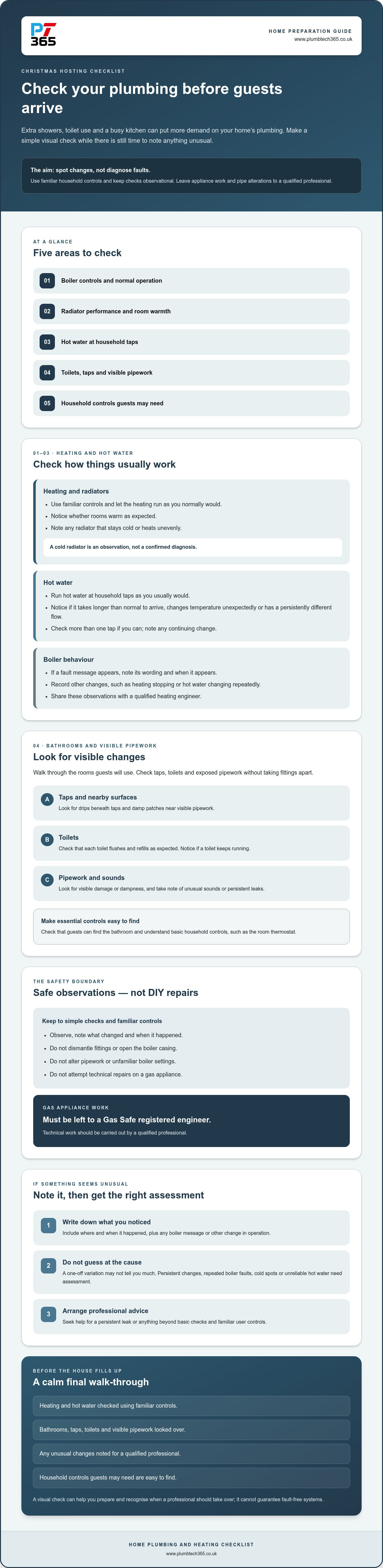
For plumbing preparations for hosting guests at Christmas, keep DIY checks to what you can see and operate safely. A visual inspection or using a familiar thermostat is different from opening a boiler, adjusting unfamiliar settings or altering pipework. You’re checking for changes, not diagnosing the cause or carrying out complex repairs.
Simple checks hosts can carry out
Use controls you already understand and notice whether the heating, taps and toilets behave as they normally do. Look for visible leaks, damp patches and unusual changes in hot water. If something seems different, write down what you noticed, where it happened and when. Clear observations can help a professional assess the issue without you investigating inside fittings or appliances.
Stay within your comfort level. Don’t force a control, dismantle a fixture or attempt a repair because guests are due. If a check makes the problem worse, or you’re unsure what you’re looking at, stop and seek advice.
When to contact a qualified professional
Arrange professional help for a boiler fault, a recurring leak or heating that no longer works normally. Don’t remove the boiler casing or try to repair the appliance. For concerns involving a gas appliance, contact a Gas Safe Registered engineer. A plumber or heating professional can assess problems that go beyond simple household observations.
Some problems may need prompt attention, especially if a leak is continuing or a fault is affecting essential household use. For guidance on recognising when an issue needs urgent attention, read when to call an emergency plumber. If you’re unsure, explain the symptoms and ask a qualified professional what to do next rather than attempting unfamiliar work.
Keep a short note of warning signs to pass on: the location of a leak, a boiler message, or when the heating or hot water changes. This helps keep the next step clear and avoids guesswork. For help with plumbing repairs or boiler servicing, contact Plumbfix 365 about plumbing and heating services.
Finish Your Christmas Hosting Plumbing Checklist and Know Your Next Step
The day before guests arrive, take a final walk through the systems and rooms they’ll use. Confirm that heating and hot water work as usual, check the bathrooms, then look over accessible pipework for fresh signs of moisture. This final pass can catch changes since your earlier checks, but it can’t certify that every part of the system is fault-free.
A final check before guests arrive
Run the heating using familiar household settings and notice whether it behaves normally.
Test hot water at a tap and check for a persistent change from usual.
Flush each toilet and make sure taps work as expected.
Look beneath accessible sinks and around visible pipework for new drips or damp patches.
Make sure guests can find the bathroom and understand basic household controls, such as the thermostat.
If you’ve noticed an unusual sound, recurring dampness or a boiler fault message, keep the details handy. Record where and when the symptom occurs. Clear notes can help an engineer understand what you’ve observed without you needing to investigate further.
Get professional help for persistent plumbing or heating issues
A persistent leak, repeated boiler fault, unreliable hot water or heating that doesn’t work normally deserves attention. Don’t ignore a change because the system is still partly working, and don’t try to fix a fault that’s beyond a basic visual check. A qualified professional can assess the cause and advise on the next step.
Plumbfix 365 provides plumbing repairs, boiler servicing and heating support. Technical work is carried out by Gas Safe Registered engineers. If a concern remains after your checks, share the symptoms you’ve recorded and ask for professional advice. That’s safer than attempting unfamiliar repairs while preparing for visitors.
Good plumbing preparations for hosting guests at Christmas are about noticing changes, keeping essential controls clear and knowing when to stop checking. You don’t need to take appliances apart or solve every issue yourself. If you have a plumbing or heating concern, contact our team for plumbing and heating support.
Get Your Home Ready for a Relaxed Christmas
A few simple checks can help you welcome guests with greater confidence. Test the heating and hot water using familiar controls, check that toilets and taps work as usual, and look for visible leaks or damp patches around accessible pipework. These plumbing preparations for hosting guests at Christmas are about spotting changes early, not attempting complex repairs.
Keep a note of persistent boiler faults, recurring leaks or heating that isn’t working normally. Leave appliance work and unfamiliar plumbing repairs to a qualified professional. Plumbfix 365 provides boiler servicing, radiator fitting and plumbing repairs, with technical work carried out by Gas Safe Registered engineers.
If something needs attention, share what you’ve noticed and ask for professional support. Contact the team for plumbing and heating support. With a clear checklist and the right help when needed, you can focus on making your guests feel at home.
Frequently Asked Questions
How do I prepare my plumbing for Christmas guests?
Check your heating and hot water using familiar controls, then test taps and toilets and look for visible drips or damp patches. These simple plumbing preparations for hosting guests at Christmas help you notice changes before extra household use begins. Keep a note of anything unusual, make bathroom and heating controls easy for guests to find, and leave complex repairs or appliance work to a qualified professional.
Should I get my boiler checked before hosting guests?
Arrange a boiler check if servicing is due or you’ve noticed a fault, unusual operation, or unreliable heating or hot water. A qualified heating engineer can assess concerns that a visual check can’t resolve. Don’t remove the boiler cover or attempt repairs yourself. Any technical work on a gas appliance should be carried out by a Gas Safe Registered engineer.
What should I do if a toilet keeps running before guests arrive?
Check whether the toilet continues running after flushing, then note how long the symptom lasts and whether it happens each time. Don’t dismantle the cistern or force unfamiliar parts. A persistently running toilet may need professional attention, particularly before the bathroom sees heavier use. A plumber can assess the cause and advise on a suitable repair.
How can I check for leaks before visitors arrive?
Look beneath accessible sinks and around visible pipe joints, taps and basins for fresh moisture, drips or damp patches. If an area looks wet, dry the accessible surface and check whether moisture returns. Don’t loosen fittings or reach into awkward spaces. Keep the area clear, note where you spotted the dampness and contact a plumber if a leak persists or worsens.
What should I do if my radiators are cold before Christmas?
Use familiar heating controls and observe whether one radiator or several remain cold, or warm unevenly compared with normal. Note which rooms are affected and whether the boiler shows a fault message. Don’t attempt unfamiliar adjustments or complex repairs. If the problem persists or the heating isn’t working as usual, ask a qualified heating engineer to assess it.
When should I call a plumber before hosting guests?
Contact a qualified professional if you find a recurring leak, a toilet that keeps running, a persistent change in hot water or heating that doesn’t work normally. Don’t wait if a fault is worsening or affecting essential household use. Plumbfix 365 provides plumbing repairs and boiler servicing, with technical work carried out by Gas Safe Registered engineers. Share your observations when arranging help.


Comments