


Cost to Replace Immersion Heater Element UK: 2026 Price & Repair Guide
- Darrell Williamson

- Jul 5
- 12 min read
Imagine waking up to a freezing cold shower. You realise the hot water has failed. It's a high-stress situation that leads to a frantic search for the cost to replace immersion heater element UK residents can expect to pay. You might worry about being overcharged by an emergency plumber or fear for the safety of your hot water cylinder. We understand that you need honest advice and a fast, professional solution to get your home running again.
Replacing a faulty element is a technical task. It requires precision to avoid leaks or electrical faults. This guide provides a clear breakdown of the fair market rates for labour and parts in 2026. We provide total financial clarity, covering everything from standard copper elements to high-durability titanium options. With the electricity unit rate at 26.11p per kWh, ensuring your heater operates efficiently is essential. You'll learn how to distinguish between a simple thermostat fault and a complete element failure. This ensures you only pay for the repairs you actually need. We also outline the exact steps our local plumbers take to restore your hot water safely and efficiently.
Table of Contents
Understanding Immersion Heater Element Replacement Costs in 2026
An Immersion heater is a heavy-duty electric element that heats the water inside your storage cylinder. It is a vital component that ensures your household has a constant supply of hot water, even if your primary boiler fails. Whilst our expertise often focuses on large-scale boiler installations, we recognise that component-level repairs are just as critical for home comfort. The total cost to replace immersion heater element UK homeowners pay is determined by the specific material of the element and the professional time required for safe installation. This repair is a core part of our general plumbing services, delivered by qualified central heating engineers who understand the complexities of both vented and unvented systems.
In 2026, the efficiency of your heating components is paramount. A scaled or faulty element draws more power to achieve the same result, which is a significant concern when the electricity unit rate is 26.11p per kWh. Investing in a high-quality replacement restored by a professional ensures your system operates at peak performance. Our central heating engineers focus on providing financial clarity, helping you understand the long-term savings of choosing durable materials over cheap, short-term fixes.
To better understand the technical steps involved in this repair, watch this helpful video:
Typical Labour Rates for UK Plumbers
Labour rates for heating engineers vary depending on regional demand and the urgency of the call-out. Because replacing an element involves working with both water and electricity, it requires a high level of competence. We generally recommend a fixed-price quote for this task. Older cylinders often present unforeseen challenges, such as seized threads, which can turn a routine job into a complex operation. A fixed fee protects you from rising costs if the removal takes longer than the typical one to two hours. This transparency is a hallmark of our general plumbing services, ensuring you know exactly what you are paying for before work begins.
Material Costs: Copper vs Incoloy Elements
The material of your new element is the biggest factor in the part's price. Copper elements are the budget-friendly standard, but they are only suitable for soft water areas. In regions with hard water, copper elements fail quickly due to mineral buildup. Incoloy elements are made from a nickel-chromium alloy, making them far more resistant to corrosion and high temperatures. For the most aggressive water conditions, titanium elements provide the ultimate durability. Whilst we specialise in boiler installations, we ensure every component we fit, down to the smallest immersion element, is perfectly matched to your local water chemistry for maximum longevity.
Key Factors Influencing the Total Cost of Replacement
The total cost to replace immersion heater element UK residents pay is rarely just the price of the metal component. Several environmental and technical variables dictate the final bill. Access is a primary concern. A cylinder tucked behind shelving in a cramped airing cupboard requires more time and physical effort than one located in an open utility room. Our central heating engineers need enough clearance to use a large immersion spanner safely. Without this space, the risk of slipping and damaging the cylinder increases significantly.
System type also plays a massive role in the final invoice. Vented systems are gravity-fed and generally simpler to work on. However, unvented systems operate under high pressure. These require specific expertise and strict compliance with UK safety regulations to ensure the safety valves and expansion vessels aren't compromised during the repair. These technical requirements are key factors that influence the cost to replace immersion heater element UK wide.
Unvented vs Vented Cylinder Requirements
Unvented cylinders are complex pieces of machinery. Because they are connected directly to the mains water supply, they must only be serviced by G3 qualified engineers. This is a legal requirement to prevent dangerous pressure build-up. Draining these systems takes longer because of the internal baffles and pressure management. If you have a high-pressure system, check our Unvented Hot Water Cylinders Guide to understand the specific maintenance needs and safety protocols involved.
The Impact of Limescale Buildup
Limescale is the primary enemy of any heating element. In hard water regions, calcium deposits fuse the element's threads to the cylinder's neck. What should be a one-hour swap can quickly turn into a three-hour struggle. If an element is truly seized, applying too much force can split the copper tank. This turns a simple component swap into a full cylinder replacement. Heavy silt at the bottom of the tank also slows the draining process. If your system is heavily affected, our experts might suggest Power Flushing to clear the debris and protect your new investment.
A professional assessment always includes electrical testing before any work begins. Sometimes the element is perfectly fine, but the thermostat has tripped or a wire has scorched. Replacing an element when the issue is a simple reset or a loose connection is a waste of your money. Our local plumbers test for continuity to confirm the failure before they even start draining the tank. If you need an immediate diagnosis, our team provides emergency plumbing repairs to get your hot water running without delay.
Professional Replacement vs DIY: Evaluating the Risks and Value
DIY forums often suggest that swapping an element is a simple five-minute task. This is a dangerous oversimplification. The real cost to replace immersion heater element UK homeowners face often skyrockets when a DIY attempt goes wrong. Water damage from a poorly sealed thread or an electrical shock from incorrect wiring can turn a minor repair into a household disaster. Most manufacturer warranties on hot water cylinders are also voided if the component isn't installed by a qualified professional.
The "Split Tank" risk is the most common catastrophe we encounter. Over years of use, limescale fuses the element's threads to the cylinder boss. If you apply too much torque with a standard adjustable wrench, you won't just move the element; you'll twist and split the thin copper of the tank itself. A professional uses a specialised box spanner designed for this exact purpose. This tool applies even pressure across the entire nut, significantly reducing the risk of a catastrophic leak. Hiring a professional provides a solid guarantee on both the part and the labour. It offers a level of security that a DIY project simply cannot match.
When DIY is Definitely Not Recommended
You should never attempt this repair on unvented cylinders. These high-pressure systems rely on critical safety valves that must be handled by G3 qualified engineers to prevent dangerous pressure build-up. If your element hasn't been moved in over 10 years, it's almost certainly seized. Forcing it without the right technique and professional tools will lead to a full cylinder replacement. Check for signs of scorching or melted insulation at the immersion cap. This indicates a serious electrical fault that requires immediate professional intervention to ensure your home remains safe.
What You Pay for When Hiring a Gas Safe Engineer
A professional doesn't just screw a part into a hole. We perform vital safety checks, including testing for earth continuity and insulation resistance. This ensures the metal tank doesn't become live if the element fails again in the future. We also apply the correct torque to prevent leaks without stressing the cylinder boss. Modern, Energy-efficient hot water systems are designed to work in harmony with your primary heat source. Our engineers can assess if your Boiler Installation is a more cost-effective way to heat your water. This expert insight is a key part of the total value when considering the cost to replace immersion heater element UK wide.
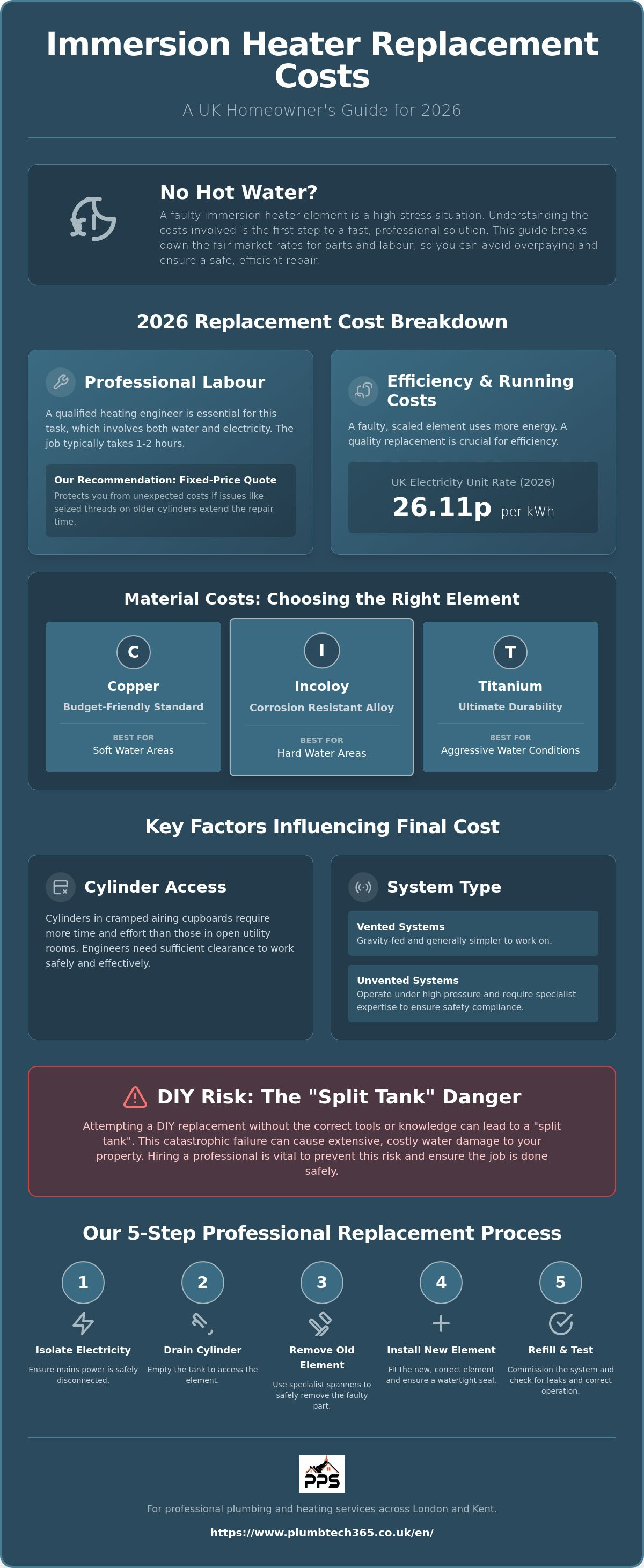
Step-by-Step Guide: How an Engineer Replaces Your Immersion Element
Safety is the absolute priority. Before touching any wiring, our local plumbers isolate the power at the consumer unit and use a digital multimeter to confirm the circuit is dead. Once safe, they turn off the cold feed to the cylinder. Unlike many DIY tutorials that suggest draining the entire tank, a professional heating engineer often performs a partial drain. This clever technique removes just enough water to clear the element's level. It saves significant time and helps manage the total cost to replace immersion heater element UK residents pay for a professional service call.
Removing a seized element requires a steady hand and technical expertise. If the threads are locked by years of limescale, our engineers apply penetrating oil or gentle heat to the boss. We always support the cylinder whilst applying torque to prevent the metal from buckling or splitting. This careful approach is why hiring a professional is a better investment than risking a split tank. Once the old unit is out, we clean the threads and fit the new element with a fresh high-temperature washer and PTFE tape. This ensures a watertight seal that lasts for years.
Testing and Commissioning
After the installation is complete, we slowly refill the cylinder to manage internal pressure. We monitor the area closely for "weeping" leaks that might appear as the water reaches the new seal. Once satisfied, we restore power and verify the amp draw of the new component. This check confirms the element is functioning correctly and isn't overloading your household circuit. We always set the thermostat to 60°C. This specific temperature is high enough to kill Legionella bacteria whilst remaining safe for household use. If you need a reliable professional to handle this technical process, book an expert local plumber today for a guaranteed result.
Tools Required for a Professional Result
A professional result depends on using the right equipment. A heavy-duty immersion heater box spanner is essential. It provides the leverage needed without slipping and rounding off the element's nut. We also rely on digital multimeters for electrical safety checks and high-quality thread sealants. These tools, combined with years of experience in general plumbing services, ensure your hot water is restored without the risk of future failures. Using the correct tools is the only way to avoid the hidden costs of water damage or electrical faults that often follow a DIY attempt.
Our central heating engineers typically complete this entire process within one to two hours. This efficiency is why many homeowners prefer professional help over a long weekend of DIY struggle. We ensure the job is done right the first time, providing you with financial clarity and peace of mind. Whether you have a standard vented tank or a complex unvented system, our team arrives prepared with everything needed to finish the repair on the spot.
Beyond the Element: Maintaining Your Hot Water System for Longevity
Relying solely on an immersion heater is a costly strategy. With current electricity rates at 26.11p per kWh, gas remains the more economical primary heat source for most households. Use your element as a secondary backup to keep the total cost to replace immersion heater element UK residents face from becoming a frequent burden on your household budget. Efficient management of your heating cycles not only reduces energy waste but also prevents the internal coil from burning out prematurely.
Annual cylinder servicing is vital for system longevity. Our central heating engineers check sacrificial anodes to prevent internal corrosion before it destroys the tank. We also provide a comprehensive suite of general plumbing services to support your entire home. From urgent toilet repairs and professional tap replacements to addressing leaks and managing complex bathroom plumbing, we ensure every part of your system is efficient. Integrating a hot water recirculating pump can further improve luxury whilst saving water during your morning routine.
Knowing when to stop repairing and start upgrading is key to long-term savings. If your cylinder boss is damaged or the tank shows signs of metal fatigue, we offer professional boiler installations to modernise your heating setup. A new, well-insulated system significantly reduces energy waste and the frequency of component failures. Our team provides honest advice on whether a simple component swap or a full system upgrade is the most cost-effective path for your property.
Preventing Future Failures
Limescale is the primary cause of element failure in hard water regions. Installing a scale inhibitor on your cold-water feed protects the new element from mineral crusting and overheating. You should also ensure the immersion cap is always securely fitted to prevent dust and moisture from reaching the electrical terminals. Finally, use a timer to avoid "dry firing" the element if the water level ever drops. These simple preventative steps ensure your hot water remains reliable and your utility bills stay under control.
Why Choose Plumbtech365 for Your Repair?
We operate as the Dependable Expert in your community, arriving prepared with common element sizes to ensure a first-time fix. Our central heating engineers maintain strict financial clarity; we never suggest a full replacement if a simple thermostat reset or a minor repair will solve the problem. We handle everything from routine tap replacements to technical unvented cylinder maintenance with total professional competence. Book your professional immersion heater repair with Plumbtech365 today to restore your home's hot water safely and efficiently.
Restore Reliable Hot Water to Your Home
Managing the cost to replace immersion heater element UK residents face is about more than just the immediate invoice. It is about protecting your hot water cylinder from the "split tank" risks associated with DIY attempts and ensuring your system remains energy-efficient in 2026. By selecting the correct element material for your local water type and ensuring a professional installation, you avoid the hidden expenses of water damage and premature component failure. A technical repair handled with precision today prevents a costly emergency tomorrow.
Our Gas Safe Registered Engineers and central heating engineers provide the technical expertise needed for both high-pressure unvented cylinders and standard vented tanks. We offer total financial clarity with honest billing and a commitment to fast, reliable service that your household can depend on. Need hot water fast? Contact Plumbtech365 for professional immersion heater repairs. With 24/7 emergency response available and specialists in unvented cylinder maintenance, we are ready to restore your home's comfort immediately. Don't let a faulty element disrupt your routine; reach out to the dependable experts who get the job done right the first time.
Frequently Asked Questions
How do I know if my immersion heater element has burnt out?
The most obvious sign is a complete lack of hot water despite the power being switched on. You might also notice that your circuit breaker trips every time you try to use the heater. In some cases, you may detect a faint burning smell near the top of the cylinder or find that the water only reaches a lukewarm temperature because the element is heavily coated in limescale.
Can I change an immersion heater element without draining the tank?
No, you must drain the water level to at least below the element's position before removal. Attempting to unscrew the element whilst the tank is full will cause immediate and significant flooding in your home. Professional central heating engineers use a partial drain technique to save time, removing only the necessary amount of water to clear the boss safely without emptying the entire cylinder.
How long does it take a professional plumber to replace an immersion element?
A standard replacement typically takes between one and two hours to complete from start to finish. This timeframe includes the initial safety testing, the draining process, fitting the new component, and commissioning the system. If the element is severely seized due to mineral deposits, the job may take longer to ensure the cylinder boss isn't damaged during the removal process.
Why does my immersion heater keep tripping the circuit breaker?
This usually indicates that the element's protective outer casing has corroded, allowing water to come into contact with the live internal wire. This creates an immediate earth fault that trips your consumer unit for safety. It is a serious electrical issue that requires an urgent replacement. Continuing to reset the breaker without fixing the underlying fault can lead to scorched wiring or further damage to your electrical system.
Is it cheaper to heat water with an immersion heater or a gas boiler?
A gas boiler is significantly cheaper for primary water heating than an electric immersion heater. In 2026, with electricity unit rates at 26.11p per kWh, using an immersion heater as your main source is expensive. We recommend using your immersion heater primarily as a backup or during the summer months if your boiler is switched off, as this helps manage the overall cost to replace immersion heater element UK residents pay over time.
What is the average lifespan of a UK immersion heater element?
Most elements last between five and ten years, though this varies greatly depending on the water hardness in your region. In hard water areas, limescale can cause an element to burn out in as little as three years. Choosing high-quality Incoloy or titanium replacements can significantly extend this lifespan. Regular boiler servicing and cylinder checks also help identify early signs of wear before a total failure occurs.
Do I need a plumber or an electrician to fix my immersion heater?
A qualified heating engineer or local plumber is the best choice for this specific repair. The task requires a combination of plumbing skills to drain the system and ensure a watertight seal, alongside electrical expertise to safely wire the unit. Our team handles both aspects, providing a comprehensive service that ensures your hot water system is restored to full, safe operation without needing multiple tradespeople.
What should I do if my immersion heater element is stuck and won’t unscrew?
Stop applying force immediately and call a professional to avoid splitting your hot water cylinder. Applying too much torque with an incorrect tool can twist the copper tank, leading to a catastrophic leak and a much higher cost to replace immersion heater element UK homeowners want to avoid. Engineers use specialised immersion box spanners and controlled heat to safely release seized threads without compromising the integrity of the cylinder boss.


Comments