


Cracking Pipe: Causes, Warning Signs, and Professional Repair Solutions
- darrell
- May 10
- 12 min read
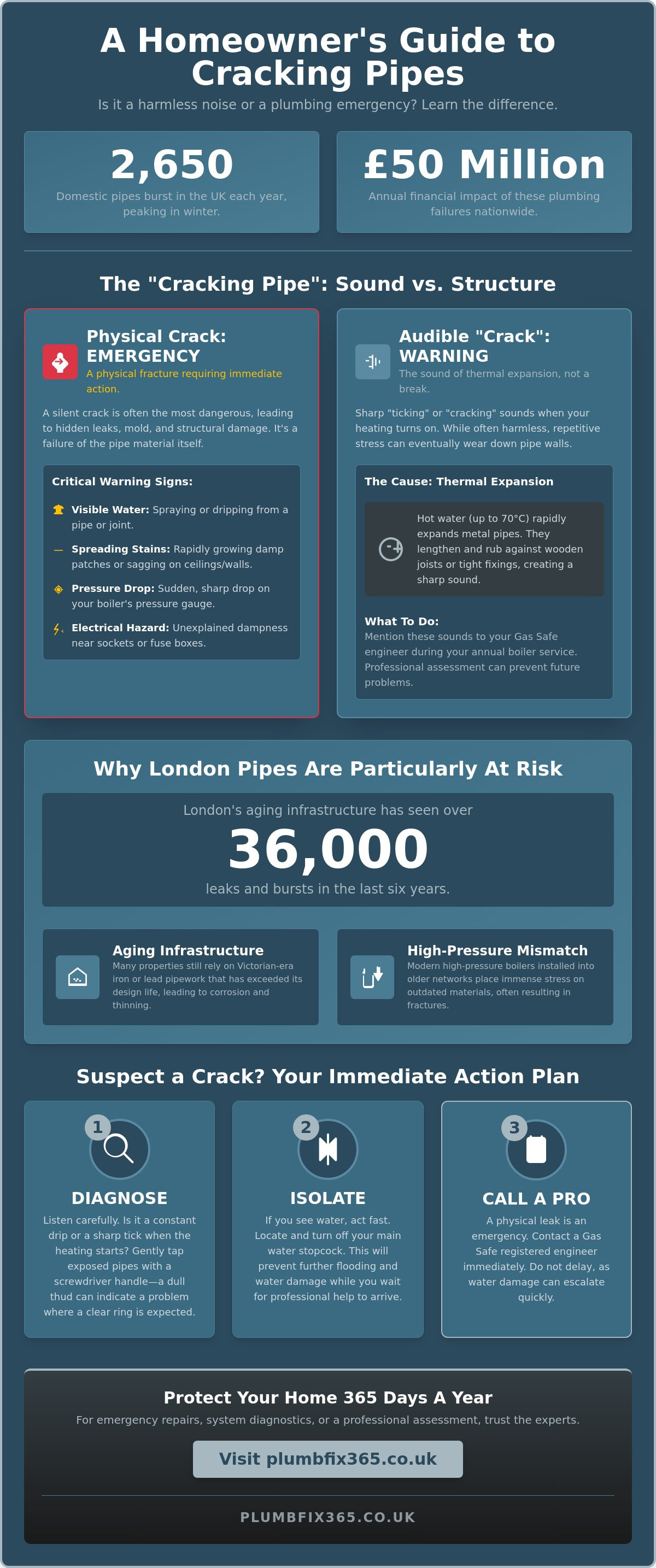
Did you know that approximately 2,650 domestic pipes burst in the UK every year, with incidents peaking during the freezing months of January and February? For many homeowners, the sound of a cracking pipe creates instant anxiety about potential flooding and structural damage. It's a valid fear, especially when you consider that the total financial impact of these plumbing failures reaches nearly £50 million annually across the country. At Plumbfix 365, we understand you need a steady hand to help you navigate these technical issues without the stress of hidden costs or unexpected bills.
You're right to be cautious when your plumbing starts making noise or showing signs of wear. This article will teach you how to distinguish between harmless thermal expansion sounds and physical fractures that require a local plumber. We'll identify the root causes of system stress and provide immediate steps to prevent a flooding disaster in your property. From a clear diagnosis of the issue to finding Gas Safe registered boiler engineers for a permanent fix, you'll get the professional guidance needed to protect your home 365 days a year. We'll also explain how London's ageing infrastructure contributes to these frequent leaks and what you can do to stay ahead of the risk.
Key Takeaways
Learn to distinguish between harmless thermal expansion noises and a physical cracking pipe that signals an imminent plumbing failure.
Identify the root causes of system stress, from corrosion in Victorian-era pipes to thermal expansion against wooden joists.
Follow a professional diagnostic checklist to determine whether you need a simple adjustment or the expertise of a central heating engineer.
Take immediate control of a plumbing emergency by learning how to isolate your water supply and drain the system to prevent flooding.
Know exactly when to contact local plumbers for professional repairs to ensure your home remains safe and dry 365 days a year.
Table of Contents
Cracking Pipe vs Noisy Pipe: Identifying the Urgent Warning Signs
Root Causes of Pipe Damage and Expansion Noises in London Homes
Physical Cracks vs. Thermal Expansion: How to Diagnose the Issue
Immediate Action Plan: What to Do When You Suspect a Cracked Pipe
Professional Pipe Repairs and Central Heating Maintenance in London & Kent
Cracking Pipe vs Noisy Pipe: Identifying the Urgent Warning Signs
A cracking pipe describes two very different plumbing realities. It might be a physical fracture in the material, or it could be a sharp, metallic sound echoing through your floorboards. In older properties across Kent and London, these audible clicks are often early warnings of metal fatigue. Understanding whether you have a structural failure or a mechanical sound is the first step toward securing your home. Identifying the difference early prevents a minor nuisance from becoming a full-scale flood.
Silent cracks are frequently more dangerous than noisy ones because they remain hidden behind plasterwork. You might notice a small damp patch on a ceiling or a musty smell in a storage cupboard before any water is visible. These "slow-motion" leaks often stem from pitting corrosion in copper, where microscopic holes develop over years of use. Local plumbers use thermal imaging and moisture meters to find these invisible threats before they cause significant damage to your property's structure.
To better understand this concept, watch this helpful video:
When is a Crack a Plumbing Emergency?
Some plumbing issues can wait, but a physical fracture in a high-pressure line demands an immediate response. Look for these critical warning signs:
Spraying water from a visible joint or pipe wall
Rapidly spreading stains or sagging plaster on ceilings
Sudden, sharp drops in your boiler pressure gauge
Unexplained dampness near electrical sockets or fuse boxes
You can perform a simple "tap test" by gently striking exposed pipes with a screwdriver handle. A dull thud instead of a clear metallic ring often indicates a pipe is full of debris or has structural weakness. If you see active water movement, you must request emergency plumbing repairs to isolate the leak. We respond to these crises within sixty minutes to protect your property and minimize repair costs.
The Sound of Trouble: Audible Cracking Noises
Don't ignore the "ticking" or "cracking" sounds that occur when your heating turns on. This is usually thermal expansion. As hot water surges through the circuit, the metal pipes expand and rub against tight joists or plastic clips. While often harmless, repetitive friction can eventually thin the pipe wall and lead to a physical cracking pipe. Differentiate this from "water hammer," which is a loud bang caused by sudden pressure changes. Mention these sounds to your boiler engineers during your annual service. Professional assessment ensures a noisy system doesn't turn into a broken one. Plumbfix 365 provides this expert oversight 365 days a year to keep your home running smoothly. Our transparent pricing means you won't face hidden costs for a diagnostic visit.
Root Causes of Pipe Damage and Expansion Noises in London Homes
London's housing stock presents unique plumbing challenges. Many properties still rely on Victorian-era iron or lead pipework that has long exceeded its design life. These systems suffer from internal oxidation and structural thinning. When modern high-pressure boilers are installed into these legacy networks, a cracking pipe is often the result. In fact, London's aging infrastructure has seen over 36,000 leaks and bursts in the last six years. This isn't just wear and tear; it's a systemic failure of outdated materials under modern demand.
Thermal expansion is the primary driver of audible system noise. When your central heating activates, the temperature of your copper pipes can rise from 15°C to over 70°C in minutes. This causes the metal to physically lengthen. In older London homes, pipes were often installed through narrow notches in wooden joists without protective sleeves. As the pipe grows, it rubs against the wood with significant force, creating the sharp "crack" you hear. While this is a mechanical movement, the constant abrasion can eventually thin the pipe wall until it fails entirely.
The Impact of London’s Hard Water
London is a high-limescale area, which directly impacts pipe integrity. Calcium deposits build up inside your system like plaque in an artery. This narrowing increases the internal pressure required to move water through the circuit. Higher pressure puts immense strain on joints and weakened sections of copper, making a cracking pipe significantly more likely during winter months. If you notice your radiators take a long time to heat up, you likely need a power flush to remove these deposits and restore safe operating pressures. Plumbfix 365 provides this service to protect your boiler and pipework from premature failure.
External Factors: Tree Roots and Ground Movement
In Kent, the local geology plays a major role in plumbing failure. The region's heavy clay soil is prone to significant "heave" as moisture levels fluctuate between seasons. This ground movement puts physical stress on underground supply and waste lines. Older clay drainage pipes are particularly brittle and often fracture under this pressure. Once a crack appears, tree roots will seek out the moisture and grow into the pipe, causing a total collapse. Our local plumbers use CCTV drain surveys to identify these subterranean issues before they require expensive excavation. We operate 365 days a year to ensure these hidden problems don't turn into a household crisis.
Physical Cracks vs. Thermal Expansion: How to Diagnose the Issue
The sound of a cracking pipe doesn't always signal an immediate disaster. Differentiating between plumbing "growing pains" and a catastrophic structural failure is critical for your peace of mind. Thermal expansion is a mechanical noise. It occurs when hot water pipes expand against wooden joists or plastic clips. This creates a rhythmic ticking or clicking sound. While annoying, it rarely leads to immediate flooding. A physical crack is far more dangerous. It often remains silent until significant damage has occurred. Escape of water incidents accounted for 34% of all insurance claims paid between 2008 and 2018, proving that early diagnosis is your best financial defence.
Professional central heating engineers use specialized tools to find what the naked eye misses. While you might see a damp patch, our team uses thermal imaging and ultrasonic detectors to pinpoint the exact location of a cracking pipe behind your walls. We provide these diagnostic services 365 days a year with total transparency and no hidden costs. Use the following guide to assess your system’s health before the situation escalates. Plumbfix 365 ensures that every assessment is handled by a steady hand to alleviate your stress.
Diagnostic Comparison Table
Use this table to quickly evaluate the symptoms in your home and determine the necessary response level.
Testing for Hidden Leaks
If you suspect a leak but can't find it, the "Water Meter Test" is an effective DIY diagnostic tool. Ensure all taps and water-consuming appliances are turned off. Locate your water meter and record the reading. Wait exactly two hours without using any water, then check the meter again. Any change in the numbers confirms a leak in your supply line. Additionally, check your boiler’s pressure gauge. A healthy system typically sits between 1.0 and 1.5 bar. If it consistently drops below 0.5 bar, you likely have a fracture in the heating circuit. Regular boiler servicing by Gas Safe Registered engineers is the most effective way to catch these pressure issues before they cause a total system failure. Our local plumbers can identify these faults quickly, saving you from the stress of emergency repairs.
Immediate Action Plan: What to Do When You Suspect a Cracked Pipe
If you suspect a cracking pipe in your home, you must act within minutes to prevent structural damage. Every second water escapes, your repair costs and the risk of mould growth increase. Follow this professional protocol to stabilize your property immediately. We operate 24/7, 365 days a year, because we know plumbing disasters don't follow a schedule. Taking these steps now will minimize the impact on your home while our engineers are on their way.
Step 1: Stop the flow. Locate your main stopcock and turn it clockwise until it's fully closed. This shuts off the water supply to the entire house.
Step 2: Relieve the pressure. Open the lowest taps in your property, such as the kitchen sink or an outdoor garden tap. This drains the remaining water in the lines and stops the leak faster.
Step 3: Protect your heating. Switch off your boiler and central heating system. If the leak is in the heating circuit, running the system could lead to "dry firing." This can crack your boiler's heat exchanger, turning a pipe repair into a full boiler replacement.
Step 4: Document everything. Take clear photos and videos of the leak site and any damaged furniture or flooring. Insurance companies require this evidence to process "escape of water" claims effectively.
Locating Your Stopcock in an Emergency
In traditional London terrace houses, the stopcock is usually tucked under the kitchen sink or located in the front cellar near the street. In newer Kent developments, it might be in a hallway cupboard or near the water meter. Ensure every family member knows this location. If the valve is seized or stuck, don't use excessive force with a wrench; you risk snapping the handle and creating a secondary leak. If it won't budge, you need a professional to isolate the supply at the external street valve. We provide a sixty-minute response time for these high-stress situations to ensure your home is protected quickly. Our team at Plumbfix 365 arrives prepared to handle the most stubborn plumbing hardware.
Why DIY "Patching" is Often a Risk
Some online guides suggest using waterproof tape or epoxy putty to fix a cracking pipe. While this might work for a low-pressure garden hose, it's a dangerous "band-aid" for internal plumbing. A central heating system operates at roughly 1.5 bar of pressure. A temporary patch cannot withstand this force and will eventually fail, often when you are asleep or away from home. Epoxy resins can also contaminate drinking water or melt when exposed to the high temperatures of hot water lines. A permanent, professional repair by a local plumber is the only way to guarantee your system's integrity. Our Gas Safe Registered engineers use professional-grade fittings and pressure-testing equipment to ensure the fix lasts for years. Our local plumbers handle everything from minor leaks and tap replacements to major system failures. Don't risk a flood by relying on a temporary solution; contact us for emergency plumbing support right now.
Professional Pipe Repairs and Central Heating Maintenance in London & Kent
Fixing a cracking pipe requires the technical authority of Gas Safe Registered engineers. This is especially true when the fracture involves your heating circuit or boiler connections. At Plumbfix 365, we provide more than just emergency fixes. Our team delivers comprehensive general plumbing services to keep your entire home functional. From urgent toilet repairs and tap replacements to large scale bathroom plumbing projects, we handle every task with professional precision. We ensure your system is structurally sound and quiet, providing you with long term peace of mind.
Upgrading to modern materials and smart thermostats significantly reduces the mechanical stress on your infrastructure. These modern solutions allow for smoother temperature transitions, which helps prevent a cracking pipe from developing in the first place. Our boiler engineers assess your entire network during every visit to identify weak points before they become catastrophic leaks. We combine the personal accountability of a local tradesman with the high standards of a sophisticated operation.
The Plumbfix 365 60-Minute Response
We understand the urgency of a plumbing crisis. Our central heating engineers are committed to reaching homes in Dartford, Bromley, and Greenwich within sixty minutes of your call. We maintain a strict no hidden costs policy to alleviate your financial anxiety. You get a transparent, fixed quote before any work begins. Contact Plumbfix 365 right now for immediate assistance from a dependable expert who arrives on time and solves the problem.
Preventing Future Cracks with Regular Servicing
Regular maintenance is your best defence against system over-pressurisation. Annual boiler installations and servicing by our boiler engineers ensure your system operates within safe limits. We use professional-grade corrosion inhibitors and power flushing to maintain pipe longevity. This proactive approach is significantly cheaper than dealing with the aftermath of an emergency flood. Trust our local plumbers to keep your home safe and dry 365 days a year.
Secure Your Home Against Plumbing Failures Today
A cracking pipe is more than just an annoying sound; it's a critical diagnostic signal that requires your immediate attention. Whether you're dealing with the rhythmic ticking of thermal expansion or a silent fracture caused by London's high-pressure hard water, taking the right steps now prevents the £9,300 average repair bill associated with burst pipes. You now have the tools to isolate your water supply and understand why DIY patches are a significant risk to your system's integrity. Our Gas Safe Registered engineers provide a permanent fix with total transparency and zero hidden costs.
We offer 24/7/365 emergency coverage across Dartford, Bromley, and Greenwich, ensuring you never face a plumbing crisis alone. Our local plumbers arrive with the expertise needed for everything from tap replacements to complex boiler installations. With our rapid response times and professional authority, we provide the steady hand required to protect your property from the 36,000 leaks that plague London's ageing infrastructure every six years. Don't let a minor noise turn into a major flood.
Need an Emergency Plumber? Plumbfix 365 is 45 Minutes Away — Call Us Now
Frequently Asked Questions
Is a cracking noise in my pipes dangerous?
A cracking noise is often harmless thermal expansion, but it can signal structural stress. As hot water flows, pipes expand and rub against floorboards or joists. While the noise itself isn't a leak, the repetitive friction can eventually wear down the metal and cause fatigue. If the sound is accompanied by a drop in boiler pressure, call a central heating engineer immediately to rule out physical damage.
Can I fix a cracked pipe myself with tape?
You should never rely on tape or epoxy for a permanent repair on a cracking pipe. While waterproof tape might hold for a few minutes on a low-pressure garden hose, it cannot withstand the 1.5 bar pressure of a modern heating system. DIY patches often fail when you are away from home, leading to catastrophic flooding. Always contact local plumbers for a professional, guaranteed fix.
How much does it cost to fix a cracked pipe in London?
Repair costs in London vary based on the severity of the damage. According to March 25, 2026, data, small cracking pipe repairs typically range from £150 to £1,100. If the pipe has fully collapsed and requires replacement, costs can rise to between £1,000 and £3,000. Emergency call-out fees in London generally range from £90 to £150, with extra charges for urgent flood mitigation.
What happens if I ignore a small leak in a pipe?
Ignoring a small leak leads to mould growth and structural rot within weeks. Even a tiny "pinhole" leak can release hundreds of litres of water over a month, driving up your utility bills. Small leaks often signal widespread corrosion, meaning a total burst is likely imminent. Professional boiler engineers can identify these issues during a standard service before they become expensive emergencies.
Will my home insurance cover a cracked pipe repair?
Most home insurance policies cover "escape of water" damage, but they may not cover the repair of the pipe itself. Insurers often distinguish between sudden bursts and gradual deterioration. If the damage resulted from years of neglected corrosion, your claim might be rejected. Always document the damage with photos and contact a Gas Safe Registered engineer to provide a professional report for your provider.
Why do my pipes crack only when the heating is on?
Pipes often make cracking or ticking sounds when the heating starts because of rapid temperature changes. The metal expands as hot water enters the system, causing the pipes to shift against wooden joists or tight plastic clips. This is a mechanical noise rather than a physical leak. However, if the noise is exceptionally loud, it may indicate that your pipes need more space to move safely to prevent fatigue.
How do I know if a pipe has burst underground?
You can identify an underground burst by checking your water meter or looking for unusual surface dampness. If your meter dial spins while all taps are off, water is escaping somewhere. Look for patches of lush green grass or sunken paving in your garden. Local plumbers use CCTV surveys to pinpoint these hidden fractures without needing to dig up your entire property or driveway.
Can hard water cause my pipes to crack over time?
Hard water is a leading cause of pipe failure in London homes. Limescale builds up inside the pipe, narrowing the passage and increasing internal pressure. This added stress makes the material brittle and much more likely to fracture under pressure. Regular power flushing by qualified boiler engineers is the most effective way to remove this buildup and protect your plumbing's long-term health.


Comments