


Emergency Plumbing Repairs: Homeowner Guide 2026

Water is pouring through your ceiling at midnight, plaster is sagging, and panic sets in. When a pipe bursts without warning, knowing how to handle emergency plumbing repairs can mean the difference between a minor clean-up and catastrophic structural destruction. It is terrifying to watch water spread through your home, especially when you are worried about hidden call-out fees during unsociable hours, or wondering whether you should call an independent plumber or a Gas Safe registered engineer.
Real control during a crisis comes down to two vital actions: rapid isolation first, certified diagnosis second. You will learn how to shut off your water immediately, diagnose the fault accurately, and secure qualified assistance before damage spreads across floors and ceilings. We outline the practical steps you need right now to safeguard your property, avoid critical mistakes, and book accredited local engineers who arrive ready to resolve the breakdown.
Table of Contents
Recognising Genuine Plumbing Emergencies Versus Routine Repairs
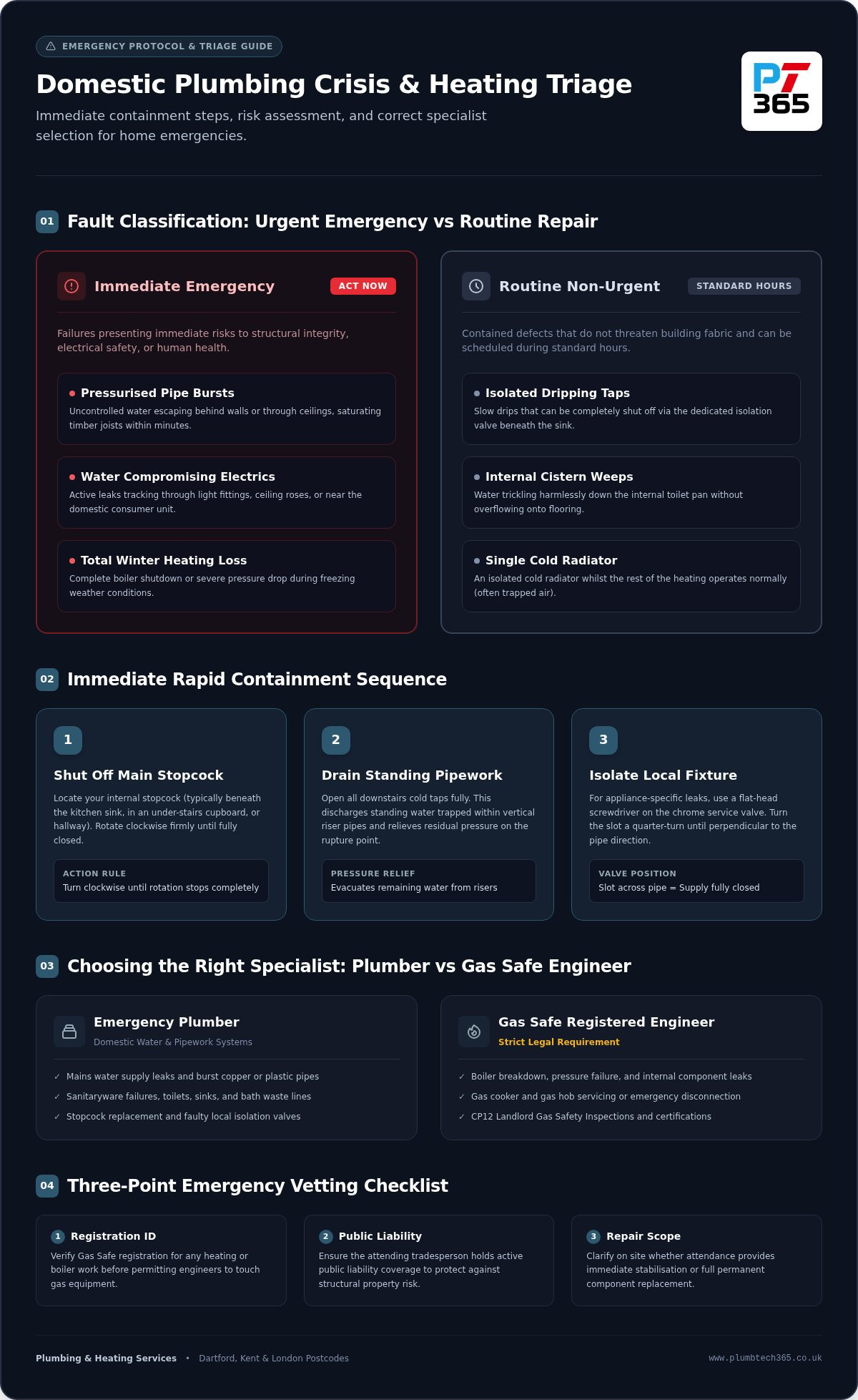
Not every household leak requires an immediate midnight call-out, but misjudging the threat can leave you with sagging plaster and ruined joists. At its core, a genuine plumbing crisis involves uncontrolled water escape that cannot be isolated, or a complete loss of heating during sub-zero conditions. In modern plumbing systems, mains water runs under significant pressure; an unchecked rupture saturates timber framing within minutes, creating long-term structural decay. You must evaluate when you should call an emergency plumber before water seeps into building cavities.
When pipes fail abruptly, rapid triage protects your home and prevents catastrophic property damage. Homeowners looking for trusted professional support often struggle to decide whether a problem demands immediate emergency plumbing repairs or a standard appointment. We are a trusted plumbing & heating company providing reliable, high-quality services across London and Kent to help you navigate these urgent property issues. To see how fast-moving leaks escalate and require intervention, watch this helpful video:
High-Risk Failures Requiring Immediate Professional Attendance
Certain failures create direct structural hazards and demand immediate emergency plumbing repairs to prevent your property from being compromised:
Pressurised pipe bursts: High-pressure water spraying behind partition walls or soaking floorboards compromises ceiling strength in minutes.
Electrics compromised by water: Active leaks running through ceiling roses, downlights, or dripping near your consumer unit present fatal shock and fire risks.
Total winter heating loss: A sudden boiler leak accompanied by total system pressure loss during freezing weather puts vulnerable occupants and frozen pipes at risk.
Non-Urgent Plumbing Faults That Can Wait for Regular Hours
If the fault is stable and water can be contained, you can safely wait for standard daytime hours:
Isolated dripping taps: A dripping tap that can be closed off using the chrome isolation valve on the copper pipe beneath the sink.
Internal cistern leaks: A toilet valve weeping water internally down the back of the toilet pan without spilling onto the floor.
A single cold radiator: One cold radiator in an otherwise warm home simply points to trapped air or a stuck pin, not an active heating disaster.
Immediate Containment Steps to Take Before the Engineer Arrives
Panic wastes vital minutes while high-pressure water ruins carpets, subfloors, and ceilings. You must take decisive control of the situation to minimise structural property damage before a technician reaches your front door. Shutting off the main stopcock instantly eliminates water pressure across domestic pipes. Once the primary supply is killed, you can safely learn how to fix a leaking pipe safely to stabilise minor line seepage whilst awaiting certified backup.
Executing a swift, sequential containment procedure protects your home from escalating destruction during emergency plumbing repairs. If you face a severe breakdown and require immediate support, contacting the team at Plumbtech 365 ensures experienced tradespeople are dispatched without delay.
Locating and Isolating the Main Stopcock and Local Valves
Cut the water off at the source using this sequential routine:
Turn the main stopcock: Find your internal valve, commonly situated beneath the kitchen sink, inside an under-stairs cupboard, or beside the front entry hallway. Rotate the handle clockwise firmly until it stops turning completely.
Drain the system lines: Open all downstairs cold taps fully to evacuate standing water trapped within vertical riser pipes, relieving remaining pressure on the burst section.
Use local service isolation valves: For isolated appliance failures, use a flat-head screwdriver to turn the slotted screw on the chrome pipe fitting a quarter turn until the slot sits perpendicular to the pipe.
Protecting Electrical Circuits and Structural Ceilings
Water conducts electricity and adds immense weight to building materials, requiring instant preventative measures:
Cut domestic power: Go to your consumer unit and switch off the main electrical isolator switch if water is leaking between floors or tracking close to light fixtures.
Avoid damp switches: Never touch wall sockets, switches, or electrical appliances that display dampness, visible water droplets, or signs of discolouration.
Relieve ceiling reservoirs: Place large buckets beneath sagging, discoloured plasterboard. Use a screwdriver to pierce a small relief hole in the centre of the bulge, guiding pooled water into containers rather than risking a catastrophic drywall collapse.
Completing these steps stabilises the immediate environment, protecting the integrity of your property until your specialist arrives on site to carry out formal emergency plumbing repairs.
Emergency Plumber or Heating Engineer: Choosing the Right Specialist
Hiring the wrong professional wastes crucial time when water or heating systems fail. UK law creates a strict division between wet plumbing fixtures and gas-powered heating infrastructure. Anyone removing a boiler casing, working on internal gas burners, or repairing gas supply pipework must legally appear on the Gas Safe Register. Hiring an unqualified tradesperson for gas work breaches the Gas Safety (Installation and Use) Regulations, invalidates home insurance policies, and exposes your family to carbon monoxide hazards. If your central heating fails, read our emergency boiler repair guide to identify whether your breakdown requires a gas-certified specialist.
Standard Plumbing Emergencies: Pipework, Fixtures, and Water Supplies
General plumbers handle the potable water supply, internal pipe networks, and sanitary fixtures. You need a dedicated plumber for:
Joint and pipe failures: Ruptured copper pipes, split push-fit connections, and split flexible braided tap tails beneath sinks.
Cistern and tank overflows: Jammed brass or plastic ball valves causing loft-based cold water storage tanks to flood through eaves.
Supply line isolation: Seized internal gate valves, broken service valves, and fractured supply pipes servicing bathrooms or kitchen appliances.
Gas and Heating Crises: Boilers, Radiators, and Pressurised Cylinders
Heating systems combine high electrical voltage, high pressure, and combustible fuel. For these issues, you must contact an engineer with specific accreditations:
Boiler system lockouts: Total heating failure during freezing weather accompanied by persistent digital fault codes on condensing or combi boilers.
Gas leaks and fumes: Any trace of gas odor or suspected carbon monoxide emissions, which requires immediate property evacuation alongside an urgent professional call.
Unvented cylinder faults: Hot water blowing through external tundish discharge pipes indicates dangerous temperature or pressure increases, requiring an engineer holding G3 Building Regulation certification.
Local compliance: Consult our Dartford repair guide to see how regional response times and safety standards protect your property.
Diagnosing whether your crisis stems from a domestic water pipe or a sealed heating circuit ensures you secure the correct trade technician for swift emergency plumbing repairs.
Vetting Emergency Plumbing Services Under Pressure
Late-night household flooding leaves residents vulnerable to unscrupulous tradespeople. Rogue operators exploit stress by hiding behind generic call-centre directories, inflating fees once on site, or sending unaccredited handymen to execute complex emergency plumbing repairs. Protecting your finances and property during an urgent crisis requires rapid, uncompromising scrutiny before agreeing to any dispatch. Legitimate engineers carry physical Gas Safe identification cards detailing specific qualification categories. Demanding proof of credentials upfront prevents costly substandard work and ensures work adheres to UK safety guidelines.
You can safeguard your home in minutes by following a strict three-point verification routine. If you need vetted, accredited support with complete pricing transparency, book an independent plumber through Plumbtech 365 to resolve your plumbing fault safely.
Verifying Gas Safe Registration and Professional Competence
Never rely on a company van logo or claims on digital directories without verifying credentials directly:
Request the registration number: Ask the call handler for the individual technician's unique seven-digit Gas Safe licence number before ending the booking phone call.
Run an instant register check: Visit the official online Gas Safe Register portal on your mobile device to verify the operative's registration status, business name, and photo identification.
Inspect the licence card at the threshold: When the specialist arrives, inspect the reverse of their licence card to confirm they are qualified for specific tasks such as domestic gas boilers, pipework, or water heaters.
Ensuring Financial Clarity and Avoiding Call-Out Traps
Honest tradespeople provide explicit charging terms before setting foot in a van, even during unsociable hours:
Demand clear charging structures: Clarify whether the quote includes attendance, initial diagnostic time, or parts. Confirm whether billing operates per hour or on fixed milestones.
Secure electronic confirmation: Request an immediate written text message or email confirming arrival windows and charging policies before approving travel.
Reject cash-only demands: Avoid contractors who refuse company card payments or demand non-traceable cash deposits upfront prior to assessing your pipework.
Gauge communication style: Trust professionals whose call handlers provide calming, practical containment advice rather than inflaming your panic to secure quick bookings.
Professional Emergency Resolution: What Happens on Arrival
Once an engineer steps through your door, chaotic guesswork stops and methodical problem-solving begins. An accredited technician approaches a crisis with a disciplined workflow designed to protect structural finishes while isolating the breach. Homeowners often wonder whether a call-out produces an immediate permanent fix or a temporary measure. In practice, initial interventions focus on stopping active damage, with the specialist either executing an immediate repair or applying a temporary mechanical seal if bespoke parts require sourcing during standard trade counter hours.
Rapid Diagnostic Assessment and Physical Isolation
Your engineer carries out a rigorous, non-destructive diagnostic procedure before lifting tools:
Precision leak detection: Technicians use acoustic sensors and thermal imaging cameras to pinpoint leaks concealed behind stud walls or screed without unnecessary demolition.
Sectional depressurisation: The engineer isolates the specific water branch, draining only the affected pipe run while keeping essential facilities running elsewhere if safe.
Transparent consultation: You receive a clear, plain-English explanation of the mechanical defect, outlining the necessary remedial actions before work starts.
Repair Execution, System Testing, and Safety Sign-Off
Carrying out the physical repair is only half the job; confirming system integrity under full working pressure completes the visit:
Pipework replacement: Ruptured lengths are cut away cleanly and replaced using matched copper, compression fittings, or approved polymer piping.
Controlled pressure re-introduction: The internal mains are recharged gradually. The technician meticulously checks every new joint and nearby connection with dry tissue to catch micro-weeps.
Heating re-commissioning: If heating pipework was drained, the engineer refills the circuit, bleeds air pockets from high-point radiators, restores the boiler expansion vessel pressure, and runs a diagnostic combustion test.
Formal sign-off: You receive a digital completion report detailing the work undertaken, parts fitted, and ongoing monitoring recommendations.
Do not let uncontrolled water destruction ruin your home. Book trusted emergency plumbing repairs now with qualified specialists who restore safety to your property around the clock.
Take Decisive Action to Secure Your Property Today
When water breaches ceilings or central heating fails during freezing weather, every second counts. Turning off your internal stopcock halts immediate structural destruction, whilst vetting credentials protects your finances from predatory rogue operators. Identifying whether your breakdown involves cold water pipework or pressurised gas infrastructure ensures the right accredited technician arrives at your door without wasted time.
Severe plumbing crises rarely happen at convenient hours, but rapid action keeps damage to an absolute minimum. When your home requires urgent emergency plumbing repairs for burst pipes, unvented cylinder failures, or complete boiler breakdowns, contact our 24/7 emergency repair team today. Our Gas Safe Registered engineers remain on call 365 days a year, delivering prompt nationwide dispatch, transparent communication, and fully certified technical expertise. You can quickly restore order, protect your investment, and regain complete peace of mind.
Frequently Asked Questions
What should I do first when a pipe bursts in my home?
Immediately turn off your main internal stopcock by rotating it clockwise until tight. Next, open all downstairs cold taps to drain residual water and relieve standing pressure in the pipework. If escaping water threatens electrical fixtures, light fittings, or your fuse box, switch off the mains electrical supply at the consumer unit straight away. Once the property is safeguarded, contact an accredited technician to manage the breakdown.
How quickly can an emergency plumber arrive at my property?
Most rapid-response plumbing services aim to arrive within one to two hours, depending on regional traffic and weather conditions. Dispatch teams assess urgency during the initial call, prioritising active, uncontrolled leaks over minor faults. You will receive an estimated arrival window alongside clear containment advice over the phone. Make sure your entrance remains accessible so the engineer can bring heavy diagnostic equipment inside immediately upon arrival.
Can any plumber legally repair a leaking gas central heating boiler?
No, only technicians listed on the Gas Safe Register can legally carry out work on gas boilers. Standard plumbers can only work on non-gas wet pipework and sanitary fixtures. Removing a boiler casing to repair internal leaks without Gas Safe credentials breaches UK safety regulations and invalidates your home insurance. When booking emergency plumbing repairs for combi or system boilers, always verify the operative's seven-digit registration number beforehand.
Will my standard home insurance policy cover emergency plumbing repairs?
Standard buildings insurance typically covers the secondary water damage caused by an escape of water, but rarely covers the plumbing repair itself. Replacing the failed pipe joint or split fitting usually requires dedicated home emergency cover or separate out-of-pocket settlement. Check your policy schedule for an emergency home assistance endorsement. Always keep itemised work sheets and photographic evidence from your engineer to support insurance claims for damaged flooring or ceilings.
What causes sudden loss of water pressure across the entire house?
A sudden, whole-house pressure drop usually indicates a major ruptured pipe within your boundary or an external water main failure in your street. Check whether neighbours have also lost pressure, which confirms a municipal utility issue. If neighbouring supplies are normal, inspect your internal stopcock to ensure it hasn't been accidentally turned. A hidden high-volume rupture under floors or behind walls requires swift diagnostic assessment before structural timbers deteriorate.
How do I safely isolate my water supply if the stopcock is stuck?
If your internal stopcock is seized, shut off the external boundary stopcock located in the pavement or front garden. You will need a standard stopcock key to reach and turn the brass valve inside the ground chamber clockwise. Never force a stuck internal valve with excessive wrench force, as old brassware can fracture. If you cannot access the external shut-off, request urgent emergency attendance from an accredited specialist immediately.
What is the difference between a temporary make-safe repair and a permanent fix?
A temporary make-safe intervention halts active water flow using mechanical repair clamps or blanking caps, protecting the building while specialised parts are sourced. A permanent fix fully restores the pipework or appliance using manufacturer-approved components, pressure testing, and complete system re-commissioning. During late-night emergency plumbing repairs, a make-safe procedure often acts as the essential first step, with permanent restoration completed as soon as replacement hardware becomes available.


Comments