


Getting Buy-In from a Management Committee for Plumbing Work

A plumbing proposal can be technically sound and still stall if committee members disagree about urgency or cannot see what the work involves. Getting buy-in from a management committee for plumbing work starts with clear evidence, not jargon or pressure. If occupants are dealing with an unresolved leak, unreliable hot water or another plumbing fault, a delayed decision can prolong disruption.
That hesitation is understandable. Members need to weigh the reported problem, the recommended scope and the practical effect on residents before agreeing to proceed. A clear, evidence-led case gives everyone the same information to assess and helps the committee reach a considered decision.
This guide explains how to document the issue, present the proposed work in straightforward terms and respond to common concerns. It also covers how to record the decision and agree practical next steps. A plumbing and heating specialist such as We are a trusted plumbing & heating company providing reliable, high-quality services across London and Kent can explain technical findings and clarify the scope of proposed plumbing repairs.
Key Takeaways
Define the issue and the decision needed so committee members know exactly what they are being asked to approve.
Build a concise evidence pack with dated reports, relevant photographs and a plain-English summary. Separate observed symptoms from possible causes that still need professional assessment.
Compare investigation, repair and planned-work options by looking at the evidence, remaining uncertainties and likely effect on occupants.
Make getting buy-in from a management committee for plumbing work easier by sharing the evidence in advance and requesting a specific decision at the meeting.
After approval, record the agreed scope, responsibilities, access arrangements and communication plan so the work can be organised clearly.
Table of Contents
Why getting management committee buy-in for plumbing work starts with a clear issue
Build an evidence pack that makes the plumbing proposal easy to assess
Address committee concerns about urgency, scope and disruption
Present the case at a committee meeting and secure a clear decision
Turn committee approval into a controlled plumbing work plan
Why getting management committee buy-in for plumbing work starts with a clear issue
A recurring leak in a communal hallway or unreliable hot water in a shared building can quickly divide a committee. One member may see a fault that needs prompt attention, while another thinks it can wait. Getting buy-in from a management committee for plumbing work starts by establishing shared understanding: what is happening, what response is proposed and what decision the committee needs to make.
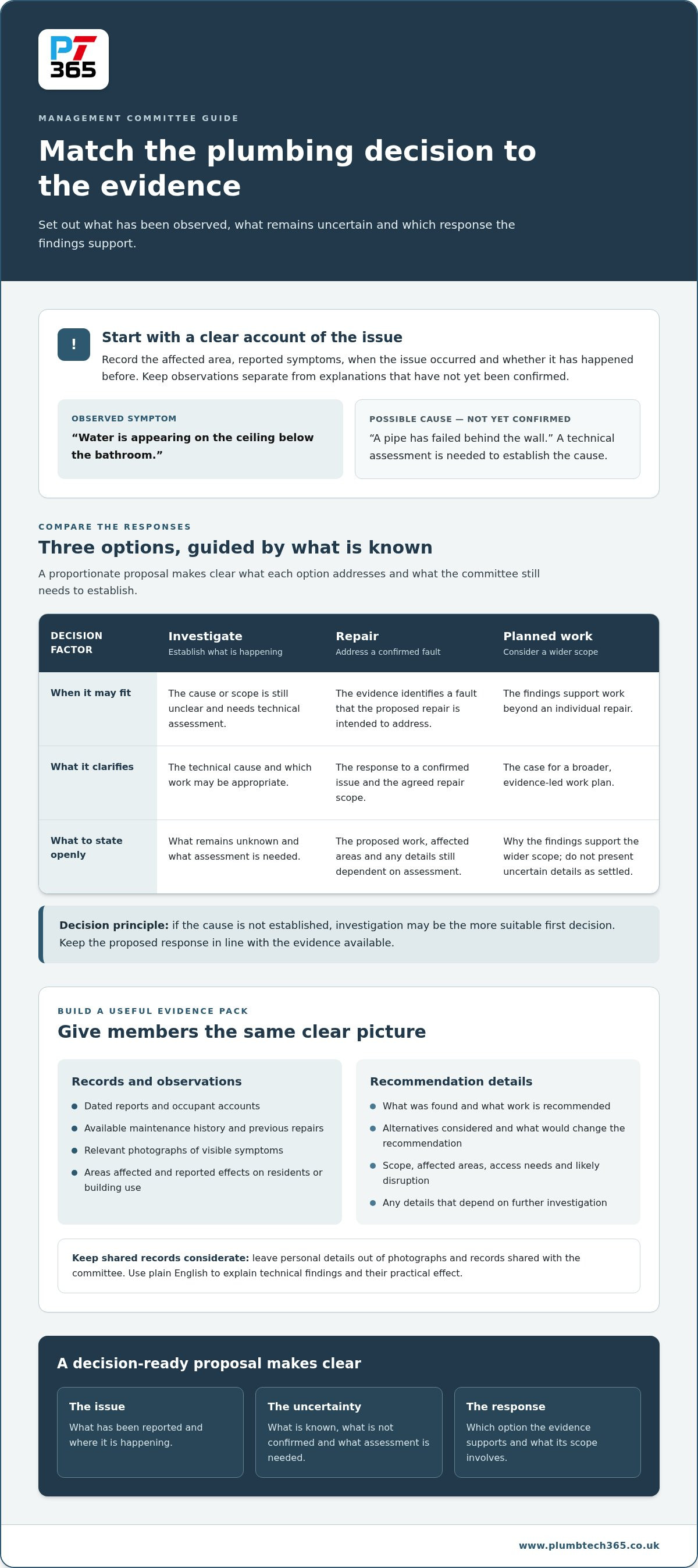
Keep observations separate from explanations. “Water is appearing on the ceiling below the bathroom” is a reportable symptom. “A pipe has failed behind the wall” is a possible cause, not a confirmed finding until it has been assessed. This distinction lets members discuss the evidence without treating an assumption as fact.
Record when the issue was reported, where it occurs and whether it has happened before. Dated notes and relevant photographs can help show whether the matter appears to be routine maintenance or needs timely discussion. A qualified plumbing and heating specialist can assess technical causes and explain which work may be appropriate.
What makes plumbing work difficult for a committee to approve?
Committee members may have different views on urgency, resident disruption and how much work is needed. Technical terms can add to the uncertainty if they do not explain the practical effect. Use plain English, identify what is known and state what still needs investigation. This gives the committee a fair basis for comparing options instead of asking members to approve a broad proposal they cannot assess.
What should the committee understand before deciding?
Set out the affected area, reported symptoms and the people or building functions affected. Then define the decision: should the committee approve further investigation, a specific repair or wider planned work? If the cause or scope remains unclear, say so and identify the technical assessment needed. For proposals involving heating, the guide to heating engineer reviews offers context on assessing professional information.
A decision-ready proposal makes the problem, options and next step clear enough for members to respond confidently. This follows the principles of project management: define the work and its scope before moving towards delivery. Keep the first decision proportionate to the evidence. If the cause is not established, approval to investigate may be more appropriate than agreeing to a larger repair plan.
Clarity does not mean claiming certainty where none exists. It means showing what has been observed, what remains unknown and what technical assessment is needed to move the decision forward.
Build an evidence pack that makes the plumbing proposal easy to assess
A concise evidence pack gives committee members a shared basis for reviewing the proposal. Keep the main paper focused: summarise the issue, show what has been observed and state what decision is needed. Dated reports, relevant photographs and a plain-English account make the case easier to assess without burying it in technical detail.
Which records help members understand the plumbing issue?
Gather available maintenance history, occupant reports and details of previous repairs. Arrange them by date where possible so members can see whether the issue is isolated or recurring. Use photographs to show visible symptoms, such as a damp patch or water around a fitting. Leave personal details out of images and shared records.
Summarise the reports and their effect on residents or building use. For example, note when interruptions to hot water were reported and which areas were affected. Keep observations separate from possible explanations: a visible symptom is evidence, but its technical cause remains unconfirmed until a qualified professional has assessed it.
How can a technical recommendation be made understandable?
Ask the specialist to explain what was found, what work is recommended and what alternatives were considered. Translate technical terms into their practical effect on the property and occupants. Describe the proposed scope, affected areas, access needs and likely disruption, and mark any details that depend on further investigation.
Compare the options and explain what would change the recommendation. An investigation may establish the cause; a repair may address a confirmed fault; broader planned work may be appropriate if the findings support it. Do not present an uncertain scope or outcome as settled. ProjectManager’s guide to how to write a project proposal offers guidance on presenting a clear case.
For commercial premises, explain how the recommended work may affect day-to-day operations, access and occupants. Keep these practical considerations tied to the evidence and proposed scope rather than making assumptions about disruption before the work has been assessed.
A focused pack makes it easier to weigh evidence, uncertainty and practical impact. A qualified plumbing and heating specialist can clarify findings and explain the scope of plumbing repairs. The information on Plumbfix 365 plumbing and heating services outlines the work available to support building maintenance needs.
Address committee concerns about urgency, scope and disruption
Two concerns often hold up approval: members may believe the issue can wait, or they may feel the proposed work covers too much. Address both directly. Show what has happened, how often it has been reported and which parts of the building or its use are affected. Then explain what the proposal would address and what it would leave unresolved.
Keep the distinction between evidence and possibility clear. A recurring symptom may justify prompt discussion, but it does not prove a particular cause or outcome. Ask a qualified plumbing and heating specialist to explain what can be concluded from the assessment so far and what may happen if the issue remains unresolved. This helps the committee weigh urgency without relying on alarm or unsupported reassurance.
How should urgency be explained without creating alarm?
Describe the present impact plainly, such as repeated loss of hot water in an affected area, and refer to dated reports where available. Separate any immediate precautions advised by a specialist from the committee’s decision on longer-term work. Clear, audience-focused updates support communicating effectively with leadership, especially when members need to review evidence, ask questions and agree what happens next.
How can members compare different scopes of plumbing work?
Set out each option against the same criteria: what the evidence supports, what residents may experience during the work and what remains uncertain. Explain access needs and possible disruption in practical terms. Make clear that the actual arrangements depend on the assessment and agreed scope. A specialist can clarify which details are known and which need further investigation.
The comparison below is a starting point, not a technical recommendation. Adapt it to the findings for the property.
Getting buy-in from a management committee for plumbing work is easier when members can see what each option resolves and which decisions need further assessment. If an impact is uncertain, say so. If the evidence points to an issue needing committee attention, state why and ask for a clear decision on the next step.
Present the case at a committee meeting and secure a clear decision
A clear evidence pack is only useful if the meeting turns it into an agreed action. Send the papers beforehand, state what decision is needed and identify who has authority to approve the work under the committee’s process. This gives members time to review the material and helps keep the discussion focused.
Use a simple sequence during the meeting:
1. State the issue. Summarise the reported problem, where it affects the building and its known impact.
2. Show the evidence. Refer to the relevant reports, records and photographs. Separate confirmed findings from questions that still need assessment.
3. Explain the options. Outline the proposed action and any alternatives, including what each would address and what remains uncertain.
4. Request a defined decision. Ask the committee to approve a specific scope, authorise further investigation or agree to review the proposal once missing information is available.
Keep the request precise. “Approve the recommended repair to the affected pipework” is clearer than “approve plumbing work”. If the technical scope is not settled, seek agreement on the next assessment step rather than implying that a larger work plan is ready.
What should the committee paper or meeting summary include?
Use a short executive summary, an evidence list, the proposed action and a clear approval request. Include alternatives considered, unresolved questions and the reasons for the recommendation. Keep technical attachments available for members who need more detail, but make the main paper understandable on its own. After the meeting, record the agreed scope, responsible person, outstanding actions and a date to review progress.
How can you respond to disagreement constructively?
Bring the discussion back to the shared aim: resolving the plumbing issue while managing its effect on occupants. Answer factual questions using the evidence. If a point needs technical clarification, record it rather than guessing, then agree who will obtain the information and when the committee will revisit the decision.
Record any dissent or conditions clearly alongside the final resolution. A written decision gives everyone the same reference point and reduces ambiguity when responsibility passes from committee discussion to work planning. This is especially useful if the person coordinating access or resident updates was not at the meeting.
Getting buy-in from a management committee for plumbing work means more than reaching a verbal agreement. The written decision should show what was approved, who will act and what happens next. Plumbfix 365 provides plumbing and heating services, including plumbing repairs and heating work.
Turn committee approval into a controlled plumbing work plan
Approval is the point to turn discussion into clear instructions. Before arranging access or notifying occupants, check that the written plan matches the committee’s recorded decision, including any conditions or limits on the work. This helps prevent misunderstandings about what has been agreed and gives everyone a practical reference as the work moves forward.
What should happen after the committee approves the work?
Set out the arrangements in writing. Keep the plan straightforward and assign a named person to coordinate each part:
Scope: Record the approved work and any exclusions or conditions.
Responsibilities: Name who will coordinate the work, receive updates and pass on questions.
Access: Identify the areas that need access and who will organise it.
Communication: Agree how occupants will be updated about access or expected disruption.
Completion: Request a record of work completed, findings and recommended follow-up actions.
If an assessment identifies a change or additional work, record the new information and refer it through the committee’s approval process rather than assuming it is already authorised.
How can a plumbing specialist support the approved plan?
A qualified plumbing and heating professional can explain technical findings, clarify what the approved work involves and identify practical considerations before work begins. For gas-related technical work, Plumbfix 365 uses Gas Safe Registered engineers.
Share completion information with committee members, including any outstanding actions and who will follow them up. This gives the committee a clear record to refer to if further work or review is needed.
Move from committee agreement to confident action
Getting buy-in from a management committee for plumbing work is easier when members can see the evidence, understand the options and know exactly what decision is needed. Keep the case grounded in confirmed facts, explain uncertainty plainly and record the agreed scope, responsibilities and next steps.
Once approval is in place, turn the resolution into a practical work plan. Confirm access and occupant communications, and agree how completion details or outstanding actions will be shared. A qualified plumbing and heating professional can clarify the technical work and help keep delivery aligned with the committee’s decision.
Plumbfix 365 carries out plumbing and heating work through qualified professionals. For gas-related technical work, its engineers are Gas Safe Registered.
Discuss your plumbing and heating requirements with Plumbfix 365 to plan the next step around the committee’s agreed scope. A well-documented decision gives the committee and occupants a clear basis to move forward.
Frequently Asked Questions
How do you get a management committee to approve plumbing work?
Present a concise, evidence-led case and ask for a specific decision. Explain the observed problem, who or what it affects, what a qualified professional has assessed and which options are available. Separate confirmed findings from possible causes. Getting buy-in from a management committee for plumbing work is easier when members can see the practical implications, consider outstanding questions and understand exactly what approval would authorise.
What should a plumbing work proposal to a management committee include?
Include a short issue summary, dated reports or relevant photographs, the affected areas and a plain-English description of the proposed work. Set out alternatives, access needs, likely disruption and any information still required. State the decision you are asking the committee to make, such as approving a defined repair or commissioning an assessment. Attach technical detail for members who need it, but keep the main proposal easy to scan.
Who approves plumbing work in a managed building?
The person or group with authority depends on the building’s management arrangements and relevant governing documents. Approval may sit with a management committee, a managing agent acting within delegated authority or another decision-maker. Follow the applicable process before instructing work, and record who authorised the scope. If the approval route is unclear, establish it before making a commitment on the building’s behalf.
How can I explain urgent plumbing work without alarming committee members?
Describe what has been observed, when it was reported and how it affects occupants or building use. Avoid dramatic language and do not present an unverified cause or outcome as fact. Ask a qualified plumbing professional to explain the implications of leaving the issue unresolved and distinguish any immediate precautions from longer-term work. This gives members a clear basis for considering urgency without overstating what is known.
What if committee members disagree about the plumbing work?
Bring the discussion back to the shared aim of addressing the issue while managing its effect on occupants. Compare the options against the available evidence, scope and practical disruption. Answer factual questions from the records, and note points that need technical clarification rather than guessing. If the committee cannot decide yet, agree who will obtain the missing information and when members will review the proposal again.
How should a management committee record approval for plumbing work?
Record the decision in the meeting minutes or another formal committee record. Include the approved scope, any conditions, the person responsible for coordination, outstanding actions and the next review point. Note unresolved questions and how they will be answered. Share the record with relevant members so everyone involved in arranging access, updating occupants or overseeing the work can refer to the same agreed instructions.



Comments