


How to Bleed a Radiator: The 2026 Step-by-Step Guide for London Homes
Your cold radiators are likely costing you over £100 per year in wasted energy as London enters the peak heating season of May 2026. It is frustrating to deal with uneven heating or gurgling pipes when you just want a warm home without a massive bill. We agree that many homeowners feel anxious about touching their central heating for fear of causing a leak or damaging the boiler. However, trapped air is a common issue that is easily resolved without a professional call-out.
This expert-led guide from Plumbfix 365 will show you exactly how to bleed radiator heating safely to restore heat and improve your system's efficiency. You don't need specialized training for this simple DIY task. We will walk you through the diagnostic "feel test", the tools required, and the critical post-bleed checks to ensure your boiler stays operational. By the end of this guide, you'll have the confidence to fix cold spots and keep your heating system running at peak performance all year round.
Key Takeaways
Perform the "Cold Top, Hot Bottom" test to verify if air pockets are blocking heat circulation in your home.
Follow our safe 5-step guide on how to bleed radiator heating to stop noisy gurgling and improve thermal efficiency.
Understand the critical link between bleeding radiators and boiler pressure to keep your central heating system operational.
Identify signs of magnetite sludge that indicate you need professional power flushing rather than a simple DIY fix.
Know when to contact a Gas Safe registered engineer for complex issues like stuck valves or persistent leaks.
Table of Contents
Recognising the Signs: Does Your Radiator Actually Need Bleeding?
Your heating system should work silently and effectively. If you start hearing gurgling, clicking, or rattling sounds, your pipes are trying to tell you something. These noises usually mean air is trapped inside the circuit. Air enters the system through tiny leaks, during general plumbing services, or if your pump is set to an incorrect speed. This trapped air is the primary reason you need to know how to bleed radiator heating to keep your home efficient and warm. When air sits at the top of a panel, it prevents the hot water from a Central heating system from circulating properly.
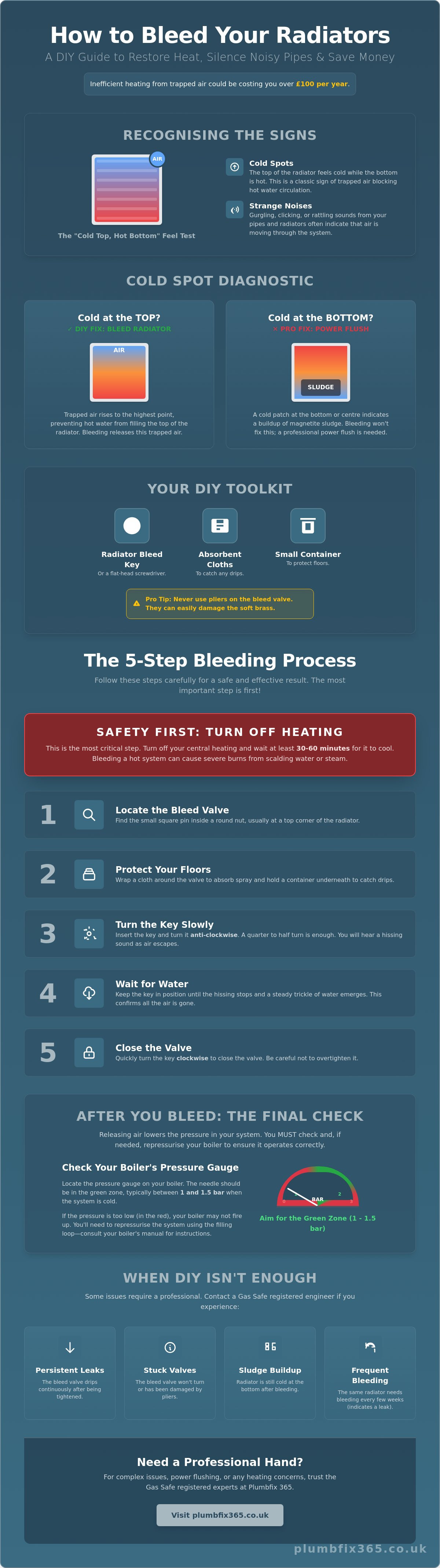
To see if air is the culprit, turn your heating on and wait for it to warm up. Carefully feel the surface of each radiator. If the bottom is hot but the top remains cold, you've found an air pocket. This is a classic sign that your system needs maintenance. Ignoring these cold spots forces your boiler to run longer, wasting money and increasing wear on internal components as the unit struggles to reach the temperature set on your thermostat.
To better understand this concept, watch this helpful video:
The Cold Spot Diagnostic
Mapping heat distribution is the fastest way to diagnose a problem. Start by running your hand near the bottom of the radiator and move slowly toward the top. Always use caution; water temperatures in modern systems can reach 70 degrees Celsius. If you find a cold patch at the very bottom or in the centre, bleeding won't help. This usually indicates a buildup of magnetite or sludge. In these cases, our central heating engineers recommend a professional power flush to clear the blockage. Bleeding is specifically for air trapped at the highest point of the radiator panel.
When to Bleed Your System
Timing is vital for system health. Our local plumbers suggest checking your radiators every autumn before the first cold snap hits London. This pre-winter maintenance ensures your home stays warm when you need it most. You should also check for air after any boiler installations or pipework repairs. Never attempt to bleed a radiator while the heating is running. Doing so can draw more air into the system or cause hot water to spray out under pressure. Turn the system off, let it cool for at least 30 minutes, and then proceed with the fix. If you find yourself bleeding the same radiator every few weeks, you might have a slow leak that requires a visit from one of our boiler engineers.
How to Bleed a Radiator Safely: A 5-Step Process
Safe execution is the priority when maintaining your central heating. Learning how to bleed radiator heating correctly prevents property damage and personal injury. Before you begin, you must turn off your central heating system completely. This is the most critical safety step. If the pump is running, it can introduce more air into the pipes or create high-pressure surges. Wait at least 30 to 60 minutes for the water to cool down. Radiator water can reach 70 degrees Celsius; attempting to bleed a hot system risks severe steam burns and scalding spray.
Essential Tools for the Job
Gather your equipment before you touch the valves. You need a standard radiator bleed key, which typically costs around £2.50 at local hardware stores. Some modern radiators feature a slot for a flat-head screwdriver, but a dedicated key provides better leverage. Never use pliers on a stubborn valve. Pliers easily round off the soft brass edges, making the valve impossible to operate without a professional repair. Prepare two thick, absorbent cloths and a small container. Radiator water is often "black water," a liquid filled with metallic sediment and sludge that will permanently stain London carpets or hardwood flooring upon contact.
Step-by-Step Execution
Follow these five steps to release the air and restore your heat:
Locate the valve: Find the small square pin inside a round nut at the top corner of the radiator.
Position your cloths: Wrap one cloth around the valve and hold the container directly underneath to catch drips.
The turning technique: Insert the key and rotate it anti-clockwise. Use a slow, controlled motion. A quarter to half turn is usually enough to start the process.
Listen for the hiss: You will hear a distinct hissing sound as the trapped air escapes. This can last from 10 seconds to a full minute depending on the size of the air pocket.
Close the valve: As soon as the hissing stops and a steady stream of water emerges, turn the key clockwise to close the valve tightly.
Do not unscrew the valve entirely. Removing the pin causes a high-pressure leak that is extremely difficult to plug while water is flowing. Tighten the valve securely, but avoid over-tightening, as this can snap the internal pins. If you notice a persistent drip from the valve after tightening, our local plumbers can provide an immediate fix to prevent water damage. Once every radiator is bled, your system will be ready for a final pressure check.
What to Do if Bleeding Your Radiator Doesnt Fix the Cold Spots
If you followed the steps on how to bleed radiator heating but the unit still feels patchy, you are likely dealing with a circulation blockage. Air always rises to the top. If the bottom or centre of your radiator remains cold while the top is warm, trapped air is not the culprit. This symptom points to a buildup of magnetite, commonly known as radiator sludge. It's a heavy, metallic debris that settles at the lowest point of your heating panels, effectively blocking the flow of hot water.
In 2026, homeowners in areas like Dartford and Greenwich face specific challenges due to the high mineral content in the local water supply. Hard water accelerates the internal corrosion of iron pipes and radiators. This process creates a thick, black substance that the pump cannot push through the system. It remains stuck, "deadlocking" the bottom of the radiator and preventing heat from radiating properly. No amount of bleeding will fix this issue because the problem is solid debris, not trapped gas.
Cold at the Bottom? The Sludge Problem
Magnetite consists of microscopic metal shards that have rusted off the inside of your heating system. Over years of use, these particles harden into a mud-like consistency. Bleeding air from the top valve does nothing to remove this heavy sludge. If multiple radiators in your home show these symptoms, your boiler has to work roughly 25% harder to maintain a comfortable temperature. This inefficiency leads to higher energy bills and eventual pump failure. Our central heating engineers recommend power flushing services to chemically clean the system and restore full heat output.
Constant Air Buildup? Potential System Leaks
Needing to bleed your radiators every week is a major red flag for any London property. A healthy, sealed system should not require frequent venting. If air keeps returning, it is being drawn in from an external source. This often happens through microscopic leaks in the pipework or a failing automatic air vent on the boiler itself. Sometimes, a faulty pump creates a "venturi effect," sucking air into the system through tiny gaps in your valves. While knowing how to bleed radiator heating provides a temporary fix, it often masks a larger failure. If you are constantly reaching for your bleed key, contact our local plumbers for a system health check. We operate 365 days a year to identify these hidden leaks before they cause significant water damage to your flooring or ceilings.
Post-Bleed Checks: Repressurising Your Boiler
Many homeowners successfully master how to bleed radiator heating only to find their boiler refuses to fire up afterward. This happens because releasing trapped air reduces the total volume of fluid within your sealed central heating circuit. As the air escapes, the internal pressure drops. If the pressure falls below a specific threshold, your boiler will trigger a "lockout" safety mechanism. This prevents the unit from operating to protect internal components from damage. You must check your pressure gauge immediately after you've finished bleeding every radiator in your home.
A healthy system should typically sit between 1.0 and 1.5 bar when the water is cold. This is the "Green Zone" on traditional gauges. If your reading has slipped below 1.0 bar, your boiler is under-pressurised. This inefficiency forces the pump to work harder and can lead to a total loss of hot water and heating. Monitoring this reading is a vital part of 2026 home maintenance, especially as modern high-efficiency boilers are highly sensitive to pressure fluctuations.
Checking the Pressure Gauge
Locate the gauge on the front control panel or underneath the boiler casing. Traditional needle gauges are easy to read; the needle should point squarely within the green section. Modern digital boilers display the pressure on an LCD screen. You might see specific error codes like "F1" on an Ideal boiler or "E119" on a Baxi, both of which signal low pressure. If you notice the needle bouncing or fluctuating wildly during normal operation, your expansion vessel may be failing. If this occurs, we recommend booking a professional boiler servicing to prevent a major system failure.
How to Top Up Your System
To restore the pressure, you need to use the filling loop. This is usually a flexible, silver braided hose located directly underneath the boiler with two small valves. Follow these steps to repressurise safely:
Switch off the boiler: Ensure the system is completely powered down before adding water.
Open the valves: Turn both small black lever valves slowly. You will hear the sound of water entering the system.
Monitor the gauge: Watch the needle rise steadily. Aim for 1.2 bar for the best results.
Close the valves: Once the target pressure is reached, turn both levers back to the closed position.
Turn the valves slowly to avoid over-pressurising the system. If you accidentally go above 2.0 bar, you may need to bleed a small amount of water from a radiator to bring the level back down. If your filling loop is missing or the valves are stuck, don't force them. Our boiler engineers provide rapid assistance to ensure your system is balanced and safe. Contact Plumbfix 365 for expert boiler repressurisation and restore your home's warmth today.
When to Call a Gas Safe Registered Engineer
While mastering how to bleed radiator heating solves most cold-top issues, certain symptoms require a professional hand. If a bleed valve is seized or the pin snaps, don't attempt a forced repair. This often leads to high-pressure leaks that can damage your home's structure. Similarly, if your boiler displays persistent fault codes or fails to fire up after you've topped up the pressure, a boiler engineer must inspect the internal sensors and pump. Professional intervention ensures your system remains safe and compliant with UK regulations.
Identifying Complex Heating Issues
A simple maintenance task can sometimes reveal that your heating system has reached its limit. If frequent air locks persist despite correct bleeding, your expansion vessel or automatic air vent may have failed. In these cases, our central heating engineers can advise if a repair is viable or if it's time for a high-efficiency boiler installation. Regular maintenance is the most effective way to prevent the sludge buildup and air pockets that compromise your home's warmth.
Professional Radiator Services in London and Kent
Plumbfix 365 provides rapid, expert assistance across Bexley, Dartford, and Bromley. Our Gas Safe registered engineers are qualified for more than just heating; we offer a full suite of general plumbing services. From urgent toilet repairs and tap replacements to large-scale bathroom plumbing renovations, we handle every job with 24/7 urgency. Under the Renters' Rights Act 2025, ensuring your property's plumbing and heating are in top condition is a legal necessity for landlords. Contact Plumbfix 365 today for a steady hand during any household crisis.
Restore Your Home's Warmth Today
Mastering how to bleed radiator heating is a vital skill for maintaining a comfortable London home in 2026. By following our guide, you now have the knowledge to release trapped air and restore system pressure safely. However, our expertise at Plumbfix 365 extends far beyond simple maintenance. As your trusted local plumbers, we provide a comprehensive range of general plumbing services to keep every corner of your property functional and efficient throughout the year.
Whether you are dealing with urgent toilet repairs, dripping tap replacements, or hidden leaks that threaten your flooring, our central heating engineers and boiler engineers are ready to assist. We also manage larger projects, including high-efficiency boiler installations and full bathroom plumbing renovations across Kent and South London. With 24/7 emergency support and a 365-day commitment to our community, we are the steady hand you need during any household crisis. We arrive on time, provide transparent pricing, and solve the problem correctly the first time.
Book a Gas Safe Engineer for Your Heating System and ensure your home remains warm and efficient all year round.
Frequently Asked Questions
Can I bleed a radiator while the central heating is running?
No, you must turn off your heating and let it cool completely before starting. Bleeding a live system can suck more air into the pipes or spray scalding water at high pressure. Wait at least 30 minutes to ensure the water temperature has dropped safely. This also allows the pump to stop circulating, which lets the air bubbles settle at the top of the radiator for easier removal.
How do you bleed a radiator without a specific bleed key?
Check if your valve has a small slot in the centre pin. If it does, a standard flat-head screwdriver will work perfectly. If there's no slot, don't use pliers as they round off the brass edges. A replacement key costs as little as £2.46 in May 2026 and is a vital tool for how to bleed radiator heating safely. Using the correct tool prevents damage to the valve that could lead to an expensive repair.
Why is the top of my radiator still cold after I've bled it?
A persistent cold top usually means a stubborn air lock is stuck in the pipework leading to the unit. If water flowed out during the bleed, the air in that specific panel is gone. You might need to turn off all other radiators to force the pump's full pressure through the cold one to shift the blockage. If this fails, a boiler engineer should check for a faulty diverter valve.
How much water should I let out during the process?
Stop as soon as a steady stream of water appears. You only need to release a few drops to ensure the air is gone. Keep a small container and an absorbent cloth ready to catch these drips to protect your flooring. Letting out half a jug of water is unnecessary and will significantly drop your boiler pressure, potentially causing a total system lockout that requires a professional reset.
Is it normal for the water to be black and have a strong smell?
Black, smelly water is a common sign of internal corrosion and magnetite buildup. While it's normal for older systems, thick sludge prevents your radiators from heating up properly. If the water looks like ink, our central heating engineers recommend a professional power flush to protect your boiler. This deep clean removes the debris that causes cold spots and noisy pipes.
What are the consequences of ignoring air in my radiators?
Ignoring air pockets makes your heating system highly inefficient and expensive to run. Your boiler has to work 20% harder to reach the desired temperature, which increases wear on the pump. Over time, trapped air also accelerates the rusting of your radiator's internal iron surfaces. This leads to pinhole leaks that can ruin your carpets and require complete radiator replacements.
How often should I check my radiators for air?
Test your radiators once a year as part of your pre-winter maintenance. The best time is late September or October before the London weather turns cold. You should also check them after any boiler installations or if you hear gurgling noises in the pipes. Regular checks prevent air from causing long-term corrosion. If you're unsure, our local plumbers can check the system during your annual service.
Will bleeding the radiators affect my boiler's pressure reading?
Yes, every bit of air you release lowers the total pressure in your system. Once you finish, check your boiler's pressure gauge to ensure it hasn't dropped into the red zone. It should be between 1.0 and 1.5 bar for most modern systems. If it's lower, use the filling loop to top it up and maintain how to bleed radiator heating efficiency throughout your home.


Comments