


How to Budget for Property Heating Maintenance: A 2026 Landlord Guide

Updated: Jul 18
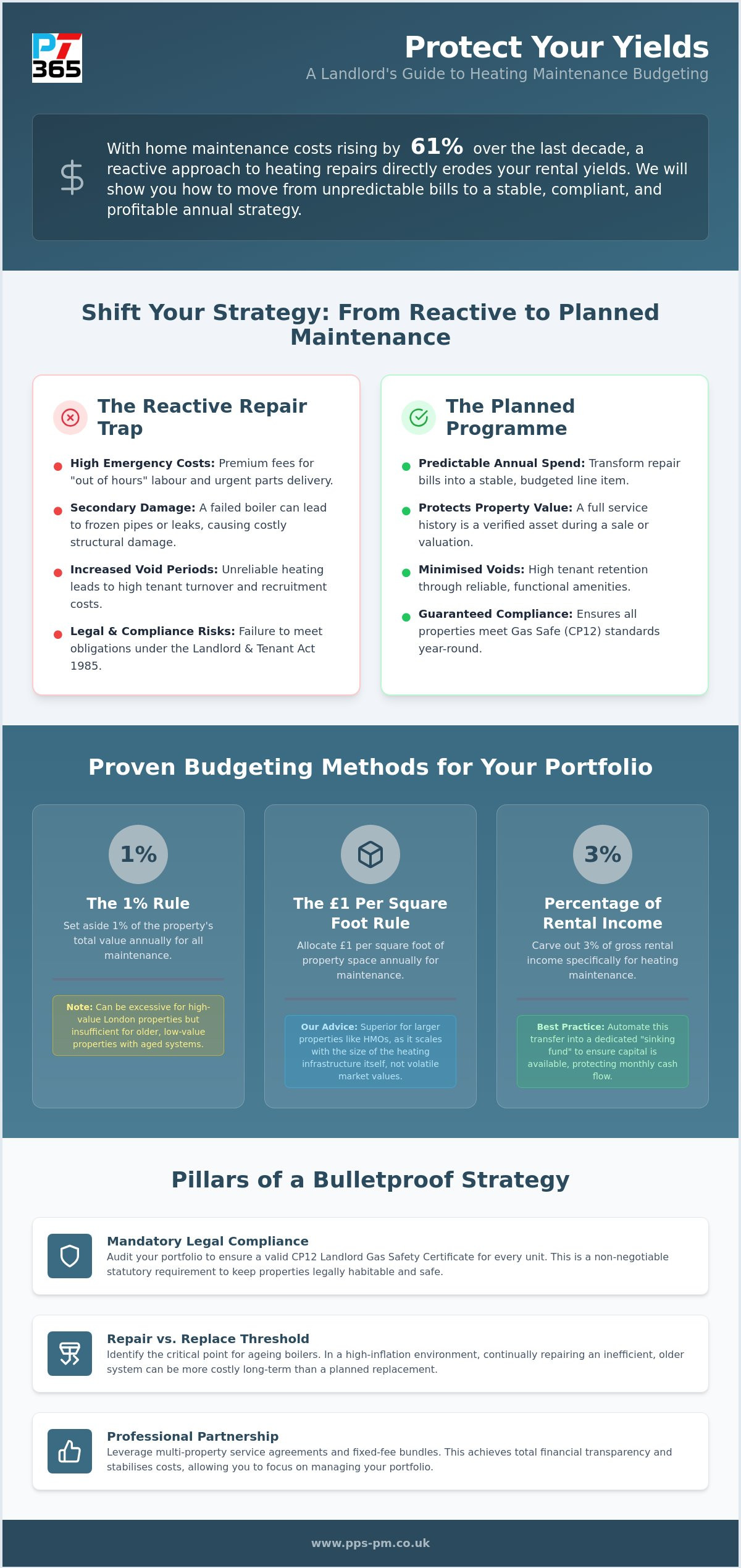
With home maintenance costs having risen by 61% over the last decade, treating your portfolio’s heating systems as a variable expense is a gamble that rarely pays off. Learning how to budget for property heating maintenance isn't just about spreadsheets; it's about protecting your yields from the 2026 surge in material and labour costs. We understand that balancing tenant comfort with strict Gas Safe compliance can feel like a constant battle against your bottom line. You want to avoid those midnight emergency fees that eat your profits whilst ensuring your properties remain legally habitable and safe.
This guide will show you how to transform unpredictable repair bills into a stable annual strategy, ensuring total CP12 compliance and zero void periods. We will break down the 2026 regulatory landscape, from the R-410A refrigerant phase-out to the latest SEER2 efficiency standards, to help you build a bulletproof maintenance fund. By moving from reactive repairs to a planned maintenance programme, you can secure your property’s condition and keep your tenants satisfied year-round. Our collective expertise will help you navigate these technical shifts with total financial clarity.
Table of Contents
Why Dedicated Heating Maintenance Budgeting is Essential for Yields
Managing a property portfolio in 2026 requires a shift in how you view infrastructure. Heating isn't just a utility. It's the heartbeat of your asset's profitability. Many landlords overlook the specific volatility of Heating, ventilation, and air conditioning (HVAC) systems when calculating their annual spend. This oversight is dangerous. With home maintenance costs having risen by 61% over the last decade, failing to understand how to budget for property heating maintenance directly erodes your rental yield.
Under the Landlord & Tenant Act 1985, you're legally obligated to keep specific installations in good repair. This isn't a suggestion; it's a statutory requirement. When systems fail, tenants often feel justified in withholding rent or reporting the property to local authorities. Beyond legal risks, a documented service history protects your property's capital value. A boiler with a full log of annual Gas Safe inspections is a verified asset during a sale or valuation. We ensure our clients remain compliant by documenting every visit, including:
Space heating and water heating system checks.
Supply lines for gas, water, and electricity.
Sanitary installations like basins, sinks, and baths.
The Reactive Repair Trap: Hidden Costs of Delay
Waiting for a system to fail before acting is the most expensive way to manage a property. Emergency call-outs during a cold snap carry heavy premiums for both parts and "out of hours" labour. You aren't just paying for the fix. You're paying for the urgency. Secondary damage is another silent profit-killer. A failed boiler in January can lead to frozen pipes or water leaks that damage flooring and ceilings, turning a simple repair into a full refurbishment. The reactive trap is a cycle of high-stress, high-cost interventions that destroy your annual rental profit in a single weekend.
Minimising Void Periods Through Reliability
Reliable heating is the foundation of tenant retention. High-quality tenants expect a responsive service and a functional home. If your heating system is prone to failure, you'll face high turnover rates and mounting recruitment costs. We focus on keeping properties "let-ready" at all times through planned maintenance. By ensuring your property maintenance strategy includes regular system health checks, you eliminate the friction that causes long-term tenants to look elsewhere. Mastering how to budget for property heating maintenance ensures your assets stay in excellent condition whilst protecting your bottom line.
Proven Budgeting Methods for Property Heating Systems
Deciding how to budget for property heating maintenance requires more than just guesswork. Traditional benchmarks provide a starting point, but they must be adapted for the 2026 market. We see many landlords struggle with the "1% Rule." This method suggests setting aside 1% of the property's total value annually for all maintenance. While it works for mid-range suburban homes, it often fails in high-value areas like London or Kent. If a flat is worth £600,000, a £6,000 annual heating budget is likely excessive. Conversely, for older properties where the value is low but the system is ancient, 1% won't cover the rising costs of specialist labour.
For medical professionals who invest in property, these calculations are often part of a broader financial strategy; engaging a mortgage broker for doctors UK can help ensure your financing structure supports your long-term maintenance and portfolio goals.
The 1% Rule vs. The £1 Per Square Foot Rule
The "£1 Per Square Foot" rule offers a more technical alternative. It focuses on the physical scale of the heating circuit rather than the market value of the land. For larger Houses in Multiple Occupation (HMOs), this method is often superior. These properties typically feature more radiators, complex pipework, and multiple bathrooms, all of which increase the wear on the central boiler. We recommend increasing this allocation if the property is over 20 years old. These systems require more frequent interventions to stay in excellent condition, and a square-foot calculation ensures the fund matches the actual size of the infrastructure.
Allocating a Percentage of Gross Rental Income
Another reliable strategy involves allocating a percentage of your gross rental income. Most experienced property managers suggest a 10% to 15% total maintenance fund. Within this, a 3% carve-out specifically for heating is a safe standard. Automating this transfer into a dedicated "sinking fund" ensures that when a component fails, the capital is already available. This prevents the reactive trap from draining your monthly cash flow. You should balance this percentage against the age of your boiler. A system nearing its ten-year mark will naturally require a larger percentage than a brand-new installation.
The most effective strategy we've seen is the "Combo" approach. This splits your budget into two distinct categories: fixed compliance costs and a variable repair fund. Your fixed costs include mandatory items like Landlord Gas Safety Certificates (CP12) and annual servicing. The variable fund covers unexpected breakdowns or part replacements. By separating these, you gain total financial clarity over your portfolio's performance. If you need help structuring your compliance schedule, our property maintenance team can provide the technical assessment required to set realistic targets. Mastering how to budget for property heating maintenance this way ensures you are never caught off guard by a mid-winter breakdown.
Variables That Influence Your 2026 Heating Maintenance Costs
Setting a flat figure for your entire portfolio is a mistake. To understand how to budget for property heating maintenance accurately, you must audit the specific hardware in every unit. A 2026 budget needs to account for a high-inflation environment where the cost of specific boiler components has climbed. Systems in London and Kent face a unique challenge: hard water. Without preventative care, limescale buildup will choke your heat exchangers and radiators, leading to premature failure. We've seen how ignoring these technical variables leads to emergency call-outs that could have been avoided with a tailored plan.
Technological complexity is another growing factor. Many landlords are now opting for smart thermostat installation to help tenants manage energy bills. Whilst these systems improve efficiency, they add a layer of digital and electrical maintenance to your budget. You also need to distinguish between system types. A standard combi boiler is generally cheaper to maintain than a system with an unvented hot water cylinder. These unvented units require specialist annual checks on pressure relief valves and expansion vessels to remain safe and compliant. If your portfolio includes a mix of these systems, your maintenance fund must reflect that diversity.
Boiler Lifecycle and Replacement Planning
Every boiler has a tipping point. We define this as the moment when annual repair costs exceed 50% of a new installation's price. In 2026, navigating this threshold requires a steady hand. If you're constantly replacing pumps, fans, or diverter valves on a twelve-year-old unit, you're throwing good money after bad. You should budget for the eventual capital expenditure (CapEx) of a full system upgrade well in advance. Consulting with Expert Boiler Engineers can help you identify which units are nearing the end of their reliable life, allowing you to plan replacements during void periods rather than mid-winter crises.
System Hygiene: Power Flushing and Magnetic Filters
System hygiene is the most effective way to extend the life of your heating assets. We recommend factoring a "deep clean" into a five-year maintenance cycle. Power flushing removes the sludge and debris that accumulate in large radiator circuits, restoring efficiency and protecting the boiler’s heat exchanger. Pair this with the installation of a magnetic filter. These devices catch metallic particles before they reach the boiler's internal components. Including these preventative measures in your five-year budget prevents the catastrophic failures that cause long-term tenant dissatisfaction. Keeping your properties in excellent condition starts with the water flowing through the pipes.
A Step-by-Step Guide to Building Your Annual Heating Budget
Building a resilient financial plan for your portfolio requires a methodical approach. Understanding how to budget for property heating maintenance starts with a comprehensive audit of every unit you manage. You must document the age, fuel type, and full service history for every boiler and unvented cylinder. This data allows you to predict which systems are entering high-risk phases. We recommend reviewing these figures quarterly to account for the ongoing 2026 parts inflation. A static budget is a failing budget. It won't protect you from the rising costs of technical labour and specialised components.
Once you have audited your hardware, you must separate your expenditure into fixed and variable categories. Your fixed costs are predictable and mandatory. Your variable fund is a safety net. By following a structured sequence, you can ensure your properties remain in excellent condition without facing sudden cash flow crises. We use our collective expertise to help landlords move away from reactive spending toward a model of total financial clarity.
Prioritising Mandatory Compliance (CP12)
Your Landlord Gas Safety Certificate (CP12) is the non-negotiable cornerstone of your maintenance fund. This is a mandatory legal requirement that must be renewed every 12 months for every gas appliance in your property. Failing to keep these certificates current exposes you to heavy fines and invalidates your landlord insurance. We ensure our clients remain Landlord Gas Safety Certificates compliant by scheduling these inspections well in advance of their expiry dates. This prevents the stress of last-minute bookings and ensures your tenants remain safe and your business stays within the law.
The Strategic Advantage of Off-Peak Servicing
We strongly advise scheduling your annual boiler services between May and August. This "off-peak" strategy offers a significant tactical advantage that many landlords overlook. Engineer availability is much higher during the summer months, allowing you to secure preferred time slots without the "winter peak" surcharges often applied during cold snaps. Fixing potential issues during the summer prevents emergency call-outs in December. This proactive scheduling improves tenant relations by ensuring the heating works perfectly when they actually need it. It is the most effective way to manage costs whilst maintaining professional standards.
Follow this sequence to build your 2026 budget:
Audit: List all hardware, its current age, and its last service date.
Compliance: Allocate funds for mandatory CP12 inspections for every unit.
Variable Reserve: Set aside a 3% rental income reserve for unexpected breakdowns.
Summer Servicing: Book all routine maintenance for the off-peak season.
Quarterly Review: Adjust your fund to account for the 2026 inflation in parts and labour.
If you need a professional assessment to kickstart your portfolio audit, contact our property maintenance team today. We provide the clear communication and technical expertise required to keep your maintenance on time and within budget.
Partnering with Professionals to Stabilise Maintenance Costs
A well-structured budget is only half the battle. To truly master how to budget for property heating maintenance, you need a partner you can rely on. As a trusted and experienced property maintenance provider, we help landlords move from unpredictable, high-cost emergency call-outs to a stabilised model of planned maintenance. By establishing a long-term relationship with a professional team, you gain a steady hand that monitors your system health year-round. This allows us to identify "at-risk" boilers before they fail, protecting your yields and preventing the tenant dissatisfaction that leads to void periods. In the high-stakes London and Kent rental markets, this proactive oversight is the difference between a profitable year and a financial crisis.
Leveraging Portfolio Discounts and Fixed Fees
For landlords and letting agents managing multiple units, scale is your greatest financial lever. We recommend negotiating multi-property service agreements that bundle mandatory CP12 certificates with annual boiler servicing. This approach provides total transparency for your balance sheet, replacing variable repair bills with predictable, fixed-fee maintenance bundles. Our collective expertise extends beyond gas engineering; we deliver a comprehensive range of solutions including plumbing, electrical work, carpentry, and end-of-tenancy refurbishments. Our commitment to honest billing and clear communication ensures you always know exactly what you're paying for. We work on time and within budget to keep your properties in excellent condition. These fixed-price models allow you to forecast your annual spend with total accuracy, eliminating the "surprises" that typically derail property management accounts.
The Importance of Gas Safe Accreditation
Technical competence is not optional. Every engineer who enters your property must be Gas Safe Registered. This professional accreditation is a recurring safety seal that protects both your tenants and your investment. Using uncertified labour is a risk that can lead to catastrophic system failure and legal prosecution. Most importantly, your landlord insurance validity often depends on documented proof that all gas work was performed by a qualified professional. We take this responsibility seriously, providing the technical expertise and compliance documentation required for total peace of mind. Our team understands the specific pressures of the rental sector, from managing tenant access to delivering certificates immediately. Contact Plumbfix 365 today to organise your portfolio maintenance and secure your assets for the 2026 season.
Future-Proof Your Property Yields for 2026
Protecting your rental income requires more than just luck; it demands a proactive approach to infrastructure. By shifting from high-cost reactive repairs to a structured annual servicing model, you eliminate the financial shocks that eat into your profits. Mastering how to budget for property heating maintenance allows you to maintain total legal compliance whilst ensuring your tenants remain satisfied and safe in their homes. We've shown you how auditing your portfolio and leveraging off-peak servicing can provide the financial clarity needed to succeed in a high-inflation market.
Our team of Gas Safe Registered Engineers is ready to help you manage these technical challenges. As specialists in landlord compliance, we provide the steady hand you need to keep your properties in excellent condition. We also offer 24/7 emergency support to ensure help is always available when it's needed most. Don't wait for the first cold snap to protect your investment. Secure your property portfolio with a Plumbfix 365 maintenance plan today and build a more resilient property business.
Frequently Asked Questions
How much should a landlord set aside for boiler repairs annually?
We recommend setting aside approximately 3% of your gross rental income specifically for heating infrastructure. This ensures you can cover routine servicing and unexpected component failures without impacting your monthly cash flow. If your boiler is over ten years old, you should increase this reserve to account for the higher frequency of repairs required to keep the property in excellent condition and avoid costly emergency call-outs.
Is heating maintenance tax-deductible for UK landlords?
Yes, heating maintenance and repairs are typically considered allowable expenses for UK landlords. You can deduct the cost of Gas Safe inspections, boiler servicing, and replacement parts from your rental income before calculating your tax liability. However, capital improvements like installing a completely new, upgraded heating system may be treated as capital expenditure rather than a revenue expense. You should consult with a qualified accountant to confirm your specific situation.
What is the average cost of a Landlord Gas Safety Certificate (CP12) in 2026?
The cost of a Landlord Gas Safety Certificate (CP12) in 2026 depends on the number of gas appliances in the property and your location. Landlords in London and Kent often find that bundling the CP12 with an annual boiler service provides the best value and ensures total compliance. We recommend requesting a fixed-fee quote from your service provider to ensure your annual budgeting remains accurate and transparent throughout the year.
Does a landlord have to provide a temporary heater if the boiler breaks?
Landlords are legally required to provide a working heating system that can maintain a minimum indoor temperature. If a boiler breakdown cannot be fixed within a reasonable timeframe, providing temporary plug-in heaters is a standard practice to ensure the property remains habitable. This proactive approach helps minimise tenant dissatisfaction and reduces the risk of legal claims for a breach of the Landlord & Tenant Act 1985 during cold snaps.
How often should a rental property boiler be serviced?
You must have your rental property boiler serviced at least once every 12 months. This is a critical component of learning how to budget for property heating maintenance, as regular checks catch minor issues before they become expensive failures. Annual servicing is also a common requirement for maintaining the manufacturer's warranty on newer units and ensuring the system operates at peak energy efficiency to help tenants manage their bills.
What happens if I don’t have a valid Gas Safety Certificate?
Operating without a valid Gas Safety Certificate is a criminal offence that can result in unlimited fines or even imprisonment. It also invalidates your landlord insurance and prevents you from serving a Section 21 notice to regain possession of the property. We prioritise compliance for our clients to protect them from these severe legal and financial consequences whilst ensuring every tenant remains safe within their home.
Is it better to have a service contract or pay for repairs as they happen?
A service contract is generally better for landlords who prioritise financial stability and predictable cash flow. While paying for repairs as they happen might seem cheaper in a lucky year, a single mid-winter boiler failure can cost more than several years of service agreements. Fixed-fee contracts often include the mandatory CP12, making it much easier to manage your annual maintenance budget with total clarity and no hidden surprises.
Can I include heating maintenance costs in the tenant’s service charge?
Whether you can include heating maintenance in a service charge depends entirely on the specific terms of your tenancy agreement or lease. In most standard residential tenancies, the landlord is solely responsible for the repair and maintenance of the heating system. However, in some commercial properties or blocks of flats with communal heating systems, these costs are often recovered through a managed service charge. Always check your legal documents first.


Comments