


How to Fix Water Hammer in Pipes: A Complete Guide for UK Homeowners

It’s 2 AM, and every time a tap closes, a violent thud echoes through your walls, leaving you wondering if you need to fix water hammer in pipes before a joint fails. We understand how unsettling that sound is, especially when you’re worried about potential leaks or costly water damage. It’s a common frustration for homeowners and landlords across London and Kent; the confusion over whether it’s a simple DIY task or a plumbing emergency only adds to the stress.
We know you want a quiet, safe home without the constant fear of a plumbing failure. Our expert guide provides the clarity you need to identify the root cause and permanently silence the noise. We’ll walk you through essential troubleshooting steps, from air chamber resets to professional arrestor installations, so you can restore peace to your property and ensure your system remains compliant with the Water Supply (Water Fittings) Regulations 1999.
Table of Contents
What is Water Hammer and Why are Your Pipes Banging?
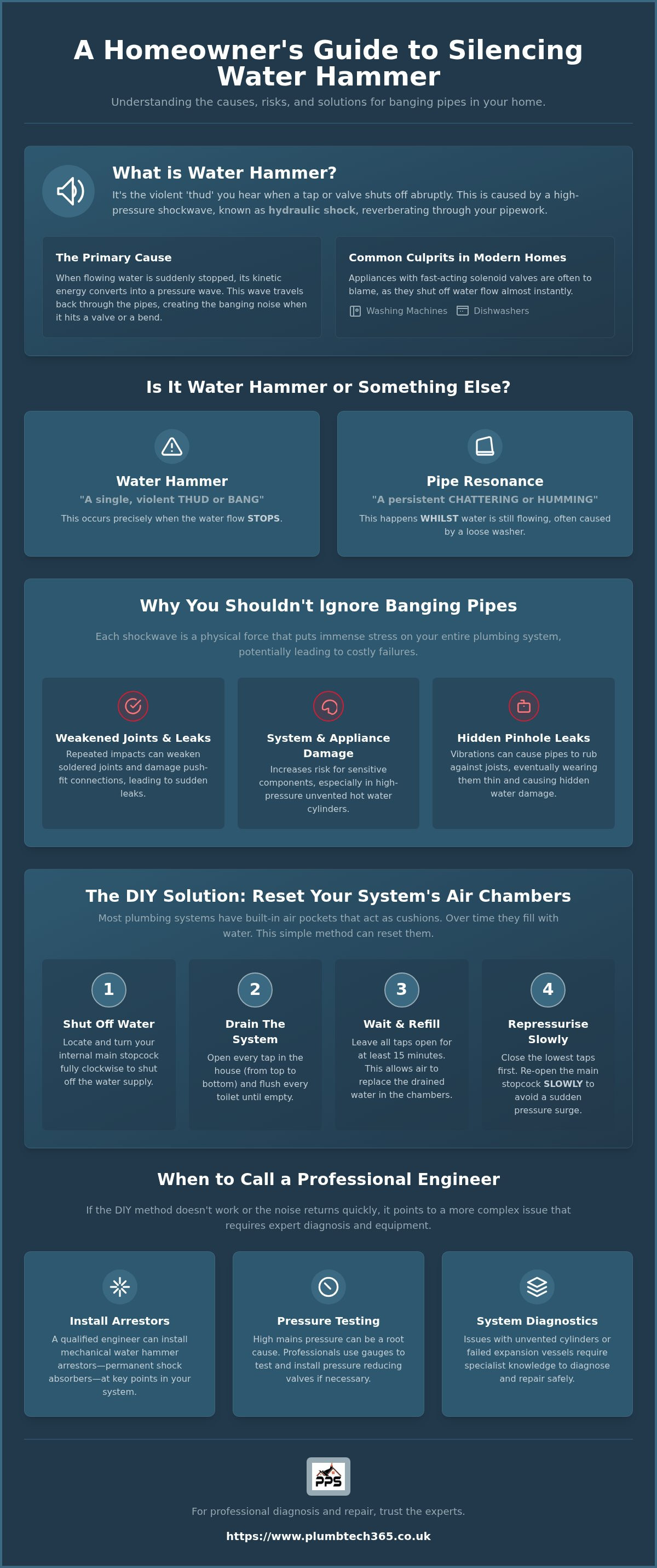
That sudden, jarring thud you hear when a tap closes isn't just a minor annoyance. It is a physical phenomenon known as Hydraulic shock (water hammer). When you abruptly stop the flow of water, the kinetic energy has nowhere to go. This energy creates a high-pressure shockwave that travels through your pipework at incredible speeds. The sound you hear is the physical impact of that wave hitting a valve or a bend in the pipe. If you want to fix water hammer in pipes, you must first understand that this is a mechanical issue, not a ghost in the walls.
Modern appliances are often the primary culprits. Dishwashers and washing machines use fast-acting solenoid valves to shut off water instantly. Unlike a manual tap that you turn slowly, these valves close in milliseconds. This creates an immediate blockage for fast-moving water, sending a surge back through the system. We often see this in properties across Kent where high mains pressure exacerbates the force of the impact. Our team at PPS handles these issues daily, ensuring systems are stabilised before damage occurs.
The Difference Between Shock and Resonance
It's vital to distinguish between a single bang and a persistent vibration. Resonance occurs whilst water is still flowing. If you hear a "chattering" or humming sound, it's likely a loose internal component, such as a worn tap washer, vibrating within the flow. A faulty ball valve in a cold water storage tank can also create a rapid "jack-hammer" rhythm. Whilst both are problematic, true water hammer is defined by that singular, violent shock when the flow stops.
Why Water Hammer is a Risk to Your Home
Ignoring these sounds can lead to catastrophic failures. Every shockwave puts immense stress on your plumbing infrastructure. Repeated impacts weaken soldered copper joints and can cause plastic push-fit connections to perish over time. For landlords and homeowners with unvented hot water cylinders, the risk is even higher. These systems are under constant pressure; additional hydraulic shock can damage internal linings or sensitive relief valves.
Beyond the joints, the vibration causes pipes to move. When pipes rub against timber floor joists or masonry, the protective outer layer wears thin. This eventually leads to pinhole leaks that remain hidden beneath floorboards or behind plasterboard until significant damp occurs. Addressing the issue early ensures your property remains safe and avoids the need for emergency call-outs. We ensure every repair is completed to a professional standard, protecting the integrity of your home.
How to Fix Water Hammer in Pipes: The Step-by-Step Drainage Method
Most modern plumbing systems include hidden air chambers designed to act as cushions. Over time, these chambers fill with water, losing their ability to absorb the energy of moving water. This is when the banging starts. Before you consider more complex repairs, we recommend this simple drainage method to fix water hammer in pipes by resetting your system's natural shock absorbers.
Follow these steps in order to ensure the system drains completely:
Step 1: Locate your internal main stopcock. This is usually found under the kitchen sink or in a utility cupboard. Turn it clockwise until it's fully closed to shut off the water supply.
Step 2: Open every tap in the property. Start at the top floor and work your way down to the lowest point. This allows gravity to pull the water out whilst letting air in.
Step 3: Flush every toilet. You must ensure all cisterns and header tanks are completely empty to break the vacuum within the pipework.
Step 4: Wait. Leave all taps open for at least 15 minutes. This ensures that any trapped water drains away and is replaced by air in the chambers.
Re-pressurising the System Correctly
Once the 15 minutes have passed, you need to restore the water without creating new problems. Close the taps on the lowest floor first, then move upwards. Reopen the main stopcock slowly; turning it too quickly can cause a sudden surge that risks damaging seals. Open the taps one by one to let the air escape steadily until the flow is consistent. This process resets the natural air pockets in your plumbing. If the banging persists, our professional plumbing team can perform a deeper system diagnostic to identify more stubborn issues.
When the Draining Method Fails
If the noise returns within a few days, your air chambers may be permanently waterlogged or simply non-existent. Many older properties in London were built before these chambers became a standard requirement. In these cases, the pipework lacks the physical space to hold a protective air pocket. You'll know the drainage method has failed if the singular "thud" remains just as loud as before. At this stage, trying to fix water hammer in pipes requires a more permanent mechanical solution to protect your home from potential leaks. We provide dependable workmanship to ensure your property remains safe and compliant with all current regulations.
Mechanical Solutions: Water Hammer Arrestors and Pipe Security
Whilst draining the system often provides a temporary fix, permanent mechanical hardware is frequently necessary to fix water hammer in pipes for good. Water hammer arrestors are small, specialised tanks containing a diaphragm that separates a pocket of air from your plumbing. They act as a local shock absorber, catching the hydraulic surge before it can rattle your pipework. For the best results, we always install these as close to the offending appliance as possible, typically right behind a washing machine or dishwasher.
High mains pressure is another common culprit we encounter in London and Kent properties. If your pressure exceeds 4 or 5 bar, a standard air cushion may not be enough to stop the noise. Installing a Pressure Reducing Valve (PRV) at the main entry point of your home allows us to control the incoming force. This protects your entire system, including sensitive bathroom plumbing and boiler components, from unnecessary stress and potential leaks.
Installing Water Hammer Arrestors
For a permanent solution on copper pipework, we use the "tee-piece" method. This involves cutting into the pipe and soldering a permanent arrestor into the line. If you need a quicker fix for a rental property, "inline" arrestors are an excellent choice. These screw directly onto the cold water valves of your washing machine without any pipe cutting required. We recommend choosing a 1/2-inch BSP arrestor for most domestic UK systems to ensure it handles the volume of the shockwave effectively.
Securing Loose Pipework
Generic advice often overlooks the physical movement of the pipes themselves. Even a small shockwave can cause a loose pipe to jump, hitting timber joists or floorboards with a loud "clunk". We perform a physical inspection of floor voids and lofts to identify these weak points. To fix water hammer in pipes where movement is the issue, we replace standard plastic clips with rubber-lined versions that dampen vibration. If a pipe passes through a tight notch in a joist, wrapping the copper in thick felt prevents the metal-on-wood contact that amplifies the sound. These small details ensure every job is completed to a professional standard, on time, and within budget.
High-Pressure Systems and Unvented Hot Water Cylinders
Many modern properties across London and Kent now use unvented hot water cylinders to provide high-pressure water to multiple bathrooms simultaneously. Whilst efficient, these systems are particularly susceptible to hydraulic shock. Unlike older vented systems that use a cold water tank in the loft to regulate pressure, unvented cylinders are sealed units connected directly to the mains. They rely on a dedicated air gap or an external expansion vessel to absorb the energy created when water flow stops. If you are struggling to fix water hammer in pipes in a newer home, the cylinder's safety components are often the first place we look.
When an expansion vessel fails, the system loses its ability to "breathe". Every time a fast-acting valve closes, the resulting shockwave has no cushion, leading to violent banging. You should regularly check your Tundish, the white plastic funnel-like fitting near your cylinder. If you see water dripping into it, or if the pressure relief valve is constantly leaking, your system is failing to manage pressure spikes. This is a clear sign that the internal environment of your plumbing is under extreme stress.
Expansion Vessel Maintenance
Expansion vessels are not "fit and forget" components. They contain a rubber diaphragm and a pressurised air charge that naturally depletes over time. Once the air charge is lost, the vessel becomes waterlogged and useless as a shock absorber. This causes massive pressure spikes every time a tap is closed, which can eventually rupture joints. Re-pressurising these vessels is a technical task that requires specific equipment. It's a legal requirement to use a Gas Safe Registered engineer to maintain these systems, ensuring they remain safe and compliant with G3 Building Regulations.
Pressure Reducing Valves (PRV) Malfunction
The PRV acts as the gatekeeper for your home’s internal plumbing. Its job is to take the high, fluctuating pressure from the street and step it down to a consistent, safe level (usually around 3 bar). If this valve perishes or becomes blocked with debris, your internal pipework is exposed to the full, raw force of the mains. Symptoms of a failed PRV include unusually high water flow at the tap and a sudden increase in hammer noise. We advise homeowners to check their static pressure if hammer occurs suddenly and without warning. If your system is banging or leaking, our boiler engineers in Kent can provide a rapid diagnosis and repair to protect your property from water damage.
Professional Repairs: When to Call Plumbfix 365
Persistent banging is more than a noise; it's a mechanical warning. If you've tried to fix water hammer in pipes without success, the shockwaves continue to batter your joints and valves. This leads to material fatigue and eventual failure. Our engineers use professional pressure gauges to diagnose the root cause accurately, ensuring all repairs meet current UK Water Regulations. We provide a steady hand for landlords and letting agents who must maintain tenant satisfaction whilst keeping their property portfolio safe and compliant.
Comprehensive System Health Checks
We offer a comprehensive solution for keeping properties in excellent condition. Beyond plumbing, our expertise covers electrical work, painting and decorating, and general repairs. Whether you require planned maintenance to prevent future issues or full end-of-tenancy refurbishments to minimise void periods, we ensure every job is completed to a professional standard, on time, and within budget. Our landlords in London and Kent also depend on us for Landlord Gas Safety Certificates to ensure total compliance.
Emergency Plumbing Support in London & Kent
We provide rapid response emergency call-outs for urgent leaks or pipework failures across Dartford, Bromley, Medway, and Bexleyheath. Our multidisciplinary team handles everything from carpentry and flooring to garden maintenance and cleaning, allowing us to restore your property fully after a plumbing crisis. We invite you to contact us for a reliable plumbing assessment to secure your system. With clear communication and dependable workmanship, we remain the trusted partner for consistent property care.
Secure Your Plumbing and Restore Peace
Banging pipes are a clear signal that your plumbing system is under mechanical stress. By understanding the causes of hydraulic shock and the importance of maintained air cushions, you can take control of your home's safety. Whether you choose to reset your air chambers through drainage or install permanent mechanical arrestors, the goal is to protect your joints and valves from premature failure. Taking the time to fix water hammer in pipes now will save you from the disruption of hidden leaks and structural damp later.
Our Gas Safe Registered Engineers have been serving London and Kent since 1996, offering the expertise needed to manage even the most complex high-pressure systems. We provide a 24/7 emergency response to keep your property running smoothly and compliant with all regulations. Don't let a minor noise turn into a major crisis. Book a Professional Plumbing Inspection with Plumbfix 365 today to ensure your workmanship is completed to a professional standard. You can rest easy knowing your plumbing is in the hands of dependable experts.
Frequently Asked Questions
Can water hammer fix itself over time?
No, water hammer will not fix itself and typically requires physical intervention to resolve. Because it's caused by mechanical force, the repeated vibration only serves to loosen pipe clips or weaken soldered joints as time passes. If you ignore the noise, you risk a sudden pipe failure or hidden leaks behind your walls that can lead to significant damp issues.
Is banging in the pipes a sign of a faulty boiler?
Banging pipes are usually a plumbing issue rather than a direct boiler fault, though the two systems are closely linked. In modern unvented systems, a failed expansion vessel near the boiler can cause pressure spikes that lead to hammer noise. If the thudding coincides with your heating coming on, it's time to have a professional engineer check your system’s pressure levels and vessel charge.
How much does it cost to install a water hammer arrestor in the UK?
The typical industry cost to supply and install a water hammer arrestor in the UK ranges from £120 to £250 based on 2026 market data. This price varies depending on the accessibility of your pipework and whether you require multiple units for different appliances. Whilst the hardware itself is relatively inexpensive, professional installation ensures the unit is placed correctly to effectively fix water hammer in pipes.
Will lowering my water pressure stop the banging noise?
Lowering your water pressure is one of the most effective ways to reduce hydraulic shock in a domestic system. If your mains pressure is above 5 bar, the water travels with too much kinetic energy for standard air cushions to absorb. Installing a Pressure Reducing Valve (PRV) to bring the pressure down to a steady 3 bar often silences the system immediately and protects your appliances.
Why do my pipes bang only when the washing machine is running?
Your pipes bang during a washing machine cycle because of the fast-acting solenoid valves used to control the water intake. These valves stop the flow in a fraction of a second, creating a sudden shockwave that travels back through your plumbing. Because the appliance is connected via flexible hoses, the vibration is often amplified as it hits the rigid copper pipework in your kitchen or utility room.
Can a faulty toilet fill valve cause water hammer?
Yes, a faulty or worn toilet fill valve is a frequent cause of persistent plumbing noise in UK homes. If the internal washer is perished or the float mechanism is sticking, the valve may vibrate or "chatter" as it attempts to close. This sends rapid pressure pulses through the system, which can be mistaken for water hammer but is actually a sign the valve needs replacing.
Is water hammer covered by standard home insurance?
Standard home insurance policies rarely cover the cost to fix water hammer in pipes as it is generally classified as a maintenance issue. However, most policies do cover "escape of water" or the resulting damage if a pipe actually bursts due to the vibration. We always recommend addressing the noise early to avoid the stress and disruption of a major insurance claim for water damage.
What is the "air pocket" method for fixing noisy pipes?
The "air pocket" method involves draining your entire plumbing system to replenish the air chambers that have become waterlogged over time. By shutting off the main stopcock and opening all taps, you allow air to enter the vertical sections of pipework designed to cushion the water’s momentum. Once the system is refilled, these restored pockets of air act as natural shock absorbers to silence the banging.


Comments