


How to Reset Boiler Lockouts Safely at Home

A boiler lockout can turn a normal morning into a cold, frustrating one - especially when the heating and hot water stop without warning. Knowing how to reset boiler lockouts can help with a minor interruption, but a reset is not a repair. Your boiler has locked out because its safety controls have detected a condition that needs attention.
A single careful reset may get the boiler running again. Repeated lockouts, error codes, low pressure, leaks or a smell of gas need professional diagnosis. Never remove the boiler casing or attempt to repair gas components yourself.
What does a boiler lockout mean?
A lockout is the boiler’s way of preventing itself from continuing to operate when it cannot do so safely or correctly. The display may show a fault code, a flashing reset symbol, a flame symbol with a line through it, or a warning light. Some boilers simply show a red light.
The cause can be straightforward, such as pressure that has dropped too low. It can also point to a fault with ignition, the fan, condensate pipework, sensors, circulation or the gas supply. The exact meaning of an error code varies by make and model, so the boiler manual is always the best first reference.
Treat a lockout as useful information rather than an inconvenience to override. Resetting once is reasonable after basic checks. Resetting the boiler again and again can mask a developing fault and leave you without heating at the worst possible time.
Safety checks before you reset a boiler lockout
Before touching the reset control, take a minute to check the situation. If you can smell gas, notice black marks or scorching around the boiler, feel unwell with symptoms such as headaches or dizziness, or suspect carbon monoxide, do not reset the appliance. Turn the boiler off if it is safe to do so, open windows and doors, leave the property, and contact the gas emergency service and a Gas Safe registered engineer.
If there is water leaking from the boiler, do not remove its cover. A small drip from a visible pipe beneath the boiler may still be linked to a pressure issue, but water around electrical components needs prompt professional attention.
You should also avoid resetting a boiler if the fault has appeared after work on the gas supply, if the boiler has been making loud banging noises, or if the flue terminal has been damaged. These are not homeowner reset situations.
How to reset boiler lockouts step by step
Provided there are no safety concerns, follow this sensible process. Keep your boiler manual nearby if you have it, as button locations and reset times differ between manufacturers.
1. Record the fault code first. Take a clear photo of the display or write down the code and any flashing lights. If the boiler locks out again, this gives an engineer a useful starting point.
2. Check the electrical supply. Make sure the boiler’s fused spur switch is on and check whether a tripped consumer-unit switch has interrupted power. Do not keep switching the electricity on and off in an attempt to force a restart.
3. Check the system pressure. On most sealed heating systems, the gauge should normally sit around 1 to 1.5 bar when cold. If it is below 1 bar, the boiler may refuse to fire. Your manual will explain whether you can repressurise using the filling loop or filling key. Add water slowly and stop at the recommended pressure. Do not overfill the system.
4. Check that the gas supply appears available. If other gas appliances, such as a hob, are working normally, that is reassuring. If they are not, the issue may be with the supply rather than the boiler. Do not tamper with the gas meter or pipework.
5. Use the reset control once. This may be a button labelled ‘reset’, a button with a circular arrow, or a control that needs to be held for a few seconds. Follow the instructions for your model. After resetting, give the boiler a few minutes to complete its start-up sequence.
If the boiler restarts and remains running, check that radiators warm up and that hot water is available. Keep an eye on the pressure gauge over the next day or two. A boiler that works briefly but loses pressure again is likely to need a repair.
Do not keep pressing reset
One reset after simple checks is usually enough. If the boiler immediately returns to lockout, or locks out again later the same day, stop resetting it. The fault has not gone away, and repeated attempts can place unnecessary strain on components.
This is particularly relevant with ignition and flame-detection faults. A boiler may fail to light because of an issue that needs a qualified engineer to test safely. Forcing repeated ignition attempts is not a solution.
Common reasons a boiler keeps locking out
Low system pressure is one of the most common causes in homes with sealed central-heating systems. It can happen gradually through small losses of water, or more quickly because of a leak, a faulty pressure-relief valve or an expansion vessel issue. Repressurising may restore operation temporarily, but recurring low pressure needs investigation.
A frozen condensate pipe can also cause a lockout during cold weather. Condensing boilers send acidic water through a waste pipe, often routed externally. When this freezes, the boiler may shut down to prevent a backup. If the pipe is easily accessible at ground level, you may be able to thaw it carefully using warm water and a warm cloth. Never use boiling water, a naked flame or any method that could crack the pipe. If access involves a ladder or the pipe is concealed, call an engineer instead.
Air in the system, poor circulation and a blocked filter can contribute to overheating faults. You may notice cold patches on radiators, gurgling pipes or a boiler that becomes noisy before shutting down. Bleeding a radiator can help where you know how to do it, but remember that it can lower system pressure. Sludge and circulation faults may require cleaning, repair or power flushing rather than a reset.
Other causes are not suitable for DIY checks. These include faulty fans, pumps, printed circuit boards, electrodes, sensors, gas valves and flue-related safety faults. A Gas Safe engineer can test these components properly and confirm whether a repair is safe and cost-effective.
What tenants, landlords and property managers should do
For tenants, the safest approach is to report the fault code, pressure reading and whether heating or hot water has stopped. You can carry out only the basic user checks permitted in the boiler instructions. Do not open the boiler, alter gas controls or keep repressurising a system that repeatedly loses pressure.
Landlords and managing agents should treat recurring lockouts as a maintenance issue, not simply a tenant inconvenience. A clear record of the code, appliance model, service history and reported symptoms helps speed up diagnosis. Where occupants include vulnerable people, care settings or families without heating, rapid attendance matters even more.
Annual servicing is one of the best ways to reduce unexpected boiler lockouts. It gives an engineer the opportunity to check combustion, clean relevant components, inspect the condensate route, identify worn parts and spot pressure or circulation problems before they become a complete breakdown.
When to call a Gas Safe engineer
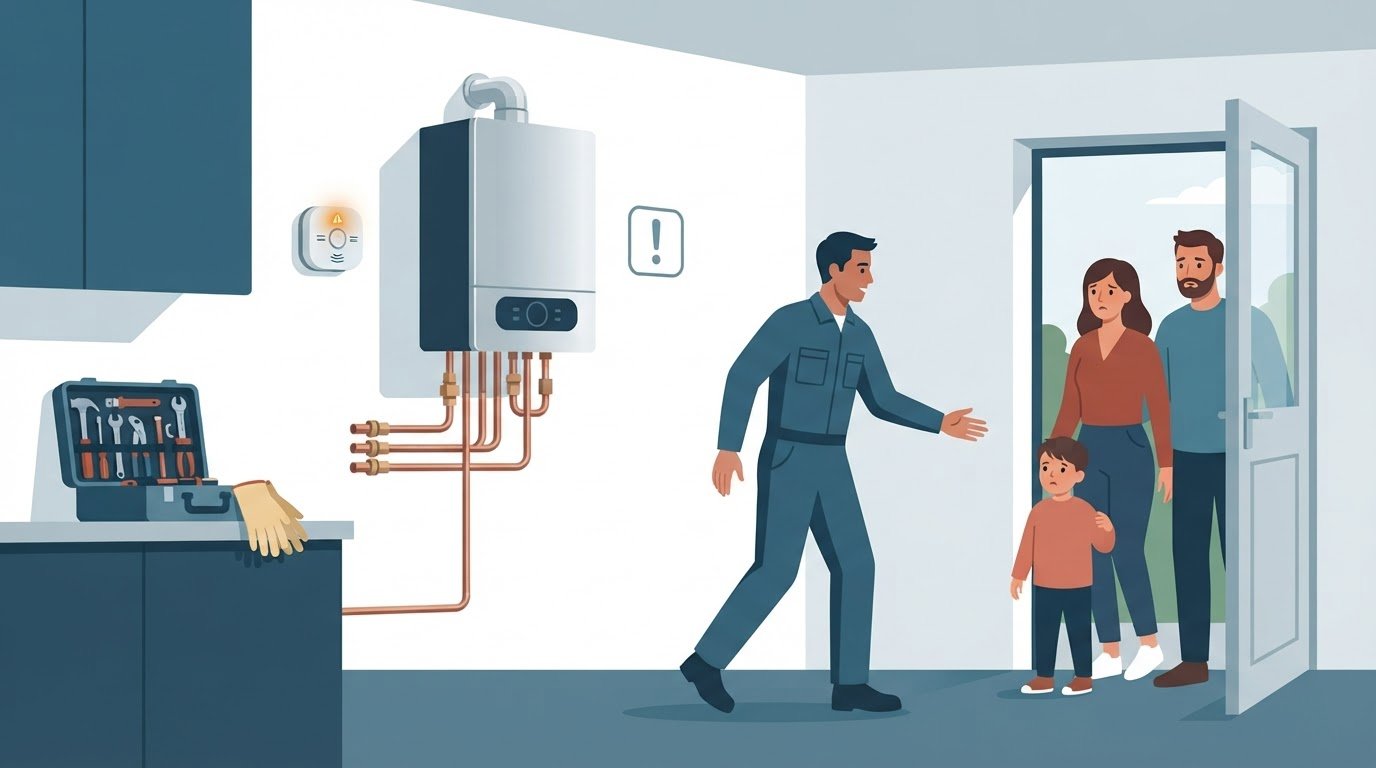
Call for professional help if the boiler will not reset, the same code returns, pressure keeps falling, there is a leak, or heating and hot water remain unreliable. You should also arrange an urgent visit for unusual noises, visible damage, signs of overheating or any concern about gas or carbon monoxide.
For homeowners and property professionals in Dartford, North Kent and South East London, PlumbTech365 can diagnose boiler faults, carry out safe repairs and explain the cause in plain English. The goal is not merely to clear a code, but to find out why the boiler entered lockout and help prevent it happening again.
A working reset button is useful, but the real peace of mind comes from knowing when to use it once, when to stop, and when to put the fault in qualified hands.


Comments