


How to Stop Leaking Pipes Before Damage Spreads

A pipe can go from a slow drip under the kitchen sink to a stained ceiling, damaged flooring or a flooded cupboard far quicker than most people expect. Knowing how to stop leaking pipes in the first few minutes can reduce the damage considerably - but a temporary fix is not the same as a proper repair.
Whether the leak is visible beneath a basin, coming through a ceiling or hidden behind a washing machine, the priority is to make the area safe, stop the water supply and identify whether you need urgent professional help.
How to stop leaking pipes safely
Start by moving towels, buckets and any items that could be damaged out of the way. If water is close to sockets, light fittings, extension leads or electrical appliances, do not touch the electrics. Switch off the electricity at the consumer unit only if it is safe to do so, and keep everyone away from the affected area.
Next, turn off the water. For a small leak on a toilet, tap or washing machine supply, you may be able to close the local isolation valve. This is usually a small valve on the pipe near the appliance or fitting, often operated with a flat-head screwdriver. Turn it a quarter turn so the slot runs across the pipe rather than along it.
If you cannot find an isolation valve, or the leak is from a pipework joint, turn off the main stopcock. In many homes it is under the kitchen sink, but it may be in a utility room, airing cupboard, garage or near the water meter. Turn it clockwise until the water stops. It is worth finding and testing your stopcock before an emergency, particularly in rented properties and commercial premises.
Once the supply is off, open the cold taps to drain the remaining water from the pipework. If the leak involves hot water pipes, allow the system to cool before touching nearby fittings. Then place a container beneath the leak, dry the visible area and arrange a repair.
Do not overlook leaks from ceilings or walls
Water dripping through a ceiling needs a more cautious approach. The source may be a leaking bathroom pipe, shower waste, central-heating pipe or an overflowing appliance above. It may also have travelled some distance before becoming visible.
Turn off the water supply and avoid standing directly beneath a bulging or sagging ceiling. A waterlogged plasterboard ceiling can fail without much warning. Do not cut into it yourself if electrical wiring or light fittings may be present. Take clear photographs from a safe distance for your insurer, landlord or managing agent, then call a qualified plumber to trace the source.
A damp patch on a wall is similarly not proof that the pipe immediately behind it is leaking. Condensation, failed sealant, roof problems and external water ingress can create similar marks. A proper inspection avoids opening up the wrong area and helps ensure the repair addresses the actual cause.
Temporary pipe leak fixes: when they can help
A temporary repair can buy time after the water has been isolated, especially if you are waiting for an emergency plumber. It should not be relied on to restore a pressurised water supply for long periods.
For a tiny pinhole in an accessible copper pipe, a proprietary pipe repair clamp or waterproof repair tape may reduce drips. The pipe needs to be dry and clean for these products to adhere properly, which is often difficult when water is still draining through the system. A rubber patch secured with a hose clip can also act as a short-term measure on certain straight pipe sections.
These options have limits. They are not suitable for split pipes, corroded sections, damaged plastic fittings, leaking compression joints or pipes concealed in walls and floors. Tape also cannot correct movement in pipework, poor installation or corrosion that has weakened the pipe beyond the visible hole.
Avoid using adhesive, filler or excessive force on a fitting. These can make later repairs harder and may create a larger failure when pressure returns. If the pipe is cracked, heavily corroded, warm from the heating system or close to gas pipework, leave it isolated and seek professional assistance.
Find out what is actually leaking
The repair depends on the type of leak. A visible drip does not always mean the pipe itself has failed.
A leak at a compression fitting may be caused by a worn olive, a poorly seated pipe or a joint that has been disturbed. Carefully tightening the nut can occasionally help, but over-tightening can damage the fitting or deform the pipe. A plumber will normally isolate and drain the section before dismantling it, inspecting the components and remaking or replacing the joint properly.
Leaks around plastic push-fit connections can result from a damaged O-ring, an unsupported pipe, poor insertion depth or incompatible parts. The fitting may need replacement rather than tightening. Pipe movement is particularly common below sinks, behind washing machines and where cupboards have been knocked or altered.
Copper pipework that develops green staining, white residue or recurring pinhole leaks may be corroding. Repairing one small hole can be sensible, but repeated failures on the same run may point to ageing pipework, water conditions or installation issues. In that situation, replacing a longer section is often the more dependable and cost-effective choice.
Heating pipes need a different response
A leak from a radiator valve, central-heating pipe or boiler area is not always supplied directly from the mains. Turning off the stopcock may stop a separate cold-water leak but may not immediately resolve a sealed heating-system issue.
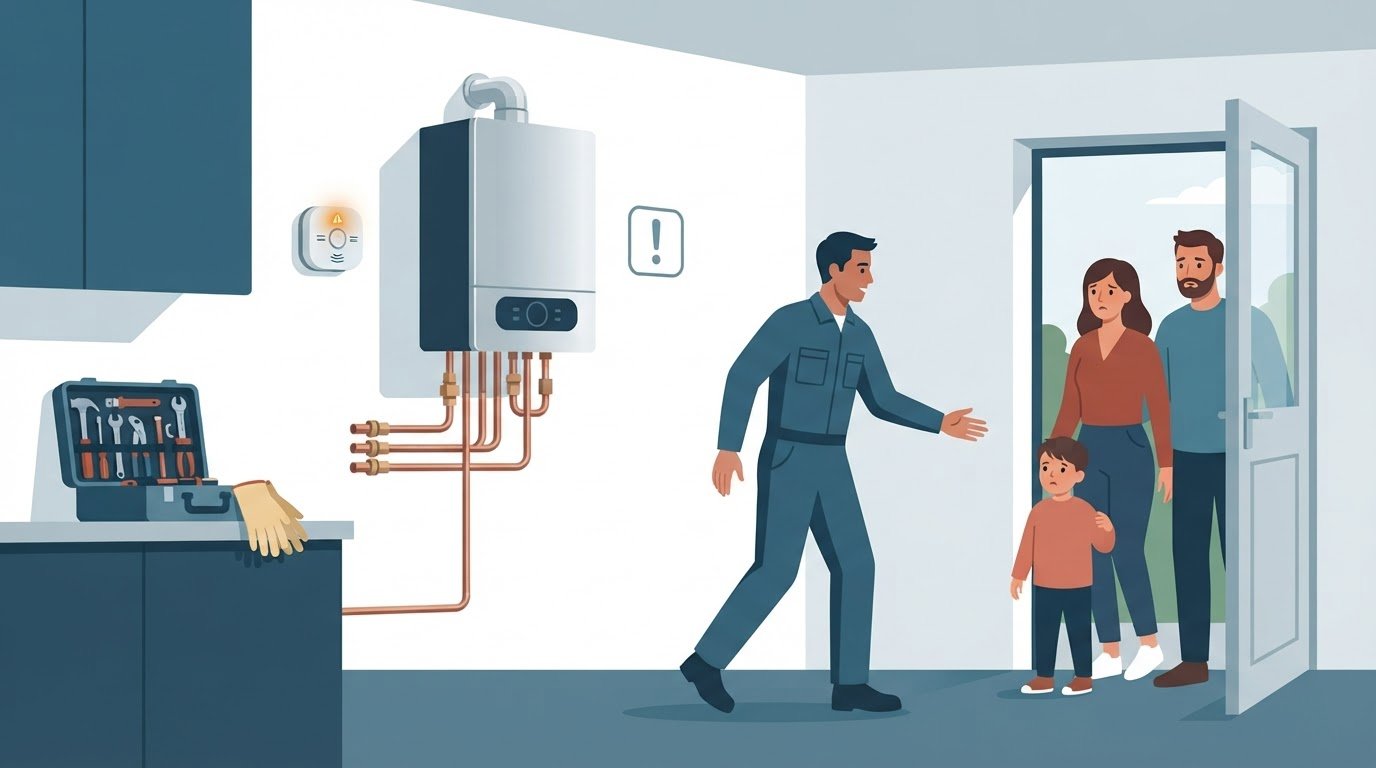
If you see water around the boiler, smell gas, notice a boiler fault code, lose pressure repeatedly or find a radiator valve leaking, switch the boiler off and do not remove its casing. Do not attempt repairs on gas appliances or safety components. A qualified engineer can identify whether the problem is a valve, pressure-relief discharge, pump, pipe joint or another fault within the heating system.
For a radiator valve drip, place a towel beneath it and turn the heating off while you arrange help. Continually repressurising a boiler to compensate for a leak can make matters worse and may conceal a developing fault.
When a leaking pipe is an emergency
Some leaks can wait for a booked repair if the local valve is closed, the area is dry and the property is safe. Others need rapid attendance. Treat the issue as urgent if water is flowing rather than dripping, the ceiling is bulging, electrics may be affected, the leak cannot be isolated, or the property is occupied by vulnerable residents.
Landlords, letting agents and property managers should act quickly where a leak affects a tenant's water supply, bathroom facilities, heating or electrics. Clear communication matters: confirm that the supply has been isolated, explain what residents should avoid using and arrange access for the engineer. Prompt action can prevent a relatively contained repair becoming a larger restoration claim.
For homes and businesses in Dartford, North Kent and South East London, a local rapid-response plumber can isolate the fault, trace the source and carry out the repair without unnecessary delay. PlumbTech365 provides emergency plumbing support alongside planned repairs, helping customers move from immediate damage limitation to a properly tested, lasting solution.
Prevent the next leak before it starts
Many pipe leaks give warning signs. Check under sinks, around toilets, behind washing machines and near boilers every few months for moisture, staining, corrosion or a musty smell. Do not store so much in cupboards that supply pipes and valves cannot be inspected.
In cold weather, protect vulnerable external and loft pipework from freezing, and keep the heating at a low background temperature when a property is empty. Insulate pipes where appropriate, but remember that insulation does not repair an existing weakness. If you are away during a severe cold spell, knowing where the stopcock is - and ensuring someone can access the property if necessary - offers valuable peace of mind.
A leak rarely improves by itself. Isolate the water, make the area safe and have the cause repaired properly, so the only thing left behind is a dry cupboard rather than an expensive surprise.


Comments