


Landlord Gas Safety Certificate for Multiple Properties: The 2026 Portfolio Management Checklist
- Darrell Williamson

- Jul 16
- 11 min read
Updated: Jul 20
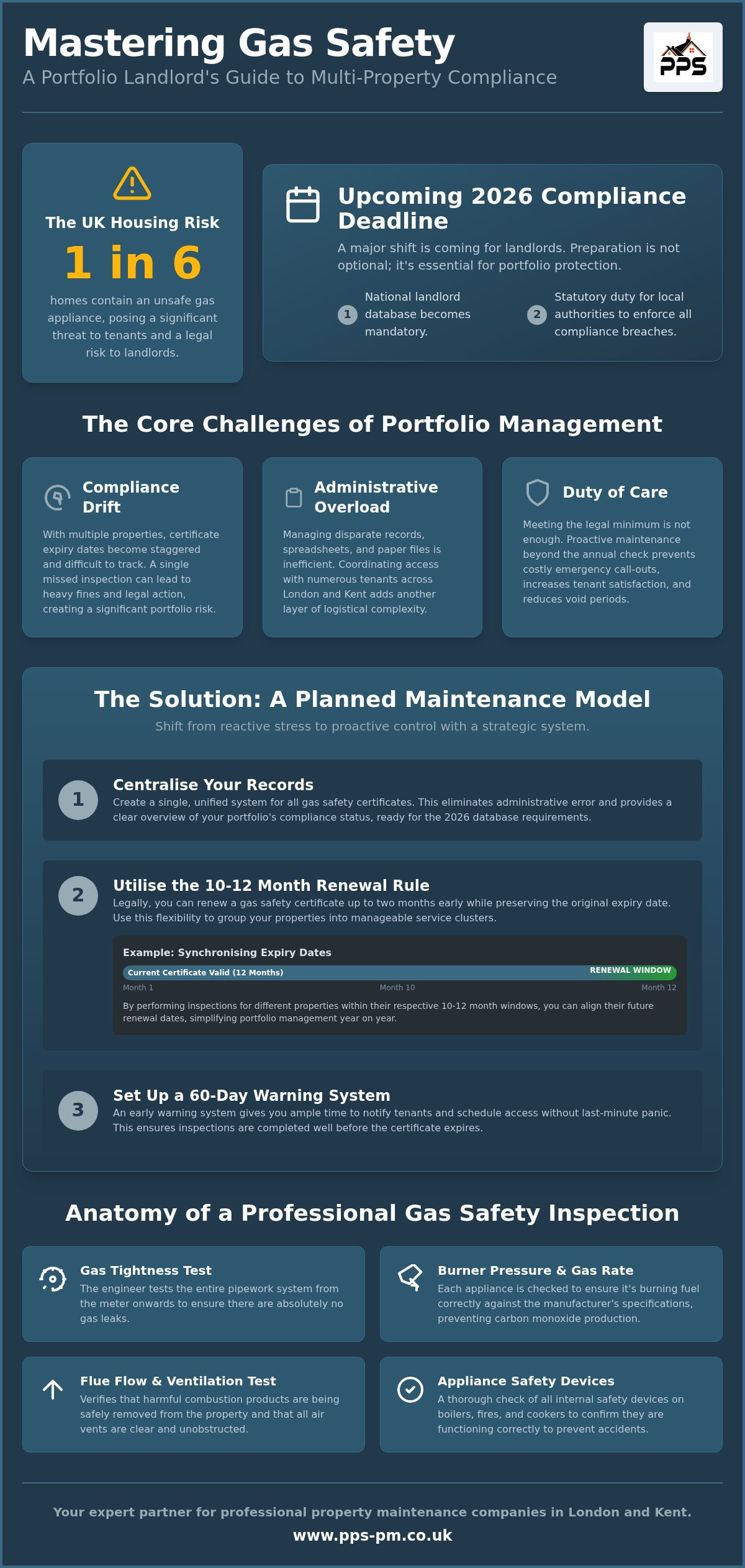
Did you know that one in six homes in the UK currently contains an unsafe gas appliance? For a landlord with a single flat, that statistic is a worry, but for those managing a diverse portfolio, it represents a massive logistical and legal risk. We know that securing a landlord gas safety certificate for multiple properties often feels like an endless cycle of chasing tenants and tracking disparate expiry dates across the calendar.
It's easy to feel overwhelmed by the administrative burden, especially with the 2026 requirement for a national landlord database and mandatory enforcement of compliance breaches starting in May. We're here to help you move away from reactive stress towards a professional, planned maintenance strategy. Our comprehensive checklist will show you how to master multi-property compliance with total confidence. We'll explore how to centralise your records, take advantage of renewal flexibility windows, and implement cost-effective bulk servicing to ensure every tenant remains safe and every property stays legal.
Table of Contents
Scaling Gas Safety: The Challenges of Portfolio Compliance
Scaling a property portfolio brings significant rewards, but it also amplifies your legal exposure. When you're responsible for a single Landlord's Gas Safety Certificate, the renewal date is easy to track. However, once you manage five, ten, or fifty units, "compliance drift" becomes a genuine threat. This occurs when administrative oversight leads to a missed inspection, leaving you vulnerable to heavy fines and potential prosecution. We've seen how easily a single date can slip through the cracks without a rigorous system in place.
Securing a landlord gas safety certificate for multiple properties requires a shift in mindset. You must move away from reactive repairs and embrace a professional planned maintenance strategy. From May 2026, local authorities in England will have a statutory duty to enforce compliance breaches. A single missed CP12 isn't just a paperwork error; it's a legal failure that could jeopardise your entire business. Our team of Gas Safe Registered engineers acts as a steady hand, ensuring every property in your portfolio remains compliant and safe for your tenants.
To better understand the steps involved in this process, watch this helpful video:
The Administrative Burden of Multi-Property Management
Tracking varying expiry dates across different tenancy start dates is a complex logistical task. You aren't just managing boilers; you're managing people. Coordinating access with different tenant personalities and schedules often leads to frustrating delays. For 2026, a centralised record-keeping system is non-negotiable. We believe that professional property management relies on clarity. Disparate spreadsheets and paper files aren't enough to satisfy the upcoming national landlord database requirements. You need a unified approach to ensure no property falls behind.
Duty of Care vs. Legal Minimums
Your legal obligation is the annual check, but your "duty of care" goes much further. Relying solely on the minimum requirements is a risky strategy for any serious landlord. Regular boiler servicing alongside your gas safety checks reduces the likelihood of expensive emergency call-outs during the winter months. Safe, well-maintained homes lead to higher tenant satisfaction and lower void periods. By using a unified team to manage your landlord gas safety certificate for multiple properties, you protect both your tenants and your long-term investment. We focus on delivering professional standards that keep your properties in excellent condition year-round.
The Landlord Gas Safety Inspection: A Technical Checklist for Every Property
A professional gas safety inspection is a rigorous technical assessment, not a simple visual check. For property managers, understanding the mechanics of this process is vital for maintaining landlord's safety responsibilities across a diverse portfolio. Every inspection must begin with a gas tightness test. Our engineers test the entire system, from the meter to the furthest appliance, ensuring there are no leaks in the pipework. Even a minor drop in pressure can indicate a significant safety risk that requires immediate attention.
Securing a landlord gas safety certificate for multiple properties involves verifying that every individual appliance is burning fuel correctly. We measure the burner pressure and gas rate against the manufacturer's specific data plate. If these figures don't align, the appliance may be producing dangerous levels of carbon monoxide. Equally critical is the flue flow test. We must ensure that combustion products are being removed from the property effectively and that all ventilation points are clear and unobstructed. This level of detail is what separates a standard check from a professional safety audit.
Appliance-Specific Safety Checks
Boilers require the most intensive scrutiny. We check all internal safety devices and confirm that the casing forms an airtight seal. However, we don't stop at the boiler. Gas fires and cookers are checked for stability and correct flame behaviour; an orange or "lazy" flame often signals a lack of oxygen. We also specialise in unvented hot water cylinders. Whilst these aren't always part of a basic gas check, their maintenance is critical for preventing high-pressure failures. Including these in your planned maintenance schedule ensures total property safety.
The Final CP12 Certificate: What to Look For
When you receive the final CP12, you must be able to interpret the results instantly. Look for specific classifications. "At Risk" (AR) means the appliance has a fault but isn't immediately dangerous, whereas "Immediately Dangerous" (ID) requires the engineer to disconnect the supply for safety. Every certificate must include a clear description of every appliance and flue tested, alongside the engineer's Gas Safe ID number and a legible signature. We provide clear communication and honest billing throughout this process, so you always know the exact status of your portfolio. If you need to streamline your compliance, we can provide professional gas safety inspections tailored for large-scale property management.
Strategic Renewal Management: Navigating the 10-12 Month Rule
Managing a landlord gas safety certificate for multiple properties is often a race against the clock. Most landlords don't realise that the law allows for a significant degree of flexibility. Since 2018, the "MOT-style" rule has enabled you to carry out inspections up to two months before the current certificate expires without losing the original anniversary date. This is a game-changer for portfolio managers who need to maintain a steady cadence of compliance without the stress of last-minute bookings.
By using this window, you can avoid the common trap of "compliance drift". Instead of your renewal dates slowly creeping forward each year, they remain fixed. This allows for better long-term planning and ensures you never find yourself with an expired certificate during a busy period. We act as a steady hand for property managers, helping you leverage these regulations to keep your entire portfolio legal and safe year-round.
The 10-12 Month Window Explained
The Gas safety for landlords regulations provide this safety net specifically to help manage access issues. If you have a tenant who is difficult to reach or frequently away, you don't have to wait until the final week. By arranging the check in month 10 or 11, you secure the new certificate whilst keeping your long-term schedule intact. For example, if your certificate expires on 30th September, you can have the inspection on 1st August. Your next expiry date will still be 30th September the following year. This flexibility is vital for ensuring tenant satisfaction and reducing administrative friction.
Synchronising Your Portfolio
Securing a landlord gas safety certificate for multiple properties doesn't have to be a logistical nightmare if you leverage the 10-12 month rule effectively. Many property managers use this window to create "compliance clusters". Synchronising your certificates so they all expire in the same month can drastically reduce administrative overhead. Instead of dealing with twelve separate engineer visits, you can organise a single week of intensive activity.
However, you must balance this against cash flow. A rolling programme might be better if you prefer to spread the costs across the financial year. We recommend using Landlord Gas Safety Certificates as the anchor for your entire maintenance calendar. We also suggest using void periods to your advantage. If a property is empty for end-of-tenancy refurbishments, bring the gas safety check forward into that window. It is the most efficient way to ensure the home is safe for the next occupant. This proactive approach is a core part of our planned maintenance solutions for agents across London and Kent.
The Multi-Property Gas Safety Checklist for Landlords and Agents
Managing the logistics of a landlord gas safety certificate for multiple properties requires more than just technical knowledge; it demands a rigorous administrative workflow. To avoid the "compliance drift" mentioned earlier, you need a system that handles keys, tenants, and paperwork without friction. We recommend following this five-step checklist to keep your portfolio safety-sealed and legally sound.
Step 1: Audit your current portfolio and centralise every expiry date into a single, accessible dashboard.
Step 2: Implement a 60-day "early warning" system. This aligns perfectly with the 10-12 month renewal rule, giving you a massive head start.
Step 3: Standardise your tenant communication. Use templated access requests to ensure consistency across all units.
Step 4: Establish a key-holding protocol. Trusting your Gas Safe engineers with keys reduces the need for tenants to be present, cutting down on wasted call-out fees.
Step 5: Digitalise all CP12 records immediately. This ensures you are ready for the 2026 national database requirements and end-of-tenancy audits.
Tenant Communication and Access Protocols
Drafting a formal "Notice of Intended Entry" is a legal necessity. You must provide tenants with at least 24 hours' notice, but we suggest giving a week's lead time to improve cooperation. If you face tenant refusals, you must document every attempt to gain access. This "reasonable steps" trail is your only defence if a certificate expires. Clear, professional communication reduces "no-show" fees and keeps your maintenance schedule on track. We act as a steady hand, coordinating directly with your tenants to minimise your administrative burden.
Record Keeping and Distribution
Compliance doesn't end when the engineer leaves the property. You have a strict legal requirement to provide a copy of the new CP12 to existing tenants within 28 days of the check. For new tenancies, the certificate must be handed over before they move in. During void periods, ensure the records are updated and ready for the next occupant. You must keep copies of all gas safety records for at least two years. Digitalisation is the most reliable way to manage this across a large portfolio, allowing for instant retrieval during end-of-tenancy refurbishments or local authority inspections. If you are struggling to manage these logistics, we can provide a comprehensive property maintenance service that handles everything from keys to compliance.
Streamlining Portfolio Maintenance with Plumbfix 365
Managing a landlord gas safety certificate for multiple properties shouldn't be a source of constant anxiety. Professional property managers choose a dedicated maintenance partner to move away from the chaos of managing disparate handymen. We act as that steady hand, providing a centralised compliance solution that ensures no property in London or Kent falls behind. Our team understands the high stakes of rental compliance, and we deliver the professional standards your business requires to thrive.
Our "unified team" approach is the cornerstone of our service. We don't just tick a box; we provide a comprehensive expert boiler service alongside every CP12 inspection. This proactive mindset prevents minor issues from escalating into expensive emergency call-outs during the winter months. By choosing a single partner, you ensure consistency across your entire portfolio, from the quality of the workmanship to the clarity of the documentation.
Handling the logistics of multi-property access is where we truly shine. We manage keys and coordinate directly with tenants, saving you hours of administrative work every month. Our reporting is clear, and our billing is honest. You receive a transparent breakdown for every property, making it easy to track expenses and manage budgets across your entire portfolio. We pride ourselves on being a reliable, community-focused provider that prioritises results over personality flourishes.
Beyond the Certificate: A Complete Maintenance Solution
We offer a complete property maintenance solution that extends far beyond gas safety. Our expertise includes plumbing, carpentry, and painting and decorating, which is essential for rapid end-of-tenancy refurbishments. By integrating these services, we help you minimise void periods and maintain high tenant satisfaction. We also provide emergency call-out support for your entire portfolio, ensuring that help is always available when a crisis hits. Whether it's a routine repair or a full property refurbishment, our team completes the work on time and within budget. If your portfolio includes commercial units, you can also explore Office Fit-outs to ensure your business environments are as safe and efficient as your residential units.
Next Steps for Your Portfolio
Preparing for the 2026/27 tax year requires a proactive strategy. We invite you to request a bulk quote for your landlord gas safety certificate for multiple properties. This allows us to synchronise your renewals and set up a robust planned maintenance schedule that fits your financial goals. Contact our team today for a professional consultation on your property needs. We are ready to provide the responsive maintenance solutions and dependable workmanship your portfolio deserves. You can reach us at PPS Property Maintenance to start your consultation.
Secure Your Portfolio for 2026 and Beyond
Managing a landlord gas safety certificate for multiple properties requires a shift from reactive fixes to a professional, planned maintenance strategy. We've explored how leveraging the 10-12 month renewal rule and implementing a 60-day early warning system can eliminate the risk of "compliance drift". With the 2026 national database and mandatory enforcement on the horizon, having a centralised, digital record-keeping system is no longer optional; it's a legal necessity for every serious property manager.
Our team of Gas Safe Registered engineers acts as a steady hand for your business, providing the expertise in multi-property compliance you need to protect your investment. We offer 24/7 emergency support and transparent billing to ensure your properties remain safe and your tenants stay satisfied. Don't let administrative burdens compromise your legal standing or lead to costly void periods. We are ready to help you streamline your operations and maintain the highest professional standards across London and Kent.
Just as property management is becoming increasingly digitised and regulated, other sectors are also seeking specialist expertise to navigate growth. For business owners involved in the broader financial services landscape, you may wish to explore Permanent Fintech Recruitment to secure the niche talent required for modern digital banking operations.
Book your portfolio gas safety audit with Plumbfix 365 today and take the first step towards a safer, more efficient maintenance schedule. We're here to ensure your properties are always ready for the next inspection.
Frequently Asked Questions
Can I get a discount for multiple gas safety certificates?
Yes, we offer competitive rates for clients requiring a landlord gas safety certificate for multiple properties across London and Kent. Grouping inspections geographically allows us to work more efficiently, reducing travel time and administrative costs. This approach helps property managers maintain professional standards whilst keeping their planned maintenance budget under control.
What happens if a tenant refuses access for a gas safety check?
You must document every attempt to gain access to prove you have taken all "reasonable steps" to comply with the law. Start by issuing a formal notice of entry at least 24 hours in advance. If the tenant continues to refuse, keep a detailed log of all correspondence, as this trail is your primary defence if a certificate expires despite your best efforts.
Do I need a separate gas safety certificate for each appliance?
No, a single CP12 certificate covers every gas appliance and flue within an individual property. The engineer will list each item inspected, such as the boiler, gas hob, and any gas fires, on this one document. When managing a landlord gas safety certificate for multiple properties, you will receive one dedicated certificate for each unique address in your portfolio.
How long does a landlord gas safety inspection take for a typical property?
A typical inspection takes between 30 and 60 minutes to complete. The exact time depends on the number of appliances and the complexity of the flue system. Our engineers work with speed and precision to ensure every technical safety check is performed thoroughly without causing unnecessary disruption to your tenants' daily routines.
Is a carbon monoxide alarm a legal requirement in every rental property?
Yes, you must install carbon monoxide alarms in any room used as living accommodation that contains a fixed combustion appliance. Whilst gas cookers are currently exempt from this specific regulation, we strongly advise installing alarms near them as part of your broader duty of care to ensure properties remain safe and compliant.
Can I use a handyman for a landlord gas safety check?
No, only a Gas Safe Registered engineer is legally permitted to carry out a landlord gas safety check. Using an unqualified person is a serious breach of the Gas Safety (Installation and Use) Regulations 1998. Always verify the engineer's credentials on their Gas Safe ID card to protect your tenants and your legal standing.
What is the "MOT-style" rule for gas safety renewals?
The "MOT-style" rule allows you to renew your gas safety certificate up to two months before the current one expires whilst keeping the original anniversary date. This flexibility is a vital safety net for property managers. It provides a 10 to 12 month window to coordinate access, ensuring you never miss a deadline due to tenant scheduling issues.
How often should I service the boiler in a rental property?
You should service the boiler annually to maintain its efficiency and prevent costly emergency call-outs. Whilst the gas safety check is the legal minimum, a full service involves deep cleaning and technical adjustments that extend the appliance's lifespan. We recommend aligning the service with your annual safety inspection to reduce administrative overhead and minimise tenant visits.


Comments