


Leaking Radiator Valve Repair Cost: 2026 Homeowner’s Guide
- Darrell Williamson

- Jun 3
- 12 min read
Updated: Jun 8
That small puddle under your radiator isn't just a nuisance; it's a ticking clock for your floorboards and your wallet. Ignoring a drip today often leads to ruined carpets, stained ceilings, and an inefficient heating system that drives up energy bills. You're likely worried about the leaking radiator valve repair cost and whether a simple fix will spiral into an expensive emergency. It's stressful to manage technical components like Thermostatic Radiator Valves (TRVs) or lockshields when you just want a dry, warm home.
We understand that financial clarity is just as important as a functional radiator. You deserve to know exactly what goes into a professional service call without hidden surprises. This 2026 guide explains the specific factors that influence repair expenses and highlights when you need a central heating engineer to intervene before water damage escalates. We'll cover everything from minor seal adjustments to full valve replacements and the importance of central heating inhibitors. By the end, you'll have the knowledge to protect your property and ensure your heating system remains compliant with the latest efficiency standards.
Key Takeaways
Learn how to spot early warning signs like weeping gland nuts or boiler pressure drops before they cause structural damage.
Gain a transparent breakdown of the leaking radiator valve repair cost, including how hourly rates and call-out fees are applied in 2026.
Determine if your system needs a simple fix or a full upgrade by applying the 10-year rule for Thermostatic Radiator Valves (TRVs).
Understand the critical role of central heating inhibitors and system re-pressurisation in maintaining boiler efficiency and preventing future repair bills.
Follow immediate emergency steps to isolate your radiator and protect your flooring while waiting for a local plumber to arrive.
Table of Contents
Identifying a Leaking Radiator Valve: Why Immediate Action Saves Money
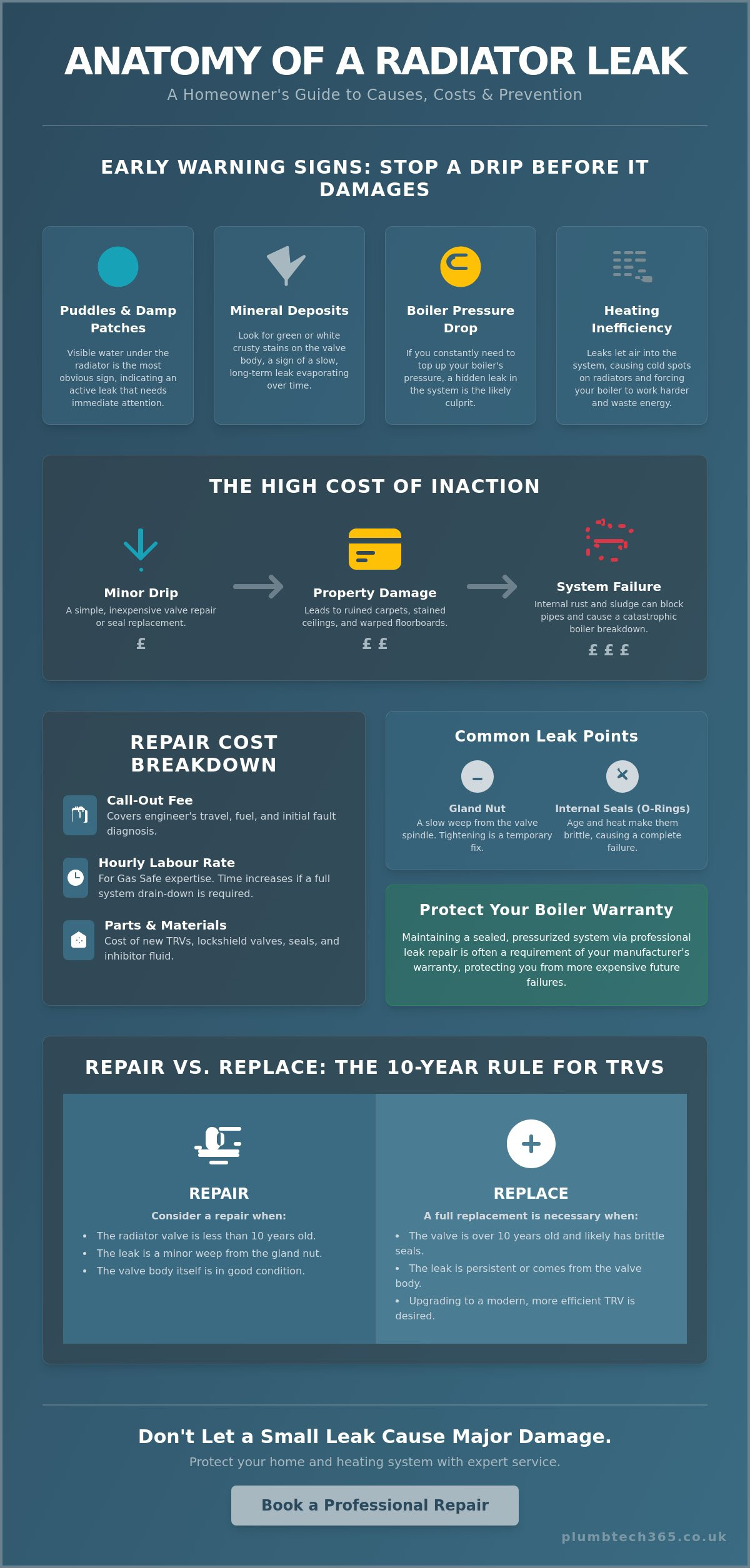
A small puddle beneath your radiator is more than a housekeeping chore. It's a warning from your central heating system. Spotting the signs early helps you manage the leaking radiator valve repair cost before it escalates into a full-scale home insurance claim. Look for damp patches on carpets, green or white mineral deposits on the valve body, or a persistent drop in boiler pressure. These symptoms indicate that water is escaping, often silently, and soaking into your floorboards. Ignoring a minor drip allows moisture to rot timber and stain the ceilings below, turning a simple plumbing task into a structural repair job.
To better understand how a valve begins to fail, watch this helpful video:
When a valve leaks, it doesn't just let water out; it lets air in. This creates air locks and cold spots at the top of your radiators, forcing your boiler to run longer to reach the desired temperature. This inefficiency wastes fuel and increases wear on your system's internal components. Addressing the issue early prevents the need for a full system drain-down later.
Common Culprits: Gland Nuts vs. O-Rings
Most valves consist of a main body, a spindle, and a cap. A Thermostatic radiator valve (TRV) contains a wax or liquid-filled sensor that reacts to room temperature. When these fail, they often weep around the spindle. While you might try to tighten the gland nut, this is a temporary patch. If the internal seals are brittle from age, you'll eventually face a higher leaking radiator valve repair cost when the part fails completely during a cold snap. Over-tightening can also crack the aged metal, turning a slow drip into a steady stream.
The Impact on Your Central Heating Efficiency
Your boiler relies on a closed-loop system to function. Even a tiny leak forces the pump to work harder, increasing your energy consumption. Over time, the oxygen introduced by constant refilling causes rust to flake off inside the pipes. This sludge can block your heat exchanger, leading to a total system failure. Contacting professional local plumbers for expert leak detection and repair ensures your system stays clean. Keeping your system sealed and pressurized is often a condition of your boiler's manufacturer warranty, meaning a neglected valve could void your coverage for more expensive parts.
Breakdown of Radiator Valve Repair Costs in 2026
Calculating the leaking radiator valve repair cost requires looking at two main pillars: professional labour and high-quality materials. Every central heating system presents unique challenges. A simple part swap on a ground-floor radiator is faster and cheaper than working on a complex, multi-story pressurized system. Most homeowners feel a sense of urgency when they spot a leak, but rushing into a "quick fix" often leads to higher expenses later. Understanding how your bill is structured helps you avoid surprises and ensures you're paying for expertise rather than just a temporary patch.
Your final invoice typically consists of a call-out fee and an hourly rate. The call-out fee covers the engineer's travel, fuel, and the immediate assessment of the fault. According to Modernize's home radiator repair cost analysis, the complexity of the specific valve type and the accessibility of the pipework are the biggest variables in the total price. If the engineer can isolate the radiator without draining the entire system, the job moves quickly. However, if your system lacks isolation valves, a full drain-down is necessary. This process adds significant time as the system must be emptied, the part replaced, and then the entire circuit refilled and bled of air.
Labour Rates for Professional Engineers
You aren't just paying for someone to turn a spanner. You're paying for Gas Safe expertise and the protection of public liability insurance. These credentials ensure that if a secondary issue arises during the repair, you're covered. Emergency plumbing repairs requested during evenings or bank holidays carry a premium rate due to the immediate response required. Choosing local plumbers often results in more competitive pricing than national franchises. Local tradespeople operate with lower overheads and prioritize their community reputation, which leads to more transparent and honest billing practices.
Material Costs: Choosing the Right Components
The price of the valve itself varies based on functionality and aesthetics. Manual valves are the most affordable option, but they offer limited control over your home's temperature. Thermostatic Radiator Valves (TRVs) are more expensive but provide superior energy efficiency by automatically adjusting heat output. Professional-grade valves sourced from trade merchants are built with sturdier internal seals than the budget versions found in DIY stores. While designer radiators might require specialist components and tools for installation, standard radiators are usually compatible with high-quality, durable TRVs that offer a longer service life. Investing in better materials now reduces the likelihood of another leaking radiator valve repair cost in the near future. Similarly, investing in a high-quality home water system from Tradewinds Water Filtration can protect your plumbing fixtures from the long-term effects of contaminants like PFAS and heavy metals.
Repairing vs. Replacing: When to Upgrade Your Valves
Deciding whether to patch a leak or install a new component is a matter of long-term value. If your valve is over 10 years old, the internal seals and springs have likely reached the end of their functional life. Investing in a leaking radiator valve repair cost for an ancient component is often throwing good money after bad. We recommend a full replacement if the valve body shows signs of heavy lime-scale build-up or if the spindle is seized. A new valve provides a tight, reliable seal that protects your home for another decade.
Always consider replacing valves in pairs. When the thermostatic valve fails, the lockshield valve on the opposite side is usually in a similar state of decay. Swapping both at once is more efficient. It ensures that the pipework diameters and thread types match perfectly, preventing future compatibility issues. By doing this, you only pay for the system to be drained and refilled once. This proactive approach is a hallmark of the service provided by expert central heating engineers who prioritize your home's long-term integrity.
The ROI of Thermostatic Radiator Valves (TRVs)
TRVs offer a clear financial return by providing room-by-room temperature control. Instead of heating every room to the same level, you can lower the output in guest rooms or hallways. This significantly reduces your monthly energy consumption. Since the implementation of the Future Homes Standard in January 2026, there has been a massive shift toward these high-efficiency controls. Upgrading to modern TRVs while your system is already drained for a repair is the smartest financial move. You avoid the repeat labour charge of a second visit and start saving on fuel costs immediately.
Aesthetic Upgrades and Property Value
Don't overlook the visual impact of your heating hardware. Old, paint-chipped valves look out of place in a modern home. Chrome, brushed nickel, or anthracite finishes can refresh a room's look for a relatively small investment. These details matter during home buyer surveys. A system fitted with modern, matching valves signals to potential buyers that the property has been maintained to a high standard. It shows that the owner has invested in professional boiler engineers to keep the infrastructure in top condition, which can be a deciding factor in a competitive property market.
Factors That Inflate Your Plumbing Bill: Drains and Inhibitors
A transparent quote for your leaking radiator valve repair cost usually covers the basic labour and the replacement part. However, several technical variables can drive the final price higher once an engineer assesses the system. Access is the most common factor. If your radiator is located in a tight corner or features pipework buried deep within floorboards, the time required to perform a clean repair increases. Our central heating engineers must work with precision to ensure your flooring and decor remain protected while they navigate these structural obstacles.
The type of boiler you have also dictates the complexity of the job. Modern combi boilers are sealed, high-pressure systems that require expert re-pressurisation after any component is replaced. This isn't a simple case of turning a tap; it involves careful calibration to ensure the pump and heat exchanger operate within safe parameters. If the water drained during the repair is dark or contains debris, it signals a larger sludge problem. In these instances, a simple valve swap might only be a temporary fix, and a power flush could be necessary to prevent the new valve from failing immediately.
System Type: Vented vs. Unvented
The architecture of your hot water system changes the scope of work significantly. If you have unvented hot water cylinders, you must hire a specialist engineer qualified to work on these high-pressure units. Gravity-fed or vented systems, common in older homes, often take longer to drain down completely, especially in multi-story properties. A bungalow is usually a faster drain-down than a three-story townhouse. These time differences are reflected in the final labour charge, as the engineer must wait for the system to be fully empty before breaking the seal on a faulty valve.
Chemical Treatments and Longevity
Every time a system is drained, the protective chemicals are lost. A professional will always insist on adding a fresh dose of central heating inhibitor to the system before refilling it. This chemical is vital; it prevents internal corrosion and stops the build-up of magnetite sludge that destroys pumps and blocks pipes. Ignoring this step might save a few pounds today, but it risks your entire boiler installation and could void your manufacturer's warranty. Ensuring your system is chemically balanced is the best way to avoid a repeat leaking radiator valve repair cost next season. If you suspect your system is losing pressure or notice a damp patch, contact our local gas engineers immediately to secure your home.
Professional Radiator Repairs: Protecting Your Home
When you discover water pooling on your floor, every second counts. You aren't just managing a leaking radiator valve repair cost; you are defending your home's structural integrity. Immediate action prevents damp from reaching the subfloor or the ceiling below. Follow these five critical steps to contain the situation before a professional arrives.
Step 1: Locate the leak. Dry the area thoroughly and place a container or heavy-duty towel directly underneath the valve. This stops water from soaking into your carpets or floorboards.
Step 2: Isolate the radiator. Turn the Thermostatic Radiator Valve (TRV) to the 'off' or '0' position. Use a spanner or pliers to turn the lockshield valve on the opposite side clockwise until it stops. This isolates the radiator from the rest of the system.
Step 3: Monitor the boiler. Check your boiler pressure gauge. A significant drop below 1.0 bar indicates the leak is affecting system health. Do not attempt to top up the pressure until the leak is contained.
Step 4: Call for help. Contact a professional plumber to assess the internal seals. They have the tools to determine if the leaking radiator valve repair cost will involve a simple seal replacement or a full component swap.
Step 5: Stay safe. Avoid using the heating system until the repair is certified safe. Running a system with low pressure or air locks can cause permanent damage to your boiler's pump.
Why DIY Valve Repairs Often Fail
Social media tips often suggest using PTFE tape as a universal fix. This is dangerous advice. Wrapping tape around a failing spindle is a temporary patch that often hides a developing crack. Old copper pipework becomes brittle over time. Applying too much force during a DIY attempt can snap the pipe beneath the floor, leading to a catastrophic flood. Most home insurance policies don't cover damage caused by unqualified plumbing attempts. Hiring an expert ensures the job is done to industry standards with a permanent, mechanical seal.
The Plumbtech 365 Commitment to Quality
We believe in total competence during a household crisis. Our team consists of Gas Safe Registered engineers who handle everything from minor leak detection and repair to complex boiler installations. We provide a versatile and capable service profile that addresses every plumbing and heating need in your home. This includes all aspects of bathroom plumbing, from urgent toilet repairs to precision tap replacements. We provide transparent, honest billing with no hidden surprises on your final invoice. If you are facing a flood, our emergency plumbing repairs service provides a rapid response to secure your property. We arrive on time, solve the problem, and ensure your entire system is balanced and efficient before we leave your home.
Secure Your Home and Heating Efficiency
Addressing a leak immediately is the only way to safeguard your property from escalating water damage and rising energy bills. As we have explored, the leaking radiator valve repair cost is a small investment compared to the structural repairs required after a major flood. Whether you choose to repair a weeping seal or upgrade to high-efficiency TRVs, securing your system ensures your boiler operates within its manufacturer warranty and maintains peak performance.
Our Gas Safe Registered Engineers bring the technical expertise and transparent billing needed to resolve your heating issues without stress. We prioritize local accountability and provide honest, fixed-price quotes to ensure you are never surprised by the final invoice. Trust a reliable professional to arrive on time and restore your home's comfort through precision leak detection and repair. Take action now to protect your flooring and keep your heating system running safely for years to come.
Book Your Professional Radiator Repair with Plumbtech 365 Today
Frequently Asked Questions
Is a leaking radiator valve an emergency?
Yes, a leaking radiator valve is a plumbing emergency if the water flow is constant or if it threatens your flooring and electrical systems. Even a slow drip can cause rot in joists and ruin carpets over time. Immediate intervention prevents the need for major structural work. Our team provides a rapid response for emergency plumbing repairs to isolate the unit and stop the flow of water before it creates a larger crisis.
Can I fix a leaking radiator valve myself with PTFE tape?
You should not rely on PTFE tape to fix a leaking valve permanently. While it might slow a drip, it doesn't address the failed internal seals or brittle metal components. Applying tape often requires disturbing old pipework, which can lead to a complete snap and a flood. A professional repair ensures the valve is mechanically sound and properly fitted to your central heating system.
How long does it typically take a plumber to replace a valve?
A standard valve replacement typically takes between one and two hours to complete. The total time depends on whether the engineer can isolate the radiator or if a full system drain-down is required. Modern systems with isolation valves are faster to service. Older, gravity-fed systems require more time to empty and refill safely to avoid air locks in the pipework.
Will a leaking radiator valve cause my boiler to stop working?
Yes, a leak can cause your boiler to stop working if the system pressure drops too low. Most modern combi boilers feature a safety cut-off that triggers when the pressure falls below a specific threshold, usually 0.5 bar. This prevents the pump from running dry. Fixing the leak is the only way to maintain the steady pressure required for your boiler installation to operate efficiently.
Do I need to drain the whole heating system to fix one valve?
You don't always need to drain the entire system to fix a single valve. Some engineers use freezing kits to isolate the specific radiator pipework. However, if your system is old or contains significant sludge, a full drain-down is often the more reliable choice. This allows the engineer to add fresh inhibitor and ensure the new valve isn't immediately blocked by debris.
What is the difference between a manual and a thermostatic radiator valve?
A manual valve acts like a simple tap, requiring you to turn it by hand to change the heat. A thermostatic radiator valve (TRV) contains a sensor that automatically adjusts the water flow based on the room's temperature. TRVs are far more efficient and are now the standard for modern boiler installations because they provide precise control and lower energy consumption.
Why is my radiator valve leaking after I bled the radiator?
Leaks after bleeding often occur because the internal spindle or gland nut was disturbed during the process. If the valve is old, the seals become brittle and fail once moved. If you notice a drip after using a radiator key, the internal O-ring has likely perished. This is a common factor that influences the leaking radiator valve repair cost when a simple tightening doesn't stop the moisture.
Does insurance cover the cost of repairing a leaking radiator valve?
Most standard home insurance policies cover the damage to your property caused by a leak, but they rarely cover the leaking radiator valve repair cost itself. Insurance providers typically view the valve failure as general maintenance or wear and tear. Check your specific policy for "Home Emergency" cover, which may include the labour and parts for the specific repair to your central heating system.


Comments