


Signs of a Failing Boiler Pump and Replacement Cost: 2026 UK Guide

If you’re searching for signs of a failing boiler pump and replacement cost, a noisy or unreliable boiler can make it tempting to assume the pump has failed. But cold radiators, poor circulation and unusual noises can have several causes. These symptoms are clues to investigate, not proof that the pump needs replacing.
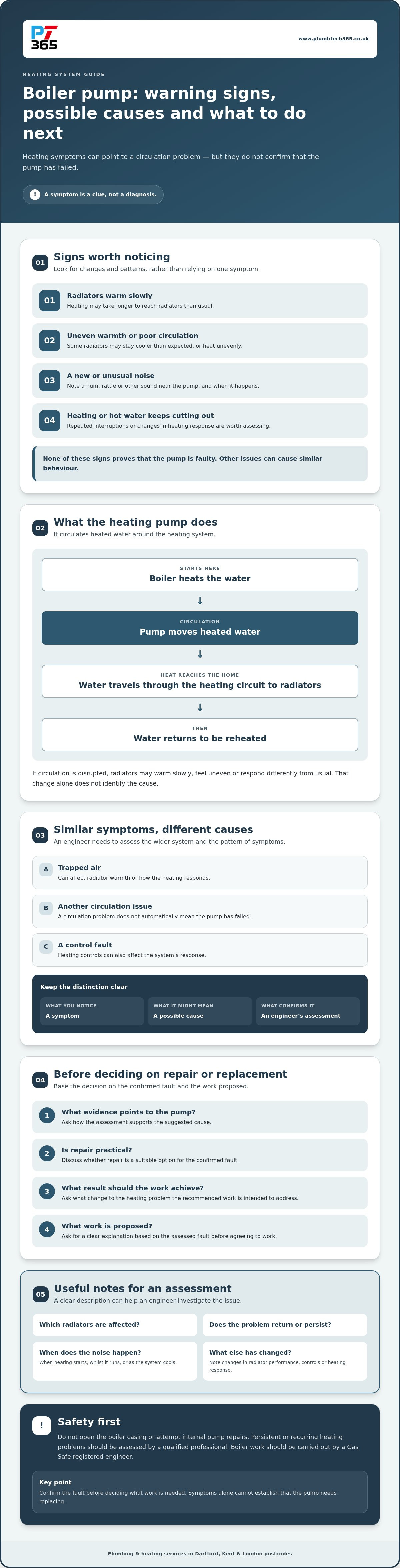
When heating or hot water keeps cutting out, the disruption can quickly become stressful. This guide explains which warning signs to look for, what else might cause similar problems and what to ask before choosing between repair and replacement. It also explains how to compare quotes when the fault has been assessed.
A qualified assessment can help establish whether the pump is at fault or another part of the system needs attention. Boiler work should be carried out by a Gas Safe registered engineer. We are a trusted plumbing & heating company providing reliable, high-quality services across London and Kent provides boiler repairs, servicing and installation, with boiler work carried out by Gas Safe registered engineers.
Key Takeaways
Uneven heating, poor circulation and unusual noises can point to a problem, but none confirms a pump fault on its own.
Other heating system issues can cause similar symptoms, so diagnosis matters before deciding what work is needed.
There is no reliable replacement cost to give from symptoms alone. Ask for a written quote based on the confirmed fault and proposed work.
Ask what evidence points to the pump, whether repair is practical and what result the recommended work should achieve.
Persistent or recurring heating problems are a reason to arrange an assessment by a qualified professional.
Table of Contents
What are the signs of a failing boiler pump?
Changes in how your heating behaves can be worrying, especially when rooms feel cold or the boiler sounds different. But a single symptom rarely identifies the fault. Radiators that heat slowly, uneven temperatures around the home or a new noise near the boiler may point to a circulation problem, but they don’t confirm that the pump has failed.
Symptoms can suggest pump trouble, but they can’t confirm the fault. If you’re researching the signs of a failing boiler pump and replacement cost, start by noting what has changed and whether the problem persists or returns. This gives an engineer useful context when assessing the system.
To see a heating pump discussed in practice, watch this video:
Which heating changes can point to a pump problem?
The central heating pump moves heated water through the system. If circulation is weak, radiators may take longer to warm, remain cooler than expected or heat unevenly. These are possible effects of a circulation problem, not a diagnosis: other faults can produce similar behaviour. For background, read about how hydronic heating systems work.
Look for a pattern rather than relying on one cold radiator or a single heating cycle. Note which radiators or heating areas are affected, whether the issue happens repeatedly and whether other parts of the home heat normally. These details can help an engineer assess the problem more effectively.
What noises or boiler behaviour should you note?
A new hum, rattle or other sound near the pump is worth mentioning, but sound alone can’t identify the component responsible. Note when it occurs, such as when the heating starts, while it is running or as the system cools. Also record whether radiator performance changes at the same time.
Recurring noise, poor circulation or repeated changes in heating performance deserve professional attention, even if the boiler still appears to operate. Don’t open the boiler casing or attempt internal pump repairs. Arrange an assessment by a qualified professional and share your notes about the symptoms and when they occur.
How a boiler pump works, and why similar faults can look alike
A central heating pump circulates heated water from the boiler through the heating circuit and towards the radiators. The water transfers heat to the rooms before returning to be reheated. If circulation is disrupted, radiators may warm slowly, feel uneven or respond differently from usual.
That change doesn’t establish that the pump is the cause. The pump is one part of a connected system, so an engineer needs to consider where the symptom occurs, how long it lasts and whether other heating behaviour has changed. A symptom is what you notice, a possible cause is one explanation, and a confirmed diagnosis is an engineer’s assessment.
What does the central heating pump do?
Think of the pump as the component that keeps heated water moving around the heating circuit. If that movement is affected, heat may not reach radiators as expected, or the system may take longer to respond. The pattern can vary around the home. This basic process is part of how water-based heating systems work, but not every circulation problem points to a failed pump.
What else can cause similar heating symptoms?
Trapped air, another circulation issue or a control fault may also affect radiator warmth or the heating response. These are possibilities for an engineer to assess, not diagnoses to make from one symptom. A cold radiator in one room may have a different explanation from several radiators that are slow to heat, so the wider pattern matters.
For broader context on signs that a heating system may not be performing as expected, see this guide to central heating inefficiency symptoms. Guidance from the Chartered Institute of Plumbing and Heating Engineering, reported by HVP Magazine, also discusses low-temperature heating systems, where the wider system context matters when considering heating performance.
Before deciding that the pump needs attention, note which radiators are affected, whether the issue comes and goes, and whether controls or heating response have changed. If symptoms persist, a professional assessment can help distinguish pump trouble from other possible faults. For boiler repair support, visit our website to discuss your boiler concern.
Boiler pump repair or replacement: how to compare the options
A recommendation to replace a pump should follow a diagnosis, not just a worrying noise or a spell of uneven heating. Ask the engineer to explain what they found, whether repair is practical and what the proposed work is intended to resolve. The pump’s age or the symptoms you’ve noticed, on their own, don’t establish that replacement is necessary.
There is no dependable way to estimate replacement cost from symptoms alone. The quote should reflect the confirmed fault and the work required. When comparing quotes, check that they cover the same scope of work and make clear what is included and excluded.
Use this comparison to check that the decision is based on evidence and a clear explanation. It applies whether repair or replacement is proposed.
When might repair be considered instead?
Ask whether the pump fault has been confirmed and whether repair is suitable for that fault. The engineer should explain what the repair is expected to resolve, so you can compare the recommendation with the symptoms and findings. Routine boiler servicing has a separate role from diagnosing a current fault. Read this boiler servicing guide for more on maintenance.
When should a wider boiler assessment be discussed?
If faults keep returning or the boiler has other problems, ask for its overall condition to be considered alongside the pump. A decision about one component is not the same as a decision to replace the whole boiler. For broader replacement considerations, see this guide to signs a boiler may be beyond economical repair.
When researching the signs of a failing boiler pump and replacement cost, it can be tempting to focus on one symptom or recommendation. Ask instead for the confirmed fault, why the proposed work is suitable and what outcome to expect. For boiler repair support from Gas Safe Registered engineers, contact the team.
What to ask before agreeing to boiler pump replacement
Before authorising work, make sure you understand why replacement has been recommended and what the engineer expects it to resolve. A clear assessment should connect the evidence to the proposed work. If the explanation is unclear, ask for more detail before making a decision.
Questions to ask about the diagnosis and proposed work
Use this checklist to guide the discussion. You don’t need to diagnose the fault yourself. Ask the engineer to explain their findings in plain language.
1. What checks point to the pump? Ask what evidence supports the diagnosis and whether another component or system issue could explain the symptoms.
2. Is the fault confirmed? Clarify whether the pump itself has been identified as the problem, rather than being one possible cause.
3. What work do you recommend, and why? Ask whether repair is suitable or replacement is proposed, and what makes that option appropriate for the fault.
4. What should change afterwards? Confirm which symptoms the work is expected to address and whether any other issues may still affect heating performance.
5. What does the written quote include? Check that it describes the proposed work clearly and identifies any exclusions, so you know what is and isn’t covered before agreeing.
What should a clear assessment explain?
A useful explanation links the checks carried out to the conclusion and recommended work. Ask whether other possible causes have been considered, what the work includes and what outcome the engineer expects. If a term or recommendation doesn’t make sense, pause and ask for it to be explained before authorising anything.
How can you prepare for an engineer’s visit?
Write down what you’ve noticed and when it happens. Include which radiators or heating areas are affected, whether the problem comes and goes, and any recent changes or previous boiler work that may be relevant. These details help the engineer assess the issue in context. For more advice on choosing a professional, read this guide to finding trusted boiler engineers.
If you’re comparing the signs of a failing boiler pump and replacement cost, focus first on the diagnosis, the scope of the work and the expected result, not symptoms alone. For boiler support from Gas Safe Registered engineers, contact Plumbfix 365 to discuss your boiler concerns.
Getting professional help for a suspected boiler pump fault
Arrange an assessment if heating problems persist, faults keep returning or your boiler isn’t heating properly. The boiler may still appear to run while the heating remains unreliable, so don’t wait for a complete breakdown before seeking advice. Avoid opening the boiler casing or attempting internal repairs. Boiler work should be handled by an appropriately qualified professional.
Why use a Gas Safe Registered engineer for boiler work?
Plumbfix 365 carries out boiler repairs, servicing and installation using Gas Safe Registered engineers. Before arranging relevant gas work, check the engineer’s credentials and that they are appropriate for the work being discussed. You can ask who will carry out the job and what qualifications or registration they hold.
What is the next step if the pump may be failing?
When requesting professional boiler support, describe what you’ve noticed rather than presenting a pump fault as certain. Explain whether the problem is persistent or intermittent, what happens to the heating and whether the boiler’s behaviour has changed. If you’ve kept notes on affected radiators or when a noise occurs, share those too. This information gives the engineer useful context, but an assessment is still needed to identify the cause.
Before agreeing to repair or replacement, ask the engineer to explain the diagnosis, the proposed work and the result they expect. The recommendation should follow an assessment of the fault, not a symptom alone. If the explanation is unclear, ask questions before deciding.
The phrase “signs of a failing boiler pump and replacement cost” may describe what you’re searching for, but identifying a likely fault is only one part of making an informed decision. A professional assessment can help establish whether the pump is involved and what work, if any, is appropriate.
For boiler support from Gas Safe Registered engineers, contact Plumbfix 365 to discuss your boiler concern.
Take the next step with confidence
Heating symptoms can point to a circulation problem, but they don’t confirm that the boiler pump has failed. Trapped air, controls or other system issues may cause similar behaviour, so a professional assessment is needed to establish the likely fault. Age or noise alone isn’t enough to show that replacement is necessary.
If you’re researching the signs of a failing boiler pump and replacement cost, focus on the evidence behind the recommendation. Ask what checks identified the problem, whether repair is an option, what the proposed work includes and what result to expect. A written quote that sets out the scope and any exclusions makes it easier to compare like with like.
Plumbfix 365 provides boiler repairs, servicing and installation, with boiler work carried out by Gas Safe Registered engineers. If heating problems persist or return, discuss your boiler repair with Plumbfix 365. A clear assessment can help you decide on the next step with greater confidence.
Frequently Asked Questions
What are the most common signs of a failing boiler pump?
Possible signs include poor circulation, radiators heating unevenly or more slowly than usual, and new noises near the pump. These symptoms can also have other causes, so they don’t confirm that the pump has failed. Note which rooms or radiators are affected and whether the problem keeps returning. Share these details with a qualified heating professional for assessment rather than deciding on replacement from symptoms alone.
Can a boiler pump make a noise when it is failing?
A hum, rattle or other new noise near the pump can accompany a heating problem, but sound alone can’t confirm the cause. Note when the noise starts, whether it continues while the heating runs and whether radiator performance changes at the same time. If the sound recurs or comes with unreliable heating, arrange a professional assessment. Don’t open the boiler casing or attempt an internal repair.
Can a boiler pump fault cause radiators to heat unevenly?
It can. The central heating pump circulates heated water around the system, so impaired circulation may affect how radiators warm. However, uneven or cold radiators don’t prove that the pump is faulty. Trapped air, other circulation problems or controls may also be involved. Note whether one radiator, several rooms or a particular heating area is affected, then share that information with the engineer.
How can an engineer confirm whether a boiler pump has failed?
An engineer assesses the boiler and heating system, considers the symptoms and checks whether the evidence points to the pump or another possible fault. Ask what checks support the diagnosis and whether other causes have been considered. The engineer should explain their findings and the reason for any recommended work in clear terms. Boiler work should be carried out by an appropriately qualified professional.
Is it better to repair or replace a failing boiler pump?
Neither option is automatically best. The decision should follow a confirmed fault and depend on whether repair is suitable and what the engineer finds. Ask what the proposed work is expected to resolve, whether other system issues could affect the result and what follow-up is recommended if symptoms return. A pump’s age or a noise alone doesn’t establish that replacement is necessary.
How much does boiler pump replacement cost in the UK?
This guide doesn’t give a UK price or range. The cost depends on the confirmed fault and the scope of the proposed job, so ask for a written quote that clearly describes the work and any exclusions. When comparing quotes, check that they cover the same work and that the recommendation follows the diagnosis. Ask for clarification if anything is unclear.
Can I replace a boiler pump myself?
Don’t attempt an internal boiler repair or pump replacement yourself. Boiler work should be handled by an appropriately qualified professional, and Plumbfix 365 carries out its boiler work using Gas Safe Registered engineers. Before arranging relevant gas work, check the engineer’s credentials. Describe the symptoms and ask for the fault to be assessed before agreeing to repair or replacement.


Comments