


Slow water leak damage: signs, risks and what to do

What if the small mark on your ceiling is only the visible part of a much bigger problem? Long-term damage from a slow water leak can build quietly behind walls, beneath floors or inside cupboards, even when there’s no obvious puddle. By the time you notice peeling paint, a musty smell or a damp patch, moisture may have been spreading for some time.
It’s easy to assume a minor drip can wait, especially if it comes and goes. But persistent moisture can damage finishes and materials, encourage mould growth and make repairs more involved. Finding the source can also be difficult when pipework is concealed or the leak is intermittent.
This guide covers warning signs, the risks of leaving a leak unresolved and sensible first steps. You’ll also learn when a qualified plumbing professional should investigate, particularly if you can’t locate the source or damp keeps returning. Acting promptly can help establish what’s happening and limit further damage.
Table of Contents
How long-term damage from a slow water leak develops at home
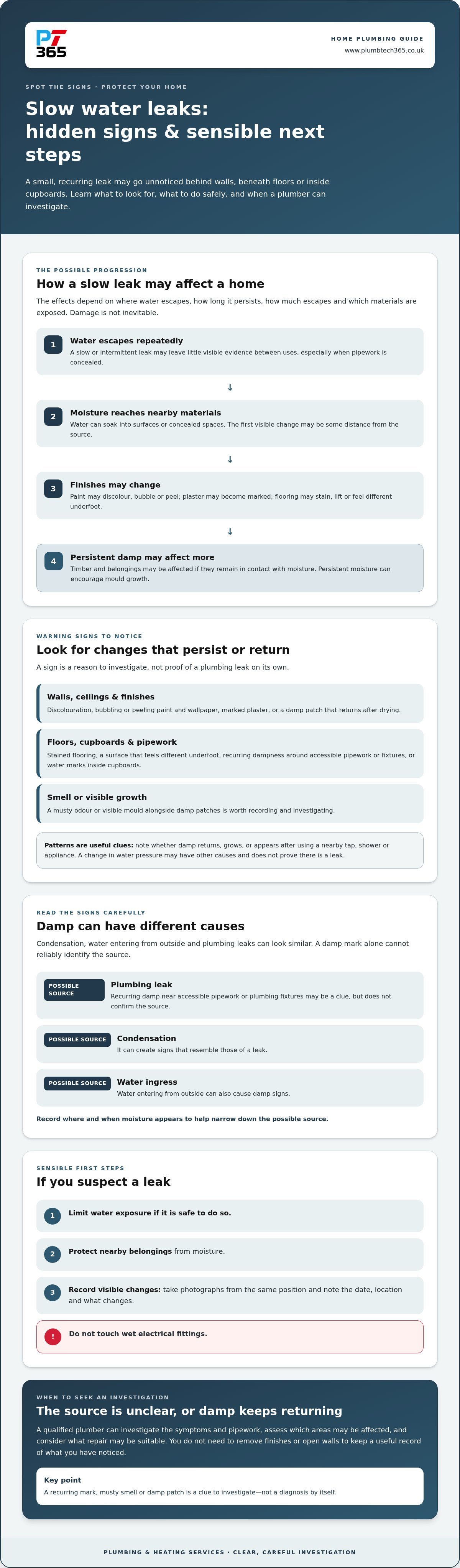
A small leak deserves attention, but it doesn’t mean your home will inevitably suffer severe damage. A slow leak is a persistent or recurring escape of water, rather than a sudden pipe failure that releases water quickly. Its effects depend on how long moisture is present, where it travels, how much water escapes and which materials are exposed.
Moisture can affect finishes before the source becomes clear. Water may move from a pipe or fitting into nearby surfaces or concealed spaces, so the first visible change might appear some distance from the leak. The causes and signs of structural dampness vary, and a damp patch alone doesn’t confirm a plumbing fault.
Why a small leak can become a wider problem
Water escaping repeatedly can soak into surrounding materials instead of collecting in an obvious puddle. A leak that only occurs when a tap or appliance is used may leave little visible evidence between uses. It can also be overlooked during everyday routines, particularly if pipework is hidden behind a wall, beneath flooring or inside a cupboard.
Look for patterns rather than relying on one mark. If an area becomes damp again after drying, or a finish changes without a clear explanation, note when it happens and where you see it. A change in water pressure can have several causes, so it isn’t proof of a leak. This guide to a sudden drop in water pressure explains other possibilities.
Which parts of a home may be affected
With prolonged moisture exposure, paint may discolour, bubble or peel, while plaster can become marked or feel damp. Flooring may stain, lift or feel different underfoot, depending on its material and how much water reaches it. These effects aren’t inevitable, and they can have causes other than a plumbing leak.
Timber and household belongings may also be affected if they remain in contact with moisture. Persistently damp timber can deteriorate, while items stored in a wet cupboard may become marked or develop a musty smell. Don’t assume the full extent of the problem from surface appearance alone. If you can’t identify the source, or signs keep returning, a plumber can investigate the pipework and assess which areas may be affected.
Hidden signs that a slow water leak may be causing damage
A concealed leak may not leave a puddle. Instead, look for changes that persist, return or appear without an obvious explanation. Discolouration, bubbling finishes, damp or musty odours and recurring wet areas are reasons to investigate, but none confirms a plumbing leak on its own. Condensation, water entering from outside and other sources of moisture can create similar signs.
What to look for on walls, ceilings and floors
Check for patches that change colour, paint or wallpaper that blisters or lifts, marked plaster, and flooring that stains or feels different underfoot. Notice whether the affected area is growing, returns after it dries, or appears after using a nearby tap, shower or appliance. A repeated pattern can help explain the problem, but it won’t identify the cause by itself.
Keep a simple record. Take photographs from the same position and note the date, location and any changes. Record whether the area feels damp and when you first noticed it. These details can help a professional assess the symptoms without you needing to remove finishes or open up walls.
Clues that may point to a concealed leak
Look around accessible pipework, plumbing fixtures and the insides of cupboards for recurring dampness, water marks or an unusual smell. Don’t dismantle building materials to search for a hidden pipe. A change in water use or pressure may be a useful clue, but it can have other causes and doesn’t prove there’s a leak.
Persistent moisture can encourage mould to develop, so note any musty smells or visible growth alongside damp patches. Record where it appears and whether it returns after the area dries. These details can help a professional assess the possible source and determine whether a plumbing issue needs investigation.
For more examples of warning signs and ways to record them, read how to spot hidden leaks before damage spreads. If signs keep returning or the source remains unclear, professional investigation can help distinguish a plumbing issue from other causes. Find out more about plumbing repair support.
Slow leak damage compared with other causes of damp
Damp marks can have several causes, and the surface alone can’t reliably tell you which one is responsible. A plumbing leak, condensation or water entering from outside may create overlapping symptoms. Treat patterns as clues to record, not as a diagnosis. Timing, location and recurrence can help a professional assess whether plumbing may be contributing to the damp.
Leak, condensation or another source of moisture?
Consider when and where the damp appears. Moisture near accessible pipework or a plumbing fixture, especially if it returns after that fitting is used, may be worth checking for a leak. Condensation may be more noticeable on cold surfaces or windows, while a mark that appears after wet weather could suggest water ingress. These patterns aren’t conclusive, and causes can overlap.
Note what you observe rather than opening walls or trying to inspect areas beyond your ability. General guidance on how to find hidden water leaks may offer ideas for tracking clues, but methods can depend on the property and its water system. A pressure change can also have several explanations. See common causes of a sudden drop in water pressure.
When symptoms suggest the issue is progressing
Act promptly if a damp area is expanding, wet patches keep returning, finishes become more damaged or a musty smell persists. Take dated photographs and note changes, then share them with the appropriate professional. These signs don’t confirm a leak, but leaving the source unclear can delay the right response.
If plumbing is a possible cause and the symptoms are difficult to trace, a qualified plumber can investigate the pipework. Find out more about plumbing repairs.
What to do if you suspect a slow water leak
Stay calm, but don’t ignore ongoing moisture. Careful action can limit further exposure while you work out what’s happening. If water is actively escaping or damage appears to be spreading, contact a plumbing professional promptly. Don’t risk your safety to reach a leak or shut-off point.
Safe first steps while you arrange help
Limit water use if you can do so safely. If you suspect a particular tap or appliance is involved, avoid using it until the issue has been assessed.
Use an accessible shut-off control only if you know how. Don’t force a stiff control or reach into a wet or difficult area. If you’re unsure, leave it and seek professional advice.
Protect nearby belongings. Move items away from the damp area if they’re safe to handle. Use a container to catch drips only if you can place it without approaching an electrical hazard.
Record what you see. Take dated photographs and note when moisture appears, whether it returns, and which fixtures or areas were in use beforehand.
Keep clear of wet electrical fittings, switches and appliances. Don’t touch them or attempt work around them. Avoid pulling up flooring, cutting into walls or taking pipework apart if the work is beyond your ability. A well-meant repair attempt can create additional problems or put you at risk.
When to contact a plumbing professional
Arrange an assessment if the source is concealed, damp patches keep returning, or visible damage is spreading. Contact a plumber promptly if water is actively escaping and you can’t safely limit it. Explain what you’ve noticed, when it began, whether it comes and goes, and any steps you’ve already taken. Photographs and notes can help clarify the history of the problem.
If you’re considering a minor repair, read how to fix a leaking pipe safely at home first, and stop if the work is outside your confidence or ability. A guide isn’t a substitute for a professional assessment when the pipe or extent of damage is unclear. Prompt investigation can help establish the source and what repair may be suitable, reducing the chance of further long-term damage from a slow water leak.
Speak to a plumbing professional if you need help investigating a suspected leak.
How professional leak investigation can limit further damage
If the source of a leak isn't clear, a plumber can assess the symptoms and establish what needs attention. The investigation will depend on the property, accessible pipework and the signs you've noticed. An early assessment can help clarify the likely source, which areas may be affected and what repair could be suitable. It can guide the next steps, but it can't guarantee that all damage will be prevented.
What information helps an initial assessment
A clear account of the problem helps the plumber understand how it behaves. Before arranging an assessment, note:
When you first noticed the moisture or other change.
Whether it's constant or intermittent, and whether it appears after using a particular fixture.
Which rooms or areas are affected, and how visible marks or damp patches have changed.
Any recent plumbing work that may be relevant.
Photographs and dated notes can show how symptoms have changed, especially if the area is dry when the plumber visits. Don't remove flooring, open walls or try to reach concealed pipework. Leave access and investigation to a professional.
What happens after the leak source is identified
Once the likely source is established, the appropriate repair depends on the confirmed fault and the condition of the pipework. A plumber can explain the issue and discuss a suitable repair. The approach may differ between a visible fitting and a concealed pipe, so don't assume the same steps will apply in every home.
Stopping the leak and addressing its effects are separate considerations. A plumbing repair can deal with the source, but damaged finishes or other affected materials may need assessment in their own right. If signs of moisture remain after the leak has been dealt with, record them and seek appropriate advice rather than assuming the problem has fully resolved.
Plumbtech 365 provides plumbing repairs for urgent leaks and pipework issues. If you're concerned about long-term damage from a slow water leak, a professional assessment can help clarify what's happening and what should happen next.
Contact us about a plumbing repair to discuss a suspected leak.
Act early to understand the source
A small, recurring leak doesn’t always lead to severe damage, but persistent moisture is worth investigating. Damp odours, discolouration, bubbling finishes or wet patches that return are useful clues, not a diagnosis. Condensation and water ingress can look similar, so note when and where symptoms appear and whether they change after using a nearby fitting.
The extent of long-term damage from a slow water leak depends on its source, duration and the materials affected. If moisture keeps returning, spreads or remains unexplained, a professional assessment can help establish whether plumbing is involved and what repair may be suitable. Don’t touch wet electrical fittings or attempt work beyond your ability.
Plumbfix 365 provides plumbing repairs for urgent leaks and pipework issues to residential and commercial customers across the UK. If you’re unsure what’s causing the moisture, contact Plumbfix 365 for plumbing repair support.
Recording what you notice and arranging the right investigation can help you take the next step with confidence.
Frequently Asked Questions
Can a slow water leak cause long-term damage?
Yes. Persistent or recurring water can affect nearby finishes and materials, although the extent varies. Long-term damage from a slow water leak depends on where the water escapes, how long moisture remains and what it reaches. Paint may discolour or bubble, and plaster or flooring may show changes. These signs don’t prove a leak, so investigate recurring moisture rather than assuming the cause.
What are the first signs of a hidden water leak?
Early clues can include a damp or musty smell, discoloured marks, bubbling paint or wallpaper, and wet patches that keep returning. You might also notice moisture near accessible pipework or plumbing fixtures. Look for patterns, such as whether a mark grows or appears after using a fitting. No single sign confirms a leak, as condensation and water entering from outside can cause similar changes.
Can a small leak cause damp or mould?
It can, if escaping water keeps materials damp, but mould isn’t inevitable and its presence doesn’t identify the moisture source. A small recurring leak may leave dampness around nearby surfaces or in concealed spaces, where it can be harder to notice. If you find mould or persistent damp, record where it appears and consider whether a plumbing fitting is nearby. Arrange an assessment if the moisture keeps returning.
How can I tell whether damp is caused by a leak or condensation?
You can look for clues, but appearance alone can’t reliably identify the source. Damp near a fitting that returns after water use may warrant a plumbing check. Condensation can appear on cold surfaces, whilst water ingress may seem connected with wet weather. These patterns aren’t definitive, and more than one cause may be involved. Note the location, timing and recurrence to help a professional assess the problem.
What should I do first if I find a slow leak?
If it’s safe, limit water use around the suspected source and move nearby belongings away from moisture. Use an accessible shut-off control only if you know how and can reach it safely. Take dated photographs and note when the leak occurs and which areas or fittings may be involved. Don’t touch wet electrical fittings or attempt repairs beyond your ability. Contact a plumber if water is actively escaping.
When should I call a plumber about a slow water leak?
Contact a plumber if the leak is active, the source is concealed, damp keeps returning or visible damage appears to be spreading. Share when you first noticed the problem, whether it comes and goes, and any changes you’ve recorded. An assessment can help establish whether plumbing is the likely source and what repair may be suitable. Don’t wait for a large puddle if signs of moisture persist or worsen.
Can a leak behind a wall go unnoticed?
Yes. A leak behind a wall may not be visible at first, particularly if water doesn’t reach the surface straight away. Signs may include a musty smell, a discoloured patch, bubbling finishes or dampness that returns. These clues can also have other causes. Don’t cut into the wall to search for pipework. Photograph changes, note when they occur and arrange professional investigation if you suspect a concealed leak.



Comments