


Unvented Cylinder Pressure Loss Troubleshooting: A 2026 Homeowner’s Guide

What if that slight dip in your morning shower pressure is actually a warning sign from your unvented hot water system? Dealing with inconsistent temperatures or a weak flow from your hot taps is more than just a nuisance; it often triggers a genuine sense of anxiety about the safety of your cylinder. We understand that for homeowners across Dartford, Kent, and London, a reliable hot water supply is the heartbeat of a functional home. Whether you have recently had a new boiler installation or are maintaining an older system, seeing a drop on the pressure gauge can be daunting.
You shouldn't have to guess when it comes to unvented cylinder pressure loss troubleshooting. This 2026 guide provides the clarity you need to identify, diagnose, and resolve pressure issues safely and efficiently. We will walk you through the essential checks for your expansion vessel and explain why your tundish holds the key to most diagnoses. By the end of this article, you will know exactly how to restore your mains-pressure hot water whilst ensuring your system remains fully compliant with G3 Building Regulations. From gas hobs to complex heating repairs, our goal is to provide the technical expertise you need to keep your utilities running smoothly year-round.
Table of Contents
Understanding Unvented Cylinder Pressure: Flow vs System Pressure
An unvented hot water cylinder is a pressurised vessel that takes cold water directly from the mains supply. Unlike older vented systems, it doesn't require a cold water storage tank in the loft. This setup is incredibly popular for property owners in Dartford, Kent, and London Postcodes because it saves significant space and delivers high-performance hot water to every tap. Whether you've recently had a new boiler installation or you're managing an existing system, understanding how water heaters work under pressure is the first step in effective unvented cylinder pressure loss troubleshooting.
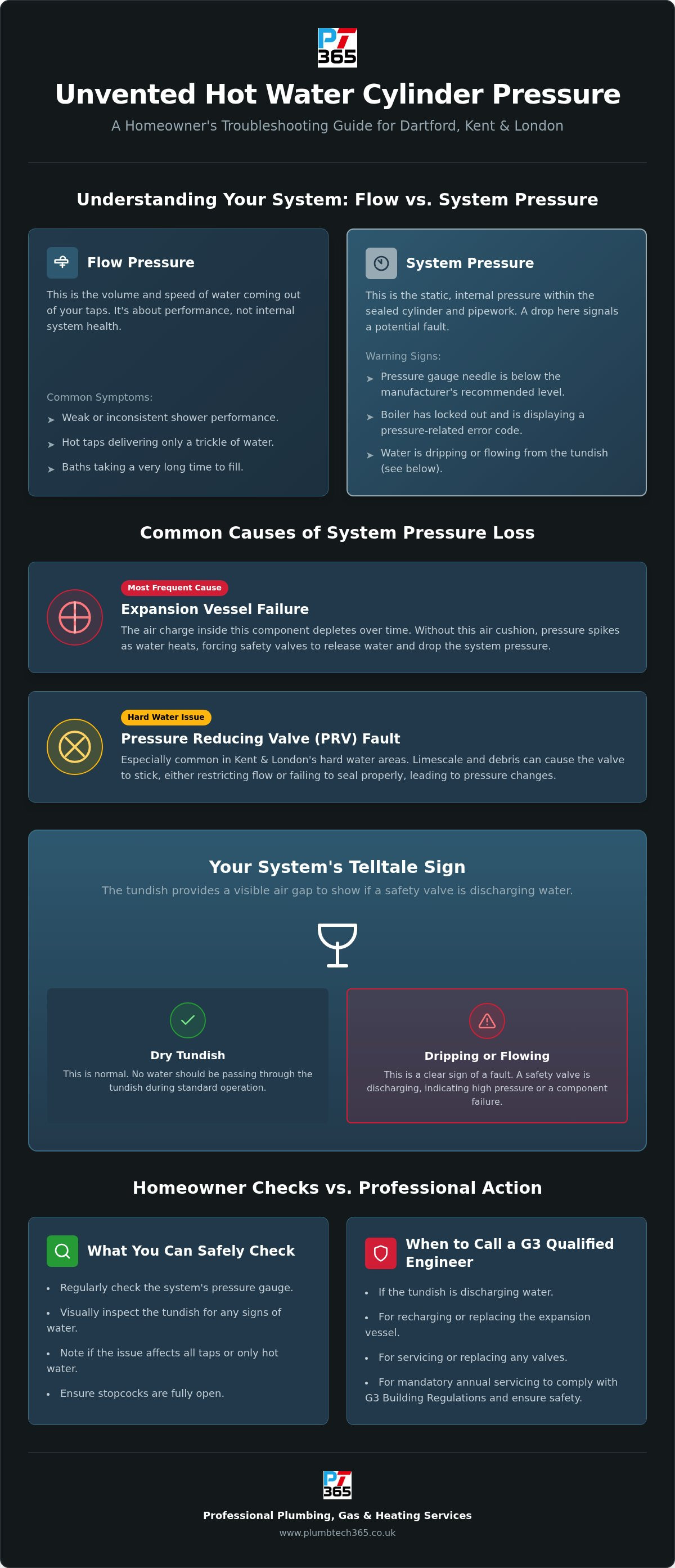
Many homeowners confuse flow performance with static pressure. You might notice your shower feels weak or your hot taps are barely a trickle. These symptoms could indicate a problem with the incoming mains or a technical fault within the cylinder itself. Identifying the specific type of pressure loss is crucial before calling out a professional engineer. Generally, symptoms fall into two categories: poor delivery at the tap or a dropping needle on the system gauge. Being able to distinguish between these two will save you time and money when describing the fault to a local plumber.
What is Flow Pressure?
Flow pressure refers to the movement of water through your pipes. When you open a tap, the mains pressure pushes the stored hot water out of the cylinder and towards the outlet. If your mains supply is restricted or the pipework is undersized, your flow will suffer. This often results in weak showers and slow-filling baths, even if the cylinder itself is functioning perfectly. Flow pressure is the volume of water delivered over a specific time.
What is System Pressure?
System pressure is the internal, static force maintained within the cylinder and its associated pipework. This is regulated by an expansion vessel, which contains a specialised air bladder to manage the natural expansion of water as it heats. You can check this by looking at the pressure gauge, typically located near the inlet control group. A drop here is a serious issue. Low system pressure can trigger a boiler lockout, preventing your heating system from firing. It can also cause safety valves to activate, which is a common sign of unvented cylinder pressure loss troubleshooting needs. If your home also features gas hobs or gas cookers, ensuring the entire utility network is balanced and safe is a priority for any local London or Kent resident. Always monitor the gauge to ensure it stays within the manufacturer's recommended range.
Common Causes of Unvented Cylinder Pressure Loss
Identifying the root cause of a drop in performance is the most critical part of unvented cylinder pressure loss troubleshooting. These systems rely on a delicate balance of internal pressure and safety mechanisms. When that balance shifts, you will see it on the gauge or hear it in your pipes. Most issues stem from mechanical wear or environmental factors specific to the South East. Don't ignore these signs; a small drop today can lead to a total system failure tomorrow.
Expansion Vessel Failure
The expansion vessel is the most frequent culprit behind pressure fluctuations. Inside this metal sphere, a rubber diaphragm separates a pocket of air from your hot water. Over time, this air charge naturally depletes or the diaphragm fails entirely. Without that air cushion to absorb expanding water as it heats, the internal pressure spikes rapidly. This often forces the safety relief valve to open, dumping water into the tundish to prevent damage. If you notice the pressure gauge rising sharply every time the water heats up, your expansion vessel likely needs a professional recharge or replacement.
The Role of the Pressure Reducing Valve (PRV)
Your system's PRV acts as a gatekeeper, limiting the high-pressure mains water to a safe level for your cylinder. However, homeowners in Dartford, Kent, and London Postcodes face a specific challenge: incredibly hard water. High mineral content leads to rapid scale and sediment build-up within the PRV and the line strainer. This debris can cause the valve to stick or become partially blocked, resulting in a noticeable drop in flow at your taps. In some cases, grit prevents the valve from seating correctly, leading to a slow, "creeping" pressure rise that eventually triggers a discharge.
Small leaks at cylinder connections or within the pipework can also lead to a gradual loss of static pressure. These faults are often governed by strict safety standards found in the UK Water Supply Regulations. If you are conducting unvented cylinder pressure loss troubleshooting, check for damp patches or salt deposits around the base of the unit. Ignoring these signs can lead to more costly plumbing repairs or even a full boiler lockout. Just like maintaining your gas hobs or gas cookers, keeping your unvented cylinder in top condition is essential for a safe, efficient home. Safety valves and pipework must be checked annually by a qualified engineer to ensure the system remains safe for your family.
The Tundish Diagnostic: What Your Cylinder is Telling You
The tundish is more than just a piece of plastic pipework; it is the primary safety "telltale" for your entire hot water system. This small, funnel-like component is located on the discharge pipework and serves as a visual indicator. It allows you to see if water is being released from the safety valves. In any unvented cylinder pressure loss troubleshooting process, the tundish is your most valuable diagnostic tool. If you see water here, your system is trying to tell you that the internal pressure or temperature has exceeded safe limits.
Understanding how your specific system operates is vital for home safety. Many residents in Dartford and Kent find it helpful to compare different setups, such as an unvented cylinder vs thermal store, to better grasp how their unit manages pressure. While a thermal store is usually open to the atmosphere, your unvented cylinder is a sealed, high-pressure vessel. This makes the tundish a non-negotiable safety feature that must be kept clear and visible at all times.
Dripping into the Tundish
A slow, intermittent drip usually points toward a loss of air charge in the expansion vessel. You can verify this by watching the tundish whilst your water is heating up. If the dripping only occurs during a heating cycle, it confirms that the water has nowhere to expand, forcing the pressure relief valve to bleed off the excess. Ignoring a minor drip is a mistake. It leads to higher water bills and places unnecessary strain on your boiler installation and internal components. Over time, this constant dripping can cause the valve seat to perish, turning a simple recharge into a more expensive repair.
Continuous Flow into the Tundish
A continuous flow of water is a high-priority emergency. This indicates that a safety valve has either failed or is responding to a dangerous over-pressure or over-temperature situation. It often suggests that the Pressure Reducing Valve (PRV) has failed, allowing full mains pressure into the cylinder. Alternatively, the Temperature and Pressure Relief (T&P) valve may be discharging scalding water to prevent the cylinder from overheating.
If you see a steady stream of water, you must act immediately. Turn off the mains water supply and the heat source. This is not a DIY job. You need a Gas Safe Registered engineer who understands G3 Building Regulations to assess the system. Whether we are fixing dripping taps, installing new gas hobs, or performing complex plumbing repairs in London Postcodes, our team prioritises your safety. A discharging T&P valve is a final line of defence; treat it with the urgency it deserves.
Step-by-Step Troubleshooting for Homeowners
Before you assume your system has suffered a major failure, follow these systematic steps. Effective unvented cylinder pressure loss troubleshooting begins with narrowing down the source of the problem. Some issues are external to your property, whilst others require the attention of a specialist engineer. By following a logical process, you can provide your plumber with vital information that speeds up the repair.
Testing the Mains Supply
Start at your kitchen tap. This is usually fed directly from the mains supply. If the flow here is weak, the issue likely lies with the local water authority or a problem with your external stopcock. Check if there are ongoing water main repairs in your part of Dartford or Kent. You should compare hot and cold flow rates at the same outlet. If the cold water is powerful but the hot water is a trickle, the fault is definitely within your internal hot water system and not the wider network.
Cleaning the Line Strainer
The line strainer is located within the inlet control group of your cylinder. Its job is to catch grit and debris before it enters the unit. In London Postcodes, where hard water is prevalent, these strainers often become choked with limescale or sediment from the mains. If you feel confident and the components are accessible, you can perform a basic check.
Locate the inlet control group near your cylinder.
Isolate the cold mains supply to the unit using the stop valve.
Carefully unscrew the strainer cap using the correct tool.
Rinse the mesh filter under a cold tap to remove debris.
Reassemble the unit and check for leaks once the water is turned back on.
If you encounter stiff valves or signs of heavy corrosion, stop immediately. High-pressure systems can be dangerous if handled incorrectly. If the strainer is clear but the pressure remains low, the issue is likely more complex.
Essential Homeowner Checks
Beyond the mains supply and strainer, perform these three visual inspections to help diagnose the fault:
Inspect all visible pipework: Look for damp patches or salt deposits around joints and the base of the cylinder. Even a tiny leak can lead to a gradual drop on your pressure gauge over several days.
Read the pressure gauge: Record the current level when the system is cold and again when it is hot. If the needle is below 1 bar, your system may need a professional top-up.
Check the tundish: Any water visible here indicates a safety valve discharge. Record whether it is a constant drip or a steady flow to help your engineer identify the failing component.
If these steps don't resolve the issue, you need a Gas Safe Registered expert. Whether you require a new boiler installation or urgent plumbing repairs in London and Kent, our team is ready to help. Don't risk DIY work on high-pressure systems; it can lead to serious safety hazards or damage to your gas cookers and heating infrastructure.
Professional Maintenance and G3 Safety Compliance
Unvented cylinders are sophisticated pieces of engineering. Because they store water under high pressure directly from the mains, they are governed by G3 Building Regulations. These laws exist for your safety. They mandate that only engineers with a specific G3 qualification can install, commission, or service these units. If you are currently performing unvented cylinder pressure loss troubleshooting, you must recognise where homeowner checks end and professional intervention begins. Attempting to dismantle valves or recharge vessels without the correct training is not just unwise; it's illegal in many contexts.
An annual service is the most effective way to prevent sudden performance drops. During a professional visit, an engineer will test the safety valves, clean the internal filters, and ensure the expansion vessel is correctly pressurised. This preventative care keeps your manufacturer's warranty valid and ensures your home remains safe. Many of our customers in Dartford and Kent find it most efficient to combine these checks with their annual boiler servicing. This approach offers total peace of mind for your entire heating and hot water network.
Why DIY is Dangerous for Unvented Systems
The primary risk of a poorly maintained unvented system is the potential for a catastrophic failure. If safety devices are tampered with or bypassed during a DIY repair, the cylinder can effectively become a high-pressure vessel with significant explosive potential. Professional engineers use specialised high-accuracy gauges and pumps to reset the air charge. Without these tools, you risk over-pressurising the system. Beyond the physical danger, unauthorised repairs almost certainly void your home insurance. If a leak occurs after a non-qualified person has worked on the unit, you'll likely find yourself facing massive repair bills without any financial support.
The Plumbfix 365 Service Standards
Since 1996, Plumbfix 365 has provided expert care for homes across London Postcodes, Kent, and Dartford. Our Gas Safe Registered engineers are fully G3 qualified, ensuring every repair or installation meets the highest safety standards. We believe in total financial clarity. Our honest billing policy means you'll never face hidden fees or unexpected costs during a crisis. Whether we're fixing your unvented cylinder, installing gas hobs, or checking gas cookers, we prioritise speed and technical competence. Don't let a minor pressure issue turn into a household emergency. Contact Plumbfix 365 today for professional unvented cylinder repairs and restore your home's comfort with the help of a dependable expert.
Secure Your Home’s Hot Water Performance Today
Maintaining a high-pressure system doesn't have to be a source of constant stress. You now have the knowledge to distinguish between simple flow issues and critical system pressure drops. By monitoring your tundish and performing regular visual checks, you can identify faults before they impact your morning shower or trigger a boiler lockout. Remember that unvented cylinder pressure loss troubleshooting is a technical task that requires specific expertise to meet G3 Building Regulations. Whether you are managing a recent boiler installation or keeping your gas hobs and gas cookers in peak condition, professional oversight is your best defence against system failure.
Plumbfix 365 has been the steady hand for homeowners across Dartford, Kent, and London Postcodes since 1996. Our Gas Safe Registered engineers are G3 compliance specialists who prioritise your safety and comfort. Don't let a minor drip turn into a major emergency. Book a Gas Safe Engineer for Your Unvented Cylinder Repair and enjoy the peace of mind that comes with a perfectly balanced hot water system. We're here to ensure your utilities remain reliable and efficient all year round.
Frequently Asked Questions
Is it normal for an unvented cylinder to lose pressure over time?
A sealed system should maintain steady pressure. Minor fluctuations occur during heating, but a consistent drop indicates a leak or a failing expansion vessel. You should check the gauge weekly to catch these trends early. If the needle falls below 1 bar, it's a sign that unvented cylinder pressure loss troubleshooting is required. Don't ignore a declining gauge; it can eventually lead to a total loss of hot water or a full boiler lockout.
Can I repressurise an unvented cylinder myself?
You should not attempt to repressurise the internal components of an unvented cylinder yourself. Whilst you can top up a heating system via a filling loop, adjusting the air charge in an expansion vessel requires specialist equipment and G3 qualification. Unauthorised work can void your home insurance and create safety risks. If your system has lost pressure, contact a Gas Safe Registered engineer in Dartford or London to perform a professional reset and safety check.
Why is water dripping from the white pipe (tundish) on my cylinder?
A dripping tundish is a safety warning that your system is discharging excess water. This usually happens because the expansion vessel has lost its air cushion or a safety valve has failed. If the drip is constant, it may be a faulty Pressure Reducing Valve (PRV). Residents in Kent often experience this due to hard water sediment. You must have a professional investigate this immediately to prevent water waste and potential damage to your heating infrastructure.
What pressure should an unvented hot water cylinder be set to?
Most domestic unvented cylinders in the UK are designed to operate at a static pressure of 3 bar. This is controlled by the Pressure Reducing Valve (PRV) located on the cold mains inlet. The expansion vessel air charge is typically set to match this PRV setting. You can verify the current level by checking the gauge near the inlet control group. If the reading is significantly higher or lower, your system needs a professional adjustment to ensure safety.
How often should I have my unvented cylinder serviced in London?
You must have your unvented cylinder serviced at least once every twelve months to maintain safety and warranty compliance. For homeowners in London and Dartford, this annual check ensures that all safety valves are operational and the expansion vessel is correctly charged. Regular maintenance is the most effective way to avoid unexpected plumbing repairs. We recommend scheduling this alongside your annual gas cookers and gas hobs safety inspection for total household compliance.
Will a boiler service include checking my unvented cylinder pressure?
A standard boiler service does not always include a full unvented cylinder inspection unless specifically requested. Whilst many engineers will glance at the gauge, a comprehensive G3 safety check involves testing the Temperature and Pressure Relief valves and the expansion vessel. We always advise London residents to combine their boiler servicing with a cylinder maintenance visit. This ensures your entire hot water and heating system is safe, efficient, and fully compliant with current building regulations.
What happens if the pressure in my cylinder gets too high?
Excessive pressure triggers safety relief valves to discharge water through the tundish. If these valves fail to operate, the cylinder could theoretically reach dangerous levels of stress. Modern systems have multiple safety backups, including a non-self-resetting thermal cut-out, to prevent overheating. If you notice the pressure gauge climbing into the red zone, turn off the heat source and mains water immediately. Contact a qualified engineer in Kent or London to resolve the issue safely.
Why is my hot water pressure low but the cold water pressure is fine?
Low hot water pressure with normal cold water flow usually indicates a blockage or a failed valve within the cylinder's inlet group. This is often caused by a choked line strainer or a sticking Pressure Reducing Valve. Because London and Kent are hard water areas, limescale build-up is a frequent culprit. This symptom is a primary indicator for unvented cylinder pressure loss troubleshooting. A qualified plumber can quickly clean the strainer or replace the PRV to restore full flow.


Comments