


What Does a Landlord Gas Safety Check Include? The 2026 Compliance Guide

Updated: Jul 20
Did you know that one in six UK homes contains an unsafe gas appliance? For property owners searching for local plumbers near me, this statistic represents a significant legal and safety risk that requires immediate attention. If you are looking for reliable Local Plumbers in Dartford, ensuring your rental property meets the 2026 standards is a non-negotiable duty of care. We understand that the technical requirements for a CP12 certificate can feel overwhelming, especially when you are anxious about potential non-compliance penalties.
This guide promises to clarify exactly what does a landlord gas safety check include, providing you with a transparent look at the engineer's professional checklist. We will preview the essential steps to prepare your property to avoid a "fail" result and explain how our Kent-based experts help you maintain the safety and legality of your gas installation. By the end of this article, you will have the confidence to manage your property's gas safety with total clarity and expert support.
Table of Contents
The Legal Framework: Why Landlord Gas Safety Checks Are Mandatory
The safety of your tenants is your primary responsibility as a property owner. This duty is anchored in the Gas Safety (Installation and Use) Regulations 1998. This legislation demands that all landlords in Dartford, Bexleyheath, and across Kent ensure gas appliances, fittings, and flues are maintained in a safe condition. It's a non-negotiable legal requirement. If you let a property, you must have an annual inspection conducted by a qualified professional. This isn't just a recommendation; it's the law.
Many landlords ask, what does a landlord gas safety check include, and how does it differ from other maintenance tasks? Whilst a professional boiler installation sets the foundation for a safe home, annual checks are the ongoing guardrail. Unlike boiler diagnostics or boiler repairs that focus on fixing specific faults, a gas safety check is a rigorous safety audit of the entire installation. It examines the integrity of the gas system, ensures there are no leaks, and verifies that harmful combustion gases are exhausting correctly. You need these checks to keep your property running smoothly and legally.
Ignoring these regulations carries severe penalties. Non-compliance can result in fines of up to £6,000 per property. In extreme cases involving injury or death, landlords have faced imprisonment. Beyond criminal charges, failing to produce a valid CP12 certificate will invalidate your landlord insurance. It also prevents you from issuing a Section 21 notice if you need to regain possession of your property. With the 2026 introduction of the National Landlord Database, enforcement is stricter than ever. Staying compliant is the only way to protect your investment and your reputation.
The 12-Month Rule and Renewal Windows
You must renew your gas safety certificate every 12 months. However, the "staying mobile" rule provides a helpful buffer. You can arrange your inspection up to two months before the current certificate expires whilst keeping the original anniversary date. This prevents you from "losing" time on your certificate and allows for easier scheduling. Timing is especially critical for new tenancies. You must provide a valid record to new tenants before they move in. Always keep your records for at least two years to satisfy local authority audits.
Who Can Legally Perform the Check?
Only an engineer on the Gas Safe Register can legally perform these checks. Using an uncertified tradesman is a major legal risk that puts lives in danger. Before allowing an engineer into your property, always check their ID card. Ensure they are qualified for the specific gas work required, such as boilers or gas fires. We are a trusted plumbing & Heating company providing reliable, high-quality services across London and Kent., and our local gas engineers are fully accredited and experienced in Kent's specific property types. DIY checks are never an option. Only a registered professional can provide the safety seal your property requires.
The Appliance Inspection: What the Engineer Examines
When our engineers arrive at your property in Dartford or Bexleyheath, they perform a forensic audit of every landlord-supplied gas appliance. This technical walkthrough is the core of what does a landlord gas safety check include. Following the Health and Safety Executive guidance, the inspection ensures that each unit operates within strict safety parameters. The engineer starts by verifying the physical stability of each appliance. They check that boilers and water heaters are securely mounted and that all gas connections are airtight and robust.
A critical technical step involves testing the burner pressure and gas rate. The engineer compares these live readings against the manufacturer’s data plate located on the appliance. If the gas rate is too high, the appliance is over-firing; if it is too low, it may be under-performing. Both scenarios are safety risks. Additionally, the engineer tests safety devices like flame failure sensors. These components must shut off the gas supply immediately if the flame goes out, preventing a dangerous build-up of unburnt gas in the room.
Boilers and Water Heaters
Using a calibrated flue gas analyser, the engineer measures the combustion process to ensure the boiler is burning fuel cleanly. They look for signs of incomplete combustion, such as soot or yellow flames, which often indicate carbon monoxide production. The inspection also confirms the appliance is correctly mounted. Loose brackets or vibrating pipes are flagged immediately to prevent future leaks. If you are concerned about your system's performance, our local gas engineers can provide a rapid diagnostic check during the inspection.
Gas Cookers, Hobs, and Fires
The engineer tests the stability of freestanding cookers, ensuring they have the correct chains or brackets to prevent tipping. For gas fires, the focus shifts to ventilation and 'chimney pull'. Open-flued appliances in living areas require specific aeration levels to function safely. The engineer performs a smoke pellet test to verify that the flue is drawing combustion products out of the property effectively, rather than spilling them back into the room.
Tenant-Owned Appliances: What Is Covered?
You are not legally responsible for the maintenance of gas appliances owned by the tenant. However, your duty of care extends to the gas pipework serving those items. During the check, the engineer will perform a visual inspection of tenant-owned appliances to ensure they don't pose an immediate threat. These items are documented on the CP12 as tenant-owned, but any defects in the connecting pipework remain your responsibility to rectify immediately.
Behind the Scenes: Pipework, Flues, and Ventilation
Whilst the boiler often takes centre stage, the infrastructure supporting it is just as vital for compliance. A core part of what does a landlord gas safety check include is the technical 'Tightness Test'. Our engineers use a manometer to measure gas pressure at the meter. We isolate the supply and monitor the system for any pressure drop over a set period. If the pressure falls, it indicates a leak somewhere in the property. This test is non-negotiable under Health and Safety Executive (HSE) gas safety regulations. It ensures the entire installation is hermetically sealed and safe for your tenants.
Next, we inspect the gas meter and the emergency control valve (ECV). The ECV must be easy to reach and operate. If a tenant cannot shut off the gas during an emergency because the valve is seized or hidden behind permanent fixtures, the property will not pass. We also trace visible gas pipework throughout the building. We look for signs of corrosion, loose joints, or dangerous DIY modifications often found in older Kent properties. These hidden elements are the backbone of a safe home and require professional verification.
Ventilation is the silent hero of gas safety. Without a constant supply of fresh air, gas appliances cannot burn fuel completely, which leads to the production of lethal carbon monoxide. We ensure that every room containing a gas appliance has the correct level of permanent ventilation. This includes checking that air bricks haven't been blocked by debris or intentionally covered by tenants trying to stop draughts in Bexleyheath or Dartford homes.
Flue and Chimney Integrity
We perform a 'Flue Flow Test' to ensure combustion gases escape safely to the outside. This involves using smoke pellets to confirm the chimney or flue has a sufficient 'pull'. We also check flue terminals for external blockages like bird nests or scaffolding. In modern properties with concealed flues, we verify the presence of inspection hatches. These hatches allow us to check the entire length of the flue for leaks or joint failures that could otherwise remain hidden behind ceilings.
Ventilation and Air Supply
Modern energy-efficiency measures can sometimes clash with gas safety. Over-insulating a property or installing airtight PVC windows can starve a gas appliance of the air it needs. We verify that all appliances have a sufficient supply of fresh air for combustion. We check that vents are correctly sized and positioned according to the manufacturer's instructions. If an appliance is 'room-sealed', we still check the integrity of the air intake to ensure the combustion cycle remains uninterrupted.
The Result: Understanding the CP12 Certificate
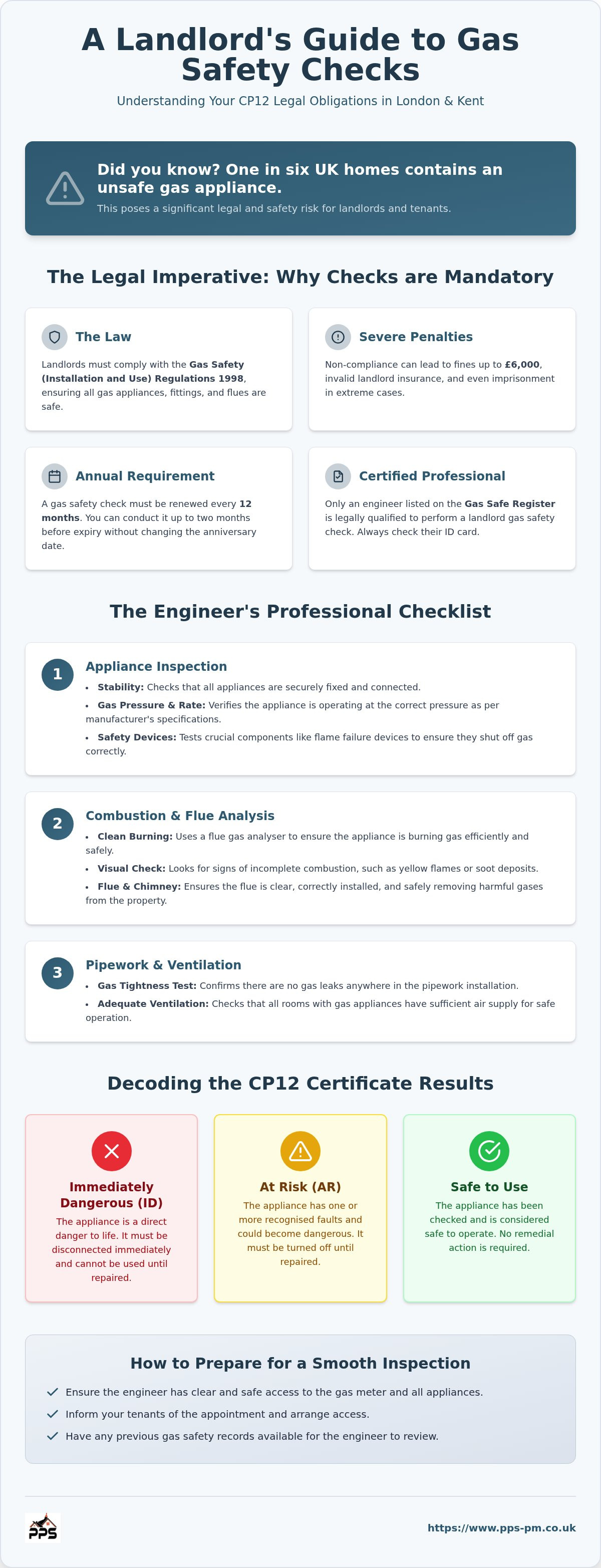
Once the physical inspection concludes, you receive the Landlord Gas Safety Record, universally known as the CP12 certificate. In 2026, this document serves as your primary evidence for the National Landlord Database. It is the final answer to what does a landlord gas safety check include, providing a transparent audit trail of every test performed. This record isn't just a piece of paper; it's a legal shield that proves you've met your duty of care. You must provide a copy to existing tenants within 28 days of the check. For new tenancies, the law requires you to hand over a valid certificate before they move into the property.
Deciphering the engineer’s findings is where many landlords feel the most stress. If an appliance doesn't meet the required standards, it will be marked with specific industry codes. Immediately Dangerous (ID) signifies a fault that poses an immediate threat to life or the building. In these cases, the engineer must disconnect the appliance for safety. At Risk (AR) means a fault exists that could become dangerous in the future. Whilst an AR code is less urgent than an ID, you must still arrange remedial works promptly to maintain your compliance status and keep your insurance valid.
Handling a 'Fail' result requires immediate action. Our team prioritises these urgent repairs to ensure your tenants aren't left without essential services. If your property is due for its annual inspection, you can book a CP12 certificate with our Gas Safe registered engineers today to ensure your records are up to date and fully compliant.
Essential Information on the Certificate
Always verify the details on your CP12 as soon as you receive it. Ensure the property address is identical to the one on the tenancy agreement. The record must clearly display the engineer’s name, their signature, and their unique Gas Safe ID number. Check the date of the inspection carefully; this starts the clock for your next 12-month cycle. A professional record will also list the specific location of every appliance tested, from the kitchen hob to the loft-mounted boiler.
Digital vs Paper Records
The industry has shifted decisively towards digital documentation. Digital CP12s are easier to store, harder to lose, and can be uploaded instantly to compliance portals. For multi-property landlords in Kent, organised digital folders are essential for surviving a local authority audit. We recommend storing your records in a secure cloud-based system. This ensures you can access them 24/7 if a tenant loses their copy or if you need to prove compliance during a property sale.
Preparation and Next Steps: Ensuring a Smooth Inspection
Preparation is the difference between a swift pass and a stressful delay. To ensure your engineer can perform the full scope of what does a landlord gas safety check include, you must provide clear access to all gas appliances. Clear away clutter from around the boiler and move any furniture obstructing gas meters or emergency control valves. Our engineers also need to inspect flues, so ensure any loft hatches are accessible and ladders are available if required. These small steps prevent aborted visits and keep your property compliant without unnecessary drama. As We are a trusted plumbing & Heating company providing reliable, high-quality services across London and Kent., we see first-hand how simple preparation speeds up the certification process for busy landlords.
A frequently overlooked requirement is the energy supply itself. You must ensure there is sufficient credit on both gas and electric prepayment meters before the engineer arrives. Without a live fuel supply and power for the boiler's electrical components, we cannot perform the mandatory combustion analysis or pressure tests. If you have recently invested in a new boiler installation in Dartford, the engineer will specifically verify that the new components integrate safely with the existing pipework as part of what does a landlord gas safety check include. Checking the meters five minutes before the appointment saves time and money for everyone involved.
Tenant Cooperation and Access Issues
Legally, you must provide tenants with at least 24 hours' written notice before an inspection. Whilst most tenants understand the importance of safety, some may refuse entry. If this happens, don't panic. You must document every "reasonable step" you've taken to comply, including emails, text messages, and formal letters. This evidence is vital for your defence if a local authority inspector audits your records. Most modern tenancy agreements include a clause specifically allowing access for mandatory safety checks, which acts as a helpful reminder of their obligations and your duty of care. Always keep a log of your communication attempts to prove you have acted in good faith.
Booking Your 2026 Gas Safety Check
Never leave your compliance until the final week of your certificate. With the increased enforcement measures introduced in 2026, a single day of non-compliance can leave you vulnerable to fines or insurance disputes. For maximum efficiency, many landlords in Bexleyheath and Kent choose to combine their annual safety check with other technical maintenance. Whether you require a high-efficiency boiler installation in Kent or proactive boiler repairs in Dartford, our team provides a one-stop solution for property owners. Book your professional Landlord Gas Safety Check with We are a trusted plumbing & Heating company providing reliable, high-quality services across London and Kent. today to secure your "safety seal" and maintain your reputation as a responsible property owner.
Secure Your Compliance for 2026 and Beyond
Staying ahead of gas safety regulations shouldn't be a source of stress. You now have a clear understanding of what does a landlord gas safety check include, from technical pressure tests on pipework to the rigorous inspection of every landlord-supplied appliance. By maintaining these records and acting quickly on warning codes, you protect both your tenants' lives and your professional standing as a property owner in Kent.
We combine technical expertise with honest, transparent billing to keep your portfolio compliant and your maintenance costs predictable. Don't leave your legal duties to chance in an era of stricter enforcement and national databases. Secure your property today with a certified Landlord Gas Safety Check from We are a trusted plumbing & Heating company providing reliable, high-quality services across London and Kent.. Our Gas Safe Registered engineers provide 24/7 emergency support across Dartford, Bexleyheath, and the surrounding areas, ensuring you're never left without expert help during a household crisis. Your peace of mind is just one professional inspection away.
Frequently Asked Questions
How long does a landlord gas safety check typically take?
A standard inspection usually takes between 30 and 60 minutes to complete. The exact duration depends on the number of gas appliances in the property and the ease of access to the gas meter and pipework. Our engineers work efficiently to minimise disruption whilst ensuring every technical safety test is completed to the highest standard.
Does the gas safety check include the oven and hob?
Yes, the inspection covers every landlord-supplied gas appliance, including cookers, hobs, and ovens. When asking what does a landlord gas safety check include, it's vital to remember that the engineer must verify the stability, gas rate, and safety devices of these cooking appliances. This ensures they don't pose a carbon monoxide risk to your tenants.
What happens if my property fails the gas safety check?
If an appliance is found to be unsafe, the engineer will issue a warning notice and may disconnect the unit for safety. Depending on the severity, the fault is categorised as 'Immediately Dangerous' or 'At Risk'. You must arrange repairs instantly to rectify the issue and receive a passing certificate; letting a property with a failed check is a serious legal breach.
Do I need a gas safety certificate if my property only has electric appliances?
You don't require a gas safety certificate if there is no gas supply to the property and no gas appliances are present. However, if the property has a gas supply but no appliances, you may still need to ensure the pipework is safe. Most landlords in Dartford with purely electric homes focus on their mandatory Electrical Installation Condition Report (EICR) instead.
Can a tenant arrange their own gas safety check?
The legal responsibility for the annual check rests solely with the landlord. Whilst a tenant can facilitate access or suggest an engineer, you must ensure the work is carried out by a Gas Safe registered professional and that you receive the official CP12 record. You cannot delegate this statutory duty of care to the tenant under any circumstances.
How much does a landlord gas safety certificate cost in 2026?
The cost of a gas safety certificate varies based on the location of the property and the total number of gas appliances that require testing. Properties with multiple gas fires and boilers will naturally require more time for technical analysis. We provide honest, transparent billing for all landlords in Kent to ensure you know exactly what you're paying for before the engineer arrives.
Is a carbon monoxide alarm required for a gas safety certificate?
Yes, current regulations require a working carbon monoxide alarm in any room containing a fixed combustion appliance, such as a boiler or gas fire. Whilst gas hobs are currently excluded from this specific requirement, having alarms installed is a critical part of what does a landlord gas safety check include to ensure full compliance with the latest safety amendments.


Comments