


Why Is My Boiler Losing Pressure? A Homeowner’s Guide to Troubleshooting

Imagine waking up on a freezing Tuesday morning in Dartford only to find your radiators stone cold and your shower icy. You check the cupboard and see the needle on your boiler gauge sitting firmly at zero. It's a common frustration for many homeowners across London and Kent, leaving you asking: why is my boiler losing pressure? It's a stressful situation, especially whilst you worry about potential leaks damaging your floorboards or the confusion of technical terms like filling loops and expansion vessels.
We are a trusted plumbing & heating company providing reliable, high-quality services across London and Kent, and we understand that a functioning heating system is essential for your comfort and peace of mind. This guide will help you discover the common causes of pressure loss and show you how to safely identify leaks or system faults before you call a Gas Safe registered engineer. We'll walk through a step-by-step troubleshooting process, from checking radiator valves to understanding system components, so you can restore your heating quickly. You'll learn whether the fix is a simple DIY task or if you require professional repair to prevent future breakdowns.
Table of Contents
Understanding Boiler Pressure: What Does the Gauge Actually Tell You?
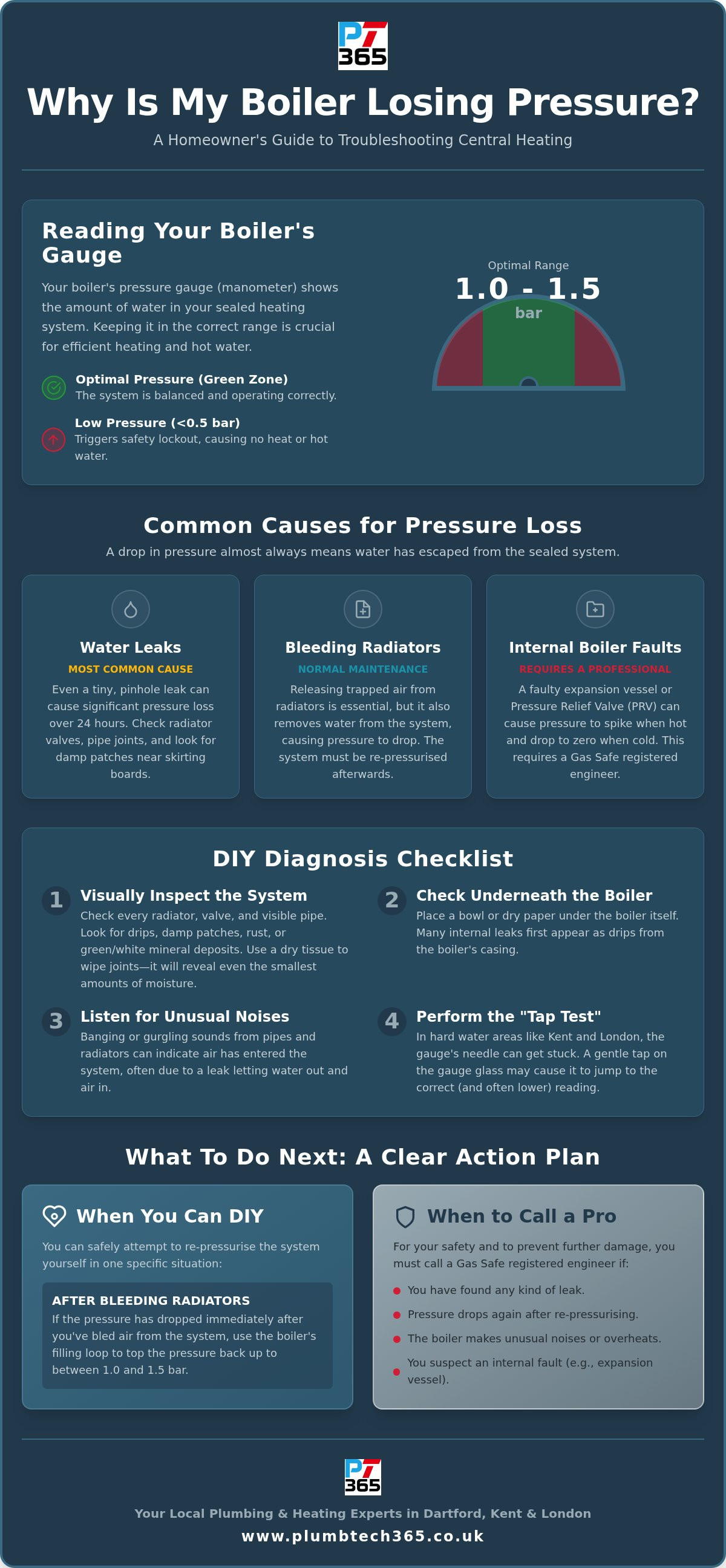
Boiler pressure is the balance of water within your sealed central heating system. Think of it as the force that pushes hot water through your pipes and into your radiators. Without the correct amount of water, your system cannot function effectively. Most homeowners first notice a problem when they check the manometer, which is the gauge on the front of the unit. This instrument is your primary window into the health of your heating.
For most systems, the "Green Zone" or healthy operating range is between 1.0 and 1.5 bar. If you have an older model, you'll likely see a hydraulic gauge with a physical needle. Modern units often feature digital displays that provide a precise numerical reading. It's normal for this figure to rise slightly whilst the heating is active because water expands when it is hot. However, if the reading remains at zero when the system is cold, you're left wondering: why is my boiler losing pressure?
The Consequences of Low Boiler Pressure
When pressure drops too low, usually below 0.5 bar, most modern boilers will trigger a "lockout" mechanism. This is a safety feature designed to protect expensive internal components like the heat exchanger and pump from running dry. The most immediate symptom is a total loss of heating and hot water. You might also notice cold spots on your radiators or hear unusual banging and gurgling noises in your pipes. These air pockets are a clear sign that the system's hydraulic balance is compromised.
London and Kent: How Hard Water Affects Your Gauge
Residents in Dartford and across various Kent and London postcodes often deal with high levels of hard water. Limescale is a persistent issue that can impact more than just your kettle. Over time, mineral deposits can block the tiny capillary tubes that lead to your pressure gauge. This can result in a "stuck" needle that shows a healthy reading whilst the system is actually dangerously low on water.
If you suspect your gauge is inaccurate, a gentle "tap test" on the glass can sometimes reveal a sticking needle. For a more permanent solution, a professional power flush can clear out sediment and restore the accuracy of your system's sensors. If you're unsure about the reading, contact a Gas Safe registered engineer from Plumbtech 365 to perform a thorough diagnostic check of your installation. Regular boiler servicing is the best way to catch these issues before they lead to a complete breakdown.
Common Causes: Why Is My Boiler Losing Pressure?
Finding your heating system at a standstill is a major inconvenience. Most of the time, the culprit is a loss of water volume within the sealed circuit. Water leaks are the most frequent reason for a dropping gauge. Even a microscopic "pinhole" drip from a radiator valve can lower the bar reading significantly over a 24-hour period. Another frequent cause is bleeding your radiators. Whilst this essential maintenance task removes trapped air, it also reduces the total volume of water in the system. You will always need to top up the pressure after bleeding to return the needle to the green zone.
Internal component failures are also common. Your boiler contains several parts designed to manage pressure automatically. If these fail, the system can no longer regulate itself. This often leads to the boiler locking out for safety. If you find yourself asking why is my boiler losing pressure despite no visible drips, the problem likely lies within the unit itself or hidden beneath your floorboards, requiring a methodical search of the property.
Leaks in the Central Heating Circuit
While internal issues are common, if the pressure loss is due to an external supply leak, specialised equipment from Rocket Rentals Ltd can be essential for the necessary excavation and repair work.
Thermostatic Radiator Valves (TRVs) and pipework joints are common sites for weeping. Over time, the seals within these valves can perish. Check for damp patches, green copper oxidation, or bubbling paintwork near your skirting boards. These "hidden leaks" under floorboards or inside walls can be difficult to spot but cause persistent pressure loss. If you find a damp spot, it's time to call local plumbers to prevent structural damage to your timber or ceilings.
Faulty Internal Components: The Expansion Vessel
The expansion vessel manages water volume changes as the system heats up. Inside is a rubber diaphragm that can perish or lose its air charge over time. When this happens, the pressure often spikes rapidly when the heating is on. This forces the Pressure Relief Valve (PRV) to open and dump water through the external discharge pipe. Once the system cools, the pressure drops to zero. This is a technical repair that requires a Gas Safe registered engineer to diagnose and repressurise the vessel safely.
Pressure Loss in Unvented Hot Water Cylinders
Many homes in Dartford and across London postcodes use unvented hot water systems like Megaflo. These setups have specific pressure requirements and safety valves. If you notice water dripping from a plastic "tundish" or the external discharge pipe, it's a sign of a pressure issue within the cylinder. These systems are complex and require specialist knowledge. If you need assistance, We are a trusted plumbing & heating company providing reliable, high-quality services across London and Kent. and our specialists can ensure your entire installation remains safe and efficient.
DIY Diagnosis: How to Find the Source of the Leak
If you've already asked yourself why is my boiler losing pressure, the next step is a methodical search of your property. We recommend a systematic "walk-around" guide. Start on the top floor of your home and work your way down. This is because water follows gravity; a leak in an upstairs bedroom can eventually manifest as a damp patch on a downstairs ceiling. Take a piece of dry kitchen tissue with you. Use it to "swipe" under every radiator valve, joint, and exposed pipework. Even a tiny amount of moisture that isn't visible to the eye will show up instantly on the paper.
Don't forget to check the area around the boiler itself. Place a clean, dry sheet of white paper directly beneath the unit and leave it overnight. In the morning, any tell-tale drips or water tide marks will confirm if the leak is internal. You should also step outside to inspect the external copper discharge pipe, often called the PRV pipe. If you see constant dripping or white lime staining on the tip of the pipe, your pressure relief valve is likely letting water escape from the system. This systematic approach helps narrow down why is my boiler losing pressure before you call for assistance.
Inspecting Radiators and Valves
While these DIY steps are effective for heating systems, those interested in how professional defect inspections help identify hidden faults during property handovers can find out more from specialist services.
Pay close attention to the radiator nuts and Thermostatic Radiator Valves (TRVs). Look for "green" copper oxide staining or white crusty deposits. These are clear indicators of a slow, weeping leak that has been present for some time. Interestingly, these leaks often only appear whilst the system is cooling down. As the metal pipes contract, small gaps can open in the joints. If you find multiple issues or can't pinpoint the source, our Boiler Repairs Bexley guide offers deeper insights into professional leak tracing for Kent residents.
Checking the Boiler and Pipework
Examine the pipework directly connected to the bottom of your boiler for any signs of water ingress or dampness. A common culprit is the "filling loop," the silver braided hose used to top up the system. Ensure both black lever valves are firmly in the "off" position and check the connections for moisture. Whilst you can perform these visual checks, you must never attempt to remove the boiler casing yourself. This is a critical safety boundary. Any internal investigation must be carried out by a Gas Safe registered engineer to comply with UK safety regulations and protect your manufacturer's warranty. If your visual search in Dartford or London postcodes comes up empty, the fault is likely an internal component that requires a professional boiler servicing visit.
How to Re-Pressurise Your Boiler Safely
Once you've investigated why is my boiler losing pressure and confirmed there are no major bursts, you can attempt to top up the system yourself. This process involves adding fresh mains water into your heating circuit to restore the hydraulic balance. It's a straightforward task, but it requires patience and a steady hand to avoid overfilling. Before you begin, ensure you have a towel and a small container nearby to catch any minor drips from the connections.
Follow these steps to restore your heating safely:
Step 1: Switch off your boiler using the main power switch or at the fused spur. You must allow the system to cool completely. Handling a hot boiler can be dangerous, and pipework contracts as it cools, giving you a more accurate pressure reading.
Step 2: Locate your filling loop. This is usually a silver braided hose found directly beneath the boiler or nearby in the airing cupboard. It typically features two small black lever valves at either end.
Step 3: If your loop is a detachable type, attach it securely to the two brass fittings. Ensure the wing nuts are finger-tight to prevent leaks whilst the valves are open.
Step 4: Open both valves slowly and simultaneously. You'll hear the sound of water entering the system. Watch the pressure gauge closely. As the needle reaches 1.2 bar, or the middle of the green zone, stop immediately.
Step 5: Close both valves tightly. If you have a detachable loop, remove it now. This is a legal requirement to prevent heating water from siphoning back into your fresh water supply.
Types of Filling Loops: External vs Internal
Not all systems use the traditional braided hose. Modern boilers from brands like Worcester Bosch or Vaillant often feature internal filling links. These might involve a "key" that you insert and turn or a blue "keyless" lever located on the underside of the unit. If your boiler has an internal key, ensure it's pushed in fully before turning. If you find these technical components confusing, our Expert Boiler Service London guide provides specific visual cues for different manufacturer models across Kent and London postcodes.
What to Do if You Over-Pressurise
It's easy to get distracted and let the needle slip into the "Red Zone," which is typically above 2.5 or 3 bar. High pressure puts unnecessary strain on your expansion vessel and joints. If this happens, don't panic. You can safely lower the pressure by bleeding a single radiator. Use a radiator key to let water out into a bowl until the gauge drops back to the 1.2 bar mark. Keep a close eye on your pressure relief valve (PRV) outside for a few hours afterwards to ensure it hasn't become stuck open. If the gauge continues to fluctuate wildly, you should book a visit from independent boiler engineers to check your internal components.
When to Call a Gas Safe Engineer in Dartford or London
Whilst topping up your system is a useful skill, it is often a temporary fix for a deeper issue. If you have restored the water level only to find the needle dropping again within 24 to 48 hours, a professional repair is essential. A sealed heating system should maintain its pressure for months at a time. A rapid drop indicates a persistent leak or a component failure that you cannot see. Continuing to top up a leaking system introduces fresh, oxygenated water into your radiators, which can lead to internal corrosion and expensive sludge build-up over time.
It is vital to remember that your DIY troubleshooting must stop at the boiler casing. Opening the unit to inspect internal parts is illegal for anyone who isn't on the Gas Safe Register. Components such as the heat exchanger, the internal pump, or the expansion vessel are complex and potentially dangerous if handled incorrectly. If you are still asking why is my boiler losing pressure after checking your visible pipes and valves, the fault is likely hidden within the boiler's internal circuitry. We are a trusted plumbing & heating company providing reliable, high-quality services across London and Kent. and our engineers provide rapid assistance across Dartford and various postcodes to diagnose these faults safely.
The Importance of the Annual Service
Prevention is always better than an emergency repair. Booking an annual Boiler Servicing Dartford visit is the most effective way to keep your pressure stable. During a professional service, an engineer will check the "pre-charge" in your expansion vessel using a specialised pump. This ensures the vessel can handle the expansion of hot water without triggering the pressure relief valve. We also clean internal filters and check for early signs of weeping joints. Keeping these records is often a mandatory condition for maintaining your manufacturer's warranty, saving you from significant costs if a major part fails.
Landlord Responsibilities and CP12 Certificates
For landlords managing properties in Kent and London, a boiler losing pressure is more than just an inconvenience. It is a potential safety and compliance risk. If a tenant is left without heating or hot water, you may be in breach of your legal duty to provide a habitable home. During a Landlord Gas Safety Certificate Kent inspection, our engineers thoroughly test the system's integrity. We check for pressure fluctuations that could signal a failing component or a gas-related issue. Ensuring your CP12 is up to date protects both your investment and your tenants' well-being throughout the winter months.
Restore Your Home's Comfort and System Safety
Identifying why is my boiler losing pressure is the first step toward reclaiming a warm, comfortable home. Whilst many minor issues can be resolved by safely using a filling loop, a persistent drop is a clear signal that your system needs professional attention. Whether it's a weeping radiator valve or a faulty internal expansion vessel, ignoring the problem can lead to more expensive repairs or a total breakdown during the coldest months.
Our Gas Safe Registered engineers have been serving residents across London, Kent, and Dartford since 1996. We specialise in identifying hidden leaks and performing the essential boiler servicing that keeps your warranty valid and your energy bills low. If your troubleshooting hasn't solved the issue, don't risk your safety by investigating internal components yourself. We offer 24/7 emergency plumbing support to ensure you're never left in the cold. Book a Gas Safe Engineer from Plumbfix 365 Today to secure your heating system's reliability. We're here to help you get back to a warm, worry-free home.
Frequently Asked Questions
Is it normal for a boiler to lose pressure occasionally?
It is quite common for a heating system to lose a tiny amount of pressure over twelve months. However, if your gauge drops below 1.0 bar regularly, it points to a fault. A sealed system should be airtight. If you find yourself asking why is my boiler losing pressure every few weeks, you likely have a slow leak or a failing component that needs a professional check from a Gas Safe engineer.
Can I still use my heating if the boiler pressure is low?
You should avoid using your heating if the pressure is significantly below 1.0 bar. Most modern boilers in the UK will automatically lock out if the pressure falls below 0.5 bar to protect the heat exchanger from overheating. Running a system with insufficient water can cause the pump to burn out or lead to noisy, air-filled pipes. It's best to repressurise the system before attempting to fire the boiler again for your comfort.
How often should I have to top up my boiler pressure?
You should only need to top up your system once or twice a year at most. If you are reaching for the filling loop every few weeks, there is an underlying issue that needs addressing. Frequent topping up introduces fresh water into your radiators, which increases limescale and internal corrosion. This is a common problem in Dartford and London postcodes where mineral content in the water supply is particularly high and leads to sediment buildup.
Why does my boiler pressure go up when the heating is on?
It is perfectly normal for the pressure to rise by 0.3 to 0.5 bar whilst the heating is running. This happens because water expands as it gets hot. The expansion vessel is designed to absorb this extra volume. However, if the pressure spikes into the red zone, usually above 3.0 bar, your expansion vessel may have lost its air charge or the internal diaphragm might have perished. This requires a Gas Safe engineer to investigate the unit.
Will a leaking radiator cause my boiler to lose pressure?
Yes, even a tiny weeping leak from a radiator valve or a pinhole in the radiator body will cause the system to lose pressure. Because the central heating is a sealed loop, any loss of water anywhere in the circuit affects the gauge at the boiler. Check for damp spots or green oxidation on your radiator nuts. Repairing these small leaks early prevents the need for a full system repressurisation and protects your floorboards from water damage. If a leak has already caused significant issues, Tip Top Plumbing & Restoration specialises in professional water damage recovery and emergency plumbing services.
Low boiler pressure isn't typically dangerous, but it is a sign that your system isn't operating as intended. The main risk is a total loss of heating and hot water during cold weather. However, if the pressure loss is caused by a leak near electrical components or if the boiler is making loud banging noises, you should shut it down immediately. Always ensure a Gas Safe registered engineer performs any internal repairs to maintain safety and compliance.
How much does it cost to fix a boiler losing pressure in London?
The cost of a repair depends entirely on the source of the leak. Minor issues like a weeping radiator valve often only require a standard call-out fee. However, internal faults such as a failed expansion vessel or a cracked heat exchanger involve higher costs for both parts and labour. For homeowners in Dartford and across London, it's best to consult independent boiler engineers who provide clear, honest billing before any work begins on your heating installation.
What happens if I keep re-pressurising my boiler without fixing the leak?
Repeatedly topping up your system without fixing the leak causes long term damage. Every time you open the filling loop, you introduce oxygen and minerals into the circuit. This leads to internal corrosion and the buildup of magnetic sludge, which can eventually ruin your pump or heat exchanger. If you ignore the root cause of why is my boiler losing pressure, you may face a much larger bill for a power flush or a new boiler installation.


Comments