


Ageing Boiler Risks: Repair or Replace?

A boiler rarely stops working without warning. It may take longer to heat the house, lose pressure every few weeks or make a new banging noise when the heating starts. These are not always emergencies, but ageing boiler risks can build quietly until you are left without heating or hot water at the worst possible time.
For homeowners, landlords and property managers, the aim is not to replace a boiler simply because it is old. It is to understand when a repair remains sensible, when maintenance can extend its life, and when an unreliable appliance is becoming an expensive or safety-critical liability.
Why ageing boilers become less reliable
Most modern condensing boilers are commonly expected to last around 10 to 15 years when correctly installed and serviced annually. Some last longer, particularly where the heating system has been kept clean and water quality managed. Others develop repeated faults much sooner because of heavy use, poor installation, limescale, sludge or missed servicing.
As a boiler ages, several parts are more likely to wear or fail. Pumps, fans, valves, seals, sensors and the heat exchanger all work hard during the heating season. A single replacement part may be straightforward, but a pattern of different faults often indicates that the boiler is nearing the point where further repairs offer diminishing value.
Older boilers are also typically less efficient than a current A-rated condensing model. That does not mean every older boiler must be replaced immediately. However, if it is using more gas, struggling to heat rooms evenly and requiring frequent call-outs, the running costs can become as relevant as the repair bill.
The main ageing boiler risks to look out for
Loss of heating or hot water
The most obvious risk is a breakdown. An older boiler may work perfectly through autumn, then fail during the first cold spell when it is running for longer each day. Common symptoms include an ignition lockout, low pressure, intermittent hot water, a frozen condensate pipe in cold weather or radiators that never fully warm up.
A fault does not automatically mean replacement. A qualified engineer can diagnose whether the problem is confined to a repairable component, the system pressure, a blocked filter or an issue elsewhere in the central heating system. The concern comes when faults return repeatedly or parts are no longer readily available.
Higher gas bills and reduced efficiency
A boiler that cycles on and off too often, takes longer to heat water or cannot respond properly to controls may use more gas than necessary. Heating bills can rise gradually, so the problem is easy to miss until compared with previous years.
Efficiency is affected by more than the boiler itself. Sludge in radiators, a poorly set thermostat, an old circulating pump and inadequate controls can all make a heating system work harder. Before deciding on a replacement, it is worth having the full system assessed. In some cases, servicing, power flushing, radiator balancing and improved controls make a noticeable difference. In others, these measures only delay the inevitable.
Leaks, corrosion and water damage
Small leaks around a boiler, pipework or radiator valves should never be ignored. Even a slow drip can reduce system pressure, damage cupboards or flooring, and encourage corrosion in parts of the system.
Visible corrosion, staining beneath the boiler, frequent pressure loss or a need to keep topping up the system all deserve investigation. Repressurising too often introduces fresh water and oxygen into the system, which can accelerate internal corrosion. The cause may be a simple external leak, but it can also point to a failing expansion vessel, pressure relief valve or internal component.
Carbon monoxide and combustion concerns
A well-maintained gas boiler should burn safely and remove combustion gases correctly. However, any gas appliance can become dangerous if it develops a fault, has poor ventilation, a damaged flue or incomplete combustion. Carbon monoxide has no colour or smell, so occupants cannot rely on noticing it.
Warning signs that need prompt professional attention include black marks or staining around the boiler, yellow or lazy flames where a flame is visible, excessive condensation, headaches or nausea that improve when away from the property, and a carbon monoxide alarm sounding. If you suspect a gas or carbon monoxide issue, turn the appliance off if safe to do so, ventilate the property, leave the area and seek urgent advice from a Gas Safe registered engineer and the relevant emergency service.
Every home with gas appliances should have an audible carbon monoxide alarm installed in line with current guidance. Landlords have additional legal responsibilities around gas safety checks and alarm provision, but alarms are a sensible safeguard in any owner-occupied home as well.
Obsolete parts and repeated repair costs
An engineer may be able to repair an older boiler today but be unable to source a key part next year. Manufacturers eventually stop producing components for older models, and suitable alternatives are not always available or appropriate.
The decision becomes clearer when you add up the recent history. If the boiler has needed several repairs over the past two years, is beyond its typical service life and has an expensive fault such as a heat exchanger issue, replacement can be the more predictable option. By contrast, a 7-year-old boiler with one isolated sensor fault may be well worth repairing.
When a repair is still the sensible choice
Repair is often the right answer where the boiler is relatively young, has a good service record and the fault is clearly identified. A replacement pump, fan, sensor, valve or pressure-related repair may restore reliable operation without the cost and disruption of a new installation.
It also makes sense to repair where the underlying heating system is in good condition and spare parts remain available. The key is receiving an honest diagnosis, including the likely cost, any related issues found, and whether the repair is expected to offer a lasting result rather than a short-term patch.
For landlords and managing agents, a prompt repair can minimise tenant disruption, provided the appliance remains safe and dependable. Keeping service records and repair history also makes future decisions easier and supports planned budgeting across a portfolio.
Signs replacement should be considered
Replacement deserves serious consideration when a boiler is around 12 to 15 years old and suffering recurring faults, when repair costs are high compared with the value of a new installation, or when parts have become obsolete. It is also worth considering if the boiler is oversized, undersized or unable to provide enough hot water for the household.
A new boiler is not simply a like-for-like box swap. Correct sizing matters. A small flat, a family home with two bathrooms and a commercial premises have different heating and hot-water demands. The right solution may involve a combi boiler, a system boiler with cylinder, upgraded controls, a magnetic filter, improved pipework or work to radiators that have never heated properly.
A professional survey should also consider the condition of the existing system. Installing a new boiler onto contaminated pipework can shorten the life of the new appliance. Cleaning the system and fitting appropriate protection helps preserve performance and manufacturer warranty requirements.
Preventing problems before winter
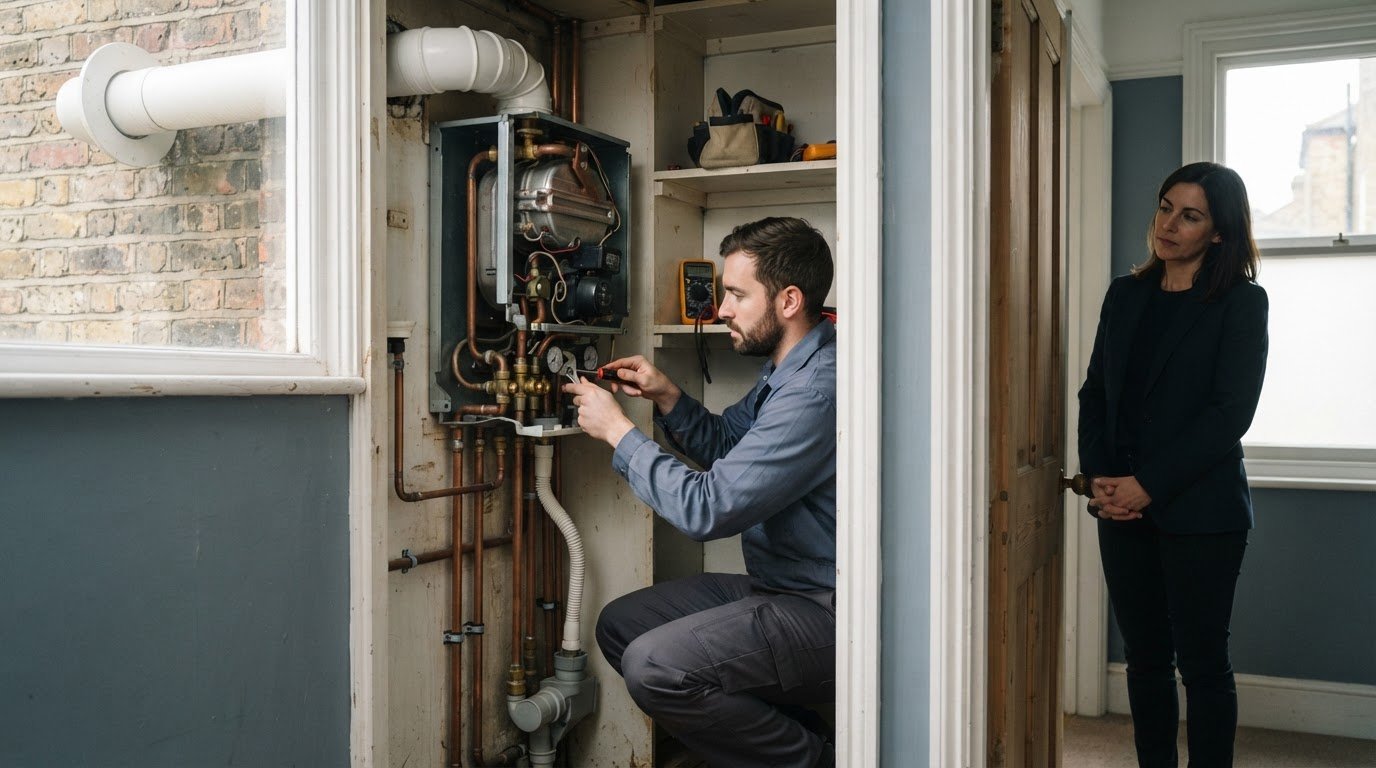
Annual servicing is the most effective way to identify developing boiler faults before they become a breakdown. During a service, a Gas Safe registered engineer checks safe operation, combustion, flue integrity, internal components and system pressure, while addressing issues that may otherwise worsen over time.
Between services, keep an eye on pressure readings, unexplained noises, leaks and changes in hot-water performance. Bleeding radiators when needed, using heating controls properly and arranging attention early can prevent a minor issue becoming an out-of-hours emergency.
For properties in Dartford, North Kent and South East London, PlumbTech365 can assess an unreliable boiler, carry out safety-focused repairs and provide clear advice on whether a replacement is justified. You should never be pressured into a new boiler, but you should have the facts needed to avoid being caught out by an ageing one.
If your boiler is becoming noisy, unreliable or costly to run, arrange an assessment before the next cold spell. A timely diagnosis gives you more choice, more control over costs and far less chance of waking up to a cold home.


Comments