


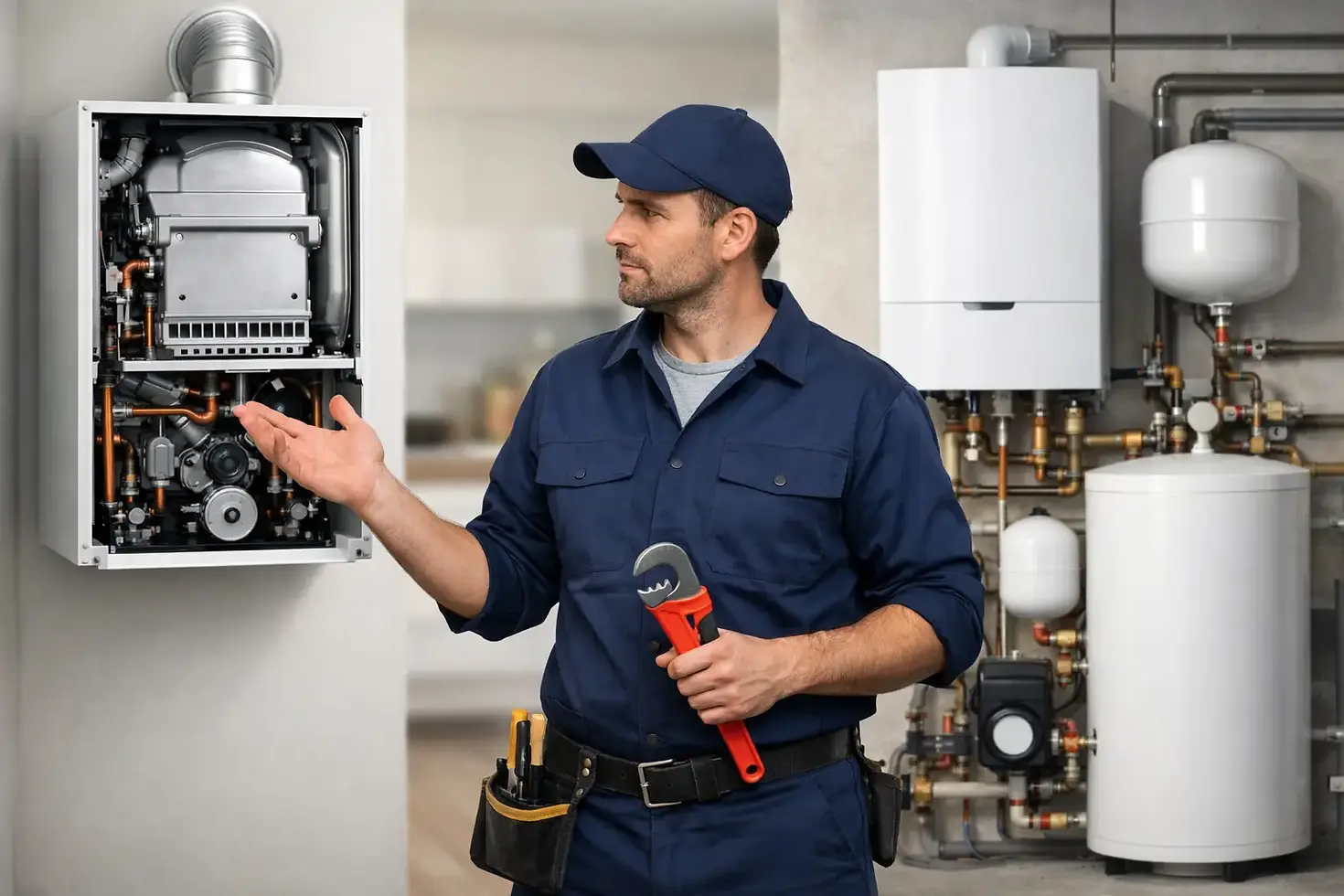
Combi Versus System Boilers - Which Suits You?

A boiler replacement is not just about getting the heating back on. The boiler you choose affects whether two showers can run comfortably, how quickly hot water reaches the tap and how much cupboard space you keep. When weighing up combi versus system boilers, the right answer comes down to your household's hot-water demand, available space and the condition of the existing heating system.
A like-for-like replacement can sometimes be the simplest option, but it is not always the best long-term choice. Understanding the practical differences before installation helps avoid a boiler that looks efficient on paper but struggles at the busiest times of day.
Combi versus system boilers: the key difference
A combi, short for combination boiler, provides central heating and hot water from one compact unit. It heats water directly from the mains when you turn on a hot tap or shower. There is no separate hot-water cylinder, which makes combi boilers particularly popular in flats, smaller houses and properties where storage space is limited.
A system boiler works with a separate hot-water cylinder, usually located in an airing cupboard or utility area. The boiler heats and stores a supply of hot water for use around the home. Most key heating components are built into the boiler itself, making installation neater than older conventional systems, although the cylinder still needs space.
The distinction matters most when more than one person wants hot water at once. A combi has to heat water as it is used, while a system boiler can draw hot water from its stored cylinder to supply several outlets at the same time.
When a combi boiler is the better fit
Combi boilers suit many one-bathroom homes very well. If you have a modest household, good incoming mains-water pressure and rarely run more than one shower or hot tap at the same time, a modern combi can be an efficient and space-saving choice.
Without a cylinder, there is less equipment to accommodate and less heat lost from stored hot water. You only heat the water you need, when you need it. This can be useful for couples, smaller families and landlords improving compact rental properties.
A combi can also make sense where an old vented cylinder system is taking up valuable space. Removing tanks and a cylinder may free up an airing cupboard or loft area, subject to a proper survey of the pipework, boiler position and water supply.
That said, a combi is only as good as the mains supply feeding it. A high-output combi may offer an impressive flow rate, but it cannot create more incoming water pressure or flow than the property receives. In some parts of older housing stock, this needs checking before a boiler is selected.
The limitations to consider
The main compromise is simultaneous demand. If someone is showering while another person runs a bath or uses a kitchen tap, the water flow may reduce. In a busy home with two bathrooms, this can quickly become frustrating.
A combi also has no stored hot-water reserve. If the boiler develops a fault, there is no cylinder of warm water left for washing. It is another reason to arrange annual servicing and have boiler performance checked before a minor fault becomes a full breakdown.
When a system boiler makes more sense
System boilers are often the stronger option for larger homes, homes with two or more bathrooms, and households where hot water is regularly used at the same time. A correctly sized cylinder stores enough hot water to support multiple showers, taps and baths more reliably than a combi in high-demand situations.
For example, a family getting ready for school and work may have one person showering upstairs while another uses the ensuite. With a system boiler and an appropriately sized unvented cylinder, both outlets can receive a more consistent supply, provided the incoming mains flow and pressure are suitable.
System boilers are also a sensible choice where a property already has a hot-water cylinder in good condition. Keeping the general layout can reduce disruption compared with converting the whole system to a combi arrangement. It may also avoid unnecessary alterations to pipework, flues, electrical connections and cupboard space.
There is a future-facing benefit too. A cylinder can work well alongside certain renewable heating plans, including solar thermal systems and some heat-pump arrangements. That does not mean every system-boiler home should make those changes, but it can offer flexibility if your plans develop later.
The trade-offs with a system boiler
A hot-water cylinder takes up room and needs proper installation, insulation and maintenance. Stored hot water can also run out if the cylinder is undersized or several baths and showers are used in close succession. Recovery time then depends on the boiler output and cylinder specification.
There is a small amount of standing heat loss from any cylinder, even when it is well insulated. However, this should be balanced against the comfort and convenience of having enough hot water available when a busy household needs it.
For properties with an older vented system, the installation may involve a loft tank. Many modern system-boiler installations use an unvented, mains-pressure cylinder instead, but the correct arrangement depends on the property, existing equipment and water supply. This is a design decision for a qualified heating engineer, not something to assume from the boiler type alone.
How to choose the right boiler for your home
Boiler choice should be based on a survey rather than simply replacing whatever is already on the wall. An engineer should look at the number of bathrooms, occupants, shower types, existing radiators, current pipework, boiler location, flue route and mains-water performance.
Start with your everyday routines. A one-bathroom home where occupants shower at different times is often well served by a combi. A home with an ensuite, a main bathroom and a family that uses both in the morning is more likely to benefit from a system boiler and cylinder.
Think about the type of showers you have as well. Electric showers heat their own water and do not rely on the boiler for hot-water flow in the same way as mixer showers. A house with electric showers may therefore place lower demand on a combi than a similar house with two thermostatic mixer showers.
Available space is the next practical question. A combi removes the need for a cylinder, but it still requires suitable access for servicing and a safe flue route. A system boiler needs room for both boiler and cylinder, yet that extra storage can be worth it for households that value strong simultaneous hot-water performance.
Do not choose purely on boiler output. A larger kilowatt rating does not automatically mean a better experience. For combis, domestic hot-water flow rate is especially relevant. For system boilers, the boiler, cylinder size, cylinder coil, controls and water supply all need to work together.
Installation quality matters as much as boiler type
Even the right boiler will underperform if the existing heating system is dirty, poorly balanced or fitted with unsuitable controls. Before fitting a replacement, a professional installer should assess radiator condition, system water quality and any signs of sludge or corrosion.
A power flush may be recommended where contamination is affecting circulation. New installations should also include appropriate system protection, such as a magnetic filter and inhibitor, to help protect the boiler and reduce the risk of debris causing faults later.
Controls make a noticeable difference too. A programmable thermostat, thermostatic radiator valves and smart controls can help you heat occupied rooms at the times you need them. This is useful whether you choose a combi or system boiler, because comfort and efficiency rely on the whole heating system rather than the boiler alone.
For landlords and property managers, consistency matters. Keeping records of servicing, repairs and gas-safety work makes it easier to manage compliance and respond quickly when tenants report a heating or hot-water issue. Selecting a suitable boiler from the outset can also reduce avoidable call-outs caused by an undersized system.
Get a recommendation based on real demand
There is no universal winner in the combi versus system boilers decision. A combi is compact, efficient and highly practical for many smaller homes. A system boiler costs more in space and equipment, but is often the better investment where several people need hot water at once.
The most useful next step is a proper assessment by a Gas Safe registered engineer who can measure what your property actually needs. PlumbTech365 can assess your existing system, explain the options in plain English and recommend a boiler arrangement that gives your home reliable heating and hot water for the way you live.


Comments