


Diagnosing a Faulty Boiler Air Pressure Switch: Signs, Causes and Safe Next Steps

A boiler that repeatedly locks out doesn’t automatically have a faulty air pressure switch. If your boiler won’t start, a fault code or unusual fan noise can make the switch seem like the obvious cause. But diagnosing a faulty boiler air pressure switch means looking at the whole start-up sequence, not guessing from one symptom.
The switch helps confirm that the fan is producing the airflow needed for the boiler to continue its ignition sequence. A fault elsewhere in the appliance or airflow path can cause similar symptoms, so a code alone may not identify the failed part. This guide explains the switch’s role, the signs you might notice and other possible causes. It also covers what to record for a Gas Safe registered engineer, and why opening the boiler, testing components or bypassing the switch isn’t a safe next step. A qualified diagnosis can identify the cause and help determine what needs to happen next.
Table of Contents
What does a boiler air pressure switch do, and what symptoms can it cause?
How can an engineer distinguish a faulty switch from other boiler faults?
What can you safely check before arranging boiler fault diagnosis?
When does a boiler air pressure switch fault need urgent professional attention?
What happens when a Gas Safe registered engineer diagnoses the fault?
What does a boiler air pressure switch do, and what symptoms can it cause?
A boiler air pressure switch is a safety component that helps confirm the required air movement before ignition can proceed. It works with the fan and flue, but its design and operation vary between boiler models. A fault code or failed start may point to an airflow-related problem, but it doesn’t prove that the switch itself is faulty.
In simple terms, the switch helps signal that the boiler’s airflow conditions are suitable for the next stage of operation. The boiler is a complex appliance, and the way it checks airflow depends on its model and internal arrangement.
This video discusses a furnace pressure switch. It may illustrate the general idea, but it isn’t a guide to diagnosing or repairing a boiler.
How the air pressure switch works with the fan and flue
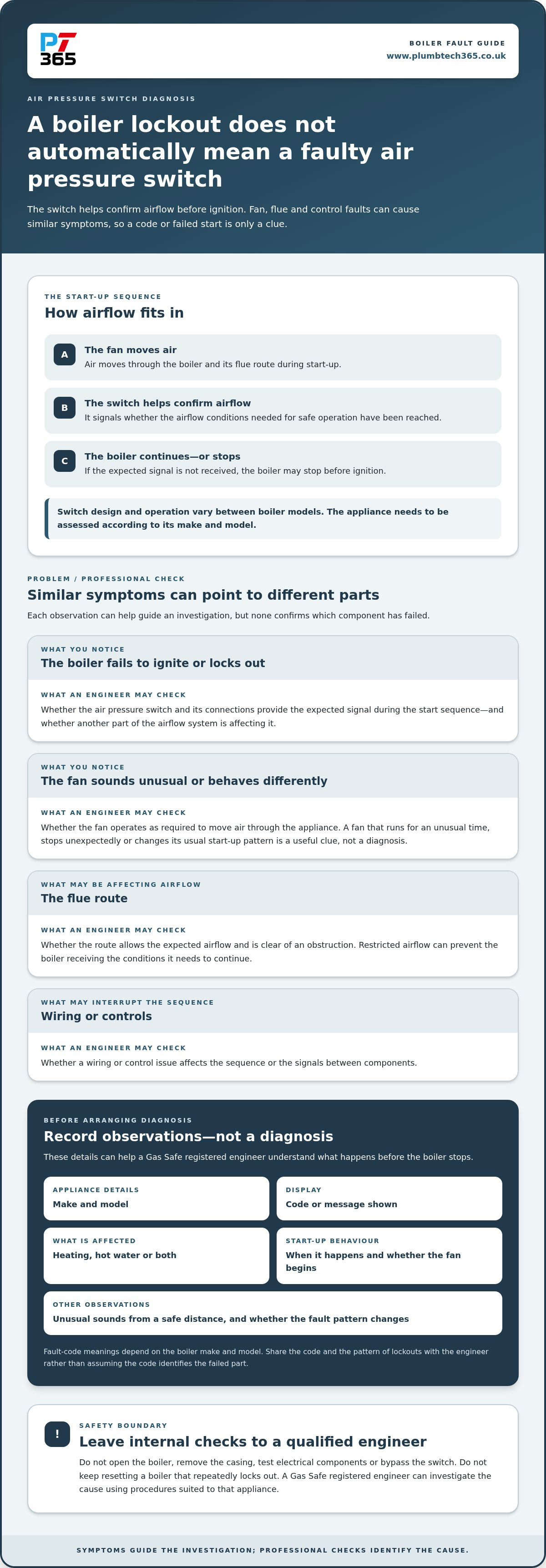
During a start sequence, the fan moves air through the boiler’s air and flue route. The switch helps detect whether the airflow conditions needed for safe operation have been reached, then signals the boiler’s controls. If the expected signal isn’t received, the boiler may stop before ignition. Because boilers use different switch designs and arrangements, an engineer needs to assess the appliance according to its model.
Which boiler symptoms might point to an air pressure issue?
Possible signs include the boiler failing to ignite, locking out or making repeated unsuccessful attempts to start. You might also notice the fan running for an unusual length of time, stopping unexpectedly or behaving differently from its usual start-up pattern. These observations can help narrow down the investigation, but none confirms a switch failure. Fan, flue, wiring or control problems can produce similar symptoms.
A displayed code can help, but its meaning depends on the boiler make and model. Check the manufacturer’s documentation rather than assuming a code means the same thing across different appliances. If the gauge also shows low pressure, keep that observation separate from an air pressure switch diagnosis. This guide to low boiler pressure covers that issue.
When diagnosing a faulty boiler air pressure switch, record the code, when it appears, whether the boiler attempts to ignite and what you notice about the fan. Share those details with a Gas Safe registered engineer. Don’t open the boiler or try to test or bypass the switch yourself.
How can an engineer distinguish a faulty switch from other boiler faults?
A boiler can stop during its start sequence for several reasons. The air pressure switch, fan, flue route and control system all play a part, so one symptom rarely identifies the failed component. Diagnosing a faulty boiler air pressure switch means assessing how these parts work together, rather than replacing a component based on a fault code alone.
The table shows some of the areas an engineer may investigate. These are possible causes, not diagnoses that can be made from symptoms alone.
Why a fan, flue or wiring problem can look similar
The switch relies on the wider airflow system and connected components. If the fan doesn’t operate as expected, or airflow through the flue is restricted, the boiler may not receive the conditions or signal it needs to continue. A wiring or control issue can also interrupt the sequence. An unusual fan noise, ignition failure or lockout is a useful clue, but none proves which part has failed.
Fault code meanings vary by boiler make and model. An engineer uses the manufacturer’s information alongside the symptoms and fault history, rather than treating a code as a universal answer.
What professional diagnosis may involve
A Gas Safe registered engineer can confirm the appliance details, review when the fault occurs, consider previous codes and assess relevant external conditions. They can then examine the components using suitable professional procedures for that boiler. Internal checks aren’t a homeowner task: don’t remove the casing, test electrical components or bypass a safety switch.
This approach helps identify the cause before repair decisions are made. The Health and Safety Executive provides guidance on gas safety, and a suspected appliance fault may need urgent professional attention. Share the boiler’s make and model, displayed code and start-up behaviour with the engineer, and arrange professional boiler repair support if the fault persists.
What can you safely check before arranging boiler fault diagnosis?
You can gather useful information without opening the boiler or trying to identify a failed part. These observations help a Gas Safe registered engineer understand what happens before the appliance stops. They won’t confirm whether the air pressure switch is faulty.
Safe observations to record before calling an engineer
Write down the boiler’s make and model, any displayed code or message, and whether the fault affects heating, hot water or both. Note when it occurs, such as immediately on start-up or after the fan begins, and whether the pattern changes. Record unusual sounds from a safe distance. Don’t remove covers or touch internal parts.
Check the display and user-accessible controls, following the boiler’s manual.
If the manual explains how to read the pressure gauge, note its displayed level. Don’t adjust anything unless the instructions direct you to.
Look for an obvious external obstruction near a vent or flue only from a safe, accessible position. Don’t climb, reach into openings or try to clear it.
Note whether the boiler has power and whether a code returns after a failed start.
Fault codes are model-specific, so record them exactly rather than relying on a general online interpretation. This information gives the engineer a clearer starting point when diagnosing a faulty boiler air pressure switch or another cause.
What not to do with a suspected pressure switch fault
Don’t open the casing, carry out electrical checks or attempt to test the pressure switch. Never bridge, bypass or disable a safety device to force the boiler to run. These checks require a suitably qualified engineer and the correct procedures for the appliance. Specialist resources may describe diagnosing the air pressure switch, but testing instructions aren’t a DIY task.
Follow the manufacturer’s user instructions, and don’t keep resetting a boiler that repeatedly locks out. Repeated resets won’t establish the cause and may delay a proper diagnosis. Arrange a professional boiler fault assessment instead.
If the display or gauge suggests low water pressure, treat it as a separate observation. See our boiler pressure troubleshooting guidance, and tell the engineer what you’ve noticed. For a persistent fault, professional boiler repair support can help identify the right next step.
When does a boiler air pressure switch fault need urgent professional attention?
A boiler that repeatedly locks out needs professional diagnosis, even if it starts again after a reset. A temporary restart doesn’t show that the underlying fault has cleared. Repeated resets can delay finding the cause, which may involve the switch, fan, flue or another component. Stop resetting the appliance and arrange an assessment by a Gas Safe registered engineer.
When a repeated boiler lockout should not be ignored
Make a note of how often the boiler stops, whether it attempts to ignite, and whether heating, hot water or both are affected. Record any displayed code and changes in fan behaviour. These details help the engineer investigate without assuming the pressure switch is at fault. For more guidance on when a breakdown needs escalation, read our guidance on urgent boiler repairs.
Repeated failure is a reason to arrange an assessment, not to test components yourself. Diagnosing a faulty boiler air pressure switch safely means identifying the actual cause of the lockout before deciding on a repair.
Recognising a possible immediate gas or carbon monoxide danger
A suspected switch fault does not, by itself, mean there’s a gas leak or carbon monoxide present. But if you smell gas or a carbon monoxide alarm sounds, treat that as a separate safety concern. Stop using the appliance and leave the property if it’s appropriate to do so. Don’t use electrical switches or create a flame if you suspect a gas leak.
From outside, follow the official National Gas Emergency Service guidance and call 0800 111 999 if you suspect a gas escape. If someone feels unwell or you suspect carbon monoxide exposure, get everyone into fresh air and seek emergency medical help. Follow NHS advice on suspected carbon monoxide poisoning. Don’t re-enter until it’s safe to do so.
If there’s no immediate gas or carbon monoxide danger but the boiler keeps locking out, arrange professional help from a qualified engineer.
Arrange professional boiler help rather than continuing to reset a boiler that repeatedly fails.
What happens when a Gas Safe registered engineer diagnoses the fault?
A professional assessment starts with the symptoms, not an assumption that the air pressure switch has failed. The engineer will identify the boiler make and model, ask what happens during start-up and review any codes or fault history you’ve recorded. This information helps guide checks specific to the appliance.
How the engineer narrows down the cause
The engineer assesses the fault in context, using the manufacturer’s information and suitable professional procedures. They may examine the air pressure switch alongside related parts such as the fan, flue route, wiring and controls. A code or unusual fan behaviour can help direct the investigation, but the diagnosis depends on the boiler and the findings. Internal tests are carried out by the engineer, not the homeowner.
This step-by-step approach matters because several faults can interrupt the same start-up sequence. Diagnosing a faulty boiler air pressure switch means establishing whether the switch is responsible or whether another component or airflow issue explains the lockout.
What to expect after the cause is identified
Once the engineer has assessed the fault, they can explain what they found and outline the appropriate repair or next action. The right response depends on the diagnosed cause and the boiler’s condition, so a switch replacement shouldn’t be assumed in advance. Ask the engineer to explain how their findings relate to the symptoms and any displayed code.
If the fault is recurring, the assessment may also identify whether servicing or further attention is appropriate. Our boiler repair and servicing work is carried out by Gas Safe registered engineers. A clear diagnosis helps establish a suitable next step without guessing at the failed component or promising an outcome before the boiler has been assessed.
For professional support with a persistent boiler fault, get professional boiler assistance.
Take the safe next step for your boiler
A boiler lockout or failed ignition can point to an airflow issue, but it doesn’t confirm that the air pressure switch has failed. Fan, flue and control faults can create similar symptoms. That’s why diagnosing a faulty boiler air pressure switch calls for a qualified assessment, not guesswork based on a code or sound.
Note the boiler’s make and model, displayed code, when the fault occurs and whether heating, hot water or both are affected. Don’t open the casing, test components or keep resetting a boiler that repeatedly locks out. A Gas Safe registered engineer can assess the fault, identify its cause and explain suitable next steps.
Plumbtech 365 provides boiler repair and servicing support, with technical work carried out by Gas Safe registered engineers. If your boiler keeps failing, arrange professional boiler assistance for a safe assessment.
Frequently Asked Questions
What does a boiler air pressure switch do?
A boiler air pressure switch helps confirm that the required air movement is present before ignition continues. It works with the boiler’s fan, flue and controls as part of the appliance’s safety sequence. The exact design and operation vary between boiler models. If the boiler stops before ignition, the switch may be one area for an engineer to investigate, but the symptom alone doesn’t identify the cause.
How do I know if my boiler air pressure switch is faulty?
You can’t confirm a faulty switch from symptoms alone. Ignition failure, recurring lockouts, a fault code or unusual fan behaviour may point to an airflow-related problem, but a fan, flue or control fault can cause similar signs. When diagnosing a faulty boiler air pressure switch, an engineer considers the boiler model, fault history and relevant components. Note the code and when the problem occurs, then arrange a professional assessment.
Can I test or replace a boiler air pressure switch myself?
No. Don’t open the boiler casing, test internal electrical components, remove the switch or try to bypass it. The switch is part of a safety system, and forcing the boiler to run can create risk or mask the underlying fault. Arrange an assessment by a Gas Safe registered engineer. They can check the appliance using suitable professional procedures and explain whether the switch or another component needs attention.
Can low boiler pressure cause an air pressure switch fault?
Low water pressure and air pressure at the boiler’s fan and flue are different things. A low reading on the boiler’s water-pressure gauge doesn’t by itself prove an air pressure switch fault. Low water pressure may cause a separate boiler issue or lockout, depending on the appliance. Follow the manufacturer’s user instructions and tell the engineer what the gauge shows so they can assess each symptom correctly.
Why does my boiler keep locking out after a reset?
A boiler that locks out again after a reset may still have an unresolved fault. Possible causes include an airflow problem, fan or flue issue, control fault or another component problem. A reset doesn’t identify or repair the cause. Don’t keep repeating it if the lockout returns. Record when it happens, any displayed code and whether heating, hot water or both are affected, then arrange professional diagnosis.
Is it safe to use a boiler with a suspected air pressure switch fault?
If the boiler repeatedly locks out or fails to start, stop resetting it and arrange assessment by a Gas Safe registered engineer. A suspected switch fault doesn’t itself confirm a gas leak or carbon monoxide danger. If you smell gas or a carbon monoxide alarm sounds, stop using the appliance, leave the area if appropriate and follow official UK emergency guidance. Don’t attempt internal checks or repairs.
Does an air pressure switch fault mean I need a new boiler?
No. A suspected air pressure switch fault doesn’t automatically mean the boiler needs replacing. The actual cause may be the switch or another part, and the right next step depends on the engineer’s diagnosis and the boiler’s condition. A Gas Safe registered engineer can explain whether a repair, further investigation or another option is appropriate. Boiler repair and servicing work is carried out by engineers registered with Gas Safe.


Comments