


How Long Does a Landlord Have to Fix a Leak? UK 2026 Guide

A steady drip can become a soaked ceiling or damaged belongings before you know what’s happening. How long does a landlord have to fix a water leak? There’s no single deadline for every situation: the expected response depends on the leak’s urgency, its cause and where in the UK you live.
It’s understandable to want a firm repair date, especially if the landlord and tenant disagree about who’s responsible or you haven’t received an update. A major leak or water near electrics needs a faster response than a minor drip, and the person responsible can depend on what has caused the leak.
This guide explains how repair timescales can differ across the UK, what landlords are generally responsible for and when a tenant may be responsible. You’ll also learn how to report the problem clearly, ask for an appropriate response and keep a record of what happens. While you wait, prioritise everyone’s safety and take sensible steps to limit further damage. If a leaking pipe needs prompt attention, a qualified plumbing professional can help assess and repair it.
Table of Contents
How quickly should a landlord respond to a water leak?
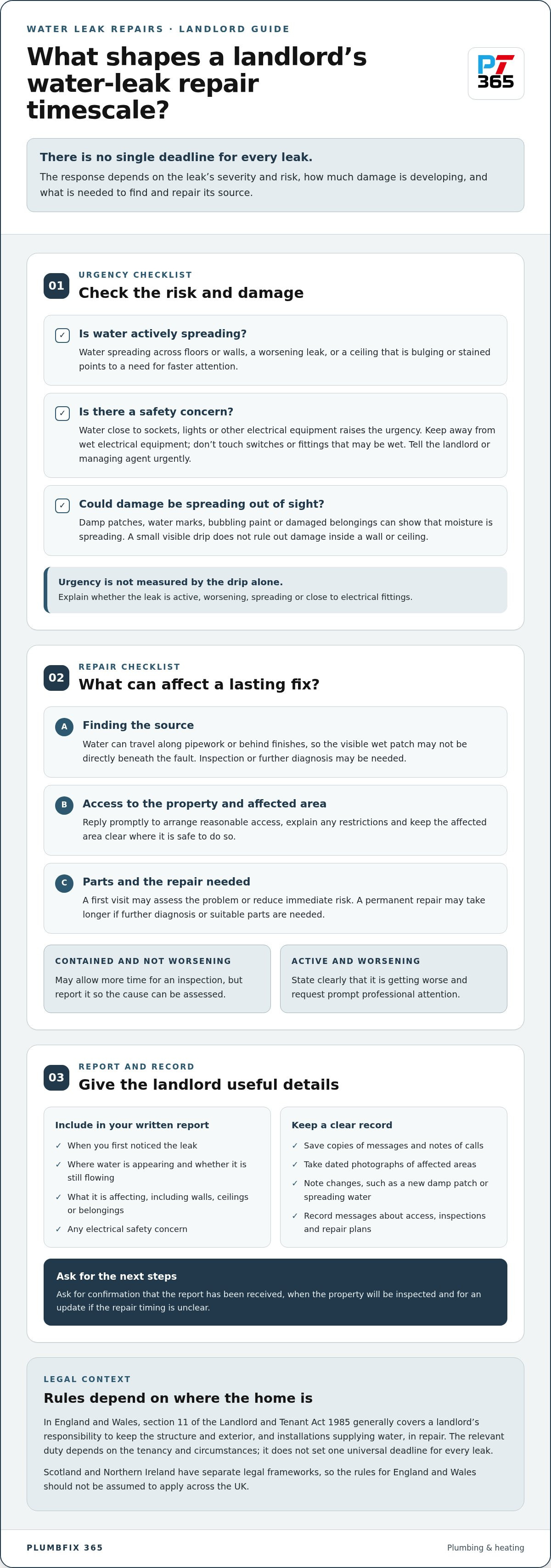
There is no single deadline that fits every leak. The appropriate response depends on how severe the leak is, whether it threatens people or the property, how much damage it is causing and the circumstances of the home. An active leak spreading through a ceiling needs faster attention than a minor drip that presents no immediate danger.
That distinction matters when asking how long does a landlord have to fix a water leak. A landlord should be told promptly so the issue can be assessed. The time needed to complete a repair may depend on finding the source, arranging access and obtaining suitable parts, but those practical steps don’t remove the need to assess immediate risks.
What makes a water leak urgent?
Look for water spreading across floors or walls, a bulging or stained ceiling, worsening damage, or water close to sockets, lights or other electrical equipment. A small-looking leak can still cause damage inside a wall or ceiling, so don’t judge urgency by the size of the visible drip alone.
Put safety first. Keep away from wet electrical equipment and don’t touch switches or fittings if they may be wet. Report the danger urgently to the landlord or managing agent. If the leak is active and worsening, explain that clearly and request prompt professional attention. A qualified plumbing professional can assess urgent leaks and pipework issues.
Is there a fixed legal deadline for repairs?
No single legal response time applies to every leak. In England and Wales, section 11 of the Landlord and Tenant Act 1985 generally covers a landlord’s responsibility to keep the structure and exterior, and installations supplying water, in repair. The relevant duty depends on the tenancy and circumstances; it does not set one universal deadline for all leak repairs.
Scotland and Northern Ireland have separate legal frameworks, so the rules applying in England and Wales shouldn’t be assumed to apply across the UK. If you’re dealing with a leak, report it in writing and describe its location, whether it’s spreading and any safety concern. Keep a copy of your message and note any response or repair arrangements.
If a boiler is also losing pressure and there’s no visible leak, see our guide to boiler pressure loss without a visible leak.
What affects how long a landlord has to fix a water leak?
The timescale depends on more than the visible drip. The leak’s source and flow rate, the risk to people and the property, how much damage is developing, and what’s needed to reach and repair the fault all matter. A leaking pipe that continues to wet a ceiling calls for a different response from a contained drip with no sign of spreading.
A reasonable repair timescale depends on the leak’s severity and risk, the time needed to identify its source, access to the property and any parts required for a lasting fix. The GOV.UK guidance on private renting repairs explains landlord repair responsibilities in England. The law and routes can differ elsewhere in the UK.
How do severity and continuing damage change the response?
An actively leaking pipe may keep soaking walls, ceilings or belongings, even if the initial escape looks small. A drip that is contained and not worsening may allow more time for an inspection, but it still needs reporting so the cause can be assessed. Water marks, bubbling paint, damp patches or damaged possessions can show that moisture is spreading. Photograph the affected areas and note when you first saw the damage. For more signs to watch for, read about slow water leak damage.
Why might diagnosis or access delay a lasting repair?
Water can travel along pipework or behind finishes, so the wet patch may not sit directly beneath the fault. A plumber may need to inspect the pipework or trace a concealed source before deciding how to repair it. An initial visit can assess the problem or reduce immediate risk; completing the permanent repair may take longer if further diagnosis or parts are needed. Ask for an update if the next step or expected timing is unclear.
Tenants can help by replying promptly to arrange reasonable access, explaining any access restrictions and keeping the affected area clear where safe. Don’t open walls or attempt a repair that could put you at risk. These safe steps for a leaking pipe can help you respond while waiting for professional attention.
Clear details help a plumber prepare: describe where water is appearing, whether it is still flowing and what areas or belongings are affected. If the leak is urgent, a qualified plumbing professional can assess the pipework and carry out the repair.
What should tenants do if a landlord has not fixed the leak?
If the leak is still active or damage is getting worse, don’t rely on a verbal report alone. Follow up in writing, keep a clear record and ask what action is planned. If you’re unsure how long does a landlord have to fix a water leak, remember that the urgency depends on the risk and circumstances, so explain clearly what is happening now.
How should you report a leak and keep evidence?
Write to your landlord or managing agent. Include when you first noticed the leak, its location, whether it is still active and what it is affecting, such as a ceiling, wall or belongings. If water is near electrical fittings, state that clearly and treat it as urgent.
Ask them to acknowledge your report, confirm when the property will be inspected and provide an update on the repair plan. Keep copies of messages, dated photographs and notes of calls. Record changes, such as a new damp patch or water spreading, and keep any messages arranging access or confirming a visit.
Who can tenants contact if the repair is still delayed?
If you don’t receive a clear response, follow the landlord’s or managing agent’s formal complaints process and keep a copy of your complaint. Explain what you reported, when you reported it, how the leak has changed and what response you’ve received.
If the problem remains serious, the next step depends on where you live, your type of tenancy and the circumstances. In England, a local council’s environmental health team may be able to advise or assess serious housing hazards. Scotland, Wales and Northern Ireland have separate housing systems and routes, so check the relevant official guidance for your nation. An ombudsman or other advice service may also be relevant, depending on the landlord and complaint.
Don’t withhold rent or arrange work and deduct it from rent without getting appropriate housing advice first. These steps can affect your tenancy and may not resolve responsibility for the leak. Avoid unsafe repairs, especially near electrics or concealed pipework. If water is actively escaping, seek prompt professional plumbing help while keeping the landlord informed. Get help with urgent plumbing repairs for leaks and pipework issues.
What should landlords do after receiving a water-leak report?
A clear response starts with acknowledgement, not guesswork. Confirm you’ve received the report, assess the information provided and tell the tenant what will happen next. A prompt initial assessment helps identify immediate risks, even if the leak’s source or the permanent repair needs further investigation.
Keep a written record of the report, your risk assessment, decisions, inspection arrangements, updates and completed work. This creates a useful timeline if the tenant asks how long does a landlord have to fix a water leak, or if there is later disagreement about what was reported and when. For broader context, see this UK guide to landlord water-damage responsibilities.
How can landlords assess the first report?
Ask the tenant where water is appearing, when they first noticed it, whether it is still escaping and what parts of the property or belongings are affected. Check whether they have noticed changes since reporting it, such as a growing damp patch or water spreading. If there may be a risk near electrical fittings, tell the tenant to keep clear. Don’t ask them to touch wet equipment or inspect a hazardous area themselves.
Use those details to decide the next step, arrange suitable access and confirm the inspection plan. If an appointment needs to change, update the tenant rather than leaving them unsure. Record attempted contact and access arrangements as well as the final appointment.
When should a plumber inspect the leak?
An active leak, worsening damage or a safety concern calls for urgent professional attention. Arrange an inspection so a qualified plumber can assess the pipework, identify the source and recommend suitable repair work. If the first visit establishes that more investigation or parts are needed, explain the interim plan and when the tenant can expect another update. An initial inspection can help manage immediate risk, even when the lasting repair cannot be completed at once.
Keep the tenant informed until the work is complete. Note what was found, what was repaired and whether any further work remains. For an urgent leak or pipework issue, get help with an urgent plumbing repair from Plumbtech 365, as we are a trusted plumbing & heating company providing reliable, high-quality services across London and Kent.
How to arrange a water-leak repair and prevent further delay
Clear information, safe access and regular updates help keep a leak repair moving. Tenants should report what they can see and tell the landlord or managing agent if the situation changes. Landlords can then arrange an appropriate inspection and keep everyone informed, even if the leak’s source or full repair plan is not yet clear.
If you’re trying to establish how long does a landlord have to fix a water leak, remember that prompt action starts with understanding the problem. A professional inspection can help identify where water is escaping and what repair is needed. Don’t delay reporting a leak while trying to find its exact source yourself.
What information helps a plumber respond effectively?
When reporting the issue or arranging a visit, share the details that help build a clear picture:
Where water is appearing and when you first noticed it.
Whether the leak is still active or seems to be getting worse.
Any visible damage to ceilings, walls, floors or belongings.
Any immediate safety concern, such as water close to electrical fittings.
What has already been done to contain the leak safely, if anything.
Arrange access with the landlord, managing agent or plumber, and make sure they know about any entry restrictions or changes to the agreed time. Keep communication open if the leak worsens or new damage appears. Never put yourself at risk to inspect pipework or contain water.
What happens during professional leak-repair support?
A plumber assesses the reported issue and works to trace the leak’s source. The visible damp patch may not be directly below the fault, so inspection can help distinguish where water is appearing from where it is escaping. Once the cause is clearer, the plumber can explain the repair options and any further work needed in plain language.
Plumbfix 365 provides rapid response emergency plumbing repairs for urgent leaks and pipework issues. If a leaking pipe or urgent plumbing problem needs professional attention, arrange professional plumbing help.
Take the next step to protect your home
There’s no single deadline that answers how long does a landlord have to fix a water leak. The right response depends on the leak’s severity, risk and cause, while the rules can vary across the UK. Report the problem in writing, describe what’s affected and keep dated records of messages, photographs and repair updates.
If the leak is active, spreading or creating a safety concern, act promptly. Keep clear of hazards and arrange professional attention rather than attempting an unsafe repair. Clear information and access can help a plumber assess the issue and identify the next step.
Plumbfix 365 provides rapid response emergency plumbing repairs for urgent leaks and pipework issues, with work carried out by qualified professionals. Get help with a water leak and take a practical step towards resolving the problem. With a clear record and the right support, you can move forward with greater confidence.
Frequently Asked Questions
How long does a landlord have to fix a water leak in the UK?
There’s no single fixed deadline for every leak. The answer to how long does a landlord have to fix a water leak depends on factors such as how quickly water is escaping, the risk to people or the property, and whether damage is spreading. A major leak or water near electrics needs urgent attention, while a contained minor drip may be less urgent. Report it promptly in writing and ask for a clear update.
Can a landlord leave a leaking pipe until the next routine repair visit?
Not necessarily. A routine visit may be unsuitable if the pipe is actively leaking, the damage is worsening or there’s a safety concern. Report the issue as soon as you notice it and describe whether water is still escaping and what it is affecting. The landlord or managing agent should assess the circumstances and arrange an appropriate response. Keep a record of your report and any repair date offered.
What should I do if my landlord is not responding to a leak report?
Follow up in writing and make the urgency clear. Include when you first reported the leak, whether it remains active, what areas are affected and any new damage. Keep dated photographs and copies of messages. If there’s still no suitable response, use the landlord’s or managing agent’s formal complaints process. For a serious unresolved issue, contact the appropriate council or advice service for your circumstances and nation.
Is a landlord responsible for fixing a water leak?
Often, yes, if the leak comes from something the landlord is responsible for maintaining, such as the property’s structure or water-supply pipework. Responsibility can depend on the source and cause. A tenant may be responsible if they caused the leak, or if it comes from their own appliance. Report the problem promptly so responsibility and the required repair can be assessed. The legal framework differs across the UK.
Can a tenant arrange a plumber if the landlord delays repairs?
Don’t assume you can arrange work and deduct the amount from rent. The right approach can depend on your tenancy, the circumstances and the applicable law. Write to the landlord or agent, request a repair plan and seek appropriate housing advice before commissioning work or withholding rent. If there’s an immediate safety risk, prioritise safety and report it urgently. Plumbfix 365 provides emergency plumbing repairs for urgent leaks and pipework issues.
What counts as an emergency water leak in a rented home?
A leak may need emergency attention if a burst pipe is releasing water, flooding is occurring, water is spreading quickly or it’s close to electrical fittings. A bulging ceiling or rapidly worsening damage also needs prompt assessment. Keep clear of wet electrical equipment and don’t touch switches or fittings that may be wet. Tell the landlord or managing agent immediately and explain the risk clearly.
Does the repair deadline differ between England, Wales, Scotland and Northern Ireland?
The legal frameworks and routes for dealing with repairs are not identical across the UK. England and Wales have relevant landlord repair duties under the Landlord and Tenant Act 1985, while Scotland and Northern Ireland have separate housing laws. The urgency of the leak still matters when assessing a reasonable response. Check current official guidance for the nation where you rent, especially if you need to escalate a delayed repair.


Comments