
How to Bleed a Towel Radiator: The 2026 Homeowner’s Guide to Efficient Heating
- Darrell Williamson

- Jun 23
- 12 min read
Did you know that trapped air in your radiators can slash your heating efficiency by up to 25%? With the average annual energy cost sitting at £1,641 and prices rising by an average of 13% this season, a cold towel rail isn't just a minor annoyance. It is a direct drain on your household budget. It's incredibly frustrating when your bathroom remains chilly whilst the rest of the house is warm. Many homeowners hesitate to act because they worry about damaging expensive chrome finishes or feel confused by valves that look different to standard radiators.
Our central heating engineers understand that you want a warm home without the stress of a technical failure. We agree that maintenance should be straightforward and effective. This guide provides the professional method for how to bleed a towel radiator safely, ensuring you restore warmth to your bathroom and protect your boiler's efficiency. We will walk you through the specific valve types found on modern towel rails and provide a clear, step-by-step process to balance your system and lower your heating bills immediately.
Table of Contents
Why Your Towel Radiator is Cold at the Top
A cold towel rail is a classic symptom of trapped air within your central heating system. Because air is significantly less dense than water, it naturally migrates to the highest points in your plumbing. In a bathroom, this is almost always the top rungs of your towel rail. Understanding how radiators work through the principles of convection and radiation helps you identify why these air pockets are so disruptive. When air occupies the space where hot water should be, it creates a physical barrier that prevents the unit from heating your room effectively.
To better understand this concept, watch this helpful video:
The Impact on Central Heating Efficiency
Trapped air isn't just a comfort issue; it's a financial drain. Industry research from late 2025 indicates that air pockets can decrease heat transfer efficiency by 15-25% in a typical UK household. With the energy price cap for typical households currently at £1,641 as of April 2026, every percentage of wasted energy counts. If you don't know how to bleed a towel radiator, your boiler is forced to run for longer cycles to compensate for the cold spots. This unnecessary strain can lead to premature failure of internal components, potentially leading to an expensive boiler installation sooner than expected. Proactive maintenance and regular boiler servicing are favourite habits amongst cost-conscious homeowners looking to protect their investment and keep bills low.
Common Symptoms of Trapped Air
Identifying the problem requires a simple assessment. The most common sign is the 'half-cold' towel rail phenomenon. If the bottom rungs are hot but the top remains stone cold, air has displaced the water. You should also listen for distinct gurgling or bubbling noises within the vertical uprights. These sounds occur as air bubbles are pushed through the pipes by the system pump. Conduct a 'hand test' by carefully checking the temperature across the top rungs whilst the heating is active. If the heat distribution is uneven, you need to release the pressure. Be careful to distinguish this from a 'sludge' blockage. If the radiator is cold at the bottom but hot at the top, it indicates a buildup of magnetite. This requires a professional power flush from a central heating engineer rather than a simple bleed.
Locating the Towel Rail Bleed Valve
Finding the bleed valve is the first practical step in learning how to bleed a towel radiator. This component is a small metal screw, usually hexagonal or square-slotted, situated at the highest point of the unit. Whilst standard horizontal radiators typically have valves on the side, towel rails often house them on the side of the top vertical 'upright' or the upper horizontal bar. If you cannot see it immediately, do not panic. Many modern designs use decorative chrome caps to maintain a sleek aesthetic. You should gently unscrew these covers by hand to reveal the valve beneath. Avoid using metal pliers directly on the chrome. This will scratch the finish and ruin the look of your expensive bathroom plumbing.
For those unfamiliar with the basic hardware, this step-by-step guide from British Gas provides excellent visual context for identifying standard fittings across different heating systems. Once the cap is removed, you will see the central pin that needs to be turned to release the air. This is a critical point of maintenance for any homeowner aiming to keep their system efficient in 2026.
Types of Bleed Valves You Might Encounter
Most towel rails in the UK use a standard square-headed valve. These require a traditional radiator key, which you can purchase for a few pounds at any local hardware shop. However, modern minimalist designs sometimes feature a screwdriver-slot valve. These are flush with the radiator body and require a flat-head screwdriver rather than a key. You might also find automated bleed valves on some high-end installations. These units manage air pockets automatically using a hygroscopic cap or float, meaning you rarely have to intervene manually. If your rail has these, you will see a larger, more complex valve body at the top.
Hidden Valves on Designer Rails
Designer towel rails often prioritise form over function, leading to concealed valves. Check the back of the top horizontal bar if the valve isn't visible on the sides. You may need to use a small hand mirror to locate these fittings in tight bathroom corners. It is vital to perform a safety check before applying any force. Ensure you haven't mistaken a mounting bracket or a blanking plug for the bleed valve. Blanking plugs are permanent seals and should never be loosened. If you find your valves are seized or completely inaccessible, our local plumbers can assist with professional maintenance to prevent damage to your system.
Always ensure the heating is switched off before you begin the search. This prevents the pump from pushing more air into the unit whilst you work. Identifying the correct entry point now saves time and prevents unnecessary mess during the actual bleeding process. If you are unsure, consulting with central heating engineers can provide the peace of mind that your designer rail remains in top condition.
Essential Tools and Safety Precautions
Preparation is the foundation of any successful home maintenance task. Whilst the process of how to bleed a towel radiator is relatively simple, failing to prepare can lead to permanent damage to your bathroom fixtures. You should avoid the common mistake of using pliers or adjustable spanners. These tools often round off the soft brass edges of the bleed valve, making it impossible to turn in the future. A dedicated radiator key is an inexpensive but essential investment that ensures a secure fit and prevents mechanical failure. If you've already damaged your valve, it may be time to consult central heating engineers to prevent a total system leak.
Protecting your bathroom's aesthetic is just as important as the heating itself. The liquid inside your central heating system, often referred to as 'black water', contains concentrated iron oxide and chemical inhibitors. If this drips onto light-coloured floor tiles or porous grout, it can cause deep, permanent staining. Always have a thick, absorbent cloth and a small container ready to catch any discharge immediately. This level of care is what separates a DIY attempt from the high standard of service provided by professional local plumbers during routine maintenance or boiler servicing calls.
The Professional Tool Kit for Homeowners
Dedicated Radiator Key: A specific key is better than a multi-tool because it provides the necessary leverage without slipping or stripping the metal.
Absorbent Bleed Cloth: Use a heavy-duty rag to wrap around the valve whilst turning. This catches the initial hiss of air and the subsequent spray of water.
Small Collection Vessel: A plastic cup or shallow tray fits easily between the wall and the towel rail rungs.
Slip Prevention: Organise your workspace by clearing away bath mats and ensuring the floor remains dry to prevent falls on wet bathroom tiles.
Critical Safety Steps Before You Start
Safety must be your primary concern. You must turn off your central heating and wait for the system to cool completely. Bleeding a system whilst the pump is running can actually draw more air into the pipes, defeating the purpose of the task. More importantly, water inside a towel rail can reach temperatures high enough to cause severe scalds if it sprays out under pressure. Allow at least 60 minutes for the temperature to drop. Finally, perform a quick scan of the area. Check for nearby electrical outlets, electric toothbrush chargers, or illuminated mirrors. Water and electricity are a lethal combination. Ensuring these are disconnected or shielded is a vital step before you open any valves to restore your bathroom plumbing to full efficiency.
How to Bleed a Towel Radiator: A Step-by-Step Guide
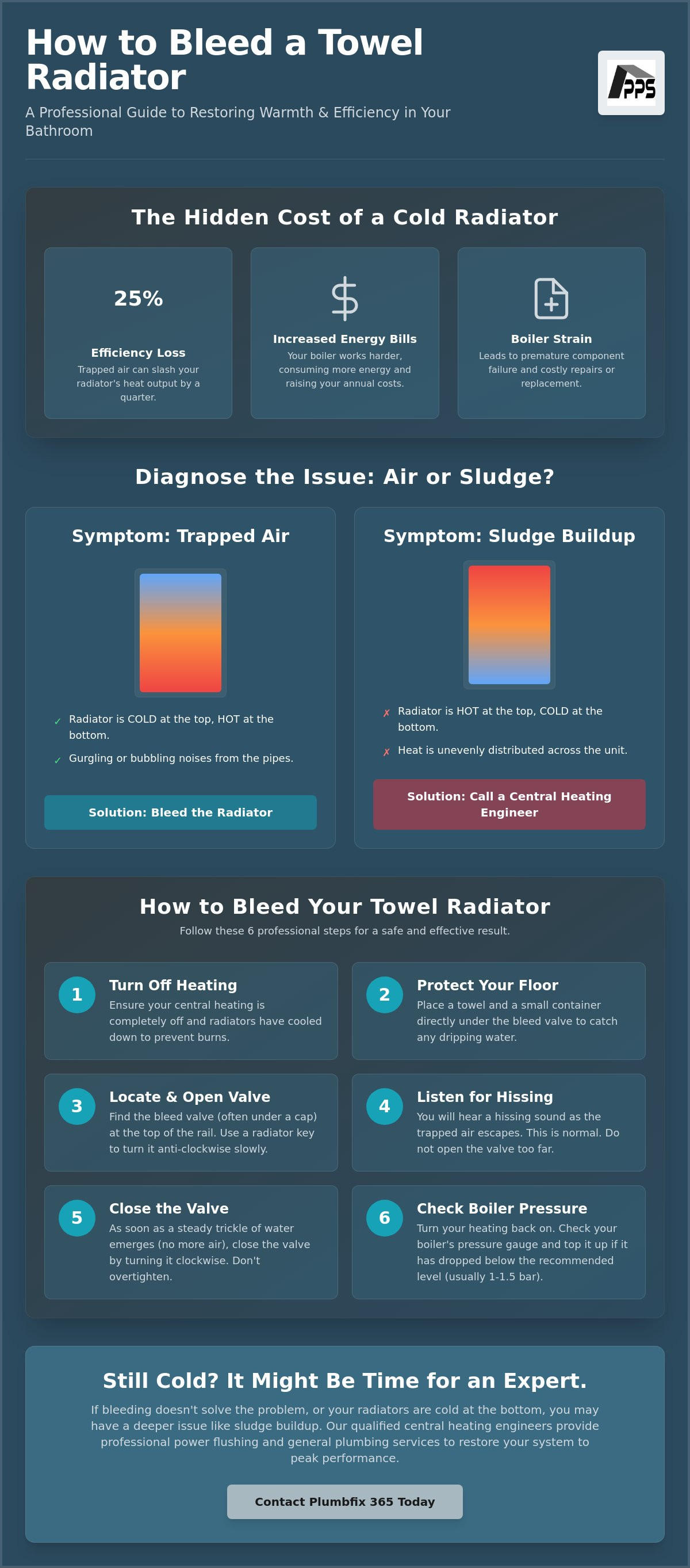
Once your system is cool and your tools are ready, you can begin the process of how to bleed a towel radiator. Follow these professional steps to ensure a safe and efficient air release. First, confirm the central heating is completely switched off. This stops the pump from moving water and air through the pipes whilst you work. Second, position your absorbent cloth and container directly beneath the bleed valve to catch the inevitable discharge. Third, insert your radiator key into the valve and turn it slowly anti-clockwise. A quarter turn is usually enough to initiate the air release.
Fourth, listen for the distinct hiss of escaping air. Keep the valve open until the hissing stops and a steady stream of water begins to flow into your container. Fifth, close the valve firmly by turning the key clockwise. Use enough pressure to create a seal, but do not over-tighten the screw. Forcing the valve can strip the internal thread or damage the soft brass components. Wipe away any moisture from the chrome surface immediately to prevent corrosion. If the air release seems sluggish or the water is heavily discoloured, you may need professional boiler servicing to check the health of your system.
Managing the Air Release Process
Controlling the speed of the air release is vital for a clean job. If you open the valve too quickly, the internal pressure can cause a messy spray that bypasses your cloth. If the valve feels 'stuck' or has been painted over, do not force it with a heavy wrench. Instead, use a small hammer to give the radiator key a gentle tap. This vibration often breaks the seal of the paint or minor corrosion without snapping the valve head. You will know the process is successful when the air pockets are gone and the water flow is consistent and bubble-free.
Post-Bleeding: Re-pressurising Your Boiler
Releasing air from your towel rail reduces the overall volume of water in your central heating system. This often leads to a drop in system pressure, which can cause modern boilers to display a fault code or shut down entirely. Locate the pressure gauge on your boiler; it should typically sit between 1 and 1.5 bar when the system is cold. If the needle has dropped below 1 bar, you must use the filling loop to restore the balance. Open the filling valves slowly until the gauge returns to the correct level. If you find your pressure continues to drop after you have finished how to bleed a towel radiator, you may have a hidden leak. For urgent assistance with system balance or pressure loss, contact our team for emergency plumbing repairs to ensure your home remains warm and safe.
Beyond Bleeding: When to Call a Central Heating Engineer
Beyond the simple task of releasing air, some heating problems require a deeper level of technical diagnostic work. If your towel rail is cold at the bottom whilst hot at the top, you are likely dealing with magnetite sludge. This iron oxide buildup settles at the base and creates a thermal barrier that cannot be cleared by bleeding. In these instances, a professional Power Flushing service is the only way to restore the unit to its full thermal capacity. Our team provides a comprehensive suite of general plumbing services to address these complex system failures, ensuring your home remains efficient throughout 2026. We handle everything from complex boiler repairs to routine maintenance with total competence.
Frequent air buildup is another red flag that DIY methods cannot solve. If you find yourself searching for how to bleed a towel radiator every few weeks, your system is likely drawing in air through a micro-leak or a failing pump. These tiny leaks often hide behind bathroom tiles or under floorboards, slowly dropping your system pressure and causing the boiler to fault. Our central heating engineers use specialised equipment to locate these ingress points, preventing the need for an emergency boiler installation later down the line. We also manage routine bathroom plumbing tasks, including addressing leaks and tap replacements, to keep your entire system balanced and reliable.
Signs of System Sludge and Corrosion
Pay close attention to the colour of the water when you perform a bleed. If the discharge is jet black or has an 'inky' consistency, your system is suffering from internal corrosion. This sludge prevents even the best-designed towel radiators from heating up effectively. Left untreated, these particles will eventually reach your boiler's heat exchanger, leading to a complete system breakdown. Identifying this early through the process of how to bleed a towel radiator allows you to act before the damage becomes irreversible and costly. Regular maintenance is the only way to protect your system from these internal threats and ensure your bathroom remains a warm sanctuary.
The Role of Professional Maintenance
Proactive maintenance is the best way to avoid a mid-winter heating crisis. Annual Boiler Servicing allows our experts to identify corrosion levels and air ingress points before they impact your comfort. If your existing units are severely corroded or inefficient, a modern Radiator Installation might be the most cost-effective long-term solution. Always verify that your technician is a Gas Safe Registered professional. This ensures they have the specific industry certifications to handle your boiler and central heating system safely. Our team remains available year-round to balance your system and keep your energy bills manageable through honest billing and expert care.
Take Control of Your Home Heating Today
Restoring warmth to your bathroom is a straightforward task once you have the professional knowledge to hand. You are now equipped with the specific guide for how to bleed a towel radiator, from identifying trapped air pockets to protecting your designer chrome finishes. By releasing these blockages and checking your boiler pressure, you can immediately improve your system's efficiency and ensure your home remains comfortable throughout the colder months.
Whilst bleeding is a vital maintenance step, some heating and plumbing issues require the steady hand of a qualified expert. Beyond specialised boiler installations, our central heating engineers provide a comprehensive range of general plumbing services to keep your entire household running smoothly. Whether you are dealing with urgent toilet repairs, faulty tap replacements, or addressing leaks that threaten your flooring, we offer the local accountability you expect from a dependable trade business. Our Gas Safe Registered team is also on hand for power flushing and complex bathroom plumbing projects to future-proof your system.
Book a professional boiler service or radiator health check with Plumbtech365 today. We are committed to honest billing and high-standard results, ensuring your home stays safe and warm with 24/7 support whenever you need it most.
Frequently Asked Questions
Do I need to turn the boiler off to bleed a towel radiator?
Yes, you must switch off your central heating before you begin. Turning off the boiler stops the pump from circulating water and air through the pipes. If the pump remains active, it can draw more air into the system or cause water to spray out with unpredictable force. Always allow the unit to cool completely to prevent serious scalding injuries from hot water or steam.
What happens if I don't bleed my towel radiator?
Ignoring trapped air will cause your heating efficiency to drop by up to 25%. This forces your boiler to run for longer cycles to reach the desired temperature, which directly increases your energy bills. Over time, oxygen in the system promotes internal corrosion. This leads to the formation of magnetite sludge, which can cause total pump failure or require a complete boiler installation if left unaddressed.
Why is my towel rail still cold after bleeding it?
If the top is warm but the bottom remains cold, you likely have a blockage caused by system sludge. Bleeding only removes air pockets from the highest point of the unit. It cannot clear the heavy iron oxide deposits that settle in the lower rungs. If this occurs, contact a central heating engineer to perform a professional power flush and restore full circulation to your bathroom plumbing.
Can I bleed a towel radiator with a screwdriver?
You can only use a flat-head screwdriver if your bleed valve features a specific slotted centre. Many modern, minimalist towel rails are designed this way. However, the majority of UK installations require a standard square-headed radiator key. You should never use pliers or adjustable wrenches on a valve. These tools often round off the brass edges, making future maintenance impossible without a professional repair.
How often should I bleed my towel radiators in 2026?
You should check your heating system at least once a year, ideally at the start of autumn. Most healthy systems only require bleeding annually. If you find yourself searching for how to bleed a towel radiator every few weeks due to recurring cold spots, your system isn't airtight. Frequent air buildup usually indicates a micro-leak or a failing expansion vessel that requires an urgent inspection from local plumbers.
Will bleeding my towel rail affect my boiler pressure?
Yes, releasing air reduces the total volume of liquid in your system, which causes the pressure to drop. Modern combi boilers usually require a pressure between 1 and 1.5 bar to operate. After bleeding, always check the gauge on your boiler. If the needle has dropped into the red zone, use the filling loop to add more water until the system is balanced and the fault code clears.
What if the bleed valve is stuck or won't turn?
Do not apply excessive force to a seized valve. Forcing a stuck screw can cause the head to snap off, resulting in an immediate and uncontrollable leak. Try giving the radiator key a gentle tap with a hammer to break the seal of old paint or minor corrosion. If the valve remains stubborn, it is safer to call a boiler engineer to replace the component rather than risking a household flood.
Is the water inside a towel radiator dangerous or dirty?
The water is generally very dirty and contains concentrated chemical inhibitors and metallic debris. This "black water" will permanently stain porous grout, light-coloured floor tiles, and bath mats. Whilst it isn't hazardous to skin, it can be extremely hot if the system hasn't been allowed to cool. Always keep a thick cloth and a container ready to catch any discharge to protect your bathroom interior.


Comments