


How to Fix a Toilet Cistern That Won't Stop Running: A Complete 2026 Homeowner’s Guide

Did you know a single leaking toilet cistern can waste up to 400 litres of water every day? That's enough to fill several bathtubs, and with the average UK water bill rising to approximately £639 in 2026, learning how to fix a toilet cistern that won't stop running is a priority for any homeowner. If you're lying awake at night listening to that constant trickling sound, you're likely worried about the impact on your water meter or the potential for overflow damage. You want a solution that works fast.
It's completely normal to feel stressed when a simple fixture starts acting up. This guide provides a clear, British plumbing perspective on diagnosing the issue and making the necessary repairs yourself. We'll help you silence the noise immediately and understand when a part needs replacing. We are a trusted plumbing & heating company providing reliable, high-quality services across London and Kent. We specialise in everything from bathroom repairs to boiler installation, gas cookers, and gas hobs. This guide previews exactly what you need to do to restore your home's efficiency today.
Table of Contents
Diagnosing a Running Toilet: Why Your Cistern Won't Stop
Most UK homes rely on gravity-fed plumbing. It's a simple, effective design, but mechanical failure is inevitable over time. To understand how to fix a toilet cistern that won't stop running, you must first identify where the cycle is breaking. When a toilet continues to flow after the flush is complete, it's usually because water is either failing to shut off at the inlet or escaping through the outlet seal. This constant flow isn't just an annoying sound; it's a significant waste of water that can impact your utility bills and the environment.
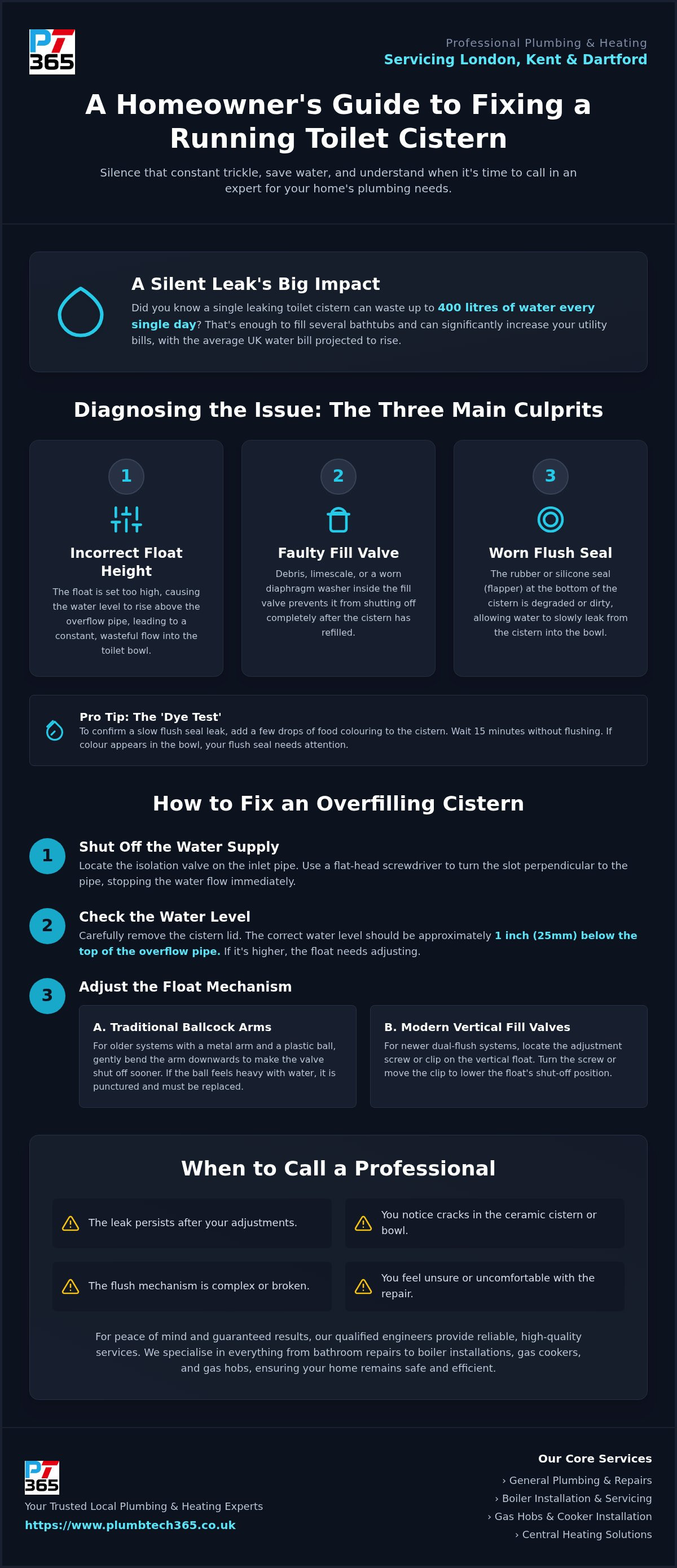
Three main components usually cause the trouble. First, the float might be set too high, pushing water into the overflow pipe. Second, the fill valve may be blocked by debris or limescale, preventing a total shut-off. Third, the flush seal at the bottom of the tank could be perished or dirty, allowing water to leak into the bowl. Before touching any internal parts, locate the isolation valve on the inlet pipe. Use a flat-head screwdriver to turn the slot so it's perpendicular to the pipe. This stops the water supply immediately, preventing accidental overflows whilst you work.
Try the 'Dye Test' to confirm a slow, silent leak. Drop a small amount of food colour into the cistern water and wait fifteen minutes. If the water in the toilet bowl changes colour without you flushing, your flush valve seal definitely needs attention. This simple diagnostic prevents guesswork and ensures you don't replace parts that are still functional. If you're unsure about the internal components, We are a trusted plumbing & heating company providing reliable, high-quality services across London and Kent. can provide further clarity on professional plumbing repairs and essential maintenance.
Anatomy of a UK Toilet Cistern
Older properties often feature a traditional ballcock mechanism. This horizontal arm with a floating plastic ball is prone to bending or snagging against the cistern wall. Modern homes typically use vertical fill valves, which are more compact but rely on delicate internal diaphragms. Regardless of the age, every cistern includes an overflow pipe. This component is your primary defence against domestic flooding, as it channels excess water into the bowl if the fill valve fails to shut. You'll also find either a traditional lever or a dual-flush button, each connecting to a different type of internal flush tower.
Essential Tools for the Job
Gather your equipment before opening the tank. You'll need an adjustable spanner for tightening connections and a screwdriver for the isolation valve. Keep a cleaning cloth nearby to wipe away limescale or grime that can interfere with seals. A bucket and a large sponge are vital for removing excess water from the bottom of the cistern once it's drained. If you're tackling plumbing repairs yourself, having a spare diaphragm washer or 'O' ring on hand can save a trip to the shops. For more complex issues involving boiler installation, gas cookers, or gas hobs, it's always safer to consult a qualified engineer who can ensure your home remains safe and compliant.
How to Adjust the Ball Float and Water Level
Lifting the cistern lid is your first physical step. These ceramic lids are heavy and fragile; set yours down on a flat, safe surface covered with a towel to prevent cracks. Once the tank is open, look at the water level relative to the overflow pipe. If water is spilling into that pipe, you've identified exactly how to fix a toilet cistern that won't stop running. The water line should ideally sit 1 inch (25mm) below the top of the overflow pipe to maintain a safe buffer.
Adjusting the float height is the most common solution for an overfilling tank. The float acts as a sensor; when it reaches a certain height, it triggers the fill valve to shut off. If this is set too high, the water never stops. You must recalibrate the mechanism so the valve closes before the water reaches the overflow. This process varies depending on whether you have an older property with a traditional setup or a modern home with a dual-flush system.
Adjusting Traditional Ballcock Arms
Older toilets often feature a horizontal metal arm with a round plastic ball at the end. If the water level is too high, you can carefully bend the metal arm downwards. Use a slow, steady pressure; applying too much force can snap the valve body or the arm itself. Check the ball float for weight. If it feels heavy or you hear water sloshing inside, it's punctured. A waterlogged float stays submerged, which keeps the valve permanently open. In these cases, replacing the metal arm with a modern plastic equivalent is a reliable way to ensure long-term performance.
Calibrating Modern Vertical Fill Valves
Modern dual-flush systems use a vertical plastic pillar rather than a long arm. These units don't require bending. Instead, look for a plastic adjustment screw or a sliding rail on the side of the valve. Turning this screw clockwise usually lowers the float, which shuts off the water supply sooner. Ensure the mechanism is clear of limescale or grit, as even a small amount of debris can cause the valve to stick. Whilst you're focusing on your bathroom plumbing, remember that We are a trusted plumbing & heating company providing reliable, high-quality services across London and Kent. We also specialise in boiler installation, gas hobs, and gas cookers to keep your utility systems safe and efficient.
After making your adjustments, perform a test flush. Watch the water rise and confirm it stops at the new, lower level. If the water continues to creep up past your mark, the issue isn't the float height. You likely have a mechanical failure within the valve seal itself, which requires a different approach to troubleshoot.
Troubleshooting the Fill Valve and Inlet Leaks
If you have adjusted the float height but the water continues to rise, the fill valve itself is likely at fault. This component is responsible for letting water into the tank and stopping it once the cistern is full. To confirm a failure, manually lift the float arm to its highest position. If the water continues to hiss or trickle into the tank, the internal shut-off mechanism is broken. Understanding this failure is a critical part of learning how to fix a toilet cistern that won't stop running, as it prevents you from wasting time on simple adjustments when a mechanical repair is required.
Sometimes the valve isn't broken but is simply blocked. Debris, grit, or small pieces of solder from the mains water supply can get lodged in the valve's narrow openings. This is common in hard water areas across London and Kent, where limescale and mineral deposits frequently interfere with plumbing fixtures. After local water main repairs in Dartford, you might also find that sediment has travelled through your pipes and into your cistern. Cleaning the valve can often restore function without the need for new parts.
Replacing the Diaphragm Washer
In many cases, you don't need to replace the entire valve assembly. Most modern UK fill valves contain a small rubber component that does all the heavy lifting. To access it, ensure your isolation valve is shut and flush the toilet to empty the tank. Carefully unscrew the large plastic nut or cap on the head of the fill valve. Inside, you'll find a rubber disc. If this disc appears puckered, thinned, or has visible tears, it won't be able to form a seal. The diaphragm washer is the primary seal that stops water flow once the float reaches its peak. Swapping this for a new one is a five-minute job that costs significantly less than a full replacement.
Installing a New Fill Valve
If the valve body is cracked or heavily scaled, a full replacement is the most reliable option. You must choose a universal UK fill valve that matches your cistern's configuration. Identify whether you have a bottom-entry valve, where the pipe enters through the base of the tank, or a side-entry valve. When installing the new unit, ensure the rubber cone washer is seated correctly inside the cistern to prevent leaks. Hand-tighten the plastic nut on the underside of the tank, then give it a quarter turn with a spanner. Avoid over-tightening, as plastic threads can easily strip or crack. If you find the supply nut is seized or the pipework is in a restricted space, it's best to contact professional plumbing services to ensure a safe, leak-free installation. Our team handles everything from bathroom leaks to boiler installation and gas hobs, ensuring your home's essential utilities remain in peak condition.
Fixing the Flush Valve and Flapper Seal
When the cistern finishes filling but you still see ripples in the toilet bowl, you're likely dealing with an outlet leak. This happens when the seal at the base of the flush valve fails to create a watertight barrier. If you're investigating how to fix a toilet cistern that won't stop running, understanding this distinction is vital. Whilst many online guides focus on American-style flapper chains, most modern UK homes use a vertical flush tower or a siphon. These mechanisms rely on a large circular rubber washer that sits at the very bottom of the tank to hold water in place.
Limescale is the primary enemy of a clean seal. In hard water areas like London and Kent, calcium deposits build up on the rubber seal and the plastic 'seat' it rests on. This creates tiny gaps that allow water to seep through constantly. Cleaning this area often restores the seal without needing new parts. You can simply wipe the seat with a damp cloth to remove any grit or slime that has accumulated over time, ensuring the vacuum is restored when the valve drops back down after a flush.
Maintaining Dual-Flush Button Mechanisms
Modern dual-flush toilets often use a twist-and-release tower. Once the water is isolated and the tank is empty, you can usually give the central tower a quarter-turn anti-clockwise to lift it out of its cradle. This allows you to inspect the large circular washer at the base. If the rubber is slimy, warped, or thinned, it's time to replace it. For pneumatic systems that use air tubes rather than a direct plastic link, check that the cables aren't tangled or kinked inside the cistern. A trapped cable can prevent the valve from seating properly, leading to a constant run of water into the bowl.
Limescale Removal in Kent and London Homes
The water supply in Dartford and the wider South East is notoriously hard. This mineral-rich water accelerates the degradation of rubber seals and causes mechanical parts to stick. Using white vinegar or a dedicated descaler inside the cistern can help dissolve these stubborn deposits. If your toilet is suffering from scale, it's likely your other fixtures are too. You might want to check the cost to replace bathroom taps London if you notice similar flow issues or crusty deposits on your basin or bath taps.
If these steps don't stop the trickle, the flush valve body itself may be cracked or the button mechanism may be failing. For a permanent solution that stops water waste immediately, contact our local plumbers near me for a professional assessment. We specialise in all aspects of home utilities, including boiler installation, gas hobs, and gas cookers, ensuring every part of your plumbing system works efficiently and safely.
When to Call a Professional Plumber in London and Kent
Sometimes, knowing how to fix a toilet cistern that won't stop running involves recognising when the job exceeds your personal toolkit. If you've replaced the diaphragm washer and adjusted the float but the water still trickles, you may be facing a high mains pressure issue. Excess pressure can force water past even brand-new seals, leading to constant waste and noise. A common mistake is attempting to stop these leaks by over-tightening plastic nuts or valves. This often leads to cracked components and sudden domestic flooding, turning a minor nuisance into an expensive emergency that requires immediate intervention.
Plumbfix 365 provides a steady hand during these household crises. Our team covers all London postcodes, Kent, and Dartford, offering rapid response times to stop leaks before they cause structural damage. Whilst we are experts in bathroom plumbing, our Gas Safe Registered engineers also provide essential services like boiler installation, gas cookers, and gas hobs. This multi-trade expertise ensures that every utility in your home meets the highest safety standards. We pride ourselves on financial clarity and honest billing, so you never have to worry about hidden costs during a professional repair call-out.
Complex Repairs and Concealed Cisterns
Modern "back-to-wall" or wall-hung toilets are sleek but notoriously difficult to service. Accessing a concealed cistern often requires removing tiles or cabinetry, which risks significant cosmetic damage if handled without professional expertise. A specialist can use diagnostic tools to determine if high mains pressure is the root cause, potentially installing a pressure-reducing valve to protect your entire plumbing system. For comprehensive advice on finding the right expert for your property, see our guide on Plumbers in Kent.
Emergency Plumbing Support for London and Kent
Don't let a running toilet inflate your water bill or damage your flooring. If your DIY efforts haven't silenced the cistern, it's time for a professional assessment. We arrive on time, equipped with the correct components to fix the issue on the first visit. Our engineers are established experts who understand the unique plumbing challenges of older Kentish homes and modern London apartments alike. Contact our team today for a reliable fix in Dartford or the surrounding areas. Whether you need a simple valve replacement or complex boiler servicing, we prioritise your home's safety and your peace of mind.
Protect Your Home and Save on Water Bills
A running toilet is more than an annoyance; it's a drain on your finances and a risk to your property. By identifying the root cause, whether it's a misaligned float or a scaled-up flush seal, you've taken the first step in mastering how to fix a toilet cistern that won't stop running. Most minor issues are resolved with basic cleaning or a simple component swap. However, if the leak persists or you're dealing with a complex concealed unit, don't risk accidental damage by over-tightening delicate plastic parts.
Plumbfix 365 has been serving London, Kent, and Dartford since 1996. Our Gas Safe Registered engineers provide total peace of mind for all bathroom plumbing, boiler installation, gas hobs, and gas cookers. With 24/7 emergency plumbing availability, we're the steady hand you need during a household crisis. Book a professional plumbing repair with Plumbfix 365 today to ensure your home remains efficient and leak-free. You've got the knowledge to act, and our team is ready to provide the expert finish your property deserves.
Frequently Asked Questions
Is a running toilet an emergency that needs a plumber immediately?
A running toilet isn't always an emergency, but it requires urgent attention if water is overflowing or leaking into your floorboards. Even a small trickle into the bowl can waste 400 litres of water daily. If you cannot turn off the isolation valve or the water is causing damage, you need a plumber immediately. Our Gas Safe Registered engineers provide rapid support across London and Kent to prevent structural damage and high bills.
How much water does a running toilet cistern waste per day?
A single leaking toilet cistern can waste between 200 and 400 litres of water every day. Over a month, this can total 12,000 litres, which is enough to fill a small swimming pool. This waste is a primary driver for high utility bills in 2026. Learning how to fix a toilet cistern that won't stop running is essential for any homeowner looking to reduce their environmental impact and household expenses.
Can limescale cause my toilet to keep running?
Limescale is a leading cause of cistern failures in hard water regions like Dartford and the London postcodes. Mineral deposits accumulate on the rubber seals and the plastic seating of the flush valve. This prevents a watertight barrier from forming, allowing a constant stream of water to escape into the bowl. Regularly cleaning internal components with white vinegar helps dissolve these deposits and restores the vacuum seal without needing new parts.
Why does my toilet start running randomly in the middle of the night?
This is typically caused by a "phantom flush." A slow leak from the flush valve seal allows water to seep into the bowl. As the water level in the cistern drops, the float eventually falls low enough to trigger the fill valve. This "top-up" sound often happens at night when the house is quiet. Replacing the flush seal or cleaning the valve seating usually stops these random cycles and prevents unnecessary water waste.
Do I need to replace the whole cistern if it won't stop running?
You rarely need to replace the entire cistern. Most running toilet issues are caused by individual components like the diaphragm washer, the fill valve, or the flush seal. These parts are designed to be replaceable and are much cheaper than a full ceramic unit. Our local plumbers can diagnose which specific part has failed and install high-quality, WRAS-approved replacements to ensure your toilet operates reliably without the need for a full bathroom renovation.
What is the difference between a fill valve and a flush valve?
The fill valve controls the water entering the cistern from the mains supply. It uses a float to shut off the flow once the tank is full. The flush valve is the central tower or siphon that releases water into the bowl when you press the button. If your toilet won't stop filling, the fill valve is the culprit. If water is constantly trickling into the bowl, the flush valve seal is usually failing.
How do I fix a push-button toilet that keeps running?
Push-button toilets typically use a flush tower mechanism. To fix this, isolate the water and remove the tower by twisting it anti-clockwise. Inspect the large circular washer at the base for dirt or damage. Cleaning the washer and the area where it sits often solves the problem. If the buttons feel sticky, check the pneumatic cables or plastic rods for kinks that might be preventing the valve from dropping back into its sealed position.
Can I use bleach blocks in my cistern to keep it clean?
We recommend avoiding bleach blocks inside the cistern. Whilst they keep the bowl clean, the high concentration of chemicals degrades the rubber washers and plastic components over time. This chemical damage leads to perished seals and premature mechanical failure. It is much safer to use liquid cleaners directly in the bowl or stick-on rim blocks, as these don't come into contact with the delicate internal mechanisms of your flushing system.


Comments