


Radiator Cold at the Bottom After Bleeding? Fixes to Try

Bleeding releases trapped air, but it won’t shift sludge or fix poor circulation. If the bottom of your radiator is still cold, the radiator cold at the bottom after bleeding fix depends on identifying the cause, not simply bleeding it again.
It’s frustrating when a radiator still doesn’t heat evenly after you’ve followed the usual advice. A cold top can point to trapped air; a cold bottom may indicate sludge or restricted water flow. A thermostatic radiator valve (TRV) that isn’t opening properly can also affect circulation. Check the pattern before assuming the cause or dismantling anything.
This guide explains what a cold radiator bottom can mean and sets out safe checks you can make, including what to look for at the TRV. You’ll also learn when to arrange a professional inspection and why draining a system or using cleaning chemicals is best left to a heating engineer.
Table of Contents
Why Is a Radiator Cold at the Bottom After Bleeding?
If the top of a radiator feels warm but its lower panel stays noticeably cooler after bleeding, trapped air may not be the cause. Bleeding lets air escape from a radiator; it cannot remove debris or correct every issue that affects water flow. A radiator cold at the bottom after bleeding fix starts with understanding the heat pattern and checking for other possible causes, rather than bleeding repeatedly.
Radiators transfer heat from circulating hot water into a room. The Radiator (heating) on Wikipedia gives general background on how they work. If water isn’t moving freely through part of a radiator, that area may not warm as expected. Deposits inside the system are one possible cause, but the temperature pattern alone can’t confirm what is happening.
What does a cold bottom and warm top usually suggest?
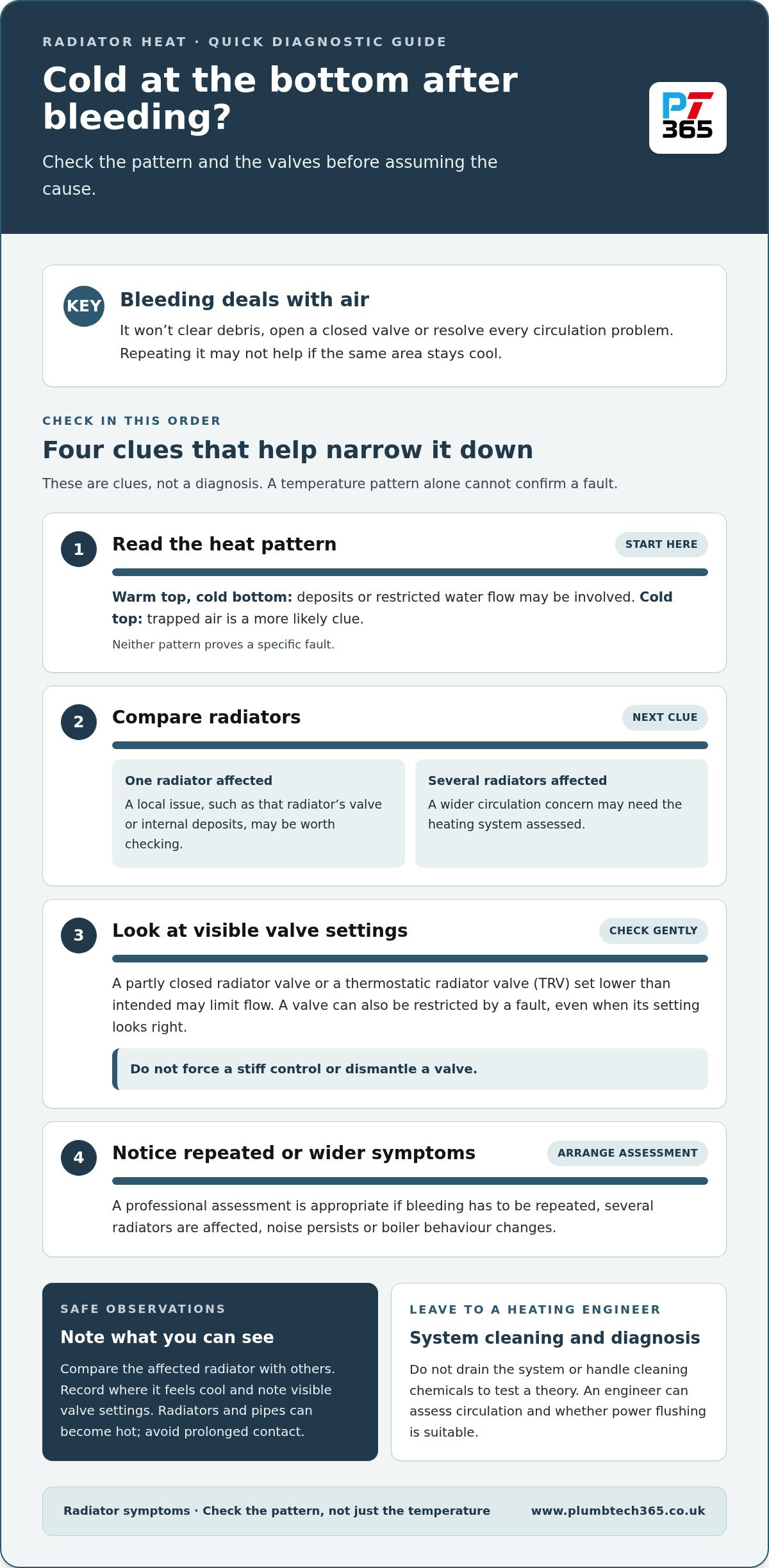
Trapped air more often collects at the top of a radiator, leaving the upper area cool or cold. Bleeding is intended to release that air. Sludge or other deposits may settle in lower areas and interfere with water flow, contributing to a cooler lower panel. Restricted flow from a valve or another circulation issue can also affect heat distribution.
A warm top and cold bottom is a clue about possible flow or deposit problems, not proof of a specific fault. Other issues can produce uneven heating, so don’t treat the pattern as a diagnosis or assume that every radiator with a cool lower section needs flushing.
Why bleeding may not have fixed the radiator
Bleeding deals with air. It doesn’t clear debris, open a closed radiator valve or resolve a wider circulation problem. If the same section stays cool afterwards, repeating the process is unlikely to identify or fix the underlying cause. Note which parts feel cool and whether the problem affects one radiator or several. This gives you useful information for the next checks without taking the system apart.
If several radiators are affected, the issue may extend beyond one unit. The guide to why radiators stay cold and what to do next covers wider symptoms. Uneven heating can also leave you tempted to turn up the heating. These suggestions for reducing heating bills without feeling cold may help you think about comfort without relying on that approach.
Don’t force a valve or drain the radiator to test your theory. If simple observations don’t explain a persistent cold section, arrange a professional assessment. This can help distinguish a local valve or radiator issue from a broader circulation concern and avoid acting on an unconfirmed diagnosis.
What Can Leave the Bottom of a Radiator Cold?
A cold lower panel can have more than one explanation. Sludge or other debris may collect inside a radiator and interfere with water flow. But a temperature difference isn’t enough to confirm a build-up, and it doesn’t automatically mean the system needs flushing. A partly closed or restricted valve can also reduce flow through an individual radiator.
Persistent cold areas after bleeding can point to causes other than trapped air. The next useful clue is whether the problem affects one radiator or several. A single affected radiator may indicate a local issue, such as its valve or internal deposits. Similar symptoms across several radiators may suggest a wider circulation concern that needs the heating system assessed.
Could sludge or restricted circulation be responsible?
Over time, particles from corrosion inside a heating system can travel with the circulating water. Some may settle where water movement is slower, including inside radiators. If deposits obstruct part of the water path, heat may not spread evenly across the panel. Sludge is one possible cause, but touch alone can’t confirm it.
Radiators rely on hot water circulating through them to transfer heat into a room. Deposits or another restriction can interfere with that movement and leave part of the radiator cooler. A heating engineer can assess whether system deposits are contributing to the problem. Power flushing is one professional cleaning option when the assessment indicates it is suitable, but it isn’t an automatic fix for every cold lower panel.
Do the radiator valves or wider system matter?
Check what you can see without taking anything apart. A radiator valve that is partly closed, or a thermostatic radiator valve set lower than intended, may limit water flow through that radiator. A valve can also be restricted by a fault even if its setting looks correct. Don’t force a stiff control or dismantle a valve to investigate.
If one radiator behaves differently from the others, note its valve settings and where the cold area appears. If several radiators stay cool or heat unevenly, the cause may involve circulation beyond one radiator. The We are a trusted plumbing & heating company providing reliable, high-quality services across London and Kent. heating team can assess persistent radiator and system symptoms, then determine whether a local repair or wider investigation is appropriate.
For a radiator cold at the bottom after bleeding fix, avoid choosing a treatment before the cause is clear. Record which radiators are affected and whether visible valve settings differ. This information can help a heating engineer narrow down the issue without guesswork, while keeping you clear of draining the system or handling cleaning chemicals yourself.
What Safe Checks Can You Try Before Calling a Heating Professional?
Start with observations, not adjustments. Let the heating run through its normal operation, then compare the affected radiator with others. Radiators and pipes can become hot, so take care and avoid prolonged contact with the metal. You’re looking for a pattern, not trying to prove a fault by touch alone.
Check the heating pattern and visible radiator valves
Once the radiators have had time to warm, note whether the upper and lower sections feel different. Compare the same areas on nearby radiators, then record whether the issue affects one unit or several. This can help distinguish a local symptom from a wider pattern. If the radiator has a thermostatic radiator valve (TRV), check whether its visible setting appears turned down or closed.
Follow these checks in order:
Check that the heating is on and let it run normally so you can assess the radiator pattern.
Compare the affected radiator’s upper and lower sections with other radiators in the home.
Note which radiators are affected and whether the same area stays cool.
Look at visible valve settings. Adjust only a control that moves easily, and don’t force or dismantle it.
Look at the boiler display for a warning or fault message. Record what it shows, but don’t remove the casing or attempt a repair.
A simple note such as “one bedroom radiator is cool at the bottom, others heat normally” is more useful than repeated guesses. Don’t change several settings at once. That can make it harder to tell whether anything has changed.
Know when to stop troubleshooting
Stop if you see a leak, hear unusual or persistent noise, notice repeated pressure problems or see a boiler fault. Several radiators affected at once also call for a professional assessment. Don’t remove radiator valves, drain the system or open the boiler casing. If there’s a boiler warning, follow the instructions displayed or in the appliance manual, and leave internal checks to a qualified engineer.
If air keeps returning after bleeding, don’t treat repeated bleeding as the fix. Recurring air symptoms need their cause investigated. This guide to why radiators need bleeding repeatedly explains what may be behind that pattern.
A sensible radiator cold at the bottom after bleeding fix starts with checking the pattern and visible controls, then stopping before any work that involves opening or draining the system. If the radiator remains uneven or warning signs appear, a heating engineer can assess the radiator and wider circulation safely.
When Is a Professional Radiator Inspection the Right Next Step?
If the same radiator stays cold at the bottom after you’ve checked its visible settings and observed the heating pattern, arrange a professional assessment. A single radiator that heats unevenly may have a local valve or radiator issue. Similar symptoms in several rooms, however, can point to a wider circulation problem. The pattern helps guide the investigation, but it can’t confirm the fault on its own.
Don’t keep repeating the same checks if the problem persists. Repeated bleeding, several affected radiators, ongoing unusual noise or changes in boiler behaviour are all reasons to have the heating system looked at. A visible leak or boiler fault needs prompt attention. Note what you’ve noticed, including which radiators are affected and any messages on the boiler display, so you can give the engineer a clear account.
Signs the problem may involve more than one radiator
One radiator staying cool while the others heat normally may suggest a local concern. If several radiators warm unevenly, take longer to heat or remain cool in different areas, the issue may involve circulation across the system. Recurring symptoms deserve diagnosis, not repeated bleeding, because bleeding can’t identify or correct every cause of poor heat.
Persistent noise or a change in how the boiler operates adds useful context, especially alongside uneven heating. These signs don’t prove a particular fault, but they help an engineer assess whether the concern is limited to one radiator or affects the wider system.
What a heating professional may assess
An engineer can inspect the radiator valves, consider how water is circulating and assess the condition of the heating system. Those findings help determine what work is suitable, rather than assuming that a cold lower panel means sludge or that flushing is automatically needed.
If deposits or restricted circulation are identified, power flushing may be considered as a professional cleaning option. It isn’t the right answer for every symptom, so the cause should be understood first. Plumbfix 365’s heating work is carried out by Gas Safe Registered engineers, who can investigate the system and explain the appropriate next step.
The right radiator cold at the bottom after bleeding fix depends on what the inspection finds. Avoid draining the system, dismantling valves or opening the boiler while you wait. A professional assessment can distinguish a radiator-level issue from a broader heating concern and help prevent guesswork.
If the radiator remains uneven after your safe checks, arrange a professional heating assessment with Plumbfix 365 to investigate the cause and discuss suitable next steps.
Get Help for a Radiator That Stays Cold at the Bottom
If basic checks haven’t helped, let a heating engineer take the next look rather than trying more adjustments. Before arranging an assessment, consider when the problem occurs: does the radiator stay cool throughout a heating cycle, or does the pattern change? These details can help you describe the issue clearly without guessing at its cause.
If you manage a property, tell the engineer whether the concern has been reported in more than one room or by more than one occupant. Keep any boiler display message to hand, but don’t attempt internal checks. A clear handover helps focus the assessment on the heating concern.
How professional help can move the diagnosis forward
An inspection lets a heating professional assess the radiator in context, including how it behaves alongside the rest of the system. They can use their findings to decide whether the next step concerns the radiator itself or requires a broader investigation. You don’t need to arrive with a diagnosis or a preferred repair.
Plumbfix 365 provides heating services, radiator fitting and power flushing. The assessment helps determine which work is appropriate for the issue.
Take the next step
When you get in touch, explain what prompted you to bleed the radiator, what changed afterwards and what still feels wrong. Mention any recent change in how the room or heating system performs. A straightforward description gives the discussion a practical starting point.
Speak to Plumbfix 365 about your heating to discuss a radiator that remains cold at the bottom. Share what you’ve noticed and take the next step with confidence.
Make Your Next Heating Check Count
If the radiator still isn’t heating evenly, avoid further adjustments without knowing what they’ll change. A clear account of the problem can keep the next step focused: note when you first noticed it, whether it has changed and how it affects comfort in the room. You don’t need to identify the fault yourself. An assessment establishes what needs attention before work is recommended.
Finding a radiator cold at the bottom after bleeding fix starts with a reliable diagnosis, not guesswork. If the issue continues, arrange a professional review and explain what you’ve observed. Plumbfix 365 can discuss your heating concern and the appropriate way forward.
Arrange a radiator assessment with Plumbfix 365 and take the next step with confidence. A clear explanation of the symptoms is a good place to start.
Frequently Asked Questions
Is a radiator cold at the bottom after bleeding always caused by sludge?
No. Sludge or debris is one possibility, but a valve that isn’t allowing enough water through or another circulation issue may also cause uneven heat. The temperature pattern can’t confirm the fault by itself. For a radiator cold at the bottom after bleeding, the right fix depends on what an inspection or further checks reveal. Don’t arrange a flush based on the symptom alone.
Should I bleed a radiator again if the bottom is still cold?
Not just because the lower section feels cool. Bleeding is more relevant if the radiator’s upper area is cold or you hear sounds that suggest trapped air. If you’ve already bled it and the same lower area remains cool, repeated bleeding may not help. Note how the radiator heats and whether the symptom changes, then seek advice if it persists.
Can a closed radiator valve make the bottom stay cold?
Yes. A closed or partly closed valve can restrict water entering the radiator, so it may heat poorly or unevenly. Check the visible setting, including the thermostatic radiator valve if fitted. If the control moves freely, set it as intended for that room. Don’t force a stiff valve or remove its parts; a damaged or restricted valve needs a professional assessment.
How long should I wait after bleeding before checking radiator heat?
There isn’t one fixed waiting time that suits every heating system. Let the heating run through its normal operation, then compare the radiator with others in the home. Avoid judging it immediately after switching the heating on, as the system may not yet have warmed evenly. If the radiator remains cold in the same area during normal use, record the pattern rather than repeatedly bleeding it.
Can one cold radiator affect the rest of the central heating system?
One radiator that heats poorly doesn’t necessarily mean the whole system is affected. If the other radiators warm as expected, the issue may be local to that radiator or its valve. If several radiators also heat unevenly, or the heating behaves differently across the home, there may be a wider circulation concern. Note which rooms are affected to help an engineer assess the pattern.
Is it safe to use the heating when a radiator is cold at the bottom?
A cool radiator section alone doesn’t automatically mean you must switch the heating off. However, stop using the system and seek professional advice if you notice a leak, a boiler fault, unusual persistent noise or other concerning changes. Don’t open the boiler casing or attempt internal repairs. If you’re unsure whether the appliance is safe to operate, follow its instructions and get qualified help.
When should I call a heating engineer about a radiator that stays cold?
Arrange an assessment if the same radiator remains uneven after basic checks or if the problem returns after bleeding. Contact an engineer sooner if several radiators are affected, you find a leak, hear persistent unusual noise or notice changing boiler behaviour. Share which rooms are affected and what you’ve observed. That information helps the engineer decide whether to investigate a radiator, its valves or wider system circulation.


Comments