


Radiator Not Heating Up at the Bottom? Causes and Safe Fixes

What if bleeding your radiator is the wrong first move? If you’ve noticed a radiator not heating up at bottom, trapped air may not be the cause. Air usually creates cold spots near the top; a cold lower section more often points to sludge or another problem restricting water flow. Repeatedly bleeding the radiator may not solve it.
It’s understandable to be unsure whether this is a minor issue or a sign that your heating system needs attention. This guide explains the likely causes, how to distinguish between them using simple observations, and which checks are reasonable to try safely. You’ll also learn when to stop troubleshooting and seek professional diagnosis. If sludge or restricted circulation is identified, a heating engineer can assess whether power flushing is appropriate. Plumbtech 365’s heating work is carried out by Gas Safe Registered engineers, with power flushing available where an assessment shows it may help. Start with the symptoms, not guesswork, so you can take the next step without risking further disruption.
Key Takeaways
A radiator not heating up at bottom can point to restricted water flow, but the pattern across your home can offer useful clues.
Check the radiator controls and compare how other radiators heat before attempting a fix.
Turning up the thermostat won’t resolve a local cold patch. Avoid adjusting anything that appears damaged or starts leaking.
If several radiators are affected, or simple checks don’t help, a heating engineer can assess circulation and radiator condition.
System cleaning may be suitable when an assessment points to sludge, but it isn’t the right fix for every cold radiator.
Table of Contents
Radiator Not Heating Up at the Bottom: What the Symptom Can Tell You
The familiar pattern is clear: the top of the radiator warms, but the lower section stays noticeably cooler. That difference can be worrying, but it doesn’t prove a particular part has failed. A radiator may also feel cooler near the point where water returns to the system, so judge whether there’s a persistent cold area rather than relying on one quick touch.
Radiators transfer heat from circulating water into a room as part of a central heating system. If warmth is uneven after the heating has had time to run, the pattern is worth investigating. A radiator not heating up at bottom can point to poor circulation through that radiator. Sludge, valve restriction or another issue may be involved, but touch alone can’t confirm the cause.
First, make a simple note: is the cold patch confined to one radiator, or do several show a similar pattern? Also notice whether the affected radiators are in one room, on one floor or in different parts of the home. This gives you a clearer starting point than changing controls at random. If the radiator remains uneven after the system has warmed, radiator fitting may be relevant if its condition calls for replacement; learn more about professional radiator fitting.
What does a radiator cold at the bottom usually mean?
Uneven warmth can mean hot water isn’t circulating effectively through the full radiator. Sludge is one common possibility: rust and other debris can collect inside and restrict flow. It’s a clue, not a diagnosis. A radiator that has only just started warming may also feel uneven at first, so reassess once the heating has been running and the temperature pattern has settled.
Is one cold radiator different from several?
Yes. One affected radiator may point to a local issue, such as its valve or the radiator itself. If several radiators share the same cold-bottom pattern, the cause may involve circulation across more of the system. Neither pattern identifies the fault by itself, but it helps narrow down what needs checking.
Write down what you observe before trying a fix:
Which radiators have a persistent cold patch?
Which rooms are they in, and do nearby radiators heat evenly?
Does the same pattern affect one radiator or several?
These observations can help distinguish a local radiator concern from a wider heating issue. Keep the notes to share with a heating engineer if the pattern continues or you can’t identify a safe, simple explanation.
Why a Radiator Gets Cold at the Bottom: Sludge, Air and Restricted Flow
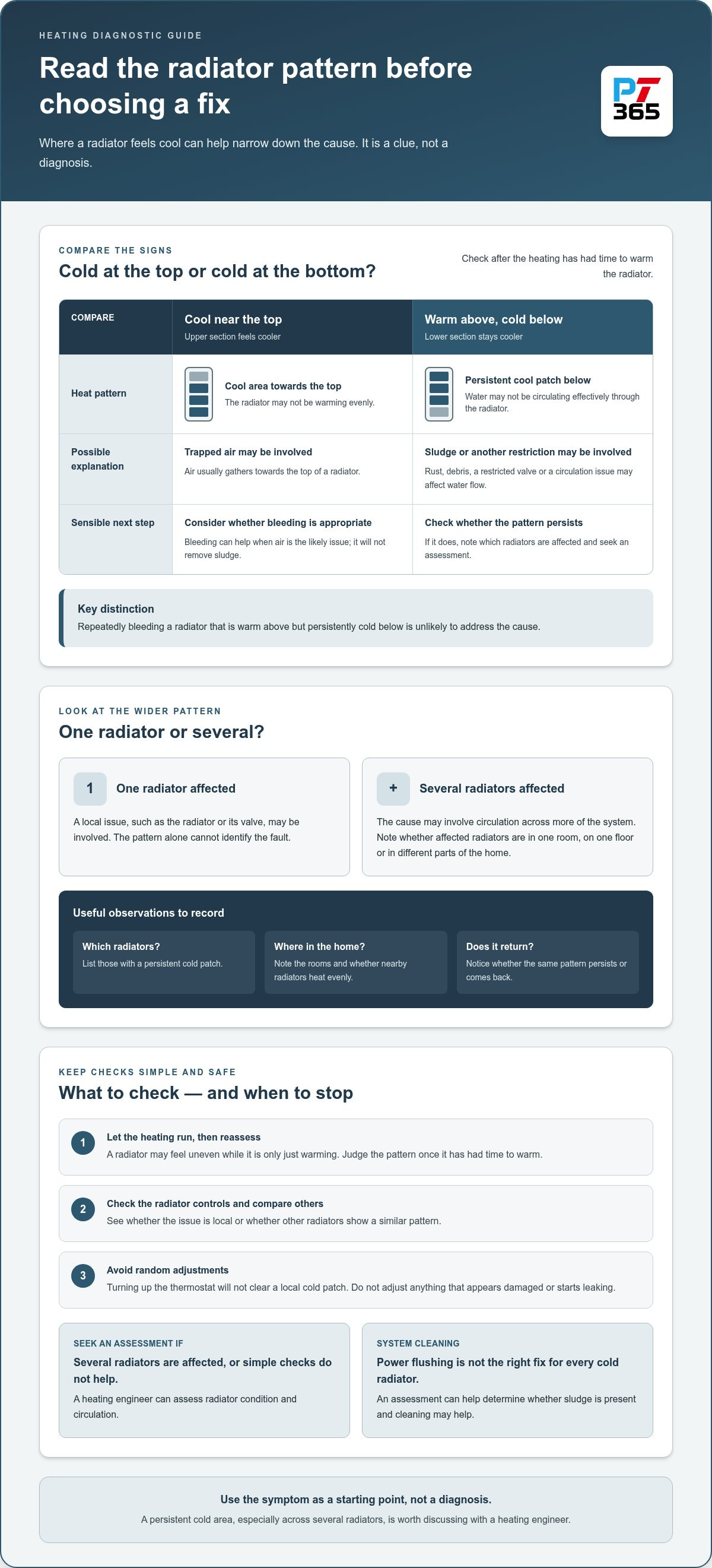
The shape of the cold area can help narrow down the cause, but it can’t confirm a fault on its own. Air, deposits inside the radiator and restricted water flow can all affect heating in different ways. Compare the pattern before choosing a fix. Bleeding is useful when air is the likely issue, but it won’t remove sludge or correct every circulation problem.
Cold at the top often points to air; cold at the bottom may suggest restricted circulation. Treat this as a guide, not a definite diagnosis. Check the radiator after it has had time to warm, then compare its temperature pattern with the signs below.
Could trapped air cause the bottom of a radiator to stay cold?
Air usually gathers towards the top of a radiator, so an upper cold area is more consistent with trapped air. The pattern isn’t absolute, and symptoms can overlap. But if the radiator is warm above and has a persistent cold patch below, repeated bleeding is unlikely to address the cause. Match the check to what you can observe rather than bleeding by habit.
How can sludge or restricted circulation affect radiator heat?
Rust and other debris can collect in the system and may interfere with water moving evenly through a radiator. A valve that restricts flow or a broader circulation fault can also leave parts of the system cooler. If several radiators are affected, or cold patches keep returning, the issue may extend beyond one radiator. These signs of a central-heating blockage can help you consider whether the pattern is wider.
Don’t assume every cold-bottom radiator needs a system flush. A heating engineer can assess the radiator and circulation, then determine whether cleaning is appropriate. If the cause remains unclear, professional heating diagnosis can help identify the next step without relying on repeated guesswork.
Radiator Cold at the Bottom: Compare the Checks Before Trying a Fix
Start with simple observations, not dismantling or repeated adjustments. If a radiator not heating up at bottom is your concern, raising the room thermostat may make the heating run for longer, but it won’t clear a local restriction or correct a valve fault. Check the controls and compare how the other radiators behave before deciding what to try. Different causes need different remedies.
Use this order to keep the checks straightforward:
Confirm the heating is on. Allow the system time to warm, then reassess the radiator rather than judging it immediately after switching on.
Look at the radiator controls. Check that the thermostatic radiator valve (TRV) and the other control valve haven’t been turned down or closed.
Compare other radiators. Note whether they warm evenly or show a similar cold area. Avoid touching hot pipework or surfaces; look for the pattern rather than testing by hand.
These checks can help identify an obvious setting or show whether the issue appears limited to one radiator. They can’t confirm what’s happening inside the system. Don’t force a stiff control or take the radiator apart to investigate.
Which checks can you make without taking the radiator apart?
Keep checks visual and limited to controls you can operate normally. A valve left closed after decorating, for example, could restrict flow to one radiator. If the controls appear correctly set but the cold patch remains after the system has warmed, record which radiators are affected. That information helps an engineer distinguish a local issue from a wider circulation concern.
When might bleeding, balancing or power flushing be considered?
Bleeding is worth considering when the symptoms fit trapped air, such as a radiator that stays cool near the top. It isn’t a general fix for a persistently cold lower section. Balancing adjusts how heat is distributed between radiators and may need professional attention. Power flushing is different: an engineer may consider it if assessment indicates deposits or restricted circulation across the system.
Don’t choose a system clean based on one cold spot alone. A heating engineer can assess radiator condition and circulation, then decide whether power flushing is suitable or another remedy makes more sense. The professional power-flushing service is relevant where assessment points to system contamination, not as an automatic response to every unevenly heated radiator.
If basic checks don’t explain the pattern, or a control is damaged or leaking, stop and arrange professional heating diagnosis. Heating work is carried out by Gas Safe Registered engineers. For a persistent circulation concern, get professional heating diagnosis rather than trying a fix that may not match the fault.
How to Check a Radiator That Is Not Heating at the Bottom
Work through a simple sequence before attempting a repair. The aim is to record what the radiator is doing, check only accessible controls and decide whether the fault seems local or affects the wider system. If a radiator not heating up at bottom still shows the same cold area after these observations, don’t keep adjusting things without a clear reason.
What should you check first, second and third?
Follow the steps in order. Make observations only; don’t dismantle the radiator, drain the system or open the boiler.
Observe the temperature pattern. Note whether the radiator is cooler at the bottom, at the top, or across its full surface. A whole radiator staying cold gives a different clue from one with a distinct cold patch.
Check the controls. Look at the radiator valves and see whether either has been turned down or closed. Don’t force a stiff control or remove any part. If you spot damage or moisture around a valve, stop here.
Compare other radiators. Check whether the same pattern appears elsewhere, including in other rooms. A single affected radiator may point to a local issue, whilst several with similar symptoms may suggest the problem extends beyond one unit.
Let the heating run, then reassess. Give the system time to warm before checking again. Note whether the cold area remains and whether other radiators have changed. Don’t raise the thermostat repeatedly as a substitute for finding the cause.
Write down which rooms and radiators are affected, what the temperature pattern looks like and whether it changes after the heating has been running. These details make it easier to explain the problem clearly if you need professional help.
When should you stop troubleshooting yourself?
Stop if water escapes, a valve or other visible component looks damaged, or the radiator makes an unusual noise that continues. Don’t dismantle a valve or try to drain the radiator to find the fault. If the system behaves unexpectedly, leave further checks to a heating engineer.
Avoid repeating a check that doesn’t match the symptoms. For example, repeatedly bleeding a radiator that is warm at the top but persistently cold below is unlikely to resolve a cause that needs a different assessment. If the cold patch returns after a basic check, or several radiators are affected, arrange professional diagnosis rather than making further adjustments.
Where other radiators are also cold, compare the wider pattern with these common reasons radiators stay cold. If the cause remains unclear, contact a heating professional for diagnosis.
When a Heating Engineer Can Help with a Radiator Cold at the Bottom
Arrange a professional assessment if the cold patch keeps returning, basic checks haven’t helped, or several radiators are affected. A persistent fault doesn’t automatically mean the whole system needs cleaning. The next step is to identify whether the cause sits in one radiator, its controls or the wider heating system, then match the remedy to the findings.
What can a professional assessment establish?
An engineer can review the radiator’s heat pattern alongside symptoms elsewhere in the home, then assess its condition and how water is circulating. This helps distinguish a local issue from one affecting the wider system. If the findings suggest deposits are restricting circulation, power flushing may be considered. It’s an assessed option, not an automatic fix for every cold-bottom radiator.
The assessment may also show that cleaning isn’t the right response. A valve fault, radiator damage or another circulation issue can call for a different repair. Avoid trying to find the cause by opening valves or draining the system yourself. A professional heating assessment can identify the likely source and guide the next step without relying on guesswork.
What happens if the radiator still will not heat evenly?
Help the engineer build a clear picture. Note which rooms and radiators are affected, whether the cold area is at the top, bottom or across the whole radiator, which controls you’ve checked and whether the symptom changes after the heating has run. Mention any leaks, visible damage or unusual noises. These details can help focus the assessment.
Depending on the findings, the appropriate work may involve addressing a local fault, considering system cleaning or fitting a radiator if the existing one is damaged or unsuitable. If replacement is indicated, this guide to professional radiator fitting explains the service. The assessment should determine which approach fits the problem, rather than assuming every radiator that stays cold below needs the same treatment.
If the same cold patch persists after reasonable checks, or more radiators begin showing the problem, arrange heating help rather than repeating adjustments. Power flushing may be appropriate when an assessment supports it. Get professional help with a persistent radiator fault.
Take the Next Step Towards Even, Reliable Heating
If the radiator not heating up at bottom remains a problem, avoid treating another adjustment as a guaranteed fix. A clear record of when the symptom appears and whether it changes can help the next assessment focus on the fault, rather than on guesswork. You don’t need to identify the cause yourself before seeking help.
Act sooner if the issue is spreading, returning regularly or affecting comfort in rooms you rely on. Leaving a persistent fault unexplained can make it harder to know whether you’re dealing with one radiator or a wider heating concern. Keep clear of damaged or leaking parts, and don’t take the system apart to investigate.
For a practical next step, arrange professional help with a persistent radiator fault. An assessment can help establish what needs attention and which remedy fits the findings. With the right diagnosis, you can move forward calmly and get your home’s heating back on track.
Frequently Asked Questions
Is a radiator cold at the bottom always caused by sludge?
No. A radiator not heating up at bottom can have sludge or other deposits restricting circulation, but the temperature pattern alone can’t confirm that. A valve fault or another flow issue may also be responsible. Check whether the controls are set as intended and compare nearby radiators. If the cold patch keeps returning or several radiators show it, arrange an assessment before deciding that a flush is needed.
Can bleeding a radiator fix one that is cold at the bottom?
It may help if trapped air is causing the problem, but air is more commonly associated with a radiator that stays cool at the top. Bleeding is not a catch-all fix for uneven heat. Before trying it, check whether the symptom fits air rather than a persistently cold lower section. If you do bleed a radiator, follow the guidance for your heating system and stop if anything leaks or behaves unexpectedly.
Should I turn up the thermostat if my radiator is cold at the bottom?
No. A higher thermostat setting won’t clear a restriction or repair a faulty radiator control. It may simply keep the heating on for longer without changing the cold patch. Check that the heating is operating and the radiator controls are open as intended, then compare the affected radiator with others. If the lower area remains cold, focus on finding the cause rather than compensating with a higher setting.
Can one radiator be cold at the bottom while the rest heat normally?
Yes. One radiator can have a local problem, such as restricted flow or a valve issue, even if the others warm as expected. That contrast helps narrow the investigation, but it doesn’t identify the exact fault. Note whether the affected radiator warms at the top, whether its controls appear correctly set and whether the cold area persists after the heating has run. Seek an engineer’s assessment if it doesn’t improve.
Is it safe to remove a radiator to clear sludge?
Removing a radiator involves its water, valves and pipe connections, so it isn’t a suitable first step if you’re unsure of the process. An incorrect attempt can cause water to escape or leave the system needing further attention. Don’t dismantle it if a valve looks damaged or there’s already a leak. A heating professional can inspect the radiator and decide whether cleaning, repair or another remedy is appropriate.
What does it mean if several radiators are cold at the bottom?
Similar cold areas across several radiators can point to a circulation issue affecting more than one unit. Deposits or restricted flow are possible explanations, but the pattern alone can’t establish the cause or show whether cleaning is needed. Make a note of which rooms are affected and whether each radiator warms at the top. Sharing those observations can help an engineer assess the system and choose an appropriate next step.


Comments