


Signs of a Boiler Carbon Monoxide Leak: What to Do

Could a headache or an unusual boiler warning be more than a routine fault? The signs of a carbon monoxide leak from boiler problems aren’t always obvious, and symptoms can have other causes. Carbon monoxide has no reliable smell, taste or visible warning, so you can’t rule it out by checking the room.
Take the concern seriously without assuming a particular symptom or boiler fault proves there’s a leak. If a carbon monoxide alarm sounds or someone feels unwell near a boiler, get everyone outside to fresh air and seek emergency help. Don’t stay indoors trying to diagnose the appliance.
This guide explains which symptoms and boiler clues may indicate a carbon monoxide risk, what to do first and who to contact. It also covers when a Gas Safe registered engineer should assess the boiler, and how routine servicing fits into home safety. These steps can help you act calmly and put people’s safety first.
Table of Contents
Signs of a carbon monoxide leak from a boiler: what to recognise
Carbon monoxide is invisible and odourless, so you can’t identify it by looking around or smelling the air. Possible signs of a carbon monoxide leak from boiler problems include symptoms in people and unusual clues around an appliance or flue. None proves carbon monoxide is present, and some leaks may leave no visible trace.
Consider two kinds of warning signs: how people feel and what can be seen near the boiler. A clue may raise concern, but it can’t confirm the cause. Warning signs can suggest possible carbon monoxide exposure, but they are not a confirmed diagnosis. The Carbon monoxide poisoning overview describes possible symptoms and causes. Suspected exposure needs appropriate professional attention.
This video shows an example of a boiler-related warning:
Possible carbon monoxide exposure symptoms
Possible symptoms include headache, dizziness, nausea, weakness, confusion and breathlessness. They can resemble ordinary illness or other health problems, so symptoms alone can’t identify carbon monoxide as the cause. Take particular care if more than one person in the property feels unwell around the same time, especially when a fuel-burning appliance is in use.
Feeling better after going outdoors can raise concern, but it doesn’t diagnose exposure. Don’t dismiss symptoms because they ease, or assume they must be linked to the boiler. Seek medical advice for anyone who feels unwell. Severe symptoms need urgent medical attention.
Boiler and flue clues that need attention
Soot, staining or unusual marks on or around the boiler, nearby surfaces or flue can be warning clues. If a flame is visible, an unstable or unusual-looking flame also needs attention. Don’t remove covers or approach the flue to inspect it. A pressure drop can have a separate cause; this guide to boiler pressure loss without a visible leak discusses that fault separately.
These clues may have other explanations, and their absence doesn’t prove the home is safe. A boiler can appear to work normally, and a normal-looking flame cannot rule out carbon monoxide. Don’t rely on appearance or performance to decide there’s no risk. Treat concerning symptoms or appliance clues seriously and arrange a safe assessment.
How carbon monoxide exposure differs from a boiler fault
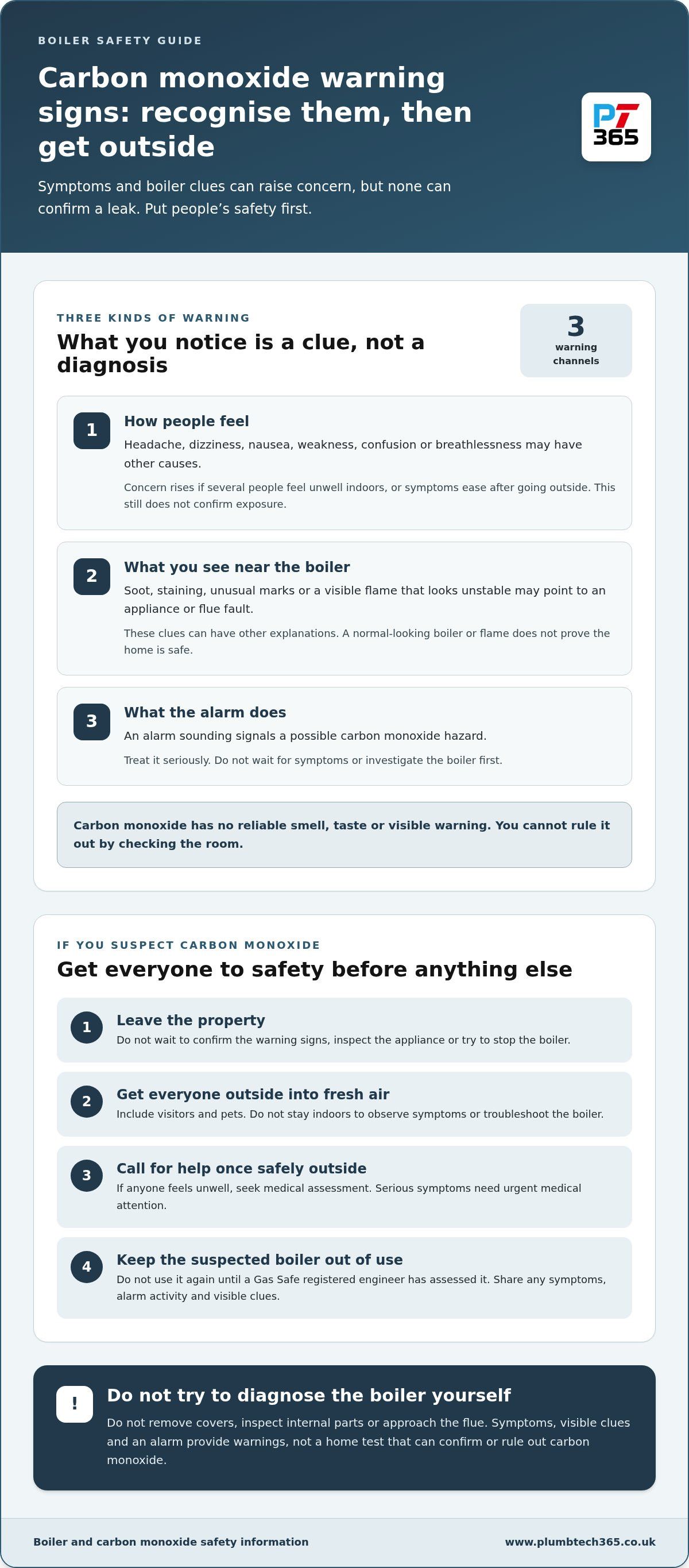
Symptoms, boiler behaviour and an alarm provide different kinds of information. A headache may be unrelated to the boiler, while a boiler fault can have several causes. An alarm warns of a possible hazard, but none of these clues is a home test that can confirm or rule out carbon monoxide. Use this comparison to understand what each may indicate, not to diagnose the problem.
What you notice
What it may indicate
What to do with that information
Human symptoms
Headache, dizziness, nausea, weakness, confusion or breathlessness may have many causes.
Seek medical assessment. A pattern affecting several people indoors, especially if they feel better outside, raises concern but does not confirm exposure.
Boiler clues
Soot, staining, unusual marks or a visible flame that looks unstable can point to an appliance or flue fault.
Don’t inspect internal parts or try to identify the fault yourself. Visible clues are not proof of carbon monoxide.
Alarm warning
An alarm sounding signals a possible carbon monoxide hazard.
Treat it seriously and follow the safety steps in the article. Don’t wait for symptoms or investigate the boiler first.
Symptoms and appliance clues are warnings, not a test for carbon monoxide. Even if the signs of a carbon monoxide leak from boiler use seem to fit, only an appropriate assessment can establish what is happening. Don’t try to settle the question by comparing symptoms with a list or checking how the appliance looks.
When symptoms may point to exposure
Concern rises if several people in the same indoor space develop symptoms, or if symptoms keep returning indoors and ease after they go outside. That pattern deserves urgent attention, but it can’t diagnose exposure. Symptoms may have another medical cause. Tell a medical professional what happened, where symptoms occurred and whether others were affected.
If anyone has serious symptoms, becomes confused or collapses, get emergency medical help immediately. Don’t stay inside to observe whether symptoms change or troubleshoot the boiler. Get people to safety first, then arrange qualified help to assess the appliance.
Why boiler warning signs cannot confirm a leak
Soot, staining or a change in a visible flame may signal a fault, but they don’t show whether carbon monoxide is present. Boiler faults can arise for different reasons, and combustion or flue problems need professional assessment. Don’t remove the boiler casing, inspect the burner or test the flue yourself. A working boiler or normal-looking flame isn’t proof of safety either.
For context on other appliance hazards, see these gas safety warning signs. After immediate safety steps are complete, a Gas Safe registered engineer can assess suspected boiler faults. Arrange qualified boiler attention rather than relying on appearance or symptoms to identify the cause.
What to do if your boiler may be leaking carbon monoxide
If you suspect carbon monoxide, leave the property before doing anything else. Don’t wait to confirm the signs of a carbon monoxide leak from boiler use, inspect the appliance or try to stop the boiler. Get everyone, including visitors and pets, outside into fresh air. Once you’re safely outside, call for help and follow the instructions you’re given.
Immediate actions for people inside the property
Move everyone outside straight away. Don’t delay leaving to operate the boiler, open windows or gather belongings. If someone collapses, has severe symptoms or faces immediate danger, call 999 for emergency medical help. Don’t go back indoors to help someone if doing so could put you at risk. Tell the emergency operator what has happened and follow their directions.
Who to contact and what not to do
From outside, report suspected carbon monoxide to the National Gas Emergency Service on 0800 111 999 and follow its current instructions. Explain that you suspect a carbon monoxide issue involving a boiler, and mention any symptoms or alarm warning. If anyone is unwell, seek medical assessment too. Don’t use a suspected appliance again until it has been assessed.
Get everyone outside. Move to fresh air without stopping to investigate the boiler or flue.
Call for urgent help. Call 999 for collapse, severe symptoms or immediate danger. Report a suspected gas appliance emergency to the National Gas Emergency Service from outside.
Stay out. Do not re-enter until the property has been assessed and you’re told it is safe to do so. Follow the emergency service’s instructions.
Arrange a qualified boiler assessment. A Gas Safe registered engineer should inspect the suspected boiler before anyone considers using it again.
Keep the appliance off. Don’t restart it, try a repair, remove its casing or test the flue yourself. These actions can expose you to further danger and won’t establish whether carbon monoxide is present. If you rent the property, tell the landlord or managing agent once you’re safely outside, but don’t wait for a reply before contacting emergency services.
After the immediate risk has been addressed and it’s safe to arrange follow-up, share the details with the engineer: when the concern began, who felt unwell, whether an alarm sounded and any visible marks noticed from a safe distance. This information can help guide a professional assessment, but leave diagnosis and repairs to the engineer. Plumbtech 365 provides boiler repairs and servicing through Gas Safe registered engineers. You can arrange qualified boiler attention after the emergency steps are complete.
Carbon monoxide alarms and boiler checks: what each can tell you
A carbon monoxide alarm can warn you of a possible danger that you can’t see or smell. It’s a valuable safety measure, but it cannot identify the source or replace immediate action. If it sounds, treat it as urgent. Don’t wait for symptoms, inspect the boiler or assume the alarm is faulty before getting everyone to safety.
For everyday alarm care, follow the manufacturer’s instructions for fitting, testing and replacement. Requirements can vary between alarms, so use the guidance supplied with your specific model rather than relying on a general placement rule. Make sure you understand its warning sounds and what its instructions say to do if it activates.
What to do when a carbon monoxide alarm sounds
Get everyone outside into fresh air straight away. Don’t silence the alarm and stay inside to investigate, and don’t delay leaving to operate equipment. From outside, contact the relevant emergency service and follow current official advice. Do not re-enter the property until it has been assessed and you’re told it is safe. If anyone is unwell, seek medical help.
An alarm warning doesn’t prove the boiler is the source, but it should never be dismissed on that basis. The same applies if the alarm stops sounding or no one feels ill. Keep people out while you seek guidance. Don’t go back indoors to retrieve the alarm or check the appliance.
How servicing fits into carbon monoxide safety
A boiler service gives a qualified engineer the opportunity to assess the appliance’s condition. It isn’t an alarm, an emergency response or a guarantee that carbon monoxide cannot occur. If you suspect a leak, follow the emergency steps first and arrange a separate assessment before considering using the boiler again. A previous service cannot rule out a new fault.
Planned professional boiler servicing helps an engineer assess the boiler as part of routine maintenance. It complements, rather than replaces, a suitable alarm and your response to a warning. An older appliance needs assessment based on its actual condition, not age alone. Read more about boiler age and carbon monoxide concerns.
The signs of a carbon monoxide leak from boiler operation can be uncertain, which is why alarms and professional checks serve different purposes. An alarm alerts you to possible danger; an engineer assesses the appliance. Plumbfix 365 provides boiler servicing and repairs carried out by Gas Safe registered engineers. For a planned boiler check, arrange professional boiler attention.
After a suspected boiler leak: arrange a safe professional assessment
Once everyone is safe and emergency advice has been followed, keep the suspected boiler out of use. A qualified professional must assess it before anyone considers using it again. A reset, the boiler starting normally or symptoms easing does not prove the appliance is safe. Don’t try to test it yourself or judge the risk by how it looks.
Give the engineer a clear account of what led to the concern. Details can help them understand the situation, but they don’t replace a professional assessment. If you’re unsure of a time or detail, say so rather than guessing.
What information helps a Gas Safe registered engineer
From a safe place, note what you remember and share it with the engineer. Include:
When symptoms began and whether they changed after people left the property.
Which occupants felt unwell, and whether more than one person was affected.
Whether a carbon monoxide alarm sounded, and what happened before or after it activated.
Any soot, staining or unusual marks noticed around the boiler or flue, plus unusual boiler behaviour.
Don’t go back inside to collect details or inspect the appliance. Leave the boiler untouched unless emergency responders or an engineer advise otherwise. Don’t switch it on, reset it, remove its casing or attempt a repair. If new information comes to mind later, pass it on when speaking with the engineer.
When to arrange boiler servicing or repair
A suspected carbon monoxide incident is not a routine service request. First follow emergency advice and make sure the property and its occupants are safe. Then arrange for the suspected appliance to be assessed before it is used again. A service or repair appointment must not delay emergency action, and a previous service or successful reset cannot rule out a new problem.
For planned maintenance or a boiler fault without a suspected exposure emergency, professional servicing gives an engineer the opportunity to assess the boiler’s condition. It is useful preventive care, but it is not a guarantee against carbon monoxide. If you have any of the signs of a carbon monoxide leak from boiler operation, treat the concern seriously and tell the engineer why you’re requesting an assessment.
Plumbfix 365 provides boiler servicing and repairs through Gas Safe registered engineers. Share the symptoms, alarm activity and visible clues you observed, and allow the engineer to assess the appliance before use. Once immediate safety steps are complete, you can arrange professional boiler help.
Make your next step a safe one
Uncertainty can make it tempting to wait for another clue. Don’t let that delay a safe decision. The signs of a carbon monoxide leak from boiler use can be difficult to interpret, so focus on what you can control: keep the suspected appliance out of use and arrange a qualified assessment once immediate danger has been addressed.
If the concern is happening now, stay outside and follow emergency service advice. A boiler appointment is a follow-up step, not a replacement for urgent help or medical care. If there’s no immediate emergency but you’re concerned about the boiler’s condition, planned professional attention can help identify what needs addressing.
For boiler servicing or repair after the immediate safety steps, arrange professional boiler help. Plumbfix 365’s Gas Safe registered engineers provide boiler servicing and repairs. Make this your next step once the immediate safety advice has been followed.
Frequently Asked Questions
Can you smell carbon monoxide from a boiler?
No. Carbon monoxide has no smell, colour or taste, so odour cannot confirm or rule out a leak. Don’t rely on a lack of smell, visible smoke or other unusual signs to judge whether a property is safe. If an alarm sounds, or anyone feels unwell and exposure is possible, get everyone outside first. From a safe place, follow current UK emergency advice and seek medical help if needed.
What are the first signs of carbon monoxide poisoning?
Possible early symptoms include headache, dizziness, nausea, weakness, confusion and breathlessness. They can be hard to distinguish from other illnesses, so don’t assume carbon monoxide is the cause or dismiss the possibility. Concern is greater if several people in the same building feel unwell, particularly if they improve after leaving. Get outside if exposure is possible and seek medical advice. Call 999 for severe symptoms or collapse.
Can a boiler leak carbon monoxide without visible signs?
Yes. Carbon monoxide can’t be seen or smelled, and the boiler may have no obvious external clue. Soot, staining or unusual flame behaviour can signal a problem, but their absence doesn’t show that the appliance is safe. The signs of a carbon monoxide leak from boiler use can’t be confirmed by appearance alone. If you suspect exposure, leave and arrange a qualified assessment before the boiler is used again.
What should I do if my carbon monoxide alarm goes off?
Get everyone outside immediately. Don’t stay indoors to silence the alarm, look for its source or check the boiler. From a safe place, follow current official emergency advice and contact the appropriate service. In the UK, report a suspected gas appliance emergency to the National Gas Emergency Service on 0800 111 999. Call 999 if anyone collapses, has severe symptoms or faces immediate danger, and don’t return until told it’s safe.
Can a boiler still work if it is leaking carbon monoxide?
Yes. A boiler continuing to provide heating or hot water doesn’t prove it’s safe, and a reset or normal operation can’t rule out a carbon monoxide risk. Don’t test the appliance by running or resetting it. If you suspect exposure, leave the property and follow emergency advice. Keep the boiler out of use until a Gas Safe registered engineer has assessed it and it’s considered safe to use.
Who should check a boiler after suspected carbon monoxide exposure?
After everyone is safe and you’ve followed emergency advice, arrange for a Gas Safe registered engineer to assess the boiler before it’s used again. Tell them when symptoms began, who was affected, whether an alarm sounded and what visible clues you noticed. Don’t inspect or repair the appliance yourself. If anyone feels unwell, seek medical advice too, as an engineer’s assessment doesn’t replace medical care.


Comments