


Unvented Hot Water Cylinders: The 2026 Guide to High-Pressure Systems

Why settle for a pathetic trickle of water when you could have a high-performance shower that actually wakes you up in the morning? If you're tired of weak pressure from an old gravity-fed tank or frustrated by a loft full of dusty header tanks, you aren't alone. Many homeowners are upgrading to Unvented Hot Water Cylinders to transform their daily routines and reclaim wasted space. It's a common frustration to see water pressure drop the moment someone else turns on a tap, but it doesn't have to be your reality.
This guide explains how these systems deliver consistent mains-pressure hot water to every tap in your home while freeing up valuable square footage. With the 2026 Future Homes Standard now in full effect, understanding these pressurised systems is essential for any modern household. We'll break down the vital safety requirements, including mandatory G3 Building Regulations, and show you why professional installation by qualified boiler engineers is the only way to ensure your system remains a safe and reliable asset. From reclaiming your loft to achieving the perfect shower, here is everything you need to know about modernising your home heating.
Table of Contents
What is an Unvented Hot Water Cylinder?
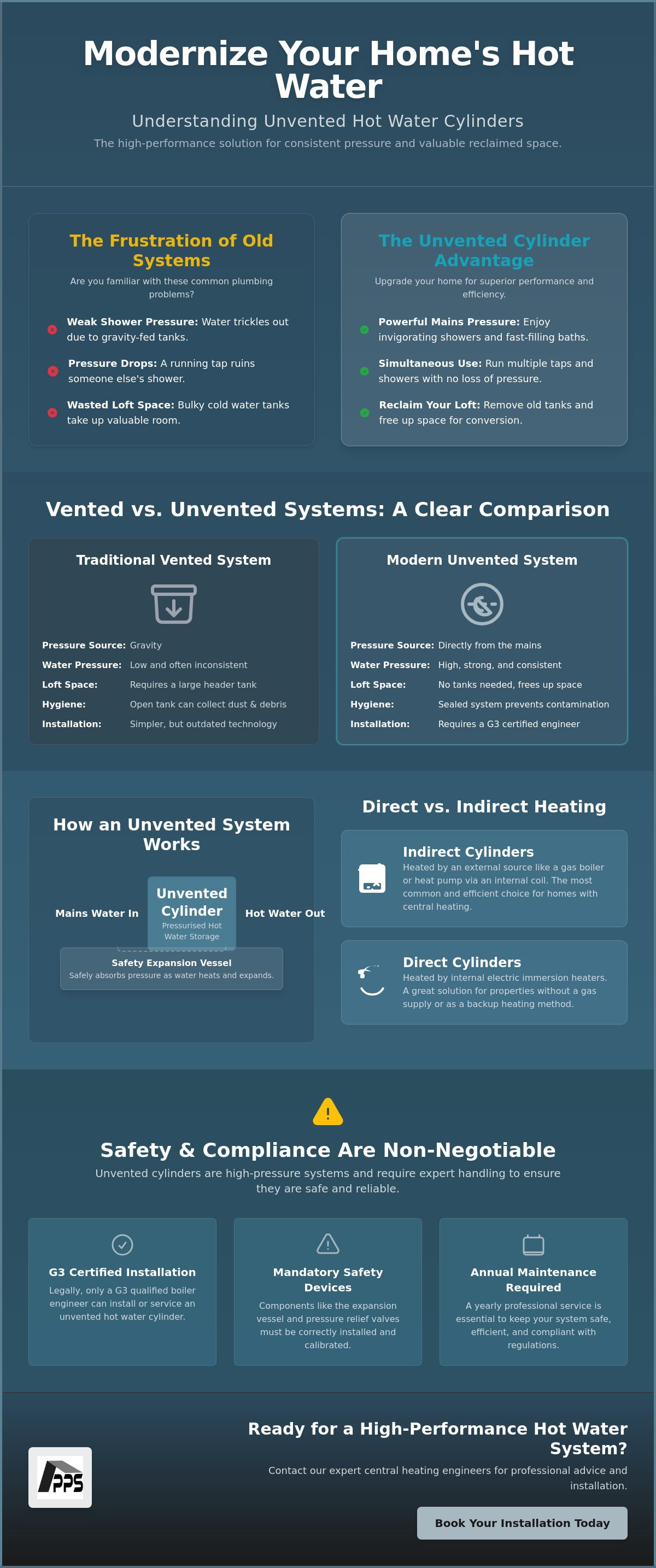
An unvented hot water cylinder is a high-performance, pressurised storage vessel designed for the demands of 21st-century living. Unlike the old-fashioned copper tanks found in many UK homes, these systems connect directly to your cold water mains. This direct connection is the key to their superior performance. Because they don't rely on gravity to move water, they can deliver hot water at the same high pressure as your incoming mains supply. It's a robust solution for anyone tired of weak showers and slow-filling baths.
When exploring What is an Unvented Hot Water Cylinder?, it's helpful to view it as a sealed, high-pressure engine for your plumbing. In a traditional vented setup, you must have a header tank in the loft to create pressure through gravity. Unvented Hot Water Cylinders eliminate this need entirely. This creates a more hygienic system, as there's no open tank in the loft to collect dust, debris, or pests. It's a streamlined, efficient solution that fits perfectly with modern boiler installations.
To better understand how these systems function within your home, watch this helpful guide:
How Unvented Systems Improve Home Plumbing
These systems effectively eliminate the frustrating pressure drop that happens when multiple taps are used at once. Since the entire system is under mains pressure, it provides a balanced flow to every outlet in the property. This is particularly beneficial for larger homes with several bathrooms or ensuite facilities where simultaneous use is a daily reality. You won't have to worry about a shower turning into a trickle just because someone started the dishwasher downstairs. Beyond performance, removing the cumbersome cold water storage tanks from your loft frees up valuable square footage. This makes it much easier to move forward with loft conversions or structural renovations without the headache of relocating heavy plumbing infrastructure.
The Role of the Expansion Vessel
The expansion vessel is a vital safety component that absorbs the increase in water volume that naturally occurs as the water heats up. In an old open-vented system, this expanding water simply flows back into the loft tank. Because unvented systems are sealed, they require this dedicated vessel to act as a pressure buffer. It contains a flexible diaphragm and a pressurised air cushion to manage these fluctuations safely. Maintaining the correct pre-charge pressure in this vessel is essential for the stability of your entire plumbing network. It's one of the primary reasons why these systems must only be handled by G3-qualified boiler engineers who understand how to calibrate these safety features correctly. Our experts are available 365 days a year to ensure these critical components remain in peak condition.
Direct vs Indirect Unvented Cylinders: Which is Best?
Choosing the right configuration for Unvented Hot Water Cylinders is a critical decision that impacts your monthly energy bills and your daily comfort. The choice boils down to how the water inside the tank is actually heated. Whilst both systems provide the same high-pressure performance at the tap, the internal mechanics differ significantly. Your property's existing infrastructure, specifically whether you have a gas supply or rely on electricity, will usually dictate the best path forward.
Think of the cylinder as more than just a storage tank. It's a central hub that must integrate seamlessly with your entire plumbing network. For larger properties, we often recommend looking at the "system" as a whole. This includes considering secondary circulation pumps that keep hot water moving through the pipes. This ensures you get instant heat the moment you turn a tap, rather than waiting for cold water to clear the lines. Our central heating engineers can assess your pipework to see if this integration is right for your home.
The Advantages of Indirect Heating
Indirect cylinders are the most popular choice for homes with a standard boiler or a modern heat pump. These units feature an internal heat exchanger, usually a coiled pipe, that carries hot water from your heating appliance through the tank to warm the stored water. This method is incredibly efficient. It allows for much faster recovery times, which is the time it takes for the tank to reheat after a long bath. When paired with a professional boiler installation, an indirect cylinder ensures you never run out of water, even during peak morning rushes. It's a cost-effective solution that leverages the lower unit price of gas or the high efficiency of renewable heat sources.
When to Choose a Direct Cylinder
Direct cylinders are the go-to option for properties without a gas connection, such as modern apartment blocks or rural homes. These units function like a large kettle, using internal electric immersion heaters to warm the water directly. While electricity is typically more expensive than gas, direct cylinders offer a simplified installation. You don't need to run primary pipework from a boiler, which can save time and reduce the complexity of the job. They are also becoming a favourite for homes with solar PV panels, as you can use "free" excess electricity to heat your water during the day. Most direct models include two immersion heaters, providing a built-in backup if one element fails. If you need a reliable setup for an all-electric home, our team can handle the full installation alongside any general plumbing services you require.
Vented vs Unvented Hot Water Cylinders
Deciding between a vented and an unvented system is the most significant choice you will make for your home's plumbing. Vented systems are the traditional option found in older UK properties. They rely on a large cold water storage tank in the loft to feed the cylinder via gravity. This means your water pressure is strictly limited by the height of the tank above your taps. If you live in a bungalow or have a bathroom on the top floor, the resulting trickle can be incredibly frustrating. It's an outdated method that often fails to meet the needs of modern families.
Unvented Hot Water Cylinders operate on a completely different principle. By connecting directly to the cold water mains, they provide high-pressure hot water to every outlet in the house. This remains true even for attic rooms or properties with multiple storeys. Whilst vented systems are generally cheaper to buy, they require more pipework and provide significantly lower performance. An unvented system is a more complex installation that involves high-pressure vessels and sophisticated safety valves. Because of these pressures, only boiler engineers with a specific G3 certification are legally permitted to install or service them.
Pressure and Performance Comparison
Unvented systems are widely considered the gold standard for luxury bathrooms. They provide the necessary flow rates for high-end power showers and large soaking tubs without needing noisy booster pumps. There is a common myth that you always need a pump for high pressure. In reality, a well-installed unvented cylinder utilises your existing mains pressure to do the heavy lifting. For larger homes where the distance between the cylinder and the tap is significant, we often recommend the benefits of a hot water recirculating pump. This ensures instant hot water the moment you turn the tap, adding a layer of luxury and efficiency to your daily routine.
Space Saving and Property Value
One of the most immediate advantages of switching is the liberation of your loft space. Removing the bulky cold water header tanks and the smaller expansion tanks allows you to move forward with valuable loft conversions. This can add significant square footage and resale value to your property. Furthermore, because the system doesn't rely on gravity, you have much more flexibility regarding where the cylinder is placed. It can be installed in a basement, a garage, or a utility room, provided the floor can support the weight. A modern, pressurised system is a major selling point for potential buyers who value reliable plumbing and high-performance showers. If you are planning a renovation, our local plumbers can help you design a layout that maximises your home's potential.
Safety, G3 Regulations, and Mandatory Maintenance
Safety is not optional when dealing with pressurised water systems. Unvented Hot Water Cylinders are high-pressure vessels that store water at temperatures that could become dangerous if safety mechanisms fail. Because of the inherent physics of these systems, the UK government enforces strict controls over who can install, service, or repair them. It isn't just about getting the hot water running; it's about ensuring your home remains a safe environment. A poorly installed cylinder is a genuine hazard that can lead to structural damage or worse. This is why we prioritise professional competence and immediate action for every client.
Understanding G3 Certification
G3 is part of the UK Building Regulations governing the installation and safety of unvented hot water storage systems to prevent explosions or structural damage. You must always verify that your local gas engineers hold both Gas Safe and G3 credentials before they begin any work on your property. These qualifications prove they understand how to calibrate Temperature and Pressure Relief valves correctly. One of the most important safety components they will install is the "tundish". This is a small plastic or metal funnel that provides a visible break in the overflow pipe. If you ever see water dripping or flowing through the tundish, it is a visual warning that a safety valve has triggered. This indicates a fault that requires an immediate call to a professional. Upon completion of any installation, a Building Regulations Compliance Certificate must be issued. You will need this document if you ever decide to sell your home.
Annual Service Checklist
Maintaining your system is more than a recommendation; it is a legal requirement for homeowners with Unvented Hot Water Cylinders. An annual service ensures that every safety mechanism is functioning exactly as it should. If you skip these checks, you risk the manufacturer's warranty becoming void, whilst also jeopardising your home insurance. This could leave you with a massive bill if a major component fails. Our expert boiler engineers follow a rigorous inspection process during every visit to ensure total system stability.
Our comprehensive safety check includes:
Expansion Vessel Charge: We check the air pressure inside the vessel. If this pressure drops, the system cannot handle water expansion, leading to internal damage or constantly leaking valves.
Safety Relief Valves: Every valve is tested to ensure it opens at the correct pressure and, more importantly, seals tightly afterwards to prevent water waste.
System Hygiene: We clean internal filters and check for any early signs of corrosion or minor leaks that could escalate into a household crisis.
Consistency is key to the longevity of your heating system. A well-maintained cylinder can last for decades, but a neglected one is a ticking clock. If your system hasn't been checked in the last twelve months, you should book an unvented cylinder service today to protect your home and maintain your warranty.
Professional Installation with Plumbfix 365
Plumbfix 365 operates as a steady hand in the high-stakes world of home maintenance. We understand that a failing hot water system isn't just an inconvenience; it's a household crisis that demands immediate action. Our Gas Safe Registered engineers provide expert installation and maintenance services across the UK, ensuring your property remains safe and functional. We don't just fit parts. We provide a reliable, long-term heating solution backed by total technical competence. Whether you need a rapid response for emergency plumbing repairs or a planned system overhaul, our team arrives on time and solves the problem without fuss.
Transparent pricing and honest billing are at the heart of our operations. We believe in financial clarity from the first point of contact, acting as a psychological handshake to build instant rapport with our customers. You won't find hidden fees or vague estimates here. We specialise in both complex boiler installations and general plumbing services, ensuring every component of your system works at maximum efficiency. From fixing a minor leak to managing a full-scale plant room renovation, we treat every job with the same level of personal accountability.
Why Choose Plumbfix 365 for Your Cylinder Upgrade?
We have extensive experience with leading industry brands including Megaflo, Joule, and Baxi. Our engineers ensure every installation is in full compliance with Building Regulations, providing you with the mandatory G3 safety certification upon completion. We also specialise in modernising your home by integrating Unvented Hot Water Cylinders with smart thermostats and advanced heating controls. This allows you to monitor your energy consumption in real-time to lower your bills. Our holistic approach means we also take care of the everyday essentials, such as toilet repairs, tap replacements, and all aspects of bathroom plumbing, ensuring your entire network is leak-free and high-performing.
Getting Started with Your New Installation
Every successful project begins with a rigorous site survey. We check your incoming mains water pressure to ensure an unvented system is the right choice for your specific property. If your pressure is below 1.5 bar, we'll discuss alternative solutions to ensure you still get the performance you expect. We organise the installation process to minimise disruption to your daily routine, often completing the switch in a single day. Our central heating engineers handle everything from the initial pressure test to the final safety check. Contact us today for a professional consultation and a clear, honest quote to transform your home's hot water performance.
Upgrade Your Home Heating for the Future
Switching to Unvented Hot Water Cylinders is the single most effective way to modernise your home plumbing. You now understand how these high-performance systems deliver powerful, consistent pressure to every bathroom whilst freeing up valuable square footage in your loft. Whether you opt for a direct or indirect model, the result is a more efficient and reliable household. Safety remains the top priority; maintaining your G3 certification through annual servicing is essential for your warranty and your long-term peace of mind.
Our team of Gas Safe Registered engineers and G3 qualified specialists is standing by to help you make the transition. We provide expert guidance, transparent billing, and 24/7 emergency plumbing support to ensure your system never lets you down. From routine tap replacements to complex boiler installations, we handle every task with professional accountability and local pride. You won't have to settle for weak showers or outdated tanks anymore. Take the first step toward a more comfortable home today.
You deserve a heating solution that works as hard as you do, so book your unvented cylinder installation or service with Plumbfix 365 today and experience the luxury of a high-pressure system. We are here to ensure your home remains safe, warm, and efficient all year round.
Frequently Asked Questions
Do I need a special boiler for an unvented cylinder?
You don't necessarily need a bespoke boiler, but your current unit must be compatible with a pressurised system if you choose an indirect model. System boilers are often the perfect match because they contain their own expansion vessel and pump. If you have an older regular boiler, our central heating engineers will assess its condition to ensure it can handle the integration without failing. Direct models don't require a boiler at all as they use internal immersion heaters.
How much does it cost to install an unvented hot water cylinder in the UK?
The total investment for a new installation depends on several variables like the cylinder capacity, the complexity of your existing pipework, and the specific brand you choose. Whilst we don't provide fixed prices without a site survey, remember that upgrading to Unvented Hot Water Cylinders often adds significant value to your property. We provide clear, honest billing for every project to ensure you know exactly what you are paying for before work begins.
Is an unvented cylinder better than a combi boiler?
It depends entirely on your household's demand for hot water and the number of bathrooms you have. A combi boiler is excellent for smaller properties with one bathroom, but an unvented cylinder is the superior choice for larger homes. It provides a dedicated store of high-pressure hot water, ensuring you don't experience a frustrating pressure drop when someone else turns on a tap elsewhere in the house.
What happens if my unvented hot water cylinder leaks?
You must treat any leak from a high-pressure system as an urgent priority. Immediately turn off your cold water mains stopcock and shut down your boiler or immersion heaters to prevent further damage. Because these are pressurised vessels, a minor leak can escalate quickly into a major household crisis. Contact our emergency plumbing repairs team immediately to prevent structural damage and ensure the system is made safe.
Can I install an unvented cylinder myself?
No, you cannot legally install these systems yourself. Under Building Regulations Part G3, only an engineer with a current G3 qualification is permitted to install, service, or maintain unvented cylinders. This is because improper installation can lead to dangerous pressure build-ups. Our boiler engineers carry all the necessary credentials to ensure your installation is safe, legal, and fully certified for your home insurance requirements.
How often should an unvented cylinder be serviced?
You must have your system professionally serviced once every twelve months. This is a legal requirement to keep your manufacturer's warranty valid and to ensure that all safety valves are functioning correctly. Regular maintenance by local gas engineers prevents minor issues from turning into expensive failures, keeping your home safe and your water pressure consistent throughout the year.
Why is my unvented cylinder making a humming noise?
A humming or vibrating noise usually indicates that the internal pressure is too high or that the pipework isn't properly secured. It could also be a sign that the pressure reducing valve is failing or that the expansion vessel has lost its air charge. Don't ignore these sounds. A quick inspection by a professional can identify the fault before it causes a more serious and costly breakdown.
Does an unvented cylinder require a discharge pipe?
Yes, every unvented system must have a dedicated discharge pipe connected to the safety relief valves. This pipework safely directs hot water away via a tundish if the system overpressurises or overheats. It's a critical safety feature that prevents internal flooding and provides a visual warning that your system needs professional attention. Our local plumbers ensure all discharge pipework meets current building standards.


Comments