


Why Do My Radiators Need Bleeding Every Few Weeks? Causes and Fixes

If you find yourself reaching for the radiator key every single weekend, you aren't just performing routine maintenance; you're masking a symptom of a deeper system failure. It is a common frustration for many homeowners who find themselves asking, "why do my radiators need bleeding every few weeks?" when the heat should be effortless and consistent. You shouldn't have to tolerate the stress of gurgling pipes or rooms that stay cold whilst your energy bills continue to rise.
We agree that a reliable heating system is essential for a comfortable home, especially during a cold British winter. This guide will help you discover why your heating system keeps trapping air and how to stop the cycle of constant bleeding for a warmer, more efficient home. We will preview the most common culprits, including internal corrosion and pressure leaks, and explain how professional solutions can provide a permanent fix. From checking your expansion vessel to understanding the benefits of a power flush, we provide the expert clarity you need to keep your boiler safe and your house warm.
Table of Contents
Understanding the Difference Between Air and Gas Accumulation
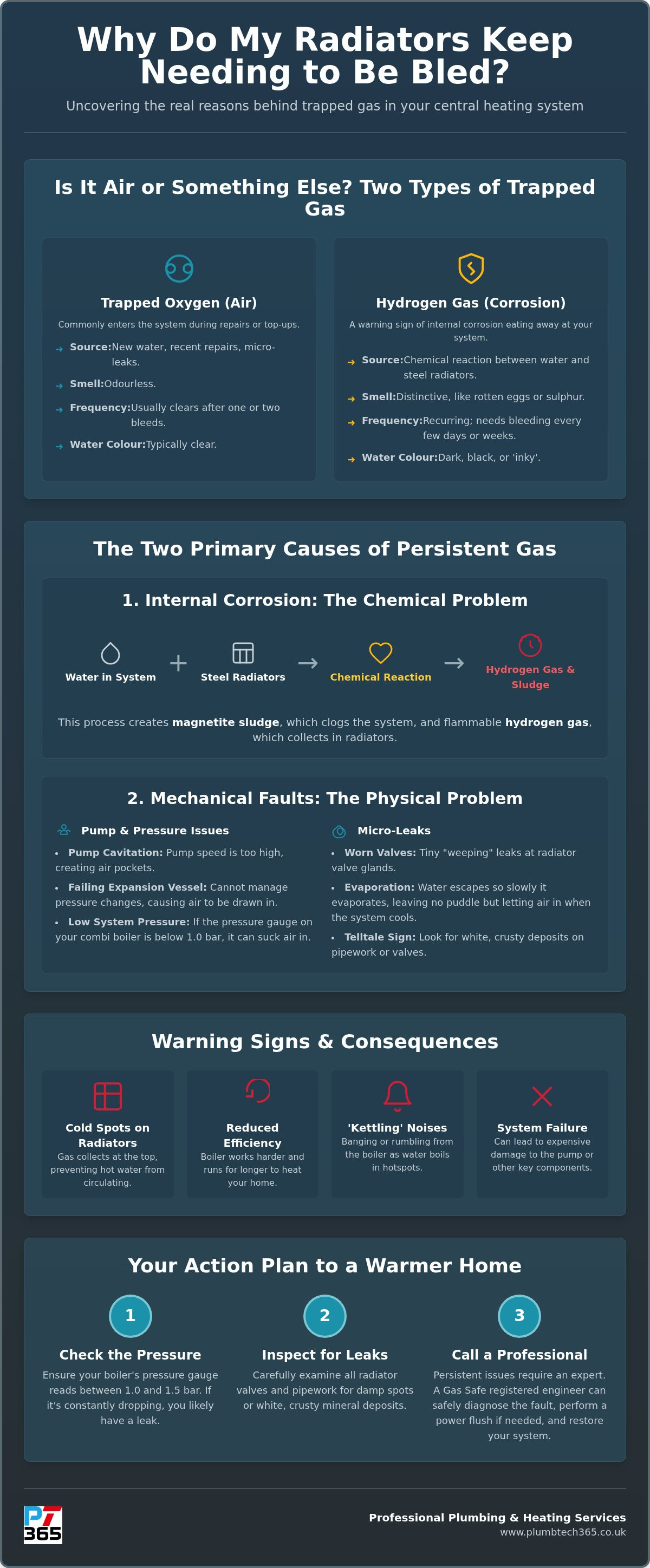
Most homeowners assume that any gas escaping a radiator is simply air. While bleeding a radiator usually releases trapped oxygen that entered during a recent installation or repair, recurring issues tell a different story. If you're constantly wondering why do my radiators need bleeding every few weeks, you're likely dealing with a chemical byproduct rather than atmospheric air.
Hydronic heating systems rely on a specific balance of water chemistry to function correctly. When this balance fails, your system stops being a closed loop and starts becoming a gas generator. To better understand this concept, watch this helpful video:
Is it Oxygen or Hydrogen?
Oxygen typically enters through micro-leaks or when you top up the system with fresh water. It's odourless and usually clears after one or two bleeds. Hydrogen gas, however, is a warning sign that your system is "eating itself" from the inside. This happens when water reacts with untreated steel radiators, creating a chemical reaction that releases hydrogen gas. You can identify it by its distinct smell, which often resembles rotten eggs. Some tradespeople use a "lighter test" to see if the gas ignites, but we strongly advise against this. It's dangerous and unnecessary when the smell and frequency of the issue already provide the answer.
Common signs of hydrogen build-up include:
Gas that smells like sulphur or rotten eggs.
Radiators requiring bleeding every few days or weeks.
Bleeding water that appears dark or "inky" in colour.
The Impact of Trapped Gas on Heating Efficiency
Trapped gas creates cold spots at the top of your radiators. This forces your boiler to work significantly harder to reach the temperature set on your thermostat. If you're experiencing this why do my radiators need bleeding every few weeks cycle, you're likely paying for heat you aren't receiving. Over time, these gas pockets can travel to the boiler, causing "kettling" noises or even total pump failure.
Addressing the root cause through a professional power flushing service can remove the sludge and stop the gas production entirely. This proactive maintenance ensures compliance with BS 7593:2019+A1:2024 and protects your boiler's internal components from premature wear. Don't ignore the problem; recurring gas is a symptom of a system in distress.
Identifying the Three Most Common Causes of Constant Air
If your radiators aren't producing foul-smelling hydrogen gas, they are likely sucking in atmospheric air due to mechanical failure. This physical ingress is a primary reason why do my radiators need bleeding every few weeks. It often stems from pressure imbalances that effectively turn your heating system into a vacuum. Understanding these mechanical faults is the first step toward a permanent fix.
Pump Cavitation and Pressure Faults
Your central heating pump is the heart of the system. If the pump speed is set too high relative to the system's static pressure, it creates a phenomenon known as cavitation. This process generates tiny vapour bubbles that eventually form larger air pockets. In sealed systems, a failing expansion vessel is a frequent culprit. If the vessel can't accommodate the expansion of heated water, the pressure relief valve may trigger. This causes a sudden drop in pressure as the system cools, which pulls air in through the weakest joints. On a combi boiler, check the pressure gauge; it should ideally sit between 1.0 and 1.5 bar. If you find yourself constantly topping it up, you might need emergency boiler support to diagnose a hidden vessel failure.
Micro-Leaks and Worn Radiator Valves
Not every leak leaves a puddle on your carpet. Micro-leaks often occur at the radiator valve "gland" or the internal spindle. These are "weeping" leaks where water escapes so slowly that it evaporates on the hot pipework before you ever see it. However, when the heating turns off and the water cools, the liquid contracts. This creates a small vacuum that pulls air back into the radiator through those same worn seals. This repetitive cycle is a major factor in why do my radiators need bleeding every few weeks. Inspect your valves for white, crusty deposits. This is dried limescale and a clear indicator that a seal has perished and is allowing air to enter whilst the system is cold.
Faulty AAVs and Header Tank Issues
Older open-vented systems with a header tank in the loft are particularly prone to "drawing air." If the tank is positioned too low relative to the pump, or if the cold feed and vent pipes are incorrectly spaced, the pump can pull air down the vent pipe. Additionally, modern boilers contain Automatic Air Vents (AAVs). These components are designed to release air automatically, but they often become blocked with system debris. A stuck AAV can either leak water or fail to prevent air from being sucked back in during pressure fluctuations. If you suspect your system is suffering from these technical imbalances, consulting local plumbers can help rebalance the flow and silence your noisy pipes for good.
How Internal Corrosion Creates Recurring Gas Pockets
Bleeding your radiators is a quick fix, but it doesn't stop the underlying chemical reaction causing the problem. If you're wondering why do my radiators need bleeding every few weeks, the answer often lies in a process called electrolytic corrosion. When water meets the internal steel surfaces of your radiators without chemical protection, it creates magnetite. This black, inky sludge is a form of internal rust that settles at the bottom of your system. A major byproduct of this reaction is hydrogen gas. Unlike atmospheric air, this gas is generated continuously by the corrosion process itself.
In areas like London and Kent, the high mineral content in our hard water can accelerate these issues. Mineral deposits can trap moisture against the metal, speeding up the rate of internal damage. Without intervention, this corrosion will eventually lead to "pinholing," where tiny holes appear in the radiator, causing a slow and destructive leak. This is a household crisis that develops silently until it's too late.
The Role of Central Heating Inhibitor
A high-quality chemical inhibitor is your system's first line of defence. It works by coating the internal metal surfaces with a microscopic protective layer, effectively separating the water from the steel. This stops the reaction that produces hydrogen gas. However, inhibitor levels deplete over time. If you have recently had a repair or drained your system to fix a leak, the fresh water added will have diluted any remaining chemicals. Signs that your inhibitor is failing include cold spots at the bottom of radiators and the return of that foul smell when bleeding. According to British Standard BS 7593:2019+A1:2024, these levels should be checked and topped up annually during your boiler service to ensure continued protection.
Professional Power Flushing as a Permanent Fix
If your system is already heavily contaminated with magnetite, simply adding inhibitor isn't enough. The sludge acts as a barrier, preventing the chemicals from reaching the metal surface. This is where professional power flushing becomes essential. This process uses high-velocity water and specialised chemicals to scour the internal pipes and radiators, removing years of accumulated debris. It restores the full flow of heat to radiators that were previously cold at the bottom and, most importantly, removes the source of the gas production. Whilst bleeding provides temporary relief, a power flush addresses the root cause. It ensures your home stays warm and your boiler remains protected from sludge-related breakdowns, giving you total peace of mind.
Practical Steps to Stop Air Entering Your Central Heating
Stop the cycle of maintenance by taking control of your system's health. If you are tired of asking why do my radiators need bleeding every few weeks, you must move beyond the radiator key and look at the boiler and pipework. A few simple checks can identify whether you have a minor pressure issue or a component that requires urgent replacement.
Monitoring System Pressure and Leaks
Check your boiler's pressure gauge whilst the system is cold. It should ideally sit between 1.0 and 1.5 bar. If it's lower, use the filling loop to top it up safely, but be careful not to over-pressurise. If the pressure drops again shortly after, you have a leak. Search for hidden damp patches behind furniture or under floorboards. A smart thermostat installation can help you monitor heating patterns and alert you to irregularities that suggest a loss of pressure or efficiency.
Inspect every radiator valve and joint for signs of white crusty deposits. This is dried limescale, which proves that water is escaping and air is entering when the system cools. Even a tiny "weep" can cause significant air ingress over time. Ensure your central heating pump is set to the correct speed. A setting that is too high for your property size will continue to cause cavitation bubbles regardless of how often you bleed the system.
Upgrading Your Radiator Components
Consider upgrading old manual valves to thermostatic radiator valves (TRVs). These provide better temperature control and often come with improved seals that prevent micro-leaks. Installing a magnetic system filter is also a vital step. It catches magnetite sludge before it can react and create gas. If your radiators are over 15 years old, replacing them with modern, high-efficiency versions can prevent the internal corrosion that drives the why do my radiators need bleeding every few weeks cycle.
If these DIY checks don't solve the problem, you need professional expertise. Our local boiler engineers can perform a full system health check to identify failing components and restore your home's warmth immediately.
When to Call a Gas Safe Registered Engineer in Kent or London
Persistent air in your heating system is rarely a standalone issue. If you've been asking why do my radiators need bleeding every few weeks, you've likely reached the limit of what a radiator key can achieve. Some symptoms indicate that your boiler's internal components are failing, which can lead to a total heating breakdown or even a safety hazard. Ignoring these signs doesn't just leave you with cold rooms; it risks expensive damage to your entire central heating installation.
You should contact a professional immediately if you notice any of the following:
Kettling noises: If your boiler sounds like a whistling kettle or makes loud banging noises, this suggests a build-up of limescale or sludge on the heat exchanger. This causes localised boiling and generates the gas pockets you're finding in your radiators.
Foul-smelling gas: Hydrogen gas is a sign of aggressive internal corrosion. If this returns weekly despite your efforts, your system's integrity is at risk.
Frequent pressure loss: Topping up your boiler pressure more than once a month is not normal. It indicates a significant leak or a failed expansion vessel that needs urgent attention.
Internal boiler leaks: Any sign of water dripping from the boiler casing requires an immediate inspection to prevent electrical failure or corrosion of the gas valve.
The Importance of a Professional Boiler Service
An annual boiler servicing is the most effective way to identify where air is entering your system. Our engineers don't just check the burner; we inspect the expansion vessel's charge and look for signs of microscopic failures in the heat exchanger. These components often cause the pressure fluctuations that pull air into your pipework. Ensuring your system meets current safety and efficiency standards protects your manufacturer's warranty and prevents the why do my radiators need bleeding every few weeks cycle from starting in the first place.
Expert Heating Solutions Across London and Kent
Plumbfix 365 provides the steady hand you need during a household crisis. We offer a rapid response for urgent heating failures across Dartford, Bromley, and the wider Kent area. Our Gas Safe engineers are trained to provide long-term, technical fixes rather than the temporary sticking plaster of repetitive bleeding. We focus on results and financial clarity, ensuring you understand exactly what's needed to restore your home's comfort. Contact us today for a comprehensive system health check and stop the cycle of cold rooms for good: learn more.
Restore Your Home's Warmth Permanently
Recurring air pockets are a symptom of a failing system, not a standard part of household maintenance. Whether you're dealing with hydrogen gas from internal corrosion or mechanical pressure drops, the cycle won't stop without professional intervention. If you've been constantly searching for why do my radiators need bleeding every few weeks, it is time to move past temporary fixes. Untreated sludge and worn valves don't just compromise your comfort; they inflate your energy bills and risk permanent boiler damage.
Plumbfix 365 has served the Kent and London community for over 25 years. As expert power flushing specialists and Gas Safe Registered engineers, we provide the technical clarity and rapid response needed to secure your heating system. Don't wait for a total breakdown or a costly radiator leak to occur. Book a Professional Heating Inspection with Plumbfix 365 today to restore your system's efficiency. We are ready to provide the steady hand and expert care your home deserves, ensuring you stay warm throughout the coldest months.
Frequently Asked Questions
Is it normal to need to bleed radiators every few weeks?
No, bleeding your radiators this frequently is a sign of a system fault. In a healthy, sealed central heating system, you should only need to perform this task once a year, typically before the winter season begins. If you find yourself asking why do my radiators need bleeding every few weeks, your system is likely suffering from internal corrosion or a mechanical pressure imbalance that requires a professional diagnosis to prevent further damage.
Why does my radiator keep filling with air but there is no leak?
Even if you don't see a puddle, your system could have micro-leaks at the valve glands or joints. Water often evaporates instantly on hot pipes, leaving only a white crusty deposit behind. As the system cools, the contracting water creates a vacuum that pulls air in through these tiny gaps. Alternatively, it might not be air at all; internal corrosion creates hydrogen gas, which accumulates at the top of radiators just like trapped air.
Can a faulty boiler pump cause air to get into radiators?
Yes, a central heating pump can introduce air if it is failing or set to an incorrect speed. If the pump speed is too high for the system's static pressure, it creates a phenomenon called cavitation. This process generates tiny vapour bubbles that eventually gather into larger air pockets within your radiators. Our engineers in Dartford and Bromley often find that simply rebalancing the pump flow can resolve recurring air issues without the need for new parts.
Is the gas released when bleeding radiators dangerous?
The gas is usually either atmospheric air or hydrogen. While air is harmless, hydrogen is flammable and is a byproduct of internal rust reacting with water. It often has a distinct, unpleasant smell similar to rotten eggs. You should never use a lighter near the bleed valve to "test" the gas. While the volume is small, its presence indicates your system is corroding internally and needs a professional health check to ensure long-term safety.
How often should I have to bleed my radiators in a healthy system?
In a perfectly functioning system, you should only need to bleed your radiators once every twelve months. This is usually done as part of your annual boiler service to ensure maximum efficiency before the cold weather sets in. If you are constantly wondering why do my radiators need bleeding every few weeks, it's a clear indicator that the system's integrity has been compromised, either through a pressure leak or a chemical imbalance in the water.
Will a power flush stop me from needing to bleed my radiators?
A professional power flush is the most effective way to stop gas build-up caused by internal corrosion. By removing the magnetite sludge and black iron oxide from your pipework, we eliminate the chemical reaction that produces hydrogen gas. After the flush, we add high-quality inhibitors to protect the internal metal surfaces. This treatment restores heat to cold spots and prevents the recurring need to bleed radiators, significantly extending the life of your boiler and pump.
What happens if I never bleed my radiators?
Ignoring trapped air or gas leads to uneven heating and significantly higher energy bills. Cold spots at the top of radiators force your boiler to run longer to reach the desired temperature on your thermostat. Over time, these air pockets can travel to the pump or heat exchanger, causing "kettling" noises and mechanical wear. Eventually, this lack of maintenance can lead to a total system failure, leaving your home in Kent or London without heating.
Why is my radiator cold at the top even after bleeding?
If a radiator remains cold at the top after bleeding, you may have a persistent air lock or a serious blockage. In some cases, the bleed valve itself might be blocked by paint or debris, preventing the gas from escaping. If the bottom of the radiator is also cold or patchy, it is a classic sign of sludge build-up. This heavy magnetite prevents hot water from circulating correctly, requiring a professional inspection to clear the obstruction and restore flow.


Comments