


7 Common Signs Your Central Heating System Has a Blockage

Did you know that 40% of boiler breakdowns happen the moment homeowners switch their heating on after the summer? It's a stressful discovery to make just as the temperature drops. You expect warmth, but instead, you're met with cold radiators and a noisy system that suggests you might be seeing the signs your central heating system has a blockage. These issues often lead to high energy bills and a home that never quite reaches a comfortable temperature.
We understand how worrying it is to face a potential boiler failure during the coldest months. In this guide, you'll learn how to identify the warning signs of heating sludge and debris before they cause permanent damage. We'll walk you through seven clear indicators that your system needs professional attention, from cold radiator spots to unusual kettling noises. By knowing what to look for, you can take immediate action and consult a Gas Safe engineer to restore your home's efficiency and warmth.
Table of Contents
Understanding Central Heating Blockages and Why They Occur
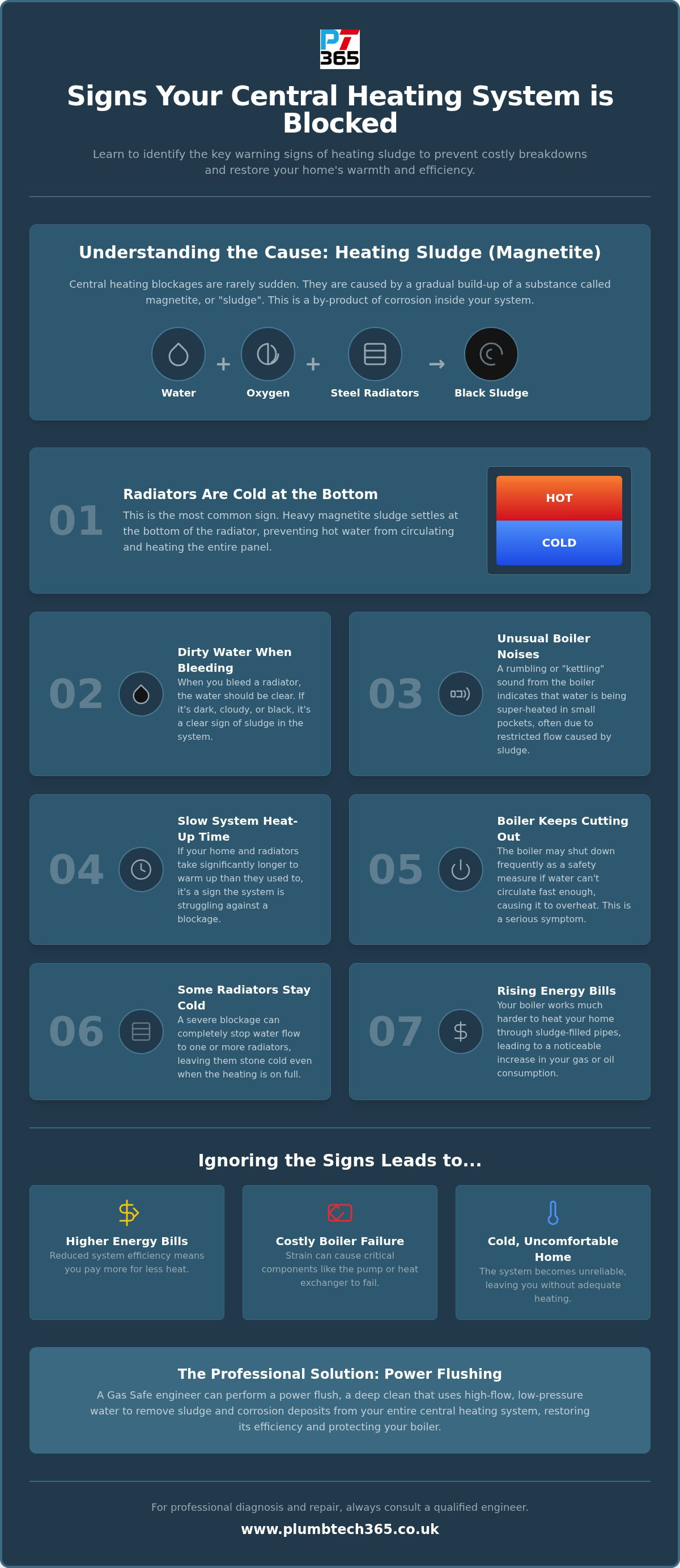
A Central heating system relies on the smooth, unrestricted flow of water to carry heat from the boiler to your radiators. When this flow is compromised, the entire system begins to fail. A central heating blockage is rarely caused by a single foreign object; instead, it's typically a gradual build-up of internal debris known as "sludge." This material restricts the diameter of pipes and settles inside components, forcing your boiler to work significantly harder to maintain temperature.
Older systems are particularly vulnerable. Over years of operation, internal corrosion occurs if the system hasn't been treated with chemical inhibitors or received regular professional attention. Without this protection, the metal components inside your radiators and pipework begin to break down. This results in a thick, restrictive substance that eventually leads to the specific signs your central heating system has a blockage.
What is Heating Sludge (Magnetite)?
The technical name for heating sludge is magnetite. It forms through a chemical reaction between the water in your system, the oxygen that inevitably enters through tiny leaks or during installation, and the steel components of your radiators. This oxidation process creates black iron oxide. In its early stages, it might just discolour the water. As it progresses, it turns into a thick, black, mud-like substance.
Because magnetite is heavier than water, it naturally settles in low-flow areas. The bottom of your radiators and the internal chambers of your pump are the most common collection points. Once it settles, it acts as an insulator, preventing the hot water from warming the metal of the radiator. This is why your rooms stay cold despite the boiler running at full capacity.
The Impact on Your Energy Efficiency
Blockages are silent efficiency killers. When sludge coats the inside of your pipework, it creates a barrier that reduces heat transfer. Your boiler has to burn more fuel to achieve the same room temperature, which directly increases your monthly energy bills. The restricted flow also puts immense strain on the boiler's heat exchanger. If the water cannot move quickly enough to carry heat away, the heat exchanger can overheat and crack, leading to a total system failure.
Proactive care is the only way to avoid these high-stakes repairs. Following a routine for Central Heating Maintenance That Prevents Breakdowns ensures that magnetite is captured or neutralised before it can solidify into a system-stopping blockage. If you notice your energy usage climbing whilst your home feels colder, it's often one of the first signs your central heating system has a blockage that requires professional intervention.
Radiator Symptoms: Cold Spots and Discoloured Water
Radiators provide the most immediate evidence of a failing system. Whilst we often blame the boiler for a cold house, the radiators themselves frequently reveal the first signs your central heating system has a blockage. If your rooms take ages to warm up or feel perpetually chilly, it is time to check the heat distribution across the radiator surface. A healthy radiator should be uniformly hot from top to bottom and side to side.
Many homeowners assume a cold radiator just needs bleeding. This is only true if the top is cold. If the bottom of the radiator is cold whilst the top is hot, you aren't dealing with trapped air. You are dealing with settled magnetite sludge. This heavy debris creates a dense barrier that prevents hot water from circulating through the lower sections of the radiator. To accurately diagnose the cause of circulation issues, you must feel the entire surface of the panel carefully. You might also notice that even if the radiators eventually get warm, the room takes significantly longer to reach the desired temperature than it did last winter. This sluggishness is a direct result of the boiler fighting against internal resistance.
The "Black Sludge" Bleed Test
Checking your system health is straightforward. When you use a bleed key to release air, pay close attention to the small amount of water that follows. Clear or slightly straw-coloured water indicates a healthy, well-inhibited system. However, if the water is dark, cloudy, or resembles black ink, you have a significant magnetite problem. Thick, dark water is one of the most definitive signs your central heating system has a blockage that requires a professional power flush. Ignoring this "black sludge" will eventually lead to a total pump failure or a cracked heat exchanger. Always have a cloth ready to catch the water, as this sludge can permanently stain carpets and flooring.
Radiators That Refuse to Get Hot
Sometimes, a radiator stays stone cold regardless of the boiler settings. This often happens in rooms furthest from the boiler or on the upper floors. You can find more specific advice on How to Fix Cold Radiators Upstairs Safely if you suspect a local air lock. However, if bleeding doesn't work, the blockage may be inside the Thermostatic Radiator Valve (TRV) or the pipework itself. Sludge can solidify around the valve pin, preventing it from opening even when the dial is set to maximum. If several radiators are affected, it suggests the main flow and return pipes are restricted. If you're struggling with cold rooms, our local plumbers can perform a full diagnostic check to identify the exact location of the restriction and restore your home comfort.
Boiler and Pipework Warning Signs
Your boiler is designed to shut down if it detects a dangerous rise in temperature or a lack of water movement. When debris builds up, it creates internal resistance that triggers these safety protocols. One of the most obvious signs your central heating system has a blockage is when the boiler cycles on and off rapidly. This is called short-cycling. The boiler fires up, quickly reaches its maximum temperature because the water isn't moving away fast enough, and then cuts out to protect itself. This cycle repeats, wasting gas and putting unnecessary wear on your components.
You should also pay attention to the pipework leading away from the boiler unit. In a healthy system, the flow pipe should stay hot as it travels through the house. If the pipes are scalding near the unit but significantly cooler just a few metres away, a physical restriction is likely present. These thermal discrepancies are clear signs your central heating system has a blockage that prevents heat from reaching your living spaces. If you ignore these early warnings, the increased pressure can lead to leaks at the weakest points of your pipework.
Understanding Boiler Kettling
If your boiler sounds like a whistling kettle or makes loud banging noises, you're hearing a phenomenon called "kettling." This happens when sludge or limescale settles on the heat exchanger. These deposits create hot spots where the water trapped underneath actually boils and turns to steam. The sound you hear is the steam bubbles collapsing. Kettling is a serious warning. If left unaddressed, the constant expansion and contraction can cause the heat exchanger to crack; this often results in an expensive replacement rather than a simple repair.
Frequent Error Codes and Lockouts
Modern boilers are intelligent enough to provide diagnostic data via error codes. Codes relating to low flow, overheating, or differential temperature are frequent indicators of a system-wide restriction. Whilst it's tempting to simply hit the reset button, this only clears the symptom, not the cause. A physical blockage requires a physical solution. If your system keeps locking out, you need professional assistance to prevent a total breakdown. For rapid support, our Emergency Boiler Repair London Kent service can diagnose whether a blockage is causing your boiler to fail.
Diagnosing a Blocked Heating Pump or Valve
The central heating pump is the heart of your heating circuit. It is responsible for circulating hot water through metres of narrow pipework to reach every room. Because modern pumps are often high-efficiency units, they are incredibly sensitive to internal debris. One of the most common signs your central heating system has a blockage is a pump that vibrates heavily or feels excessively hot to the touch. Magnetite is naturally magnetic, meaning it is drawn directly into the pump's motor, where it creates friction and causes the unit to overheat.
Beyond the pump, your system uses zone valves to direct water to different floors or to your hot water cylinder. These valves are frequent casualties of system sludge. When debris settles around the valve seat, the mechanism can jam in one position. You might find your downstairs radiators are scalding whilst the upstairs remain stone cold, or vice versa. These localized failures are clear signs your central heating system has a blockage that is preventing the "brain" of your system from distributing heat correctly.
Pump Overheating and Failure
A healthy pump should run quietly and stay at a moderate temperature. When sludge accumulates, the pump must work significantly harder to move water against the increased resistance. This creates intense heat within the pump housing. If you notice a faint burning smell or if the pump is too hot to hold your hand against, the motor is likely failing. Magnetite particles act like sandpaper on the internal bearings, leading to a total seizure. Once the pump seizes, your boiler will usually lock out to prevent overheating, leaving your entire home without heat until the component is replaced and the system is cleared.
Slow Heat-up Times and Inconsistent Performance
In the early stages of a blockage, you might not experience a total breakdown. Instead, you will notice that the system takes hours to warm up even when set to maximum. Radiators may feel lukewarm rather than hot, and the temperature in your home might fluctuate throughout the day. This inconsistent performance is a direct result of the pump struggling to maintain the correct flow rate. This strain doesn't just affect your comfort; it also leads to higher electricity bills as the pump runs for much longer periods to compensate for the restricted flow. If your heating feels sluggish or underperforms, our local plumbers can perform a full diagnostic check to identify if a failing pump or blocked valve is the culprit.
Professional Solutions to Clear System Blockages
Identifying the signs your central heating system has a blockage is the first step toward restoring your home comfort. Once sludge has settled, standard maintenance or bleeding radiators won't be enough to clear the restriction. You need a professional intervention to physically remove the debris and protect your boiler from permanent damage. For homeowners in London and Kent, a professional power flush is the industry-standard solution for deep-seated magnetite build-up.
Always use a Gas Safe Registered engineer for these procedures. A qualified professional has the expertise to handle chemical cleaners safely and ensure the boiler remains compliant with manufacturer warranties. Ignoring the signs your central heating system has a blockage often leads to an expensive emergency call-out; proactive cleansing is a far more cost-effective approach.
The Power Flushing Process
Power flushing is a highly effective cleansing method that uses a specialised machine to circulate water at high speed but low pressure. This removes debris without risking damage to your pipework. The process is systematic and thorough:
System Connection: We connect a high-flow machine to the system, typically at the central heating pump or a radiator.
Chemical Mobilisation: Specialised chemical cleaners circulate through the pipes to loosen baked-on sludge and corrosion.
Targeted Flushing: We isolate and flush each radiator individually until the discharge water runs completely clear.
This restores the flow and ensures heat reaches every corner of your home. You can learn more about our Professional Power Flushing Service London and Kent to see how it can benefit your specific system.
Preventing Future Blockages
Clearing the system is essential, but prevention is what keeps your bills low in the long term. Installing a magnetic system filter is the most effective way to catch magnetite before it enters the boiler. These filters use powerful magnets to trap metallic particles, which are then easily removed during your annual boiler service. It is a simple addition that provides a permanent layer of protection for your heat exchanger.
Chemical inhibitors are also vital. These additives are introduced to the system to stop the internal corrosion that creates sludge. During every annual service, we check the concentration of these inhibitors to ensure your system remains healthy. Combining these preventative measures with regular maintenance is the only way to guarantee a reliable, efficient heating system year after year. This proactive care prevents the stress of unexpected failures and keeps your home warm throughout the winter.
Protect Your Home From Heating Failure Today
Central heating blockages are silent efficiency killers that lead to expensive repairs if ignored. Magnetite sludge doesn't just leave your radiators with cold spots; it places immense strain on your boiler's heat exchanger and pump. By recognising the early signs your central heating system has a blockage, you can take decisive action to restore your home's warmth and lower your energy bills. Proactive maintenance is always more reliable than waiting for a total system failure during a cold snap.
Our team of Gas Safe Registered engineers has been serving London and Kent for over 25 years. We are a trusted plumbing & heating company providing reliable, high-quality services across London and Kent. Whether you require a routine system cleanse or 24/7 emergency support, we are here to ensure your heating operates at peak performance. Clear water and hot radiators are just one professional service away.
Don't let sludge compromise your comfort. Book a Professional Power Flush with PlumbTech 365 Today and enjoy the peace of mind that comes with a healthy, efficient heating system. We look forward to helping you restore your home's comfort and reliability.
Frequently Asked Questions
Can I clear a central heating blockage myself?
You cannot safely clear a deep-seated blockage yourself. Removing magnetite sludge requires high-flow power flushing machines and industrial-grade chemicals that are not available to the general public. Attempting a DIY fix often leads to further damage or system leaks. It is essential to hire a Gas Safe Registered engineer in Dartford or London to ensure the procedure is performed correctly without compromising your boiler warranty or household safety.
How much does it cost to have a system power flushed in London?
We do not provide fixed price ranges as the investment depends on several variables. Factors including the number of radiators in your home, the age of your pipework, and the severity of the magnetite build-up all influence the scope of work. For homes across Kent and London, a professional assessment is the only way to determine the specific requirements for your system. We prioritise financial clarity and honest billing for every customer.
Will a blocked central heating system cause the boiler to leak?
Yes, a blockage can lead to leaks by increasing internal pressure and thermal stress. When water flow is restricted, the boiler heat exchanger can overheat, causing the metal to expand and contract excessively. This eventually leads to cracks or weakened seals. If you notice damp patches or a drop in pressure alongside other signs your central heating system has a blockage, you should seek a professional diagnostic check immediately.
How often should a central heating system be flushed?
Most experts recommend a professional flush every five to ten years depending on the water quality in your area. However, you should consider a flush immediately if you identify signs your central heating system has a blockage, such as cold radiator bottoms or discoloured water. Regular boiler servicing in Bexleyheath or Bromley includes a water quality check, which helps determine if a preventative flush is necessary to protect your system's lifespan.
Is black water in radiators dangerous for my health?
Black water is not directly dangerous to your health, but it is highly damaging to your property. This liquid is a mixture of water and iron oxide particles which will permanently stain carpets, flooring, and furniture if a leak occurs. More importantly, it indicates that your radiators are corroding from the inside out. If you see this during bleeding, it is a clear warning that your system's internal health is rapidly deteriorating.
Can a blockage in the heating system cause high gas bills?
A blocked system will significantly increase your gas bills. When sludge restricts the flow, your boiler must run for much longer periods and at higher temperatures to reach the setting on your thermostat. This inefficiency means you are paying for heat that never reaches your rooms. Restoring the flow through a professional cleanse often leads to a noticeable reduction in monthly energy consumption for homeowners in Maidstone and Medway.
What is the difference between a power flush and a chemical flush?
A power flush uses a specialised high-flow machine to physically force debris out of the system. In contrast, a chemical flush relies on the system's own pump or gravity to circulate cleaners, which is often less effective for heavy blockages. For systems with significant magnetite build-up, our engineers in London and Kent recommend power flushing as it provides a much deeper and more comprehensive clean of the entire pipework and radiator network.
Can I still use my heating if I think there is a blockage?
You should avoid using your heating if you suspect a major blockage. Running a compromised system puts immense strain on the pump and heat exchanger, which can lead to a total and expensive breakdown. If your boiler is already making "kettling" noises or locking out, it is trying to protect itself from damage. Turn the system off and contact a qualified engineer to assess the restriction before a minor issue becomes a household crisis.


Comments