


Boiler Making a Loud Banging Noise? Safe Fixes and Next Steps

A loud bang does not automatically mean your boiler is about to fail, but it should not be ignored. The right boiler making loud banging noise fix depends on when and where the sound starts. Notice whether it happens as the heating comes on, while hot water is running, or near a radiator. These clues can help distinguish a boiler noise from water hammer or radiator pipework, but they cannot confirm the cause.
It is understandable to worry about a dangerous fault or make things worse by trying a repair. You can make safe external observations, such as noting the pressure shown on the display and when the noise occurs. Do not open the casing or attempt to repair internal parts.
This guide covers possible causes, safe checks and when to stop using the boiler and seek qualified help. If the banging persists or suggests a fault, a Gas Safe registered engineer can assess it. Plumbtech 365 carries out boiler repairs and servicing with Gas Safe registered engineers.
Key Takeaways
Note whether the sound is a single knock, repeated banging or rumbling, and when it happens.
Use the timing and where the sound seems loudest to help distinguish a boiler noise from pipework or radiator noise.
Trapped air, restricted circulation, limescale and moving pipes are possible causes, not diagnoses you can confirm by sound alone.
For a boiler making loud banging noise fix, stick to safe observations: check the display, look for visible leaks and record any changes.
If the noise persists, worsens or keeps returning, leave internal checks to a Gas Safe registered engineer.
Table of Contents
Boiler making a loud banging noise? Start by noting when it happens
A bang from your boiler can be alarming, but it has several possible causes. The sound alone can’t confirm a fault or show whether it comes from the boiler, a radiator or connected pipework. Before looking for a boiler making loud banging noise fix, focus on what you can safely observe and record.
Listen for the pattern. A single sharp knock differs from repeated tapping or a deeper rumble. Notice where the sound seems loudest, but don’t touch hot surfaces or put yourself in an awkward position to investigate. A boiler is part of a wider heating system, and noise can travel through its components and pipework. The general Boiler overview provides useful context for how these systems work.
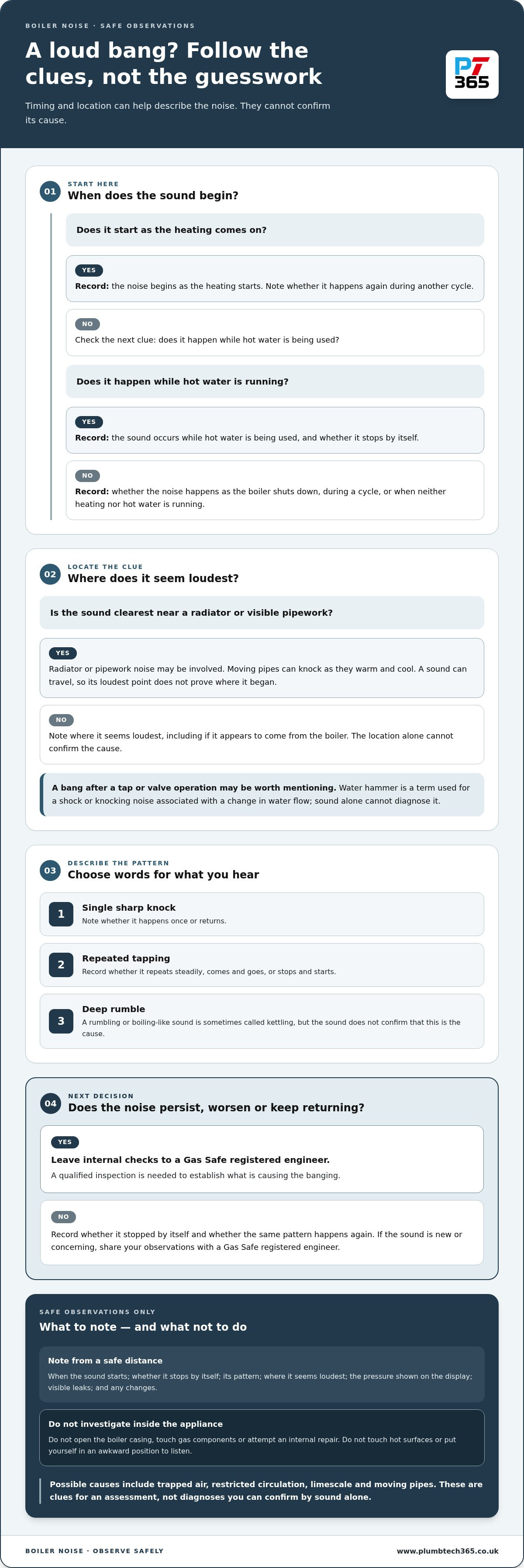
Timing and location help an engineer assess boiler noise by showing when it starts and which part of the heating system seems loudest. They don’t confirm the cause.
What does a banging boiler sound like?
Describe the noise in plain terms. Is it one sudden knock, a series of taps or a low, sustained rumble? Does it repeat at a steady pace, come and go, or happen just once? These details help describe the symptom, but they don’t identify a definite cause. Sounds can travel through the system, so the place where you hear them most clearly may not be where they begin.
When does the boiler make the noise?
Notice what the system is doing when the sound starts. Does it happen as the heating comes on, while hot water is being used, or as the boiler shuts down? Record whether it lasts throughout a cycle, stops and starts, or occurs only once. Observe from a safe distance and don’t remove the boiler cover, even if the noise seems to come from inside it.
A brief record can make your description more useful. Note:
What was running: central heating, hot water or neither.
When the sound began and whether it stopped by itself.
How it sounded: a single knock, repeated tapping or a deeper rumble.
Where it seemed loudest: near the boiler, a radiator or visible pipework.
Whether the same pattern happened again during another cycle.
Keep to observations. Don’t open the casing, touch gas components or attempt an internal repair to locate the noise. If the sound is new or concerning, share your notes with a Gas Safe registered engineer. The pattern can guide an assessment, but only a qualified inspection can establish what is causing the banging.
Common causes of a boiler making a loud banging noise
A banging sound can have several possible explanations, none of which can be confirmed by sound alone. Trapped air, restricted water circulation, limescale and moving pipework may all contribute to unusual noises. Sound can also travel through connected pipes, making it seem as though it comes from the boiler when it starts elsewhere in the heating system.
A noise is a symptom to investigate, not proof of a particular boiler fault. Treat possible causes as clues, not a diagnosis. The right boiler making loud banging noise fix depends on what an inspection finds, so don’t dismantle or adjust internal parts based on a sound description.
Could trapped air or restricted circulation be responsible?
Air in the heating circuit may contribute to bubbling, gurgling or tapping around radiators and pipework. If a radiator is also cold in part, report that observation, but don’t assume trapped air is causing the bang.
Restricted circulation is another possibility. If water isn’t moving freely through the system, the boiler or pipework may make unusual noises as the heating runs. Listening alone can’t establish why the flow is restricted, so persistent noise needs proper assessment rather than guesswork.
Bleeding a radiator is separate from repairing a boiler. Only do it if you know how and can follow the radiator or system instructions safely. Don’t attempt it if the radiator is hot, you’re unsure how to proceed, or you suspect a leak. Never remove the boiler casing or try to clear a restriction inside the appliance yourself.
Could limescale or moving pipes cause the bang?
Kettling is a term often used for a deep rumbling or boiling-like noise from a boiler. It can be associated with restricted water flow and limescale, which may affect how heat transfers to the water. A rumble doesn’t confirm kettling, so a qualified engineer must establish whether this or another issue is involved.
Pipework can also knock as it warms and cools. Heating causes materials to expand, and pipes may shift against nearby surfaces. As they cool, they contract again. This can create a knock or tap that seems to come from the boiler but is louder along a connected pipe. Note where it’s clearest and whether it happens as the heating starts or stops.
If the noise continues or returns, don’t descale, dismantle or adjust boiler components yourself. A Gas Safe registered engineer can assess the appliance and heating system. You can find gas safety information through the Gas Safe Register. For professional boiler repairs and servicing, arrange help with boiler repairs.
How to tell boiler banging from water hammer or radiator noise
A bang can travel through pipes, making it difficult to tell where it began. The timing and location may help distinguish pipework noise from boiler noise, but neither confirms a fault. Notice what happened just before the sound, then listen from a safe distance to see where it seems loudest.
Use this comparison as a guide, not a diagnosis:
Sound follows a tap or valve operation: A sharp knock in pipework may be water hammer, a term commonly used for a shock or knocking noise associated with a change in water flow. It doesn’t confirm a boiler fault.
Sound starts as heating comes on or switches off: A radiator or heating pipe may be making noise as the system warms or cools. Note whether one area seems louder than the boiler.
Sound seems to come from the boiler during a heating or hot-water cycle: The appliance may be involved, but noise can carry along connected pipework. Record the timing and report it for assessment rather than assuming the source.
Does the bang happen when a tap or valve operates?
Think back to what happened immediately before the knock. Did someone turn off a tap, use hot water or operate a heating control? A sudden pipework bang after a change in water flow may point towards water hammer, although listening alone can’t establish the cause. Don’t repeatedly open and close taps to test it. Note the sequence and where the sound seems loudest.
Is the sound coming from a radiator or heating pipe?
From a safe distance, listen near the boiler, then near radiators or visible pipe runs. Don’t touch hot surfaces, loosen fittings, adjust valves or try to reach concealed pipework. A knock heard most clearly by one radiator may be travelling through the system rather than originating there.
Radiator and pipe noises can accompany changes in heating, but they don’t prove that the boiler has a fault. Note whether the sound occurs as the heating starts, while it’s running or as it shuts down. Record whether one radiator seems louder or the noise carries across several rooms. These observations help an engineer understand the pattern without treating a likely source as a definite diagnosis.
If the sound seems to come from the boiler itself, keeps returning or is getting louder, don’t try to fix internal components. A boiler making loud banging noise fix starts with identifying the source safely. A qualified engineer can assess the appliance and connected heating system.
Safe checks to make when your boiler is banging
Keep your checks external and simple. You’re gathering information, not diagnosing or repairing the appliance. A clear record of what you see can help a Gas Safe registered engineer assess the problem safely.
What can you safely observe without opening the boiler?
Follow this short sequence from a safe position:
Note the sound. Record whether it’s a knock, repeated bang or rumble, and whether it happens as heating or hot water starts, runs or stops.
Check the display. Look for a warning light, message or pressure reading, if shown. Don’t remove the casing or press controls repeatedly to clear a warning.
Look for visible water. Check around the outside of the appliance and nearby floor for signs of a leak. Don’t touch wet areas, hot surfaces, wiring or electrical components.
Record what still works. Note whether heating and hot water are available, and whether the noise changes or returns during another cycle.
If the display shows a pressure warning or you can see a leak, record the details rather than trying to adjust the appliance. This boiler pressure troubleshooting guidance may help you understand what information to note, but don’t attempt a repair if you’re unsure.
When should you stop using the boiler?
Stop using the appliance and treat the situation as urgent if you smell gas, see signs of scorching or suspect carbon monoxide exposure. Don’t reset the boiler repeatedly or continue running it if it appears unsafe.
If you suspect a gas leak, avoid flames and don’t switch electrical equipment or lights on or off. Open doors and windows if you can do so safely, leave the property, then call the National Gas Emergency Service on 0800 111 999 from outside. Don’t re-enter until you’ve been advised it’s safe.
If a carbon monoxide alarm sounds or someone feels unwell and you suspect exposure, get everyone outside into fresh air and seek urgent medical help. Call 999 for severe symptoms. Don’t go back inside to investigate the boiler.
A pressure reading or warning message is useful evidence, but it doesn’t identify the cause of banging. Share what you observed with a qualified engineer and leave internal checks and repairs to them. If you need a professional assessment, arrange a boiler repair assessment with Plumbfix 365.
When a banging boiler needs a Gas Safe engineer
A bang that persists, grows louder or starts recurring after a quiet period should be assessed by a Gas Safe registered engineer. Don’t wait for the boiler to stop working before taking repeated noise seriously. The sound may come from the appliance or connected heating system, and listening alone can’t confirm the cause. The safest boiler making loud banging noise fix is a professional assessment, not an attempt to adjust internal parts yourself.
Stop using the boiler and seek urgent help if the noise occurs alongside signs that the appliance may be unsafe, such as scorching or a suspected gas or carbon monoxide issue. Follow the safety steps in the previous section. Don’t restart or keep operating an appliance that appears unsafe.
What may an engineer investigate?
The assessment will depend on the sound, the boiler’s behaviour and what an inspection reveals. An engineer may consider whether circulation, scale, pipework or an appliance component could be contributing. These are possible areas to investigate, not faults that can be diagnosed from a description alone. Leave internal inspection and repairs to a Gas Safe registered engineer.
A useful assessment connects the noise with the conditions in which it occurs. The engineer may observe the boiler’s operation and inspect relevant parts of the heating system. Don’t try to recreate the problem by repeatedly switching the boiler on and off. Your notes can explain the pattern without risking further use if the appliance seems unsafe.
What information should you share when arranging help?
Give a clear description rather than guessing at a cause. Explain whether the sound is a single knock, repeated banging or rumbling, and whether it happens during heating, hot-water use or shutdown. Say how long it lasts, how often it returns and whether it has become louder or more frequent.
Also mention any display message, change in heating or hot-water performance, pressure warning or visible leak. If you’re a landlord or manage a property, pass on the occupant’s observations and remind them not to open the boiler casing or attempt repairs. Keep notes or photographs of an external display or visible leak, but don’t touch the appliance or take pictures if doing so would be unsafe.
For repeated or worsening banging, arrange a professional assessment rather than trying to silence the noise yourself. Arrange professional boiler help from Plumbfix 365, with technical work carried out by Gas Safe registered engineers.
Take the next step towards a quieter, safer home
A careful record of the noise gives an engineer a useful starting point, but it can’t replace an on-site assessment. If the banging keeps returning, you don’t need to identify the fault yourself or risk making it worse. The safest boiler making loud banging noise fix is to leave internal checks and repairs to a qualified professional.
Plumbfix 365 provides boiler repairs and servicing, with technical work carried out by Gas Safe registered engineers. Share what you’ve noticed so an expert can assess the boiler and its connected heating system. Acting when a worrying sound persists helps you make an informed decision about what happens next.
Speak to Plumbfix 365 about a boiler assessment and take a clear next step towards resolving the noise.
Frequently Asked Questions
Is a boiler making a loud banging noise dangerous?
Noise alone can’t establish whether a boiler is dangerous or identify the fault. An occasional sound without other symptoms is different from banging alongside a gas smell, suspected carbon monoxide exposure, scorching or a leak. If you suspect immediate danger, stop using the appliance and seek urgent help. If a carbon monoxide alarm sounds or someone feels unwell, leave the property and get help rather than investigating the boiler.
Can I keep using my boiler if it is banging?
It depends on the noise and what else is happening. Stop using the boiler if you notice signs of immediate danger, and arrange a qualified assessment if the banging persists or worsens. Don’t repeatedly reset it or open the casing to investigate. Record whether the sound happens during heating, hot-water use or shutdown, and note any change in performance. That information can help an engineer assess the situation.
Can bleeding radiators fix a banging boiler?
Bleeding a radiator may help if trapped air is contributing to radiator noise, but it isn’t a universal fix for banging. A knock that seems to come from the boiler may have a different cause, so don’t assume radiator bleeding will resolve it. Only bleed a radiator if you can do so safely and follow its manufacturer’s instructions. If the boiler noise continues afterwards, avoid repeated DIY attempts and arrange an assessment.
Why does my boiler bang when the heating starts?
The timing may help narrow down possible causes, such as changing water flow, pipe movement or a circulation issue, but it doesn’t confirm a fault. Note whether the bang seems loudest at the appliance, a radiator or along pipework. Record whether rooms heat as usual or radiators behave differently. If the noise keeps happening at start-up, share those observations with a qualified engineer for assessment.
Can water hammer sound like a boiler banging?
Yes. A knock in pipework after a tap or valve is used can be mistaken for a bang from the boiler. Note whether the sound follows a change in water flow and where it seems loudest. Don’t adjust pipework or fittings to test the cause. If the noise is severe or keeps returning, arrange a professional assessment to establish whether the boiler or connected pipework needs attention.
Should I reset my boiler if it makes a loud bang?
Don’t use repeated resets to deal with an unexplained loud bang. A reset won’t identify or repair the cause, and it shouldn’t override a safety concern. You can check the display for a message without removing the casing, then note what it shows. Stop using the boiler if it appears unsafe. If the bang recurs, seek qualified advice rather than trying further resets.


Comments