
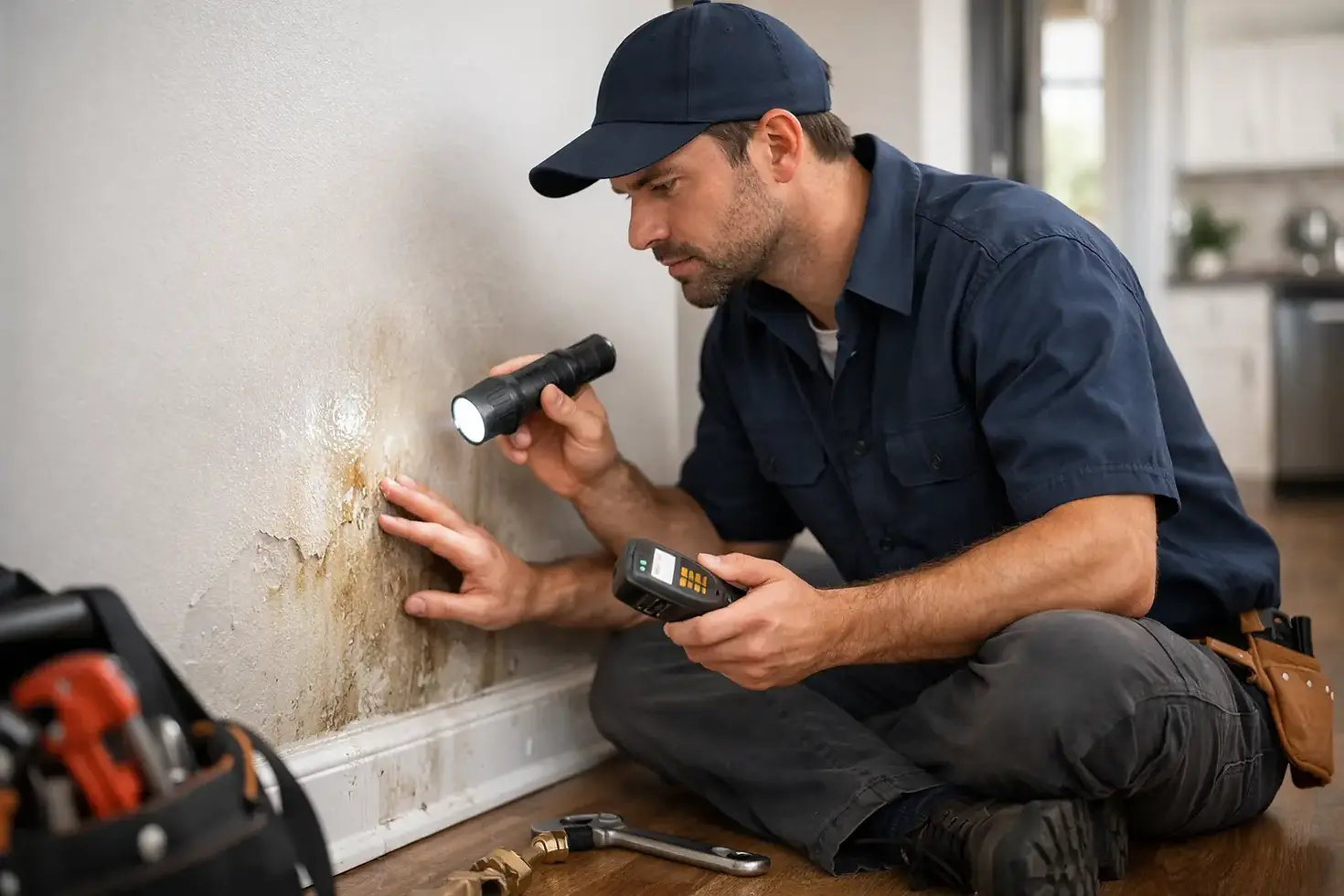
How to Find a Hidden Water Leak in Your Home
- Darrell Williamson

- 2 days ago
- 5 min read
A higher water bill, a cold patch beneath your feet or a faint smell of damp can be the first sign of a problem concealed behind a wall, under a floor or within your heating system. Knowing how to find a hidden water leak early can save considerable disruption, protect your property and prevent a small fault becoming costly water damage.
Not every unexplained damp mark is an active leak. Condensation, failed sealant around a bath or shower, and rainwater ingress can look similar. The key is to look for patterns, carry out a few safe checks and know when it is time to stop investigating and call a qualified plumbing engineer.
Start by checking whether water is still being used
Your water meter is often the quickest way to establish whether you may have a leak on your supply pipework. First, make sure nobody is using water in the property. Turn off taps, avoid flushing toilets, pause washing machines and dishwashers, and check that any appliance connected to the water supply is not mid-cycle.
Take a reading from the meter, then leave all water use off for at least 30 minutes, or preferably an hour. If the numbers or leak indicator continue to move, water is likely passing through the system somewhere. This does not tell you exactly where the problem is, but it gives you useful evidence that the issue needs further attention.
A meter test has limits. Some homes have a shared supply, an external tap that is easy to overlook, or a toilet cistern that refills intermittently. If you are unsure which meter serves your property, do not rely on the result alone.
Look for the quieter signs of a hidden leak
Water does not always appear as a dramatic ceiling stain. It can travel along pipes, joists and masonry before becoming visible, so the damp area is not necessarily directly below the leak. Walk through the property with a torch and pay particular attention to rooms with plumbing above, below or behind them.
Common signs include a persistent musty smell, peeling paint, bubbling plaster, warped skirting boards, loose flooring, mould returning in one area, or a patch of wall that feels cooler than the surrounding surface. On carpets and laminate, look for unexplained dampness, lifting edges or discolouration.
Outside, check around external taps, visible pipe entries and the area between the house and water meter. A constantly wet patch during dry weather, unusually green growth or ground that feels soft can indicate a leak on an underground supply pipe. Surface water may also have another cause, so avoid digging until the source has been properly assessed.
Test toilets, taps and appliances one at a time
A concealed leak is often something less dramatic than a burst pipe. A toilet cistern that quietly leaks into the pan can waste a surprising amount of water without leaving a puddle. Listen for a periodic refill when nobody has flushed, and look for a slight ripple or trickle in the pan.
You can place a little food colouring in the cistern and wait around 15 to 20 minutes without flushing. If colour appears in the pan, the internal valve is allowing water through. Do not use this test if there are chemical cleaning blocks in the cistern, as they can make the result difficult to read.
Then inspect under kitchen and bathroom sinks, around washing machines, dishwashers, fridge water connections and any visible pipe joints. Dry the area first, place kitchen roll beneath suspected connections and return later. A small drip will often show itself on the paper before it is visible on a cabinet base.
Pay attention to when the signs appear. Dampness that develops after showers points towards bathroom pipework, seals or a shower tray. A mark that worsens after running the hot tap may indicate a hot-water pipe. This simple observation can make diagnosis much faster.
Check your boiler and central heating system
If you have a sealed central-heating system, the boiler pressure gauge can provide a useful clue. Pressure that drops repeatedly, particularly when the heating has been running, may mean water is escaping from radiators, valves or hidden heating pipework. It can also be caused by a fault within the boiler, an expansion vessel issue or a pressure relief valve discharging outside.
Check radiator valves and pipe connections for moisture or corrosion, including those in less-used rooms. Look outside near the boiler’s discharge pipe for regular drips or staining. Never remove a boiler case or attempt work on gas appliances yourself. Boiler repairs and any gas-related work must be carried out by a Gas Safe registered engineer.
It is also worth distinguishing between a water-supply leak and a heating-system leak. If the water meter moves while every outlet is off, the problem may be on the incoming mains supply. If the meter stays still but boiler pressure falls, the fault may be within the sealed heating circuit instead. Both need attention, but the investigation is different.
How to find a hidden water leak safely
If you find active water or suspect a significant leak, act promptly. The priority is limiting damage, not locating every last drop yourself.
Turn off the internal stop tap if water is escaping from a pipe or fitting. It is commonly under the kitchen sink, in a utility area or close to where the mains enters the property.
Switch off electricity at the consumer unit only if water is near sockets, wiring, light fittings or electrical equipment, and only if it is safe to reach the unit without crossing wet areas.
Contain water with towels or a suitable container where possible, then move furniture, valuables and electrical items away from the affected area.
Avoid lifting floors, cutting into walls or disturbing boxed-in pipework without a clear reason. This can create unnecessary damage and may miss the actual source.
For landlords and managing agents, document the time the issue was reported, the affected rooms, meter readings where available and any immediate action taken. Clear records help protect tenants, support insurance discussions and allow repairs to be prioritised properly.
When professional leak detection is the sensible option
A professional investigation is appropriate when the meter indicates water use but there is no visible source, when a ceiling or floor is becoming wet, or when heating pressure continually drops. It is especially urgent if water is close to electrics, a ceiling is bulging, a leak is affecting a neighbouring property or a tenant cannot safely use essential facilities.
Experienced engineers can isolate sections of pipework and use non-invasive methods to narrow down the source before opening up finishes. Depending on the property and pipe layout, this may involve pressure testing, acoustic listening equipment, thermal imaging or moisture readings. No method is perfect in every building - concrete floors, insulation, pipe depth and background noise all affect what can be detected - but a targeted approach usually avoids the disruption of opening large areas on guesswork.
PlumbTech365 provides responsive plumbing and leak detection support for homeowners, landlords and property managers across Dartford, Bexley and surrounding areas. A clear description of what you have noticed, when it occurs and whether the meter or boiler pressure has changed will help an engineer arrive prepared.
Prevent a repeat problem after repair
Once the leak is repaired, the surrounding area may need time to dry fully. Do not repaint or replace flooring immediately if plaster, timber or subfloors remain damp, as trapped moisture can cause further damage. Ventilate the room where safe to do so and ask for advice if the leak has affected insulation, electrical fittings or structural timbers.
It is sensible to locate your stop tap now, test that it turns and ensure other household members know where it is. Periodically checking visible pipework, toilet cisterns and boiler pressure can also catch small faults earlier. For rental properties, planned inspections and prompt reporting give minor defects less opportunity to become major repairs.
A hidden leak rarely improves by itself. If your meter is moving unexpectedly, your boiler keeps losing pressure or damp is spreading, treat those signs as a reason to act early. A timely inspection can protect the parts of your home you cannot see.


Comments