


Toilet Cistern Not Filling Up Fast? Causes and Fast Fixes for 2026
- Darrell Williamson

- Aug 8
- 12 min read
Updated: Aug 16
A toilet that takes five minutes to refill isn't just a minor annoyance; it's a household liability that often signals a looming system failure. You've likely stood there, hand on the handle, waiting for that familiar rush of water whilst worrying about the next guest who needs the loo. It's incredibly stressful to deal with a toilet cistern not filling up fast, especially when you're concerned about wasting water or facing a sudden, expensive leak in your bathroom. We recognise that in a busy home, you need your plumbing to work without hesitation or embarrassment.
We're here to help you restore a powerful, efficient flush and get your system refilling in under 60 seconds. This guide will show you how to diagnose the root cause of your slow tank, from mineral "choking" in South East water pipes to simple valve fatigue. We'll preview the fast fixes that align with the latest 2026 water efficiency standards and Mandatory Water Efficiency Labelling (MWEL) regulations. You'll gain the clarity needed to decide if a quick adjustment will solve the problem or if a professional repair is required to protect your home's long-term plumbing health.
Table of Contents
Why Is Your Toilet Cistern Not Filling Up Fast? Understanding the Flow
A functional bathroom relies on a predictable cycle of water movement. When you notice your toilet cistern not filling up fast, the internal rhythm of your plumbing has been disrupted. Most UK toilets operate using three primary components: the fill valve, the float, and the siphon. Understanding how these parts interact is the first step toward a permanent fix. In many London and Kent homes, the toilet's fill valve is the gatekeeper of this process. It controls the flow from your main supply into the tank. If this gate is only partially open, the refill time stretches from seconds into minutes.
Water pressure plays a critical role here. Your home's pressure determines how forcefully water enters the cistern once the flush is complete. A slow fill is often a warning sign of restricted flow, whilst a cistern that won't fill at all suggests a total mechanical blockage or a shut-off valve issue. Ignoring a sluggish refill is a mistake. It leads to higher water bills if the valve is "weeping" and eventually causes total valve failure. With the 2026 Mandatory Water Efficiency Labelling (MWEL) regulations now active, maintaining an efficient system is both a financial and environmental necessity for every homeowner.
The Role of the Fill Valve and Float
The float acts as the mechanical brain of the cistern. As water levels drop, the float falls, pulling open the fill valve to allow fresh water in. If the float is snagged against the cistern wall or weighed down by limescale, it cannot signal the valve correctly. Modern UK homes often use either bottom-entry or side-entry valves. High-pressure valves are designed for mains-fed systems, whereas low-pressure versions are meant for tank-fed setups. Installing the wrong type or using a valve with a worn-out washer will immediately result in a frustratingly slow refill cycle.
Symptoms of a Sluggish Cistern
You can often hear the problem before you see it. Whistling or high-pitched hissing sounds during the refill usually indicate that water is being forced through a tiny, obstructed gap. Instead of a robust stream, you might see a weak trickle. This often leads to the "half-filled" tank problem. When the cistern doesn't reach its full capacity, the resulting flush lacks the power to clear the bowl effectively. This forces multiple flushes, wasting water and increasing the strain on your system. Monitoring these symptoms early prevents a minor inconvenience from turning into a need for urgent Plumbing repairs.
The Main Culprits: Why Water Flow Becomes Restricted
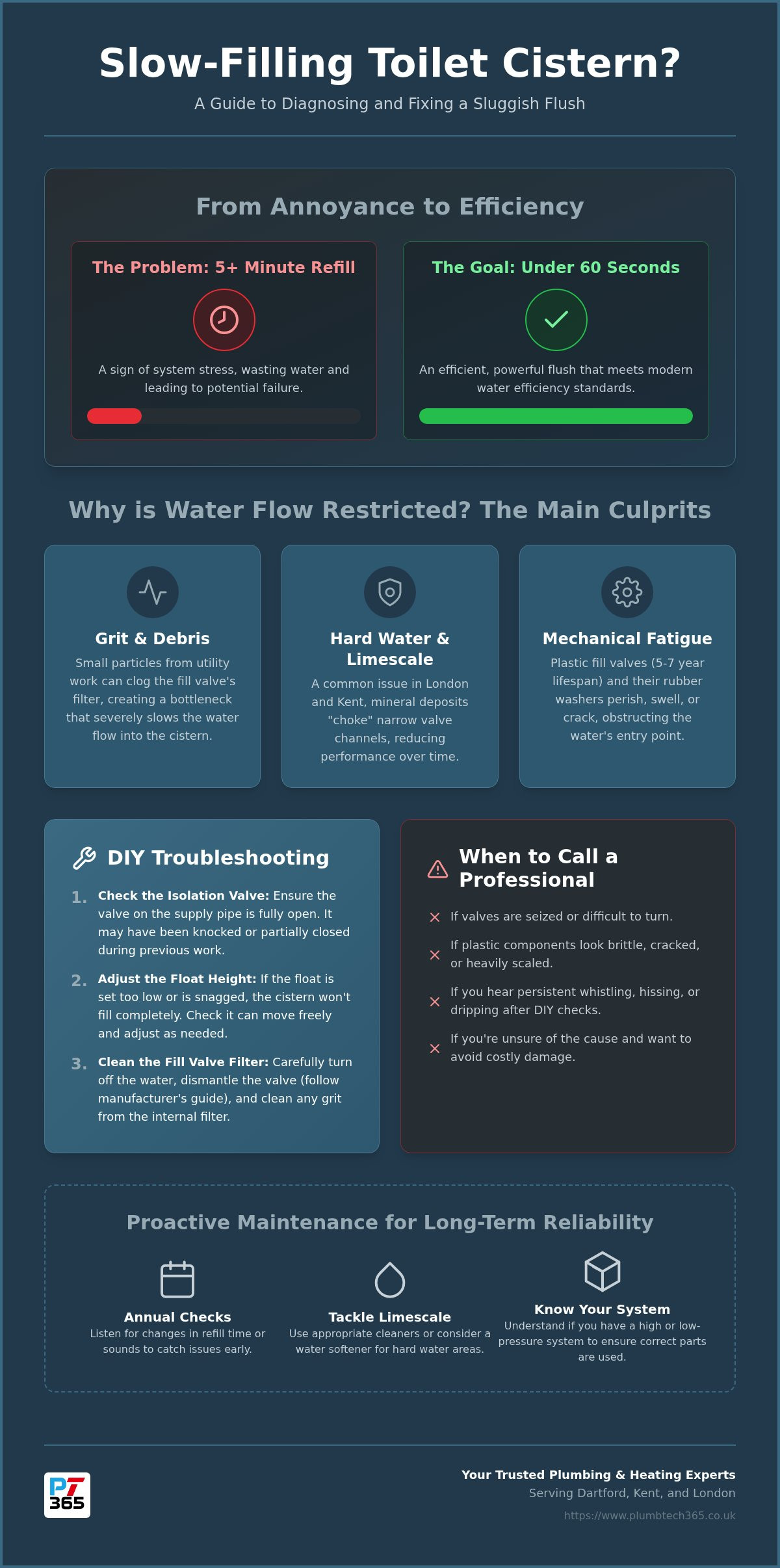
When dealing with a toilet cistern not filling up fast, the cause is frequently a physical obstruction. Grit or tiny fragments of pipework can enter your internal supply lines following local utility work. These particles lodge themselves in the filter of your fill valve. Another common culprit is the isolation valve located on the pipe leading to the cistern. If this valve has been knocked or was never fully reopened after a previous repair, it restricts the volume of water reaching the tank. This creates a bottleneck that transforms a 45-second refill into a five-minute wait.
Hard Water and Limescale Buildup
Homeowners in London and Kent face a specific challenge: high mineral content in the water supply. Limescale acts as a silent enemy within your plumbing. Over time, calcium and magnesium deposits accumulate inside the narrow apertures of modern fill valves. This scale literally "chokes" the flow. You might notice white, crusty deposits on the float arm or around the water inlet. Because modern valves use precision-engineered channels to control water, even a small amount of buildup can drastically reduce performance.
Mechanical Fatigue in Older Components
Most standard plastic fill valves have an expected lifespan of five to seven years. Beyond this point, mechanical fatigue sets in. The rubber washers inside the valve assembly are designed to be flexible, but they eventually perish or swell due to constant contact with water and chemicals. When a washer swells, it partially blocks the entry point, leading to a toilet cistern not filling up fast. You might also find that the plastic components become brittle, causing the float to snag whilst it attempts to rise with the water level.
Many people try to mask the issue by "jiggling the handle" or tapping the cistern lid. This provides only a temporary reprieve and does nothing to address the underlying mechanical decay. If your valve is showing signs of age or heavy scale, it's often safer and more cost-effective to arrange a professional plumbing repair. Replacing a fatigued valve now prevents the risk of a total failure or a slow-motion flood in your bathroom. Don't wait for the component to snap entirely before seeking expert help.
DIY Troubleshooting: Restoring Your Toilet’s Performance
If you're dealing with a toilet cistern not filling up fast, start with the most accessible component: the isolation valve. This small, often chrome-plated valve sits on the pipework leading into your cistern. Use a flat-head screwdriver or the attached handle to ensure the slot is perfectly parallel with the pipe. Even a slight 15-degree obstruction can slash your water flow in half. Whilst you're there, inspect the flexible supply hose for any sharp bends or kinks. In older Kent properties, these hoses can sometimes suffer from internal collapses where the inner lining perishes, creating a hidden bottleneck that restricts water entry regardless of your mains pressure.
How to Safely Adjust the Float
Open your cistern lid and identify whether you have a traditional ballcock on a metal arm or a modern vertical fill valve. Most 2026 models use a vertical pillar with a sliding float. To adjust these, locate the plastic adjustment screw or the spring-loaded clip. If your water level is too low, it won't create enough pressure for a swift refill. Turn the screw clockwise or slide the float upward to raise the limit. You should aim for the water to stop exactly at the manufacturer's "WL" (Water Level) mark etched into the ceramic. Always perform a trial flush after any adjustment to ensure the mechanism doesn't snag against the cistern walls, which is a common cause of a toilet cistern not filling up fast.
Cleaning Debris from the Valve
Before you consider replacing parts, check for trapped sediment. This is a frequent issue in London where hard water is prevalent. First, turn off the water at the isolation valve. Carefully twist the top cap of the fill valve anticlockwise to remove it, taking care not to lose the small rubber diaphragm inside. Inspect the filter for any black grit or white limescale flakes that may have travelled through the pipes. If you find debris, you must clear the valve body to prevent an immediate re-blockage. The "flush-through" method involves holding a container over the uncapped valve body and briefly opening the isolation valve to let water pressure blast out internal sediment. This simple maintenance step often restores a powerful flow without the need for tools or expensive replacements.
When to Call a Professional Plumber in London or Kent
DIY attempts often end in disaster when plastic threads meet metal ones. Cross-threading a new fill valve is the fastest way to cause a flood in your bathroom. If the components don't spin together with ease, forcing them will strip the delicate threads and ruin the unit instantly. Seized isolation valves are another common hurdle. These often require professional-grade grips and a steady hand to avoid snapping the copper supply pipe. If your toilet cistern not filling up fast is part of a concealed unit, the complexity increases significantly. Accessing these built-in systems often involves removing wall panels or delicate tiling, where one wrong move creates a costly cosmetic repair alongside the plumbing failure.
Underlying mains pressure issues can also mimic a faulty valve. If you suspect the problem lies deep within your property's pipework, a professional assessment is vital. We carry the diagnostic tools necessary to measure flow rates and identify bottlenecks that a visual inspection might miss. For residents in Sussex and Kent concerned about hidden plumbing issues, Pro Drain Experts offer comprehensive surveys to ensure your system remains clear and efficient. Attempting to "fix" a pressure issue by dismantling your toilet can lead to unnecessary component damage whilst leaving the actual root cause untouched.
Signs of a More Serious Plumbing Issue
Look beyond the tank for warning signs of systemic failure. If you notice water pooling at the base of the cistern or damp patches on the floorboards, you have a leak that requires immediate Plumbing repairs. Low water pressure that affects your kitchen tap and shower simultaneously suggests a problem with the mains supply or a faulty pressure-reducing valve. Additionally, a toilet that runs constantly whilst also being slow to fill indicates a double failure in the siphon and the fill valve. This combination can lead to astronomical water bills if left unchecked, especially with the new water efficiency ratings introduced in 2026.
The Benefit of Professional Component Replacement
A professional installer ensures your bathroom remains compliant with the Water Supply (Water Fittings) Regulations. We often recommend upgrading to high-quality, silent fill valves that eliminate the vibrating "hammer" noise common in older Kent properties. These modern units are more resistant to the heavy limescale found in the South East. For those in the Dartford area, our plumbers in Dartford provide local expertise to ensure your system is optimised for regional water conditions. If your toilet cistern not filling up fast has become a daily frustration, contact our team of local plumbers to restore your home's efficiency and peace of mind today.
Long-Term Maintenance: Keeping Your Bathroom Reliable
A toilet cistern not filling up fast is a quiet drain on your time and your budget. Prevention is always more cost-effective than an emergency call-out. We recommend checking your cistern's refill speed once a month to ensure it remains under the 60-second mark. For Kent homeowners, an annual plumbing health check acts as a vital insurance policy against bathroom failure. These professional inspections identify weeping valves and hairline fractures in plastic components before they escalate into significant leaks. With the 2026 Mandatory Water Efficiency Labelling (MWEL) regulations now in place, modernising your hardware isn't just about speed; it's about lowering your utility costs whilst staying compliant with new standards.
Upgrading to modern, water-efficient components can save a typical household a substantial amount on metered bills. High-efficiency fill valves are designed to resist the mineral fatigue that plagues older models. By investing in proactive maintenance, you avoid the stress of a sudden failure when guests are visiting. Regular servicing ensures that every flush is powerful and every refill is silent, providing the peace of mind that your home's most essential system is operating at peak performance.
Preventing Limescale Damage
Limescale is the primary cause of mechanical failure in South East plumbing systems. You can protect your fill valve by using scale-inhibiting products safely within the cistern, though you must avoid harsh chemical blocks that perish rubber seals. For London properties, a whole-house water softener is a superior long-term solution. It removes the calcium and magnesium before they ever reach your bathroom pipes. Watch for early warning signs like a faint hissing sound or visible white crusting on the float arm. If you spot these deposits early, a quick descale can prevent the valve from "choking" and stop a toilet cistern not filling up fast from becoming a permanent problem.
Your Next Steps for a Functional Home
Maintaining a fast-filling, efficient toilet is essential for a hygienic and stress-free household. Proactive repairs are always better than reactive emergencies. If you've noticed other issues in your bathroom, such as a dripping tap, it's wise to address them simultaneously to keep your plumbing system in top condition. Our team has been supporting the community since 1996, providing the steady hand needed during household crises. Don't let a sluggish refill or a minor leak compromise your home's reliability. Contact Plumbfix 365 for expert plumbing support and professional Plumbing repairs across London and Kent today. We're ready to restore your system's efficiency with total competence and honest billing.
Restore Your Home's Efficiency Today
A toilet cistern not filling up fast is more than a minor daily annoyance; it's a clear signal that your plumbing system requires immediate attention. You now have the tools to identify mineral "choking" and understand when a simple float adjustment might save the day. However, you must recognise the limits of DIY. Don't risk a bathroom flood by forcing seized valves or cross-threading delicate plastic components. Precision is vital when dealing with modern water efficiency standards and high-pressure systems.
Reputable industry leaders such as Fast Plumbing, LLC emphasise that professional expertise is the best way to safeguard your home, as even minor errors during a DIY fix can lead to significant water damage.
Plumbfix 365 has provided expert local knowledge across London and Kent since 1996. Our Gas Safe Registered engineers deliver rapid results with the calm authority your household needs during a plumbing crisis. We maintain 24/7 emergency availability to ensure you're never left waiting for a reliable flush. If your troubleshooting hasn't restored a swift refill cycle, let our steady hands take over. Book a Professional Plumbing Repair with Plumbfix 365 today to secure your home's reliability. We're ready to provide the professional fix you need to keep your bathroom running perfectly for years to come.
Frequently Asked Questions
Why is my toilet cistern filling so slowly after a flush?
A slow refill is usually caused by a partially blocked fill valve or restricted water pressure. Over time, debris from the main supply or a kinked flexible hose can limit the volume of water entering the tank. If the internal diaphragm is worn, it won't open fully, which stretches the refill time from seconds into minutes. Inspecting the supply line is the first step toward a fix.
Can hard water cause my toilet to take ages to refill?
Yes, hard water is a primary reason for a toilet cistern not filling up fast in London and Kent. Limescale accumulates inside the narrow channels of the fill valve, effectively "choking" the flow of water. This mineral buildup prevents the valve from opening completely. Regular descaling or installing a water softener can prevent this mechanical interference and maintain a powerful refill cycle.
How do I adjust the water level in my toilet cistern?
You can adjust the level by turning the adjustment screw on the float assembly. Most modern vertical valves have a plastic screw that you turn clockwise to raise the float. This allows more water into the tank before the valve shuts off. Ensure the water stops at the "WL" mark on the cistern wall to provide enough pressure for an effective, single flush.
Is it safe to clean a toilet fill valve myself?
It is safe to clean the valve provided you isolate the water supply first. You can usually twist off the top cap to rinse the rubber diaphragm and clear any trapped grit. Avoid using bleach-based cleaners inside the tank. These harsh chemicals perish the rubber seals and washers, leading to leaks or a toilet cistern not filling up fast due to component swelling.
What should I do if my toilet makes a whistling noise when filling?
A whistling or hissing noise indicates that water is being forced through a very small, obstructed opening. This typically means the fill valve is blocked by sediment or the internal washer has become brittle and vibrated. You should attempt to flush out the debris using the "flush-through" method. If the noise continues, the valve assembly likely requires a professional replacement to prevent total failure.
How much does it cost to have a plumber fix a slow-filling toilet in Kent?
The cost depends on whether the issue requires a simple manual adjustment or a full replacement of the fill valve and isolation tap. Whilst DIY fixes are inexpensive, a professional repair provides a guarantee on parts and labour. Expert plumbers ensure your bathroom hardware meets the latest 2026 water efficiency standards, which helps reduce your long-term utility bills and prevents future emergencies.
Can a partially closed valve cause a slow-filling cistern?
A partially closed isolation valve is a common but overlooked cause of restricted flow. This valve sits on the pipework leading to your toilet. If the slot on the valve isn't perfectly parallel with the pipe, the water volume is slashed. Ensure the valve is fully open to allow the maximum flow rate. Even a slight turn away from the open position can double your refill time.
When should I replace the entire fill valve instead of repairing it?
You should replace the valve if it is more than seven years old or if the plastic components have become brittle. If you see visible cracks or if the float consistently snags despite cleaning, a repair is only a temporary mask. Upgrading to a modern, silent fill valve is a smart investment. These newer units are more resistant to limescale and comply with current UK water regulations.


Comments