


Hiring a Professional Plumber: UK Homeowner Guide 2026

A burst pipe spraying across floorboards does not leave time to browse unvetted classifieds, yet grabbing the first search result often costs more in property damage than the original fault. When water breaches your ceilings, finding a qualified plumber who can arrive swiftly and resolve the issue correctly is your absolute priority.
You already know the sinking dread that comes with suspecting rogue tradespeople or facing poor workmanship in your home. Finding an honest, dependable engineer should never feel like a gamble with your domestic water system, nor should you have to puzzle over whether your problem requires standard pipework repairs or a certified Gas Safe engineer.
This guide cuts through the uncertainty to show you how to identify certified trade professionals, spot genuine plumbing emergencies, and isolate active leaks before disaster strikes. Below, you will discover the exact credentials to verify, the critical differences between water and gas compliance, and how to safeguard your property with complete confidence.
Table of Contents
Understanding Domestic Plumbing: What Does a Qualified Plumber Do?
Domestic plumbing centres on the installation, repair, and ongoing maintenance of systems that distribute potable water and remove waste fluids. Broad definitions explain what is a plumber? by focusing on basic pipes, but modern households involve intricate pressures and networked components. A qualified tradesperson inspects mains supplies, repairs cracked copper pipework, installs kitchen brassware, and manages hot water storage cylinders. Leaving minor leaks unattended allows moisture to seep into floor joists. This creates structural timber rot, destroys ceiling plaster, and fosters dangerous damp mould.
General Plumbing Versus Heating Engineering
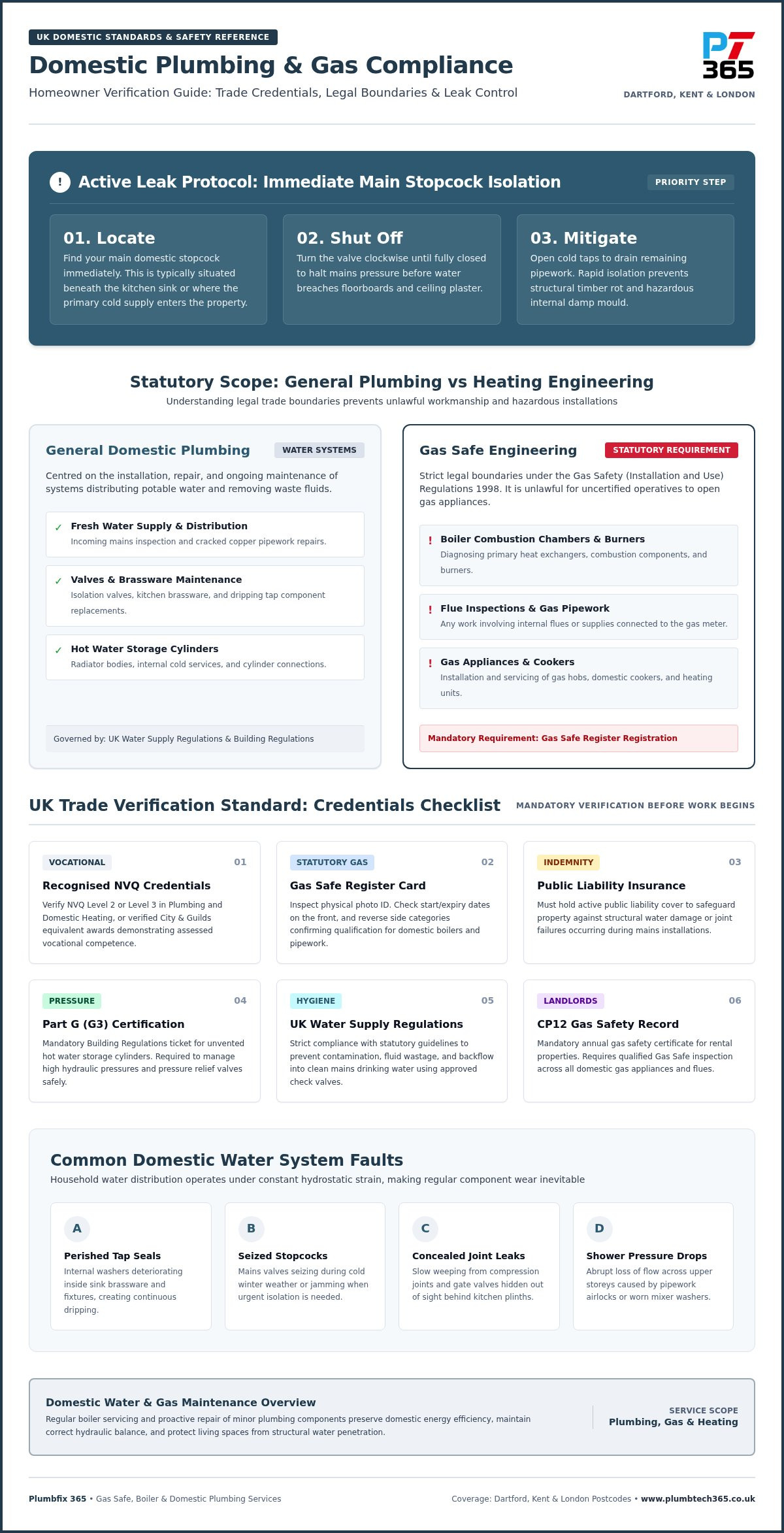
Many property owners assume any trade professional working with pipes can service central heating. The statutory boundaries are strict. A general plumber works on fresh water incoming mains, isolation valves, radiator bodies, and internal cold services. However, the Gas Safety (Installation and Use) Regulations 1998 dictate that opening or adjusting boiler combustion chambers, burners, or flues legally demands an operative on the Gas Safe Register. Multidisciplinary teams bridge this divide efficiently, diagnosing whether a loss of warmth stems from an air-locked pipe run or a faulty primary heat exchanger.
Common Domestic Water System Faults
Household water distribution endures constant hydrostatic strain, making regular wear inevitable. Common points of failure include:
Seals perishing within sink fixtures, where homeowners can follow advice on how to fix a dripping tap before calling for component replacement.
Seized main stopcocks that jam during cold weather or refuse to shut off when turned.
Leaking compression joints and gate valves hidden behind kitchen plinths.
Abrupt pressure drops across upper-floor showers caused by airlocks or worn internal washers.
Rapid action keeps minor drips from turning into serious structural water damage.
Key Qualifications: How to Verify Your Plumber Meets UK Standards
Hiring an independent tradesperson requires more than browsing customer review ratings. A competent domestic plumber holds recognised vocational credentials, typically an NVQ Level 2 or Level 3 in Plumbing and Domestic Heating or equivalent City & Guilds awards. Always verify active public liability insurance before any work starts in your property. This policy protects your home against costly structural water damage if a mains pipe fails during installation.
Verifying Gas Safe Registration
Working on gas-fired boilers, domestic cookers, or pipework connected to the gas meter demands statutory oversight. Under the Gas Safety (Installation and Use) Regulations 1998, anyone completing gas work must be listed on the Gas Safe Register. Inspect the physical photo identity card whenever an operative arrives. Check the start and expiry dates on the front, then inspect the back of the card to confirm they are qualified for specific tasks such as domestic boiler installation or pipework inspections.
Landlords face strict legal duties to keep properties compliant. You must secure an annual gas safety inspection, known as a CP12 certificate, covering every appliance and flue. Using uncertified operatives invalidates insurance and risks civil penalties up to £30,000 or severe criminal prosecution.
Water Regulations and Building Control Compliance
Plumbing work connecting into the public main must comply with the UK Water Supply Regulations. These statutory guidelines prevent contamination, waste, and backflow into the clean drinking network through approved check valves. Fitting unvented hot water cylinders introduces intense hydraulic pressures, requiring a plumber holding a Building Regulations Part G (G3) unvented ticket. Faulty pressure relief valves on unvented units can cause serious system failures if installed incorrectly.
Experienced teams keep your home safe by aligning every job with modern technical standards. Homeowners looking for dependable support can find vetted guidance through professional local plumbing services to secure verified workmanship for routine and urgent maintenance.
Emergency Repairs Versus Scheduled Maintenance: Assessing the Urgency
Water under pressure travels fast. A slow trickle beneath a kitchen basin can often wait for standard operating hours, provided you place a catch bucket underneath and monitor the flow. In contrast, an uncontrolled rupture demands rapid intervention. Knowing the distinction saves property finishes from permanent ruin while preventing unnecessary panic over minor repairs.
When pipework fails catastrophically, locate your internal stopcock without delay. Most domestic properties house this brass tap beneath the kitchen sink, inside a ground-floor hallway cupboard, or near the front entrance. Turn the handle clockwise until it seats firmly. Open all cold taps across the house to drain remaining pressure from the lines. If standing water approaches skirting boards, power points, or electrical appliances, switch off your home's main consumer unit at the fuse box before touching wet surfaces.
Critical Situations Requiring Immediate Assistance
Burst mains supply lines or frozen pipes that split during winter cold snaps.
Water bowing through plasterboard ceilings, threatening a structural collapse.
Unvented hot water cylinders discharging boiling water continuously through external tundish pipes.
Evaluating the severity of your leak early prevents extensive damage to timber subfloors and neighbouring properties. Review our checklist on when to call an emergency plumber to determine whether immediate trade response is essential.
Routine Upgrades and Planned Maintenance
Not every plumbing issue requires an urgent response. Addressing minor wear during scheduled appointments protects your pipework before faults escalate into crises. Booking a local plumber to replace stiff basin taps, modernise bath mixers, or install thermostatic radiator valves (TRVs) keeps your heating balanced and efficient. Professional bodies like the Chartered Institute of Plumbing and Heating Engineering advocate regular maintenance over reactive patching. Arranging an annual boiler service and system health check ensures circulation pumps, expansion vessels, and pipe seals operate safely under sustained domestic pressure.
How to Choose a Reliable Plumber: A Step-by-Step Vetting Checklist
Blindly booking a tradesperson from an online advert often leads to poor artistry and spiralling invoices. Protecting your property requires a structured vetting process before anyone lifts a tool. Following five systematic steps ensures you hire a competent specialist who resolves the issue safely on the first visit:
Step 1: Document the fault: Photograph leaking joints, note error codes flashing on your digital boiler interface, and record the exact brand and model of the appliance.
Step 2: Check active registrations: Verify that the attending engineer holds relevant NVQ certificates or an up-to-date entry on the Gas Safe Register.
Step 3: Request clear written estimates: Insist on itemised breakdowns differentiating between supplied hardware components, scheduled labour, and project timelines.
Step 4: Verify insurance coverage: Confirm valid public liability cover that protects against accidental flooding during works.
Step 5: Clarify payment structures: Agree on explicit settlement terms upfront, avoiding open-ended arrangements that produce unexpected final additions.
Questions to Ask Before Booking
Always speak directly with the tradesperson to gauge technical competence. Ask whether the visiting engineer carries an active photo registration card that covers your exact appliance setup. Enquire if replacement isolation valves or fittings include manufacturer warranties alongside an installation guarantee. Finally, ask for a confirmed arrival window. Knowing response protocols matters when an isolated pipe requires swift repair.
Warning Signs of Rogue Traders
Unqualified operators display obvious operational shortcomings. Walk away if an individual demands complete cash payments upfront before purchasing fixtures or setting foot in the property. Refusal to provide a traceable business address, landline phone number, or proof of insurance suggests an unaccountable trader. Reputable heating teams build long-term confidence by operating transparently, showing how to select independent domestic plumbing services that prioritise customer care over hasty repairs.
Protect your household fixtures by vetting credentials ahead of time. When you need verified, fully certified expertise to resolve pipe leaks or central heating failures, book an independent plumber online to secure dependable service.
Securing Reliable Domestic Support with Plumbfix 365
Navigating household leaks or heating breakdowns requires immediate access to dependable tradespeople who stand firmly behind their work. Operating continuously since 1996, Plumbfix 365 provides homeowners, landlords, and property managers with verified technical expertise and direct personal accountability. Our certified team eliminates the uncertainty of blind directory searches by delivering dedicated services covering complete boiler installations, central heating radiator replacements, and emergency plumbing repairs across the nation.
Every heating assignment is completed exclusively by a Gas Safe Registered technical engineer, ensuring absolute compliance with current UK safety standards. We maintain clear communication from your initial call until completion, offering rapid response times for severe domestic water failures alongside transparent, honest commitments free from hidden terms.
End-to-End Heating and Pipework Care
Modern properties rely on interconnected infrastructure that demands precise technical balance. Our engineers manage complete domestic systems, working across fresh water distribution networks and unvented hot water cylinders to maintain steady hydraulic performance. Routine servicing and scheduled CP12 safety inspections identify component fatigue early, keeping boilers running cleanly and preventing unexpected failures during winter peak loads. When hidden leaks threaten floorboards, we apply targeted diagnostic testing to locate concealed pipe breaches swiftly without unnecessary damage to your home.
Arranging Your Technical Visit
Securing professional support should be straightforward, especially when water is actively escaping. Whether you need an experienced plumber to fix dripping taps, fit new kitchen brassware, or carry out critical boiler servicing, our booking process ensures prompt scheduling without administrative delays. Reach out directly through Plumbfix 365 to speak with trade specialists ready to restore safety, efficiency, and lasting peace of mind to your domestic water systems.
Protect Your Home With Verified Plumbing and Heating Expertise
Safeguarding your property against water damage starts with decisive action and verified credentials. Isolate your stopcock swiftly when pipes fail, insist on seeing photo credentials before work begins, and never allow unregistered tradespeople near gas appliances. Taking time to hire an accredited plumber ensures long-term safety, optimal central heating efficiency, and lasting peace of mind.
Operating as an independent technical specialist company since 1996, Plumbfix 365 provides homeowners and landlords with dependable service for routine upgrades and urgent leaks. All our boiler installations, servicing, and central heating repairs are carried out exclusively by Gas Safe Registered engineers who prioritise transparent communication and prompt arrival.
Do not leave your home's pipework and heating systems to chance. Book a qualified Gas Safe engineer with Plumbfix 365 today to secure honest, reliable workmanship from trusted trade professionals.
Frequently Asked Questions
Can a standard domestic plumber legally work on my central heating boiler?
No, a general domestic plumber cannot legally dismantle or repair the internal components of a gas-fired boiler. British law restricts any work on gas burners, combustion seals, and flues strictly to operatives listed on the Gas Safe Register. A general plumber can only handle external pipework, bleed radiators, or replace domestic water valves connected away from the appliance.
What is the very first step I should take during a sudden pipe burst?
Turn off your main internal stopcock immediately to stop pressurised water feeding the breach. You will usually find this valve under the kitchen sink or within a ground-floor utility cupboard. Once turned fully clockwise, open all cold taps to empty remaining fluid from the distribution lines. Switch off electricity at the fuse box if water runs near wiring.
How can I check if a visiting engineer is properly Gas Safe registered?
Ask to inspect their physical Gas Safe photo identification card as soon as they reach your door. Check the active licence dates printed on the front, then flip the card over to examine the back. Ensure the listed work categories explicitly cover domestic boilers and pipework. You can also verify their unique seven-digit registration number online via the official Gas Safe Register portal.
What is the difference between an unvented hot water cylinder and a combi boiler?
A combi boiler heats domestic water on demand straight from the incoming cold mains without needing a separate storage vessel. An unvented hot water cylinder stores a dedicated volume of heated water under mains pressure, supplying multiple showers simultaneously without pressure drop-offs. Unvented cylinders require specialized G3 building regulation certification to install and maintain safety relief valves.
Why is my central heating radiator cold at the bottom while warm at the top?
A radiator that stays cold along its base is usually restricted by an accumulation of heavy black magnetite sludge. Unlike air pockets that collect at the top and require simple key bleeding, dense metallic debris settles at the bottom of the panel. This restricts hot water flow, demanding an effective chemical flush or system power flush to restore full heating efficiency.
What does a landlord gas safety inspection involve during an annual check?
An annual check requires a certified engineer to examine all gas appliances, pipework, and flues across the rental property. The technician tests operating pressures, confirms safety devices function correctly, checks ventilation paths, and ensures combustion gases vent outside safely. Once verified, the engineer issues a CP12 certificate, which landlords must share with tenants within 28 days.
How do I prevent domestic water pipes from freezing and bursting during cold weather?
Insulate exposed pipe runs in unheated areas like lofts and garages using high-grade polyethylene foam lagging. Keep your central heating running on a low background setting during severe frost periods, even if the property is vacant. Repairing dripping taps promptly also stops ice blockages forming inside waste lines, protecting copper pipe joints from excessive pressure buildup.


Comments